Is it rude to leave food on my plate in Korea?
No, leaving a little food on your plate is not rude in Korea. Nobody expects you to empty every side dish, and a few bites left behind won't offend anyone. What people do notice is waste: a rice bowl abandoned half full, or a table of food you ordered and barely touched.
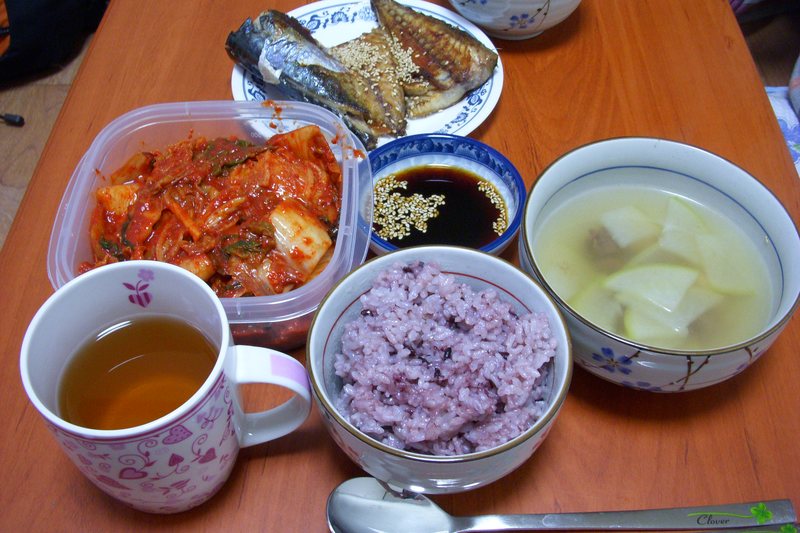
Rice matters most. Many Koreans grew up with parents telling them not to leave a single grain, often repeating the popular saying that one grain of rice passes through a farmer's hands 88 times before it reaches the table. Older Koreans who remember leaner years (the same memories behind the greeting in our story on “Have you eaten?”) tend to notice a half-eaten bowl more than younger people do. If you know you can't finish, ask for less from the start: 밥 조금만 주세요 (bap jogeumman juseyo, “just a little rice, please”).
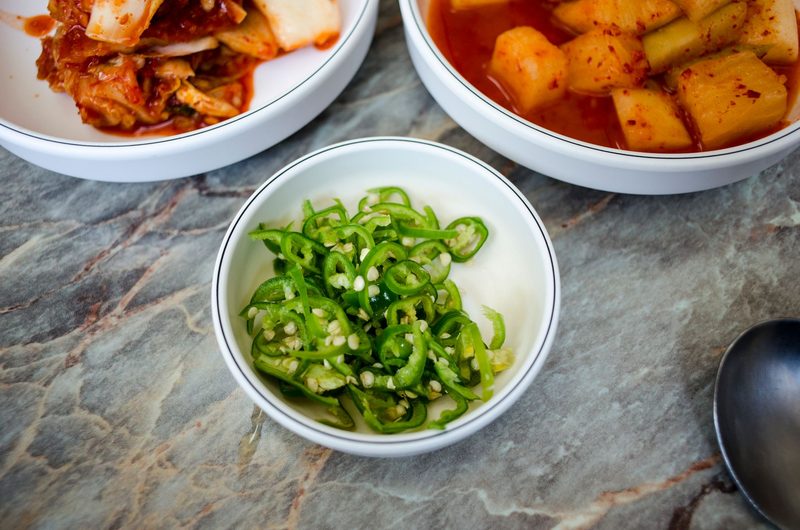
Restaurants add a practical reason. Under Korea's food hygiene rules, they can't serve what one customer leaves to the next, so everything left on the table is thrown out, as we explain in our story on Korea's little side dishes. That's why Koreans ask for refills only of the dishes they'll actually eat. Some all-you-can-eat places post signs warning of an extra charge if you leave a lot. That's the shop's own rule, not a law, and it's rarely enforced, but the message is clear. Waste costs money at home too: since a nationwide rollout in 2013, households pay for food scraps by the bag or by weight, and many apartment complexes have bins that weigh each family's scraps with a card or tag.
In someone's home, many hosts will keep refilling your plate, so clearing it may just bring a second helping. The polite way out is to say 배불러요 (baebulleoyo, “I'm full”) and, at the end, 잘 먹었습니다 (jal meogeosseumnida, “I ate well,” a thank-you for the meal). Praise the food, leave a bite, and nobody will mind.
The one place to finish absolutely everything is a temple. At 발우공양 (baru gongyang, the Buddhist monastic meal), which some temple stays let visitors try, you take only what you can eat, then rinse your bowls with water and drink that water at the end.