Is it rude to refuse a drink in Korea?
No. Saying no to a drink is not rude in Korea, as long as you do it warmly. What can feel awkward is the way you refuse, not the refusal itself, and a few small gestures go a long way.
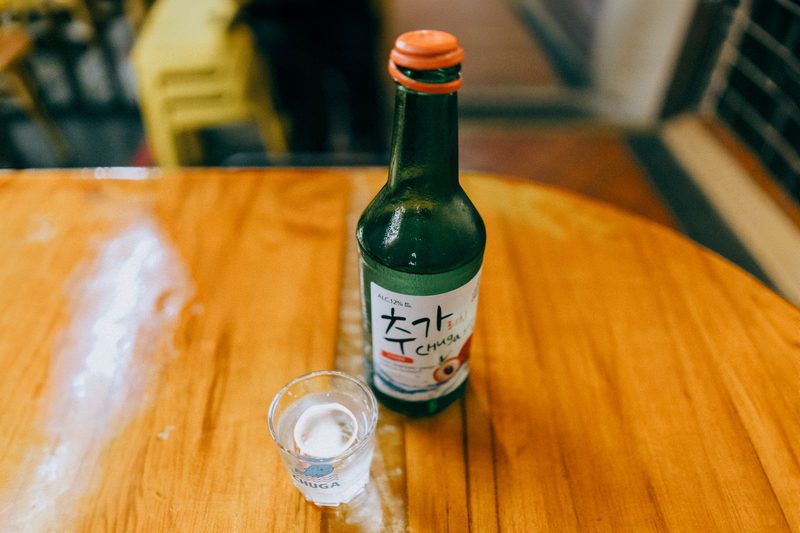
Why does it seem like such a big deal? At a Korean table, a drink is rarely just a drink. Pouring for someone is a way of looking after them, so when an older person or your boss offers you a glass, in their eyes they are being kind. Pushing the bottle away or sharply covering your glass can feel like you are turning down the person, not the soju. That is why many Koreans who don't drink keep the gesture and skip the alcohol: they hold out their glass with two hands, let it be filled, raise it for the toast and simply touch it to their lips. A full glass also tells everyone you're fine, because nobody refills a glass that isn't empty. We walk through the two-handed pour and the rest of the routine in our guide to drinking with elders in Korea.
A short, friendly reason helps, and nobody expects a long explanation. Health or religious reasons are generally understood too.
- 술을 잘 못 마셔요 (sureul jal mot masyeoyo, "I'm not much of a drinker")
- 차를 가져왔어요 (chareul gajyeowasseoyo, "I drove here"), a reason nobody argues with, since Korea's blood-alcohol limit for drivers has been 0.03 percent since 2019
- 약 먹고 있어요 (yak meokgo isseoyo, "I'm on medication")
Filling your glass with water or soda for the toasts is completely normal, and you still join every 건배 (geonbae, "cheers"). You can keep pouring for others as well, which is the clearest sign that you are enjoying the table even without drinking.
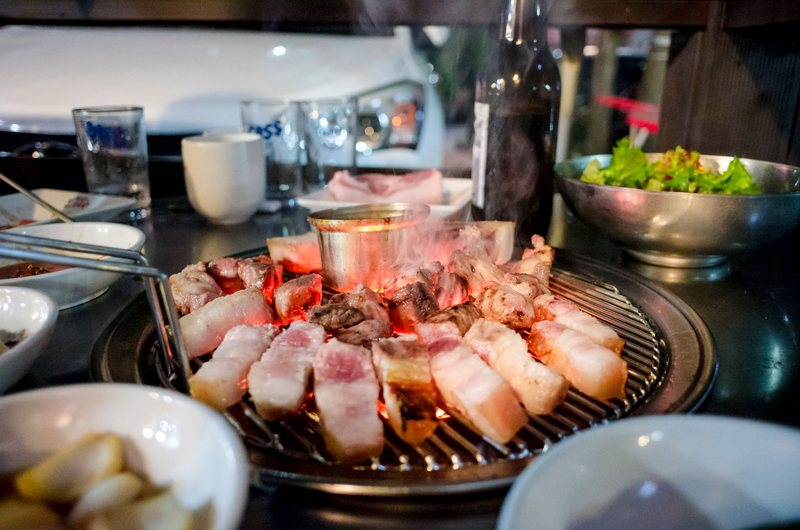
Expect some generational difference. Among younger Koreans, "I'm not drinking tonight" usually ends the conversation. Some older people, or an old-school company dinner, may still urge you on with 한 잔만 (han janman, "just one glass"). A smile and a second polite no are enough, and pushing alcohol on people is far less accepted than it used to be: since July 2019, Korea's Labor Standards Act has banned workplace harassment, and the Ministry of Employment and Labor's guidance lists forcing someone to drink or to join company dinners against their will as an example. And if the evening happens around a grill, knowing the unwritten rules of Korean BBQ will win you more goodwill than emptying glasses ever could.