Do Koreans really eat kimchi every day?
Many do, but not everyone, and fewer than before. 김치 (kimchi, seasoned fermented vegetables) still shows up at most Korean meals, often without anyone ordering it. Yet in 2024, 22.7% of Koreans ate no kimchi at all over a 24-hour period, almost double the 11.7% recorded in 2010, according to a study of national health and nutrition survey data by Chung-Ang University, Jeju National University and the World Institute of Kimchi, reported by Korea JoongAng Daily.
It feels constant because a Korean meal is built around rice, and kimchi is the most basic thing to eat with it. Restaurants set down a small dish for free, school and office cafeterias typically serve it at lunch, and many homes have a separate kimchi refrigerator to keep it at just the right sourness. When UNESCO listed 김장 (kimjang, making kimchi together for winter) as intangible heritage in 2013, it described kimchi as an essential part of Korean meals across class and region. It is the anchor of all the little plates we explain in why a Korean meal arrives with a table full of little plates.
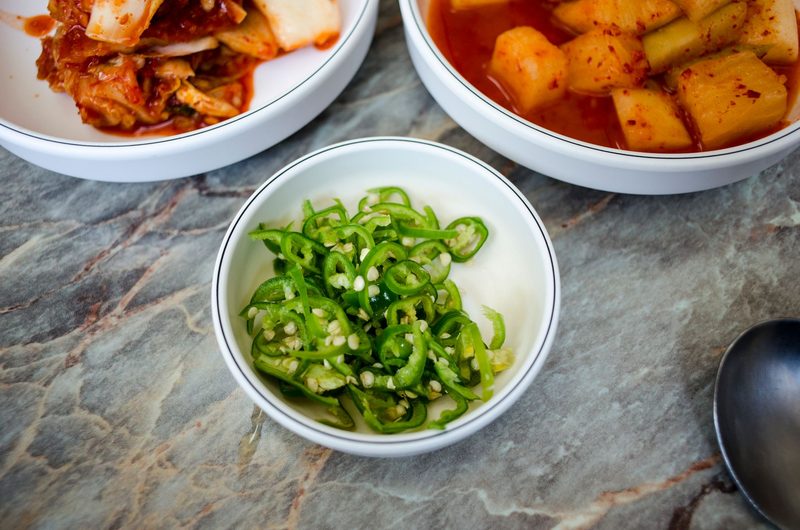
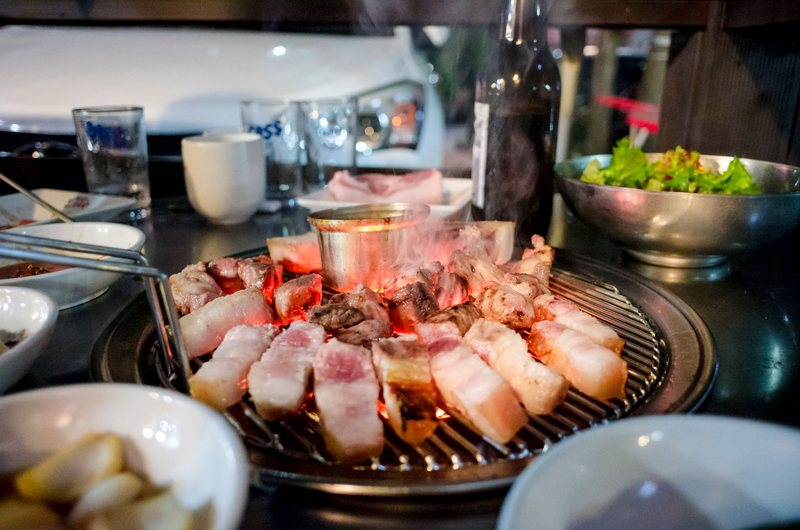
Kimchi is also not one food. Napa cabbage kimchi is the classic, but there is cubed radish 깍두기 (kkakdugi), cucumber kimchi, and mild white kimchi made without chili. Once kimchi gets too sour to enjoy raw, it goes into 김치찌개 (kimchi-jjigae, kimchi stew), fried rice or savory pancakes, so someone can eat kimchi all day without touching the side dish. At barbecue restaurants, people even grill it in the pork fat, one of the unwritten rules of Korean BBQ.
What is changing is mostly generational. The same study found the sharpest drop among people in their 20s and 30s: the share who ate kimchi as a side dish fell from 82% to 66%, while more of them now eat it cooked into other dishes. The researchers see it as part of a wider shift in what Korean meals look like. Homemade batches are shrinking too. In a 2025 survey by the Korea Rural Economic Institute, people planning to make less kimchi for winter most often said their household simply eats less of it now.
If you visit Korea, expect kimchi at almost every Korean meal, but nobody will mind if you skip it. If chili is too much for you, look for white kimchi, 백김치 (baek-kimchi). It is not on every table, but it is a gentle place to start.