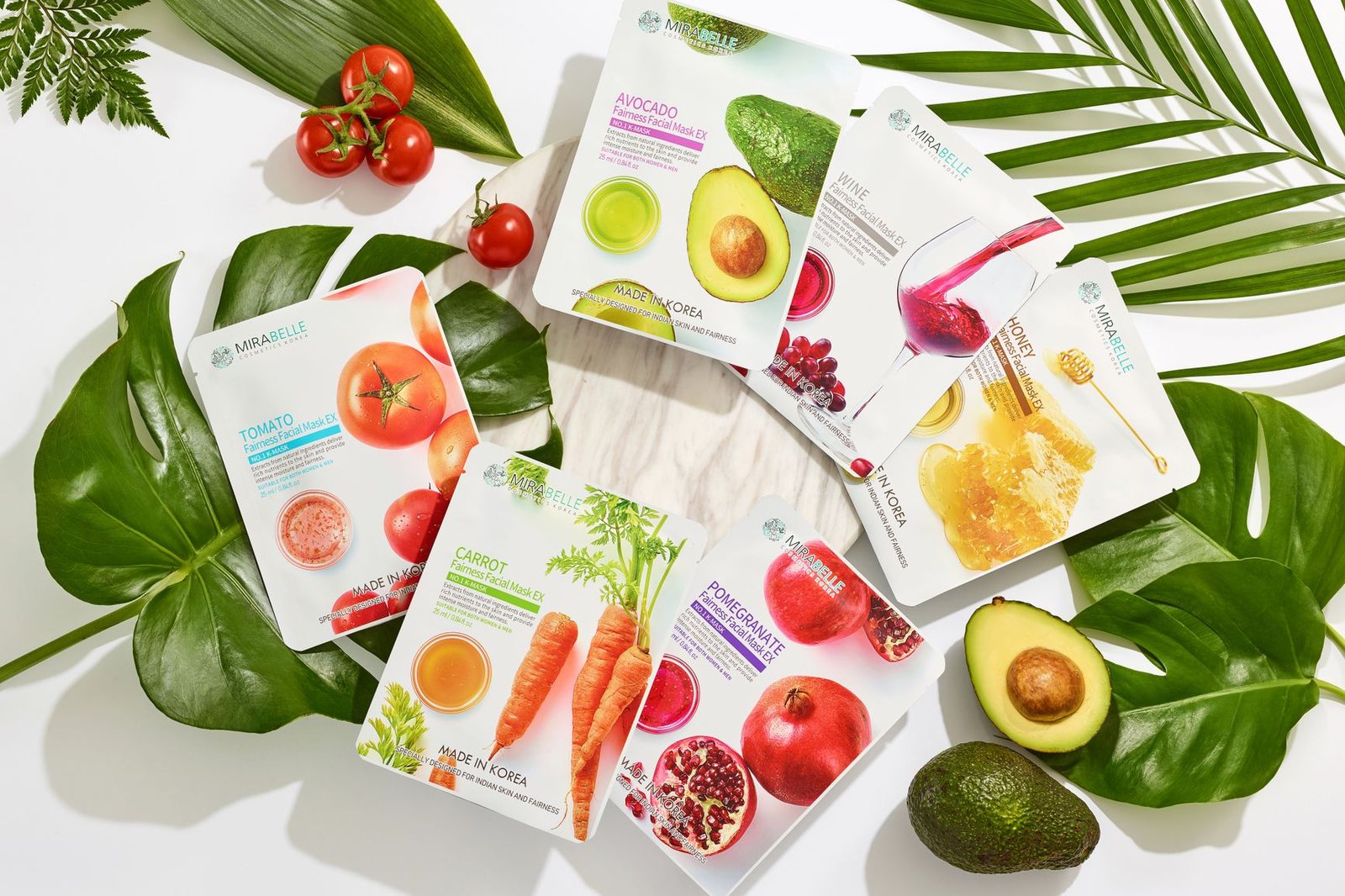
Video-call a Korean friend on an ordinary weeknight and there is a fair chance a pale, ghostly face will answer: a wet white sheet with holes for the eyes, nose and mouth. That is a 마스크팩 (maseukeu-paek, "mask pack"), usually shortened to 팩 (paek), and it is one of the most familiar sights in a Korean home. It is also one of the things people abroad ask about most: do Koreans really put one on every day?
Some do. There is even a catchphrase for it, 1일1팩 (il-il il-paek, "one day, one mask"), which spread through Korea in the mid-2010s. But the everyday reality is calmer: in a 2022 survey of Korean women, the most common answer on frequency was about once a week. The routine itself is simple. After washing and toner, the sheet goes on for about 10 to 20 minutes, comes off before it dries, and whatever essence is left gets patted in, not rinsed off. Here is how a free gift turned into a national habit, and what Koreans actually pick.

From free gift to bathroom staple
Nobody knows for sure who invented the sheet mask. Korea's beauty industry generally credits a Japanese cosmetics company, and the first versions, in the 1990s, were sheets of rayon fabric soaked in essence, the Korean business magazine Bizhankook reported. For years they were an afterthought in Korea. As the daily Edaily put it in 2025, a mask pack used to be little more than a promotional freebie handed out when you bought other cosmetics.
The 2010s changed that. One brand alone, Mediheal, has sold more than 3 billion sheet masks, Edaily reported in March 2025. Tourists played a part: shops in Myeongdong handed out free masks to visitors from China, who often bought them by the stack as gifts, Bizhankook noted. Then came the slogan. By December 2015, Korean news stories were already describing 1일1팩 as a skincare routine catching on among women, and in July 2016 Edaily said this new "daily pack" culture was driving a market that had grown from about 290 billion won in 2014 to 400 billion won in 2015. That October, Olive Young said its mask pack sales were up 80% on the year before.
The habit has since traveled. In a report released in March 2026, the Korea International Trade Association found that in 2024 sheet-type face masks had newly joined the list of products in which Korea holds the world's largest export share.
Do Koreans really use one every day?
Daily maskers exist, but it is a trend, not a rule, and the surveys show something calmer.
- In Opensurvey's Beauty Trend Report 2019, based on a 2018 survey of 1,500 Korean women aged 20 to 49, 72% said they used mask packs at home.
- In an October 2022 survey of 300 Korean women aged 20 to 59, run by InsightKorea and published by the trade outlet CosinKorea, sheet masks were by far the most used type, named by 79.3%. The most common answer on frequency was about once a week, while sheet mask users averaged about seven sheets a month.
One Korean dermatologist suggests watching the clock rather than the count. Speaking to Health Korea News in 2022, a dermatology professor at Uijeongbu Eulji University Hospital said sticking to 15 to 20 minutes per mask matters more than "one a day," because once the sheet dries, the moisture in your skin can evaporate with it and leave you drier than before. The weather plays a part as well: back in 2016, Kyunghyang Shinmun reported that the mask craze grew even stronger at 환절기 (hwanjeolgi), the changeover between seasons. And if there is one step many Koreans never skip, it is not the mask but sunscreen in the morning.
How Koreans use a sheet mask, step by step
Most packets sold in Korea print nearly the same directions, and between them they answer most of the questions people abroad ask.
- Clean face, then toner. The mask goes on after cleansing and toner and before your cream. Think of it as an extra, very watery layer in the middle of the routine.
- About 10 to 20 minutes. That is the range most packets give. Take it off while it is still damp.
- No rinsing. Pat the leftover essence into your skin instead. Rinsing is for wash-off packs, which are a different product.
- Finish as usual. Follow with your regular cream.
- One sheet, one use. Sheet masks are single-use. Plenty of people squeeze the last of the essence from the pouch onto their neck or hands rather than waste it, but the sheet itself goes in the bin.
Morning or night? Either works, since the packet only asks for a clean face. Evening is the classic slot because you can lie back for 15 minutes, while some people use one in the morning before makeup on a big day. Can you sleep in one? Not a sheet mask. For overnight, Koreans reach for a 수면팩 (sumyeon-paek, "sleeping pack"), a cream-type mask meant to stay on until morning. And the fridge? Some people chill their masks in summer because a cold sheet feels nice. It is a comfort, not a requirement.
Korean insider tip: Buying boxes to take home or hand out as gifts? Turn one over and check the date printed on the back before you pay. Sheet masks do expire: Mediheal's own shop says its Tea Tree mask lasts three years from 제조일 (jejo-il, the manufacturing date) and should be used immediately once the pouch is opened. So never tear a pouch open early to save time later; open it only when the sheet is going straight onto your face.
Sheet, gel, rubber or overnight: what Koreans pick
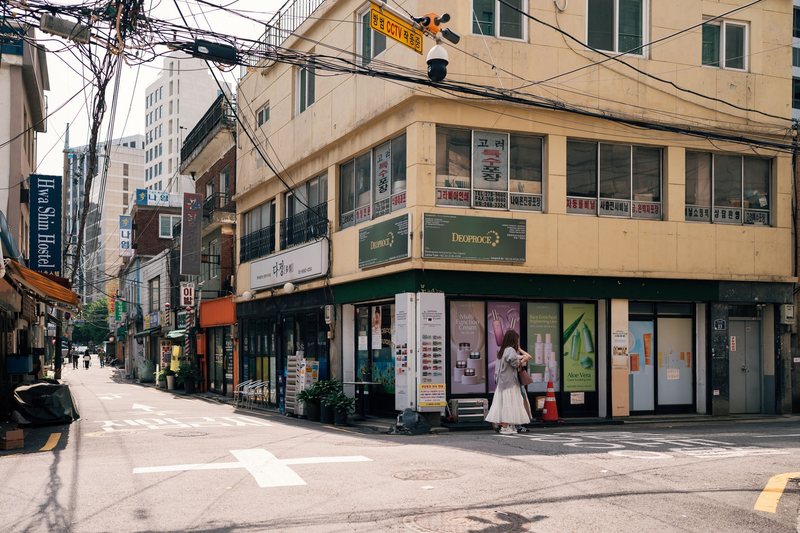
The 2022 survey gives a rough picture of the Korean bathroom shelf. After sheet masks came wash-off packs (32.7%), peel-off packs (29.3%), sleeping packs (27.0%) and nose packs (23.7%). In Korean beauty talk you will also hear about gel masks, which cling better than cloth, and the 모델링팩 (modelling-paek), a mask that sets into a thick layer you peel off in one piece, usually just called 고무팩 (gomu-paek, "rubber pack"). Newer still are toner pads, cotton pads soaked in toner and packed in a jar, which now share the shelf with masks, even in Olive Young's mask section in Myeongdong.
For a snapshot of what Koreans actually buy, many look to the Olive Young Awards. They are a year-end tally of sales, not a jury prize: for the 2025 awards, Olive Young analyzed about 180 million purchases made between July 2024 and June 2025 and named 166 products in 40 categories. First place in the mask pack category went to Torriden's Dive-In low-molecular hyaluronic acid mask, the Korean trade outlet Cosmorning reported in March 2026, adding that more than 150 million sheets of it had been produced. The steadiest name is Mediheal: its Tea Tree Essential Mask won in the mask category again in 2024 and had been a winner every year since the awards began, Insight reported. Just remember that a ranking shows what sold the most, not what suits your skin. That is why many Koreans read reviews and buy a single sheet before committing to a box. Our Olive Young guide explains how the rankings and the big sales work.
What does a sheet mask cost in Korea? As one example, on Mediheal's own online shop, run by its maker, L&P Cosmetic, a box of 10 Tea Tree Essential Masks (24 ml each) had a list price of 20,000 won and a sale price of 11,900 won when we checked on Nov. 5, 2026. That works out to 1,190 won a sheet.
If you buy sheet masks in Korea
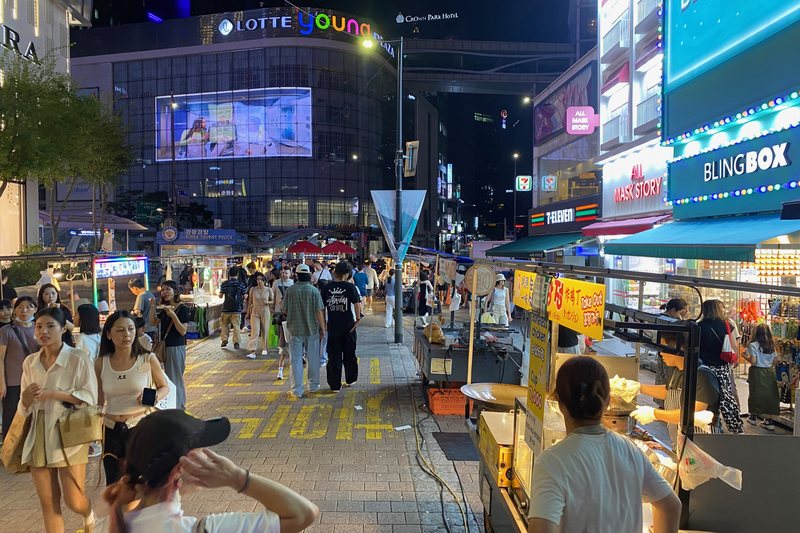
- Myeongdong's Mask Library: Olive Young Central Myeongdong Town, which opened in March 2026, gives its third floor to a "Mask Library": more than 100 mask brands shelved like books, with over three times the mask shelving of a regular store, according to CJ Group's newsroom.
- Time it with the sale: Koreans like to stock up during 올영세일 (ol-yeong seil), Olive Young's week-long sale held four times a year, in March, June, September and December.
- Tax refund: If you are staying in Korea for less than six months, show your physical passport and spend at least 15,000 won per receipt. At stores with an instant refund, the tax comes off at the register for payments under 1,000,000 won, up to 5,000,000 won per trip. Keep the goods unopened and leave Korea within three months.
- Global membership: Olive Young Global's app and points are for its online mall only. They do not work in Olive Young stores in Korea.
- Read the back: The full ingredient list is printed under 전성분 (jeon-seongbun). Korean cosmetics also carry a standard caution: stop using a product if you notice red spots, swelling, itching or irritation.
Outside Korea, American shoppers have had a separate Olive Young US online store since May 29, 2026, launched the same day as the chain's first US store, in Pasadena; the Global mall does not ship to the US. Elsewhere, buying from a brand's official channels is the safest bet, and our guide to spotting fake K-beauty shows what Koreans check on the box. And if a Korean friend ever turns down your video call with 지금 팩 하는 중이야, now you know what to do: give them 15 minutes.
Quick answers
Do Koreans use sheet masks every day?
Some do, and the habit even has a name, 1일1팩 (one day, one mask). But in a 2022 survey of Korean women, the most common answer was about once a week.
Do you rinse your face after a sheet mask?
No. Pat the leftover essence into your skin, then apply your usual cream. Only wash-off masks are meant to be rinsed.
How long should you leave a sheet mask on?
Most packets say 10 to 20 minutes. Take it off before it dries, and don't sleep in it; overnight is what sleeping packs are for.