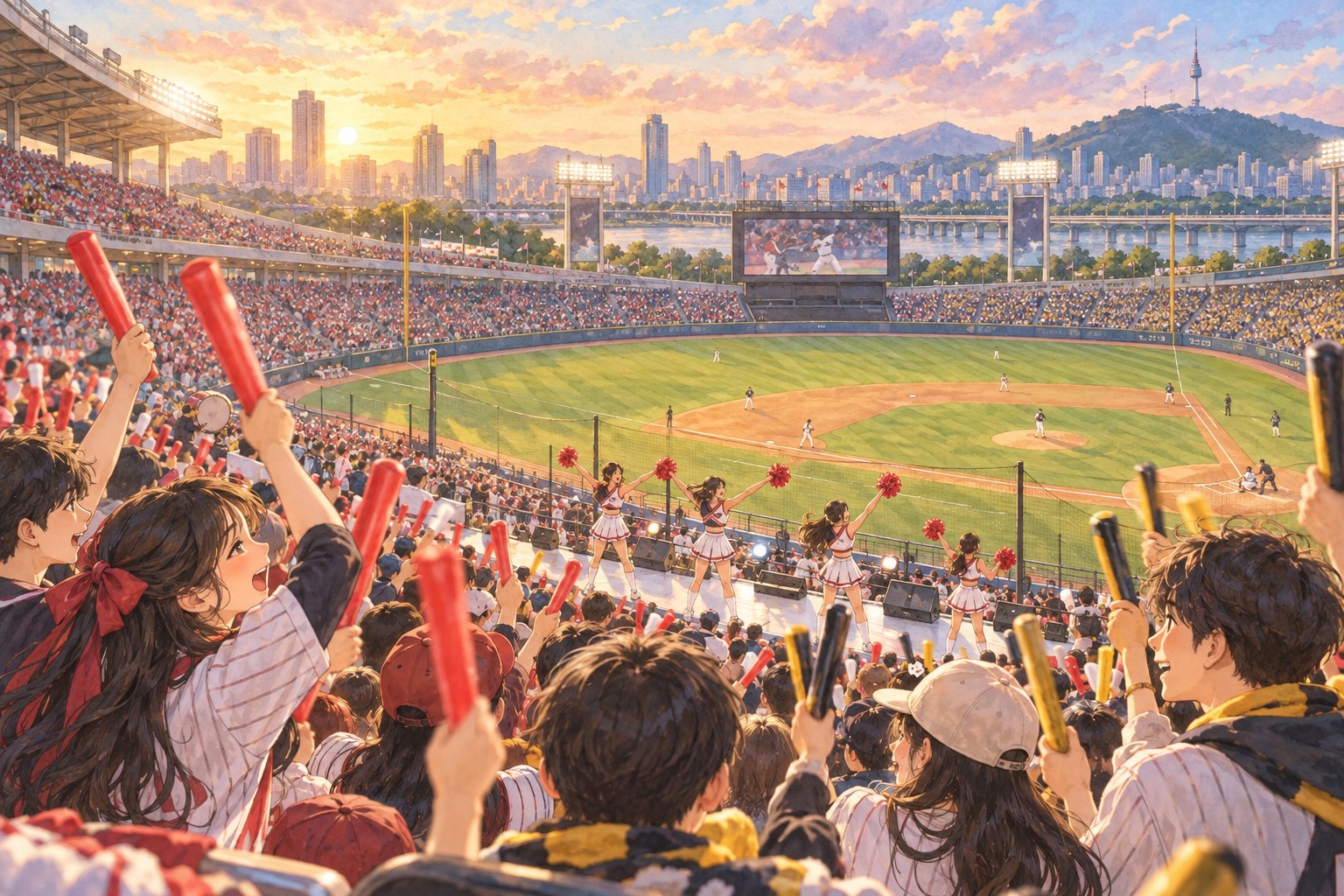
Go to your first Korean baseball game and you will probably notice the noise before the baseball. On a raised stage in the stands, a man with a microphone is conducting thousands of people. Cheerleaders dance beside him. Each time a new batter walks up, the whole section switches to a new song with the player's name in the chorus. So why do KBO games feel like K-pop concerts? Because the cheering is organized almost exactly like one: a leader, a setlist, moves everyone knows, and a crowd that has learned the words.
And that crowd has never been bigger. On October 5, 2026, the Korea Baseball Organization said attendance had reached 12,362,000 after 699 games, breaking the 2025 record of 12,312,519 with six days of the season still to go. When the regular season ended on October 12, the total stood at 12,770,551 across 720 games, an average of 17,737 a game, Financial News reported. Eight of the ten clubs drew more than a million fans each, a first for the league.
A song for every batter
The heart of it all is the 응원가 (eungwon-ga, fight song). Every club has its own anthems, and nearly every regular in the lineup has a personal song that the crowd sings the moment he steps into the batter's box. The melodies are usually borrowed from well-known pop or K-pop tunes and given new lyrics simple enough for 20,000 people to shout together, with the player's name landing on the big beat.
It adds up quickly. A 2015 Korea JoongAng Daily report counted that batters' theme songs can play around 36 times in a single game, and that a fan hears 50 to 60 different songs in one visit. The clubs license the original music through Korea's music copyright associations, so the soundtrack is a real line in the budget.
Some team songs are older than most of the people singing them. Lotte Giants fans in Busan sing 부산 갈매기 (Busan Galmaegi, “Busan Seagulls”), a song their stadium has belted out for decades. LG Twins fans in Seoul chant 아파트 (Apateu, “Apartment”), Yoon Soo-il's 1982 rock song, long before Rosé and Bruno Mars turned “APT.” into a global hit.
One rule makes it all work: the singing belongs to your team's turn at bat. When your side is hitting, you stand and sing. When the other team bats, you sit down and let their fans have the moment.

The cheer captain and the stage in the stands
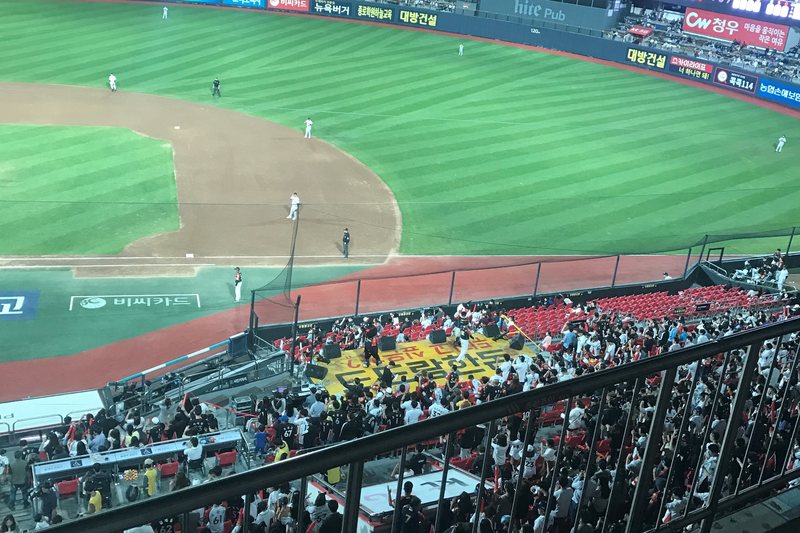
Every song has a conductor: the 응원단장 (eungwon-danjang, cheer captain). From a raised platform built into the infield stands, with a team of 치어리더 (chieorideo, cheerleaders), the captain leads the crowd from the first pitch to the last out: picking the song for each situation, starting the chants, counting everyone into the chorus and keeping a tired section on its feet in the eighth inning. Between innings, the cheerleaders and mascots take over with dance routines.
The seats right in front of that stage are the 응원석 (eungwon-seok, cheering section), and they come with expectations. As the Korea Times explains in its guide for newcomers, fans there are expected to stand and join in whenever their team is batting. If that sounds like a concert pit, many Korean fans already know the drill from K-pop shows, where audiences shout set fan chants at fixed moments in each song. A 2018 survey of 7,010 fans by the Korea Professional Sports Association found that 71.1% go to the stadium because “cheering is fun,” Korea.net reported.
What does a seat in the singing section cost? On the LG Twins' official ticket page, the 2026 standard price for the Orange Seats, which the club labels its cheering section at Seoul's Jamsil Baseball Stadium, is 22,000 won from Tuesday to Thursday and 24,000 won on Fridays, weekends and public holidays. A booking fee of 1,000 won is added to each ticket.
Korean insider tip: Sold out? Do what Korean fans call 취켓팅 (chwi-ketting, “cancellation ticketing”): keep refreshing the booking page for seats other people give back. LG Twins tickets, for example, can be canceled until four hours before the game starts, so returned seats can reappear right up to that point. Buy only through the club's official booking link, never from resale posts.
Two crowds, one stadium
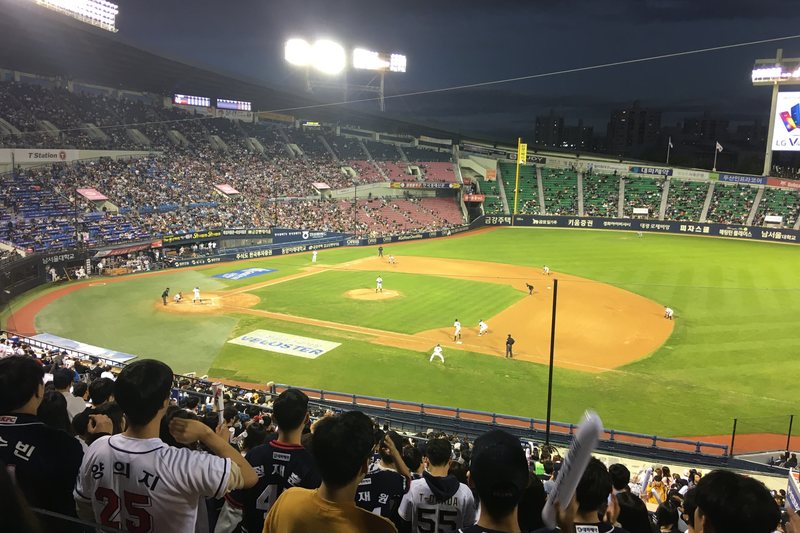
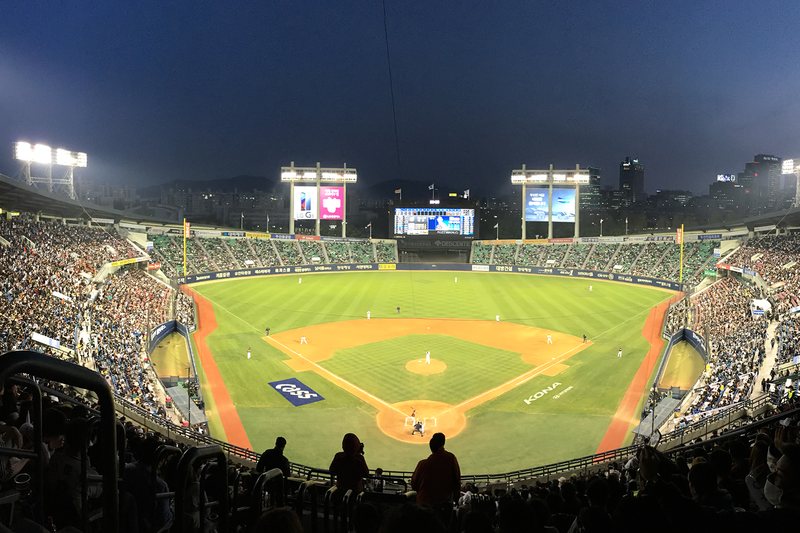
A KBO ballpark is split down the middle. Home fans fill one side of the infield and visiting fans the other, each in their team's colors. At most stadiums the home side runs along first base, but not at every one, so check before you book. Because the singing follows the batting, the two sides take turns: in the top of the inning the visitors' side erupts, and in the bottom the home side answers. At a full house it sounds like two concerts sharing one stage.
Each side brings props, too. For years the classic one was the 막대풍선 (makdae-pungseon), a pair of long inflatable plastic sticks banged together to keep the beat; the LG Twins are credited with bringing them to Korean ballparks in the early 1990s. In 2023, the KBO and all ten clubs signed a voluntary pact with the Ministry of Environment to cut back on single-use vinyl cheering goods like these and switch official gear to reusable versions, SBS Biz reported. Then there is Busan's signature sound: when the opposing pitcher throws over to first base, Lotte fans let out a collective 마! (ma!), a gruff Gyeongsang-dialect “Hey!”

Do Lotte fans really wear plastic bags on their heads?
This is the picture many people abroad associate with Sajik Stadium in Busan: a sea of fans with orange plastic bags puffed up on their heads, the handles looped over their ears. The real story is less wild than it looks, because the bags were garbage bags. Lotte fans were already known for 신문지 응원 (sinmunji eungwon, newspaper cheering), tearing newspapers into pom-poms and waving them while singing “Busan Galmaegi.” Nobody is quite sure when that started, but everyone knew how a game ended: a sellout could leave up to 25 five-ton truckloads of trash.
In 2005, the Kyunghyang Shinmun reported that the club had begun handing out 10,000 orange garbage bags at home games, meant to work as cheering props during the game and as trash bags after it. Fans blew them up, put them on their heads, and the 봉다리 응원 (bongdari eungwon, “bag cheer,” from the local word for a plastic bag) became Sajik's trademark.
If you go today, though, don't count on seeing it. From the 2021 season, Busan stopped allowing single-use items at the sports facilities it manages, and Hankook Ilbo reported that Lotte would replace the bags with towels and paper planes. A 2025 Korean news report described both the newspaper and bag cheers as effectively gone. The orange bags now live mostly in old photos and in longtime fans' memories.
Why the seats keep filling up
Part of the answer is who is sitting in the stands. In the KBO's own fan survey of 8,000 people, released in January 2025, 64.3% of fans surveyed at stadiums said their interest in the league had grown. Among women in their 20s, the figure was 77.9%, OSEN reported. Koreans even have a word for going: 직관 (jikgwan), short for watching a game in person at the stadium.
If you go to a KBO game
- Choose your seat by mood. The cheering section means standing and singing for about three hours. For a calmer game, pick seats away from the stage.
- Sit with your team. Check which side is home before you book, and wear the team color. Cheering with your own side is far more fun than sitting silently in the other team's section.
- Learn one chorus. You don't need every song. Many are on YouTube and in team apps, and the rest you will pick up as you go.
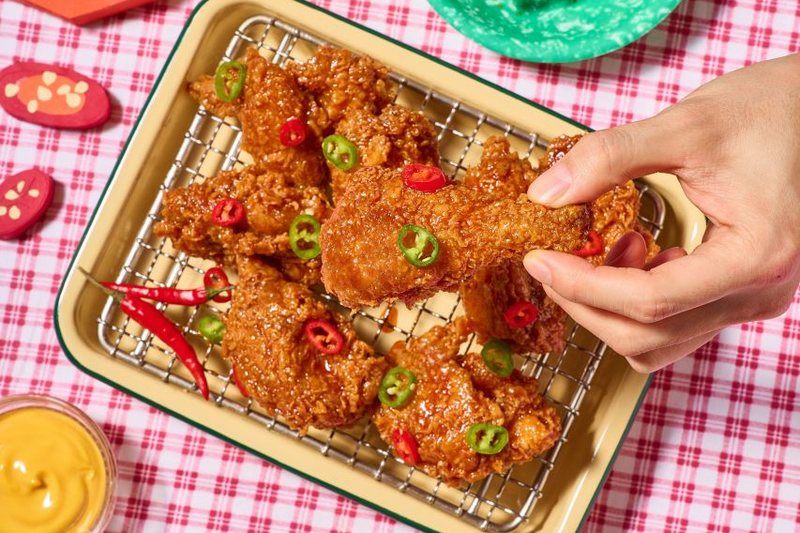
- Check the bag rules. Outside food is generally allowed, but rules vary by stadium and glass containers are banned everywhere, according to the Korea Times. Cans, banned from 2015, were allowed back in 2023. Look up the home club's list of restricted items before you go. As for what to eat, the classic order is chimaek, fried chicken and beer.
- Book early. The 2026 season had already logged 330 sellouts by October 5.
Quick answers
Why is Korean baseball cheering so loud?
Because it is organized. A cheer captain and cheerleaders lead each side from a stage in the stands, nearly every batter has his own fight song, and fans sing whenever their team is at bat.
Do you have to stand and sing at a KBO game?
Only in the cheering section, where fans are expected to stand and join in while their team bats. Elsewhere you can sit and watch, though you may end up humming along anyway.
Can you bring food and drinks into a KBO stadium?
Food, generally yes. Glass is banned everywhere, cans have been allowed again since 2023, and alcohol rules differ from stadium to stadium, so check the home team's rules first.