Why Koreans Pay to Play Games When They Have a PC at Home
A top-end gaming PC for about 1,000 won an hour, ramyeon delivered to your desk. How the PC bang built Korean esports, and how to use one.
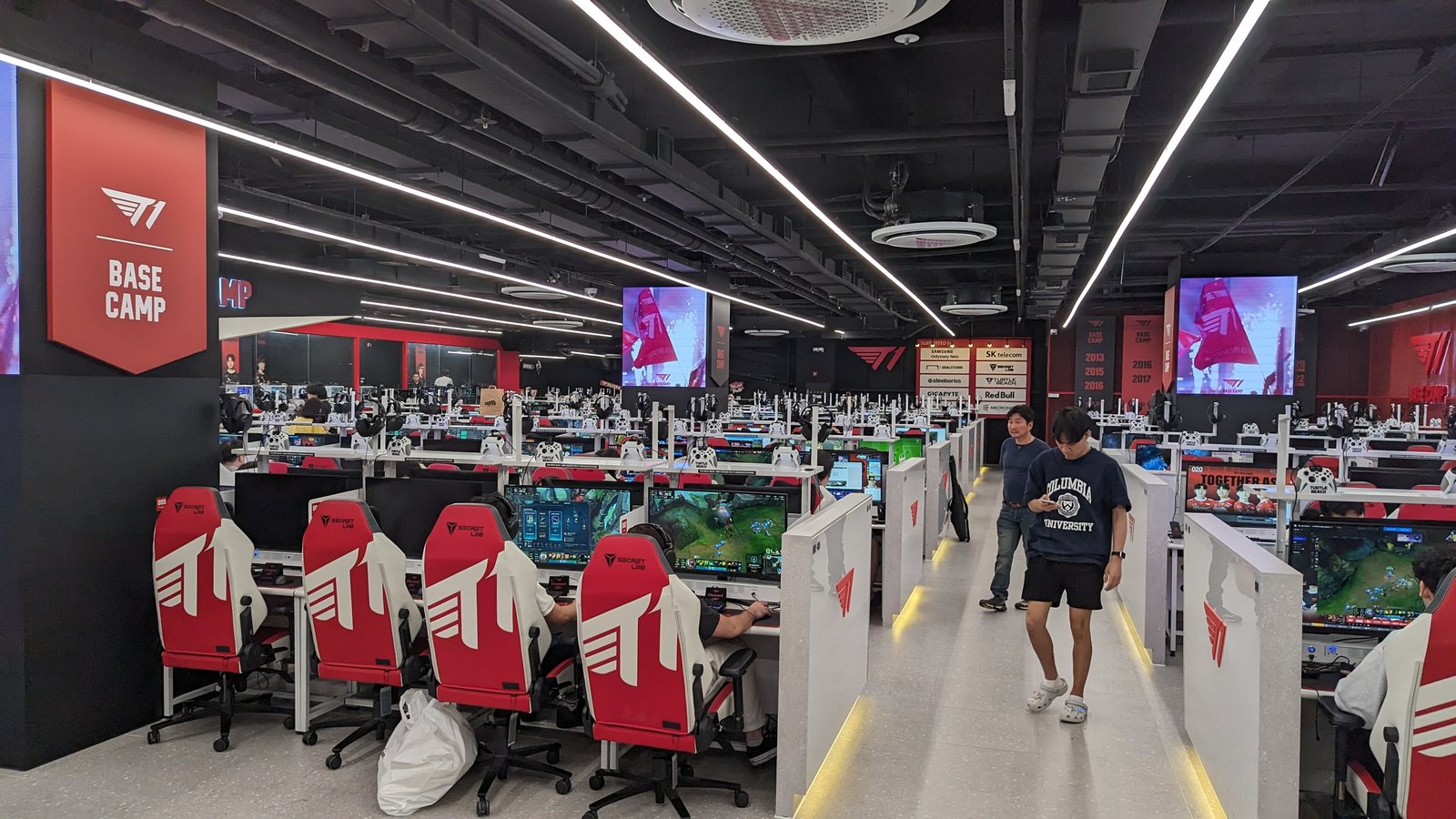
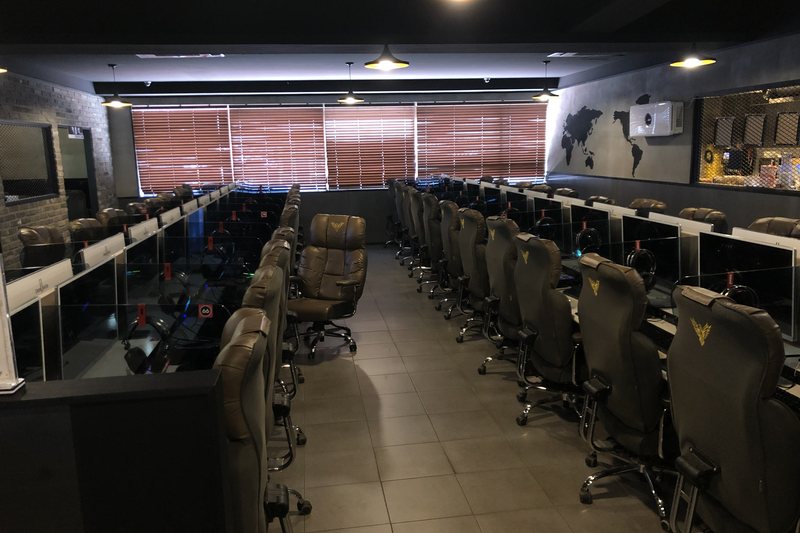
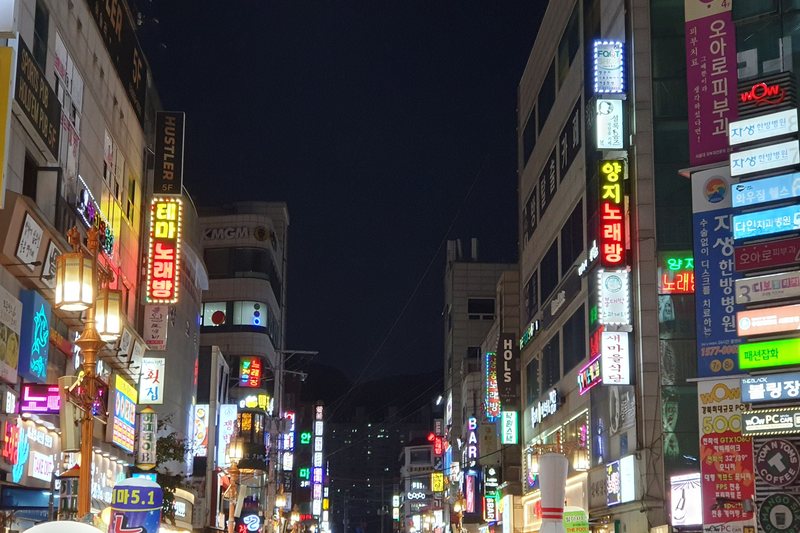
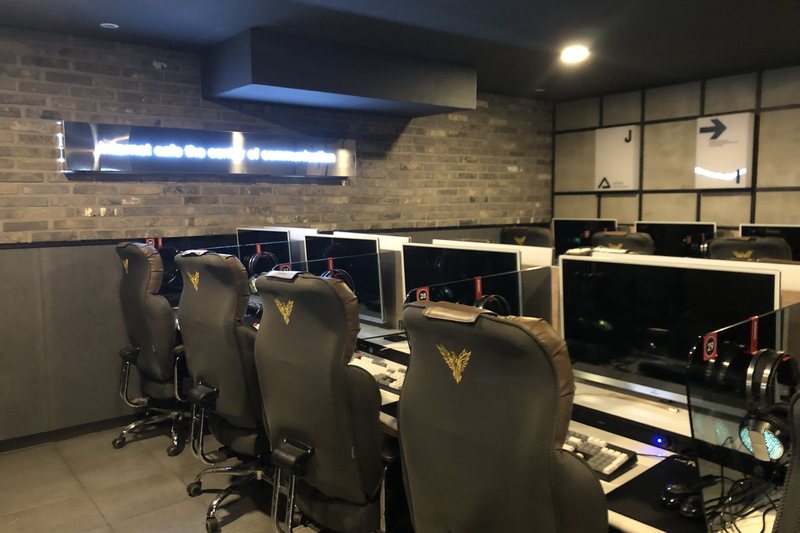
Walk past almost any university or busy subway station in Korea and look up. Somewhere on a second floor, or down a basement staircase, there will be a glowing sign that reads PC방 (PC bang, literally "PC room"). Inside: rows of gaming computers with big monitors and padded chairs, rented by the hour and often open all night. A PC bang is Korea's take on the gaming café, and for many Koreans it is simply where you go to play with friends.
So why pay to game when almost every home has a computer? Because the PC bang was never only about the machine. An hour costs about as much as a snack, the hardware is often better than what people own, some games reward you for playing there, your whole team can sit in one row, and someone will bring a bowl of ramyeon (Korean instant noodles) to your desk. For anyone who grew up in Korea after 1998, it is also a habit with a history.
From 100 shops to more than 22,000 in three years
Seoul had an experimental "electronic café" as early as 1988, but the PC bang as Koreans know it exploded at the end of the 1990s, when three things landed at once. In 1998 came StarCraft and Lineage, a Korean online role-playing game. That June, Thrunet launched Korea's first high-speed internet service, and broadband spread at a speed that suits a country famous for ppalli-ppalli, its "hurry, hurry" culture. Meanwhile, the 1997 Asian financial crisis had put many people out of work, and as the Korean IT newspaper Electronic Times later recalled, laid-off workers opened PC bangs on side streets all over the country.
The numbers still sound unreal. According to Korea JoongAng Daily, there were only about 100 PC bangs in January 1998 and 15,150 by 1999. Korea Creative Content Agency (KOCCA) data put the count at 22,548 in 2001.
Where Korean esports grew up
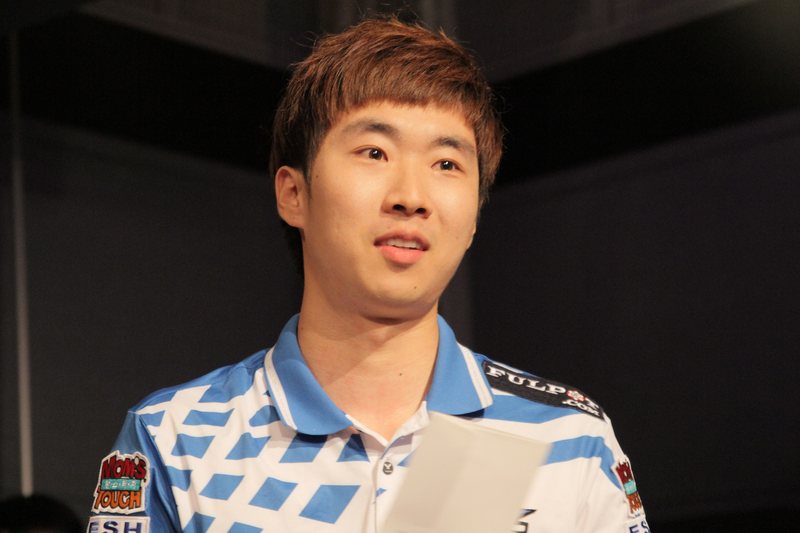
Before the arenas and the trophies, there were PC bangs. As MIT Technology Review has described, the first StarCraft competitions were informal neighborhood events held in PC bangs, where the prize might be free playing time and bragging rights. In 1999 a cartoon channel aired a tournament on TV, and organized leagues took over from there. The Korea e-Sports Association (KeSPA) traces its founding to February 2000, the same year OnGameNet, a cable channel devoted entirely to games, went on air.
Pro gamers became stars, and the PC bang became the place where everyone else chased a higher rank, or just a good night with friends. The game on most screens today is League of Legends: N Media Platform data reported by The Korea Herald gave it 36.01 percent of all PC bang playtime in 2025, far ahead of second-place FC Online at 9.06 percent.
Why Koreans still go when they have a PC at home
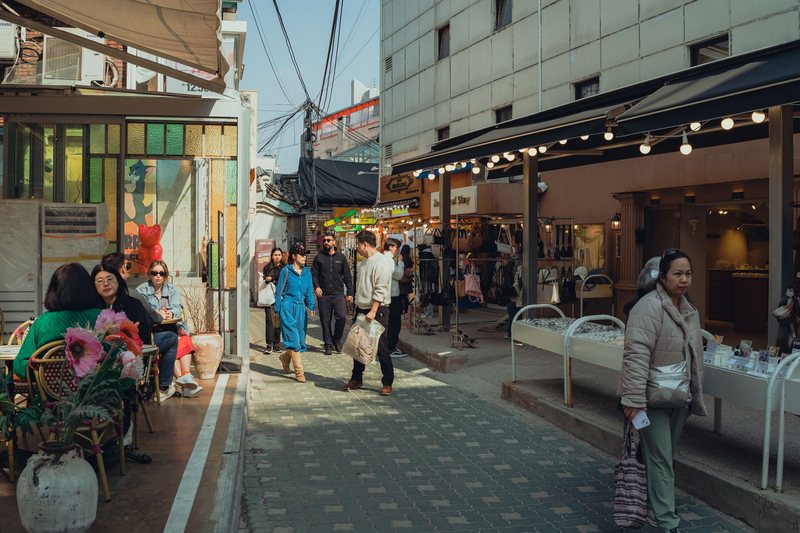
It is the question foreigners ask most. Koreans usually give a mix of these answers:
- Your friends are in the next seat. Team games are more fun when you can talk strategy (and complain) across a row of desks instead of over a headset.
- The games give PC bang perks. Publishers reward play from PC bangs. Riot Games' official Korean notices, for example, list every League of Legends champion as available, plus 20 percent extra experience points, when you play at a PC bang.
- The hardware is better. PC bangs advertise fast graphics cards, high-refresh monitors and comfortable chairs, a setup many players don't have at home.
- It is cheap, and it gets you out of the house. For roughly the price of a canned coffee, you get an hour in a space that belongs to no one's parents.
The PC bang is not what it was in 2001, though. KOCCA counted 21,549 in 2009 and 9,265 in 2021, as The Korea Herald reported, and National Tax Service figures showed 6,792 in January 2026. Even so, the 2025 Korea Game White Paper found that the industry's revenue rose 12.8 percent in 2024: fewer PC bangs, but far from a dead habit.
Ramyeon by the keyboard: the PC bang menu
Here is the part that surprises visitors most: nobody walks to a counter to order. You click the food menu on your screen, usually pay through the same system, and a staff member brings the order to your desk. Typical menus run from cup ramyeon, fiery Buldak noodles and Chapaghetti (an instant black-bean noodle) to chicken nuggets, cheese tteokbokki and iced drinks. Dishes usually cost 5,000 to 10,000 won and drinks 1,000 to 2,000 won, according to Korea JoongAng Daily.
Food is no side hustle. A KB Financial Group research institute report cited by Asia Business Daily in 2020 found that food had grown from about 10 percent of PC bang revenue to about 40 percent, and the Korea Internet PC Culture Association gave Korea JoongAng Daily the same 40 percent figure in 2022. Many Koreans will tell you, only half joking, that instant noodles somehow taste better at a PC bang than at home. (For the other place Koreans go for late-night noodles, see our story on Korean convenience stores.)
What an hour costs, and the house rules
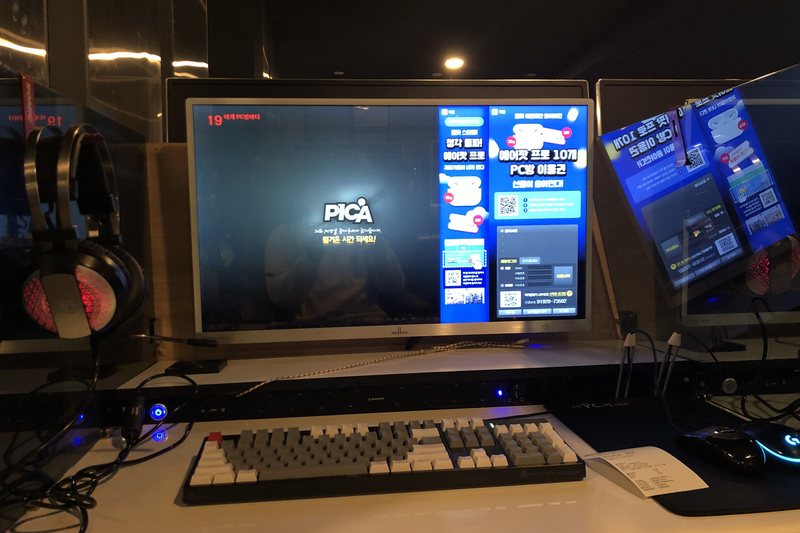
The famous price is 1,000 won an hour, a rate the Korean tech outlet Byline Network says the industry held for more than 20 years. Real prices vary with the neighborhood and the gear, and members usually pay a little less than walk-ins: a 2025 Segye Ilbo report put the 2022 average at about 1,156 won an hour for members and 1,335 won for non-members. You buy time up front and watch it count down in the corner of the screen.
Korean insider tip: Buy only the hours you will actually use. Leftover non-member time often disappears once you log off, and whether unused time is refunded is up to the owner. Members' remaining time is usually saved, but usually only at that shop, and owners can set an expiry, so ask before you top up. When you leave, press the 사용 종료 (sayong jongnyo, "end use") button in the PC bang program, because your clock keeps running until you do.
- Late nights are normal. Many PC bangs run 24 hours a day, every day of the year.
- Teenagers leave at 10 p.m. Under the Game Industry Promotion Act, anyone under 18, plus high school students of any age, may use a PC bang only from 9 a.m. to 10 p.m. A 2024 amendment lets owners ask for ID to check age and turn away anyone who refuses. It is not the old midnight "shutdown law" for under-16s, which was abolished on January 1, 2022.
- No smoking at your desk. All PC bangs went non-smoking on June 8, 2013, and fines began on January 1, 2014, after a grace period, as Korea JoongAng Daily reported. A smoker caught at a seat faces a 100,000-won fine. Some places have a sealed smoking room, but you cannot smoke where you play.
If you try a PC bang in Korea
- Pick "non-member." You don't need to register. According to The Korea Times, foreigners can choose the non-member option, 비회원 (bihoewon), on the self-service kiosk, pay and sit down.
- Expect Korean on the screen. Menus and Windows are often set to Korean. The 한/영 (han/yeong) key switches the keyboard between Korean and English.
- Order from your seat. Look for the food or order button on the screen. Some places charge right away, others when you leave.
Quick answers
Can foreigners use a PC bang in Korea?
Yes. Choose the non-member option at the kiosk, pay for your hours and sit down. No Korean membership is needed.
How much does a PC bang cost per hour?
Usually around 1,000 to 1,500 won an hour, with members paying slightly less. Newer places with premium gear can charge more.
Can teenagers go to a PC bang at night?
No. Under-18s and high school students may stay only from 9 a.m. to 10 p.m.
Why do Koreans go to PC bangs instead of gaming at home?
To sit next to their friends, use better hardware, unlock in-game PC bang perks and get food brought to the desk, all for around 1,000 won an hour.