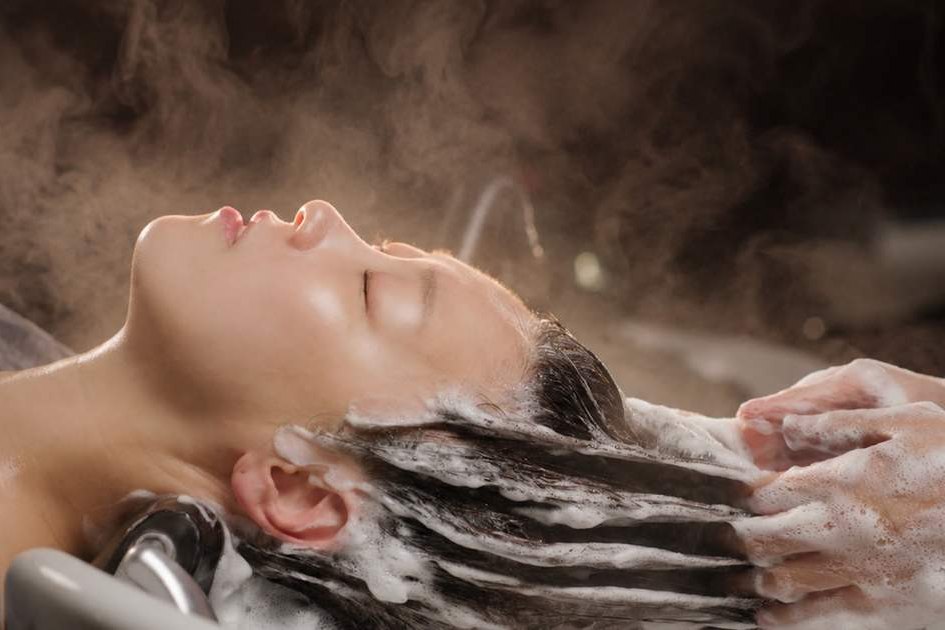
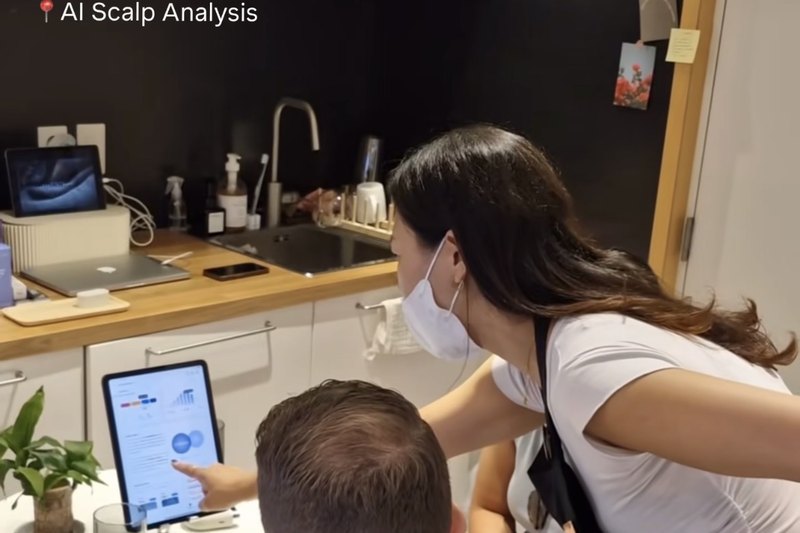
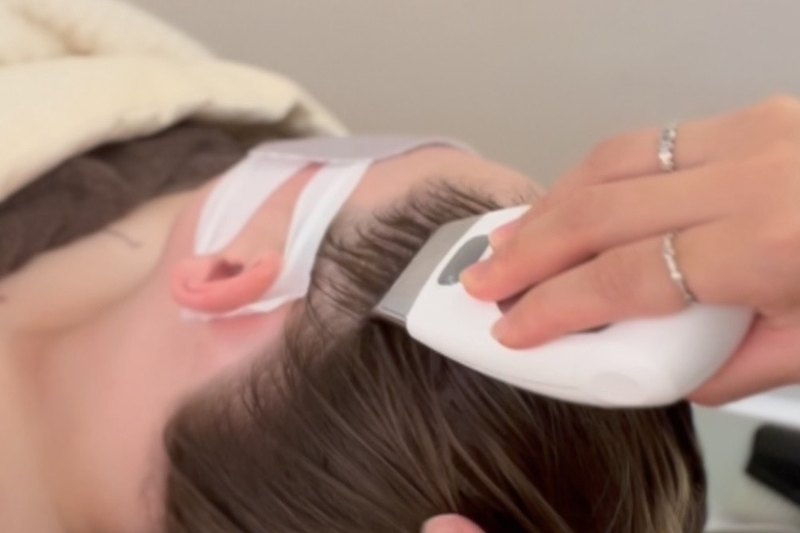
The first thing many Seoul head spas show you is your own scalp, blown up on a screen. A staff member slides a small camera across your head, and every flake and oily patch appears in sharp close-up. Then you lie back, and for the next hour or two someone exfoliates, washes, massages and rinses that scalp until it feels brand new.
That is a Korean head spa: 헤드스파 (hedeu-seupa), or in plainer Korean 두피 관리 (dupi gwalli, scalp care). It is a professional scalp-care session, usually lasting anywhere from under an hour to about two, built around a scalp check, a deep cleanse called “scaling,” a long massage and a warm rinse. Koreans have been getting scalp care for years. What is new is the line of visitors. Creatrip, a travel booking platform for foreigners, said spending on Korean scalp care through its service from January to November 2025 was up 219% on a year earlier, and that customers from the US, Canada, Australia and other English-speaking countries made up 58% of bookings, with Europeans another 19%, the Chosun Ilbo reported.
What happens in the chair, step by step
Every shop writes its own menu, and the famous “15-step” or “18-step” programs are menu names, not an industry standard. Most sessions still follow the same arc:
- A form and a scalp check. You note any concerns, then the camera does its work. This is the 두피 진단 (dupi jindan, scalp check), a step that often surprises foreign customers.
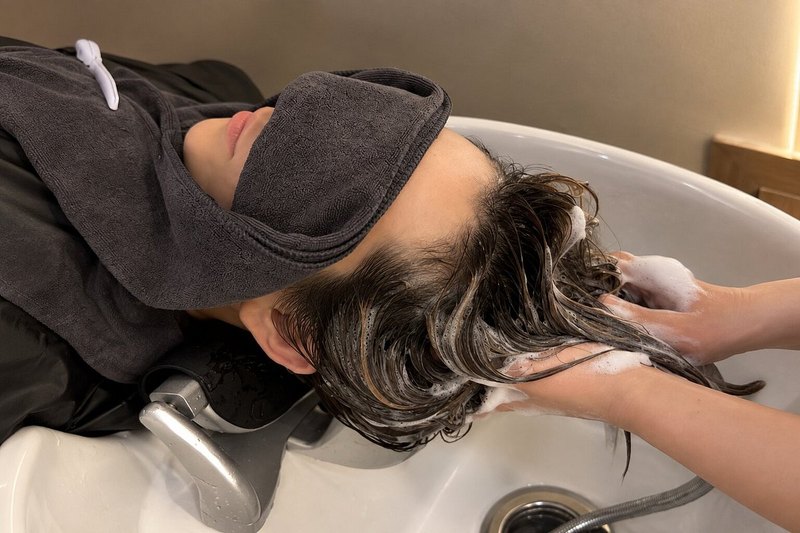
- Scaling. An exfoliating product loosens dead skin and buildup so it can be cleared away. Koreans call it 두피 스케일링 (dupi seukeilling), borrowing 스케일링, the everyday word for a teeth cleaning at the dentist.
- Shampoo and massage. Usually the longest part, with firm pressure on the scalp that often moves down to the neck and shoulders.
- Treatment. Depending on the course: steam, a scalp pack, an ampoule or a hair mask.
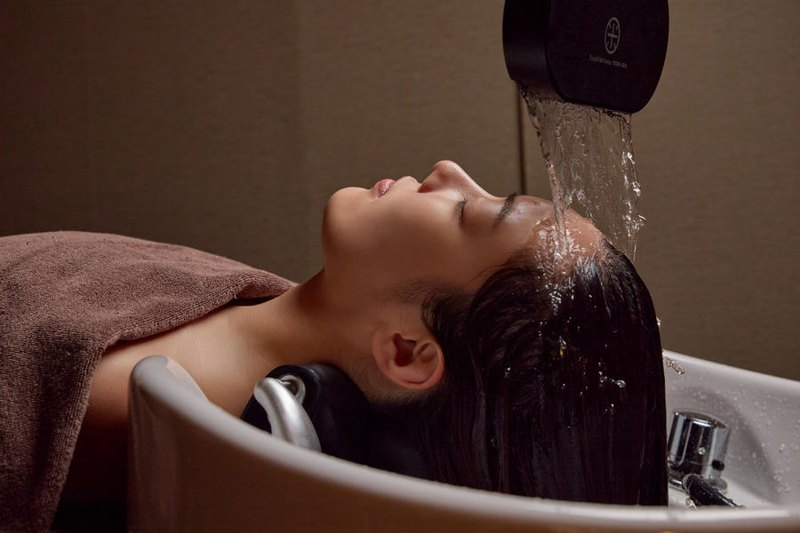
- The rinse. Warm water, sometimes poured in a steady stream across the scalp. This is the “waterfall” shot that fills so many TikTok and YouTube clips.
- Check and dry. Many shops repeat the camera check so you can compare before and after, then dry your hair. Some style it; others hand you the dryer, so ask in advance if you have plans afterward.
Length depends on the course. A short scaling course listed on VisitKorea takes 40 minutes, while a boutique spa in Seoul profiled by Cosmopolitan Korea keeps guests on the bed for about two hours.
Why visitors started lining up
Two trends met. One is what the beauty industry calls skinification: treating the scalp with the same care as the face. The other is short video. By the Chosun Ilbo's count in early 2026, there were nearly 300,000 TikTok posts tagged #scalpcare worldwide, and a head spa, with its glowing screens and streams of water, seems made for the camera.
A large Korean salon chain told Edaily that Koreans now layer tonic, ampoule and oil on the scalp the way they layer toner, essence and ampoule on the face, the same step-by-step habit behind Korea's love of sheet masks. A 24-year-old visitor from Germany told Edaily that in Korea the scalp is examined carefully and cared for step by step. The same report found that at one large salon chain's flagship in Seoul, about 80% of head spa customers were foreigners, many of whom had found it on Instagram or YouTube and went on to post their own sessions.
What Koreans themselves go for
For most Koreans, scalp care is less a holiday treat than maintenance, and the honest reason is usually 탈모 (talmo, hair loss). Preventing and managing it is by far the top reason Koreans get scalp care, the Chosun Ilbo noted, in a society known for being sensitive about thinning hair. In 2024, 241,217 people were treated for hair loss at Korean hospitals and clinics, according to Health Insurance Review and Assessment Service (HIRA) figures cited in the same report, and nearly four in ten of them were in their 20s or 30s.
That is why many younger Koreans book regular scaling before anything seems wrong, and why so many hair salons offer scalp care next to cuts, perms and color. If you combine them, shops often suggest the scalp care first, since its heat and steam can affect a fresh perm or dye. And then there is plain rest: an hour lying down, phone out of reach, while someone else does all the work.
One thing should be clear. A head spa is beauty care and relaxation, not medical treatment. It can leave your scalp feeling clean and your shoulders looser, but it does not cure hair loss, whatever a menu promises. For real hair loss, Koreans would send you to a 피부과 (pibugwa, dermatology clinic).
How to book one as a visitor
Koreans often book through the 예약 (yeyak, booking) button on Naver Map, one of Korea's go-to map apps, or by messaging a shop on KakaoTalk. For years that shut out travelers, because verification needed a Korean phone number. Since June 4, 2026, Naver lets visitors verify with a passport issued outside Korea and then book, order and pay on Naver Map from a smartphone. Menus and replies may still be in Korean, so keep a translation app handy.
Korean insider tip: Type the Korean words into Naver Map, 헤드스파 or 두피 스케일링, and you will turn up neighborhood shops an English search can miss. When you read up on a shop, be wary of glowing blog posts marked 협찬 (hyeopchan) or 체험단 (cheheomdan): both signal that the writer was given the session or paid to write. Koreans lean on the short visitor reviews and photos on the shop's Naver page instead.
Many visitors instead find a shop on Instagram or YouTube and book by direct message, or use travel booking platforms for foreigners that show courses, prices and cancellation rules in English. A few tips:
- Language: Shops that court tourists often have English-speaking staff; one scalp-care shop in Hongdae told the Chosun Ilbo that every employee speaks English plus a second foreign language. A neighborhood salon may not.
- Price: Each course has a set price in won that depends on length and extras. A January 2026 Chosun Ilbo report cited around 100,000 won for a session; longer programs cost more.
- Timing: Book a few days ahead and read the cancellation and deposit rules.
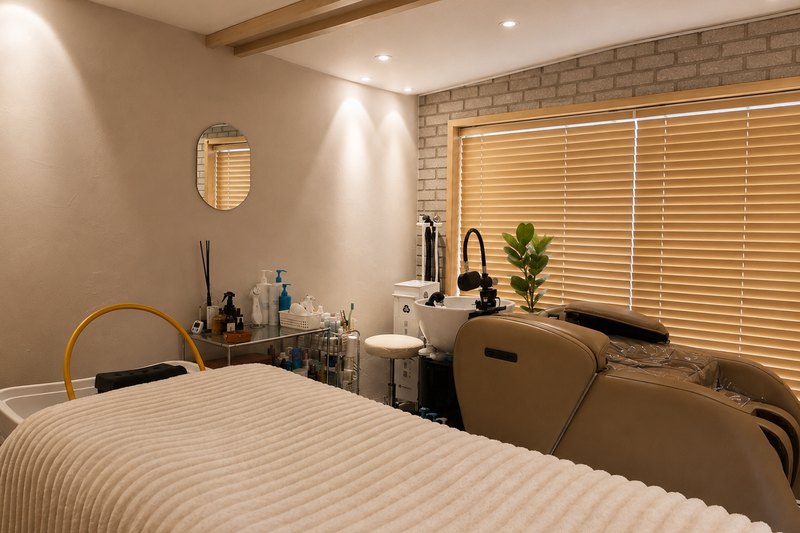
- Privacy: Some shops work in private rooms, and some advertise private spaces for women who wear a hijab. Ask when you book.
For comparison, the same Chosun Ilbo report said one scalp-care session in the United States costs about $300 to $500, or roughly 430,000 to 720,000 won, far more than the roughly 100,000 won it costs in Korea.
Before you lie back: small manners that help
- Arrive a few minutes early. There is a form to fill in, and the day's bookings often run back to back.
- Mention anything relevant, such as a sensitive or irritated scalp, a recent perm or bleach, or trouble with strong scents.
- Speak up about pressure. 세게 해 주세요 (sege hae juseyo) means “stronger, please,” and 살살 해 주세요 (salsal hae juseyo) means “gently, please.” Staff would much rather adjust than watch you grit your teeth.
- Products are optional. Shops usually sell what they used on you. Looking is free; buying is up to you.
- No tip. As across most of Korea, tipping is not expected; the price on the menu is the price.
And when your therapist finds that one tight spot, you may hear yourself sighing the most Korean reaction of all: 시원하다 (siwonhada). It literally means “cool” or “refreshing,” but the Standard Korean Language Dictionary also lists the pleasant feeling when an itch or a heavy, bloated feeling clears away. Koreans say it after a good massage, a satisfying scratch and even a steaming bowl of soup. Say it on the bed, and your therapist will know they found the right spot.
Quick answers
How long does a Korean head spa take?
Usually from under an hour to about two hours, including the scalp check and drying.
Does a Korean head spa help with hair loss?
It is beauty care, not treatment. It cleans and massages the scalp and can feel wonderful, but it does not cure hair loss. In Korea, people with real hair loss see a dermatologist.
Can I book a head spa in Korea without a Korean phone number?
Yes. You can message shops on Instagram, use travel booking platforms for foreigners or, since June 2026, verify with your passport and book on Naver Map.