One letter. That was the only thing separating a counterfeit APR collagen mask from the real one: the fake said "gollagen." The Korea Herald reported the case in November 2025. Fake K-beauty usually looks right at a glance. The details give it away.
So how do you avoid fake K-beauty products? Koreans lean on two checks, in this order: where the product is sold, and what the back of the box says. Buy from the brand's own store or a retailer the brand names, then read the Korean label, which by law must carry a batch number, a use-by date and the companies behind the product. Neither check is proof on its own, because fakers copy Hangul too. Together, they make a sloppy copy much easier to catch.
Why fake K-beauty is suddenly everywhere
The more popular K-beauty gets, the more it gets copied. Figures from Korea's intellectual property agency, reported by the Korean daily Herald Business in September 2026, show that 39,295 online listings for counterfeit cosmetics were blocked in 2025, up from 16,780 in 2023. From January to August 2026 alone, the count reached 37,544. More than half of those takedowns were in Southeast Asia, and blocks in Europe grew about seventeenfold from the same months a year earlier.
Most fakes caught so far trace back to China: 97.7% of the K-beauty counterfeits intercepted at Korea's border in 2025 had been shipped from there. In late September 2025, police in Foshan, China, raided a warehouse making copies of five trending Korean skincare brands, including Beauty of Joseon and SKIN1004, and seized about 56,000 items. In June 2026, Korea's Ministry of Food and Drug Safety (MFDS), its customs service, the intellectual property agency and the Korea Cosmetic Association signed an agreement to fight fakes together, because with a counterfeit, nobody can vouch for what is inside the tube.
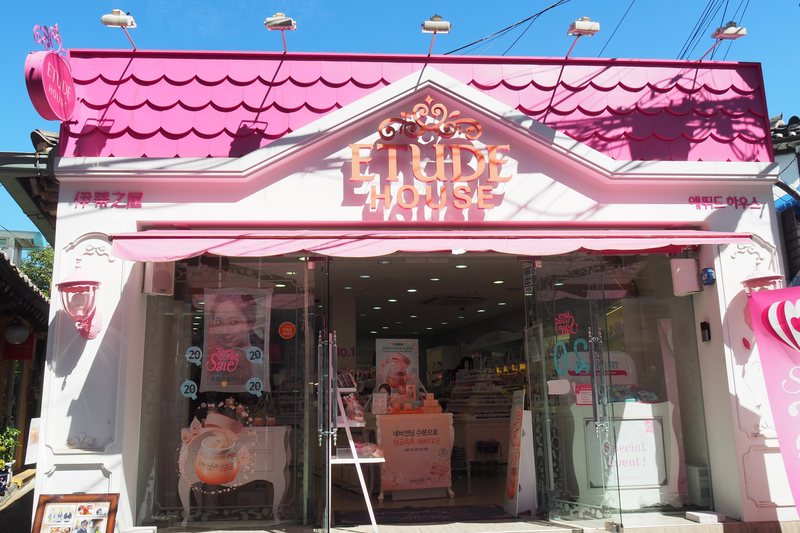
Check one: where Koreans buy
Inside Korea, the standard advice is the ordinary one: brand shops, department stores, a brand's own online mall or a big chain like Olive Young. On marketplace apps, where almost anyone can open a shop, many Koreans look for the brand's official store rather than an unfamiliar reseller. Two words come up constantly: 정품 (jeongpum, genuine product) and its opposite, 가품 (gapum, fake), or in slang, 짝퉁 (jjaktung, knockoff).
Abroad, the same logic means starting with the brand, not the marketplace. Many K-beauty brands list their official stores and authorized retailers on their global websites. COSRX's site describes cosrx.com as its only official store and links to a "Verify Authenticity" page, while Beauty of Joseon's FAQ points shoppers to its global website, its official Amazon US storefront and its authorized retailers.
Korean insider tip: If a brand's own site won't ship to you, the shortcut Koreans tend to give friends overseas is Olive Young's Global Mall (global.oliveyoung.com). It is the chain's own online store for buyers abroad, every order is shipped directly from Korea, and it delivers to more than 60 countries. One catch: it no longer ships to the 50 U.S. states or D.C., so American shoppers should stick to the brand's official storefront or the retailers it lists.
Ratings and badges are not proof. When COSRX warned UK shoppers about a wave of fakes in September 2023, the brand said counterfeits often use the same logo and Korean text, and that resellers with good reviews and even a Prime sticker can add to the confusion. It also said TikTok Shop was not an authorized seller at the time. Price can be a clue too: in September 2025, Incheon Customs caught an online seller who had imported more than 7,000 Chinese-made knockoffs and sold them for less than half the normal price.
The won figures in that case show how tempting the gap looks. Herald Business reported that the copies were firming creams faking Sulwhasoo and other well-known Korean brands, smuggled in between February and May 2025. A genuine cream cost 120,000 won; the fake sold for 50,000 won on a large open marketplace, where the seller deleted all import details from the listings and passed the parcels off as domestic shipping.
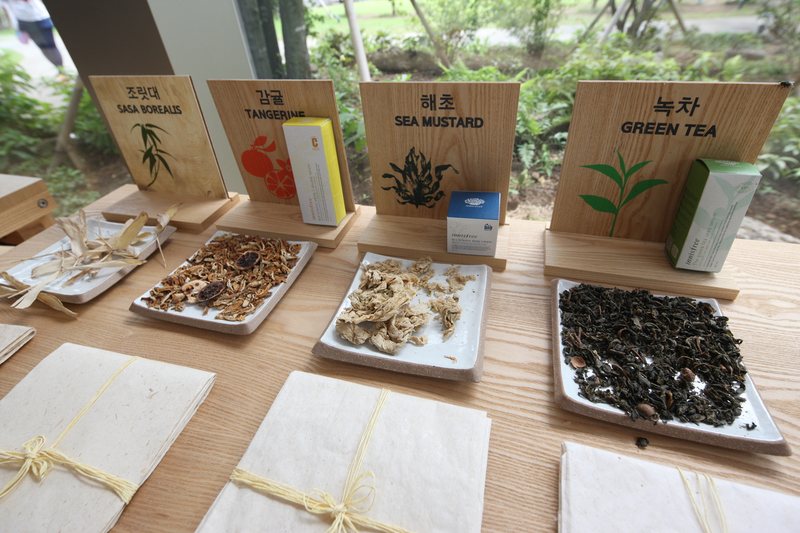
Check two: read the back like a Korean
Korea's Cosmetics Act spells out what a cosmetic sold in Korea must show on its packaging. You do not need fluent Korean to use it; a handful of words is enough, and Hangul was designed to be learned quickly. Look for these lines:
- 제조번호 (jejo beonho, batch number): a code that ties the product to one production run. The law requires it, so a Korean-market product with no batch number at all is a red flag. If the box and the container both carry one, they should match.
- 사용기한 (sayong gihan, use-by date): often a date followed by 까지 (kkaji, "until"). Some products give a period after opening instead, such as 12 months; then Korean rules also require the manufacturing date, often marked 제조 (jejo, "made").
- Company names and addresses: typically the 화장품제조업자 (hwajangpum jejo-eopja, manufacturer) and the 화장품책임판매업자 (hwajangpum chaegim panmae-eopja, the company responsible for putting it on the market).
- 전성분 (jeon-seongbun, full ingredients): the complete list, worth comparing with the one on the brand's website.
Don't panic if the manufacturer is a name you have never heard of. Many Korean brands have products developed and made by specialist contract manufacturers, with Cosmax and Kolmar Korea the best known. Korea JoongAng Daily reported in 2024 that the pair make hit products for other brands, Beauty of Joseon sunscreens and Tirtir cushions among them. The more useful test is comparison: put your box next to the brand's official photos and look for misspellings, a different font or missing lines. Copies are often careless, like that "gollagen" mask, and a missing batch number or a date that makes no sense is easy to catch once you know where to look.

The "functional cosmetic" line, and what it does not mean
Korea has a legal category called 기능성화장품 (gineungseong hwajangpum, functional cosmetics). Under the Cosmetics Act it covers products that help with brightening (미백, mibaek, literally "whitening," the legal term), wrinkle care (주름개선, jureum gaeseon), sun protection, hair color and a few other uses set by law. Each product must be reviewed by the MFDS or reported to it before it goes on sale, and its Korean label must carry the word 기능성화장품 or a mark set by the ministry.
That is especially handy with sunscreen. Because sun protection is a functional category, a sunscreen made for the Korean market normally shows the word on its label. Just don't read too much into it. It is not a medical approval or a promise that a product will suit your skin, export versions may not show it, and a fake can print it as easily as a logo.
Myths that trip up K-beauty fans abroad
- "No Korean on the box means it's fake." Not necessarily. The Cosmetics Act lets products made only for export follow the importing country's labeling rules, so some brands sell versions with English or local-language labels. Compare your box with the brand's photos for your region, not with a product sold in Seoul.
- "A barcode starting with 880 proves it came from Korea." The prefix 880 belongs to GS1 South Korea, which issues barcode numbers to companies there. But GS1 itself says a prefix does not show where or by whom a product was made, and a barcode is as easy to copy as a logo.
- "A Prime badge and five stars mean it's safe." As COSRX pointed out, a fake listing can have both. Check who the seller is, not just how the listing looks.
If you buy K-beauty outside Korea
- Start on the brand's website. Find its official store and authorized retailers, and use any authenticity check it offers.
- Keep the box. Photograph the batch number and dates when the package arrives, so you have them if you need to ask the seller or the brand.
- Trust your memory. If a repurchase looks, smells or feels different from the last one, stop using it and contact the seller and the brand.
- Check your own country's register. In Indonesia, the Cek BPOM site lets anyone search a product's notification number, and in Brazil, Anvisa runs a public lookup for regularized cosmetics.
- Shopping in Korea and unsure? Ask 정품 맞아요? (jeongpum majayo?, "Is this genuine?"). It is a normal, polite question.
Quick answers
Is K-beauty on Amazon fake?
Not automatically. Many brands run official storefronts there, but fakes have also been sold on Amazon by third-party sellers. Check that the seller is the brand itself or a retailer the brand lists on its own website.
What do 제조 and 까지 mean on Korean skincare?
제조 (jejo) means "made," so the date beside it is the manufacturing date. 까지 (kkaji) means "until," so a date followed by it is the use-by date, also labeled 사용기한. The code marked 제조번호 is the batch number.