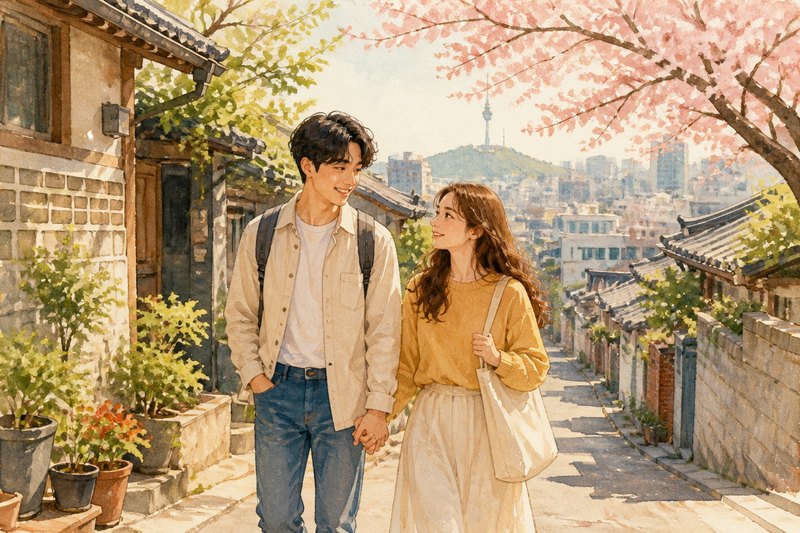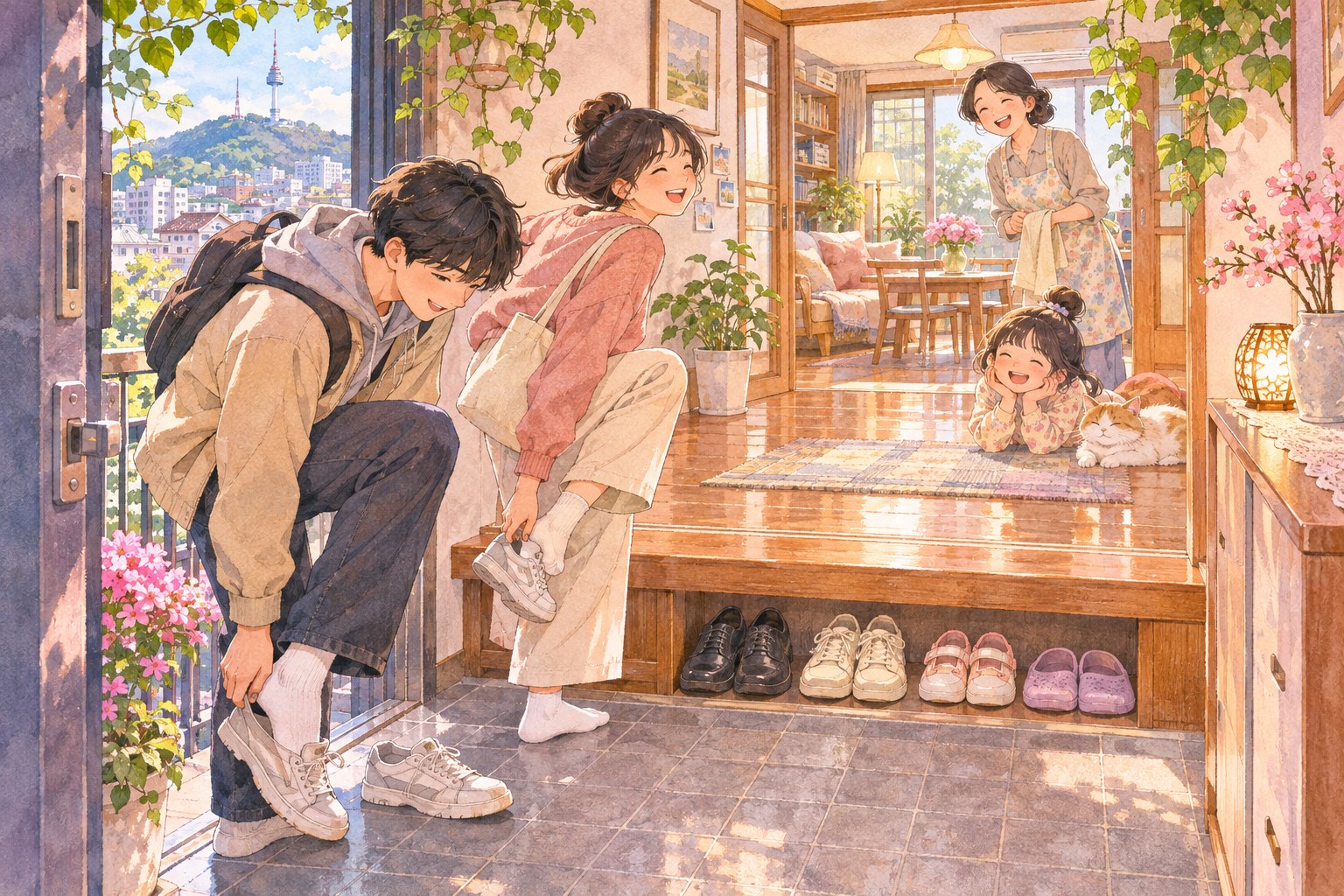
Step into almost any Korean home and the first thing you meet is not the living room. It is a small tiled square just inside the door, one step lower than the rest of the house and full of shoes. So why do Koreans take off their shoes indoors? Because in Korea the floor has never been just something you walk on. For centuries it was the sofa, the dining room and the bed, and it was heated.
Cleanliness is part of the answer, but the real key is how close to the ground Korean life has been. Take away the chairs and the beds, and a shoe on the floor stops being a small mess. It becomes a shoe on the table.
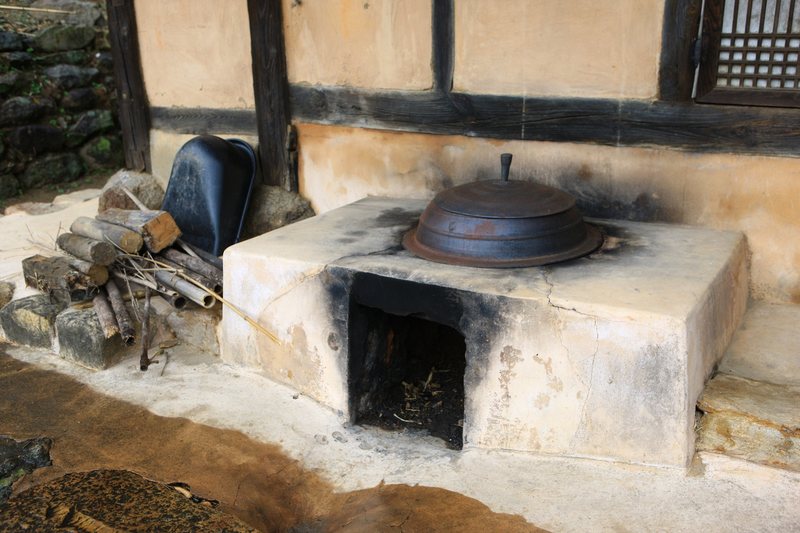
Why do Koreans take off their shoes? Start with the heated floor
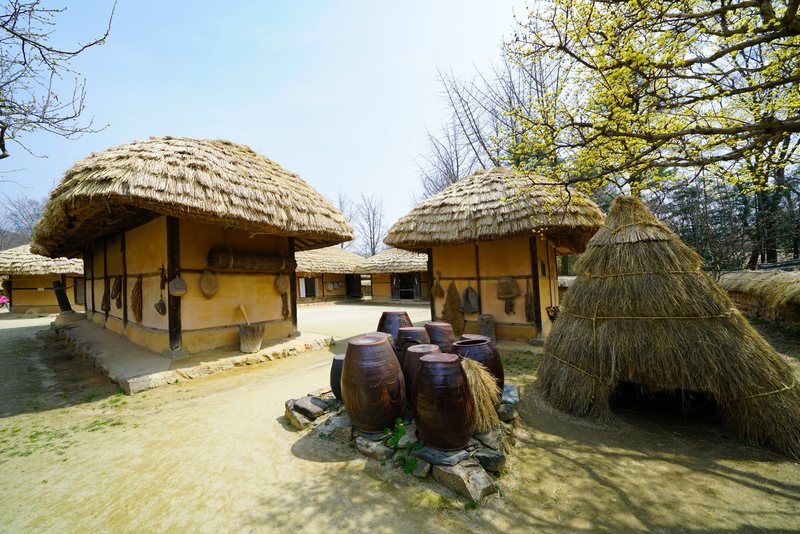
The traditional heating system is 온돌 (ondol, "warm stone"), also called 구들 (gudeul). A fire in an 아궁이 (agungi, firebox) sends heat through channels under stone slabs, warms the whole floor and leaves as smoke through a chimney. TheEncyclopedia of Korean Culture says installation surged across regions and social classes in the 17th century, and it names ondol as a main reason Koreans came to live by taking off their shoes and sitting or lying on the floor.
The firebox also sat outside the room, which kept the room itself clean, a point architecture professor Cho Jae-mo makes in a book quoted by the Korea JoongAng Daily. Warmth came with a seating order too. A Korea Heritage Service article explains that the warm end of the floor, the 아랫목 (araenmok), became the place of one's elders. The best seat in the house was a patch of floor.
Ondol is not the whole story, though. In the same JoongAng piece, Lee Keun-hye of Gachon University cautions against treating it as the single cause, and a 2012 paper by Cho pairs it with the raised wooden floor called 마루 (maru), the word this magazine is named after. Together, Cho argues, they moved Korean buildings from chair-sitting to floor-sitting and made taking off your shoes at the entrance part of the design.
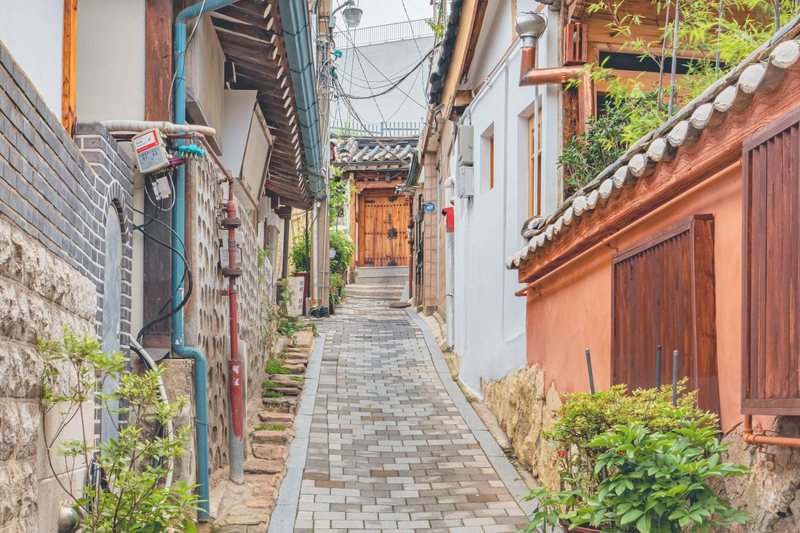
Where do the shoes go? From stone step to hyeongwan
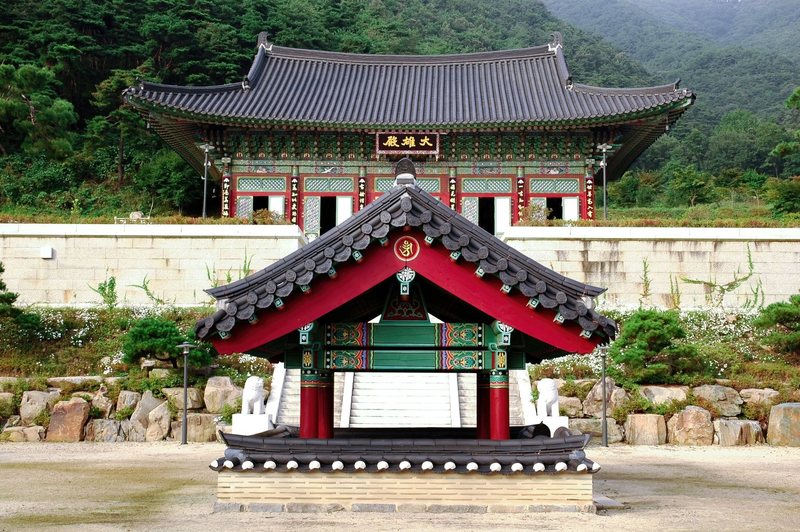
A raised floor needs a place to stop. In a traditional 한옥 (hanok), you climbed to the maru by a stone step, the 댓돌 (daetdol), and your shoes stayed on it. Cho's paper argues that "the matter of shoes" reached into architecture itself, down to the layout of Changdeokgung Palace and the way you approach a temple's main hall.
Today more than half of Korean households live in apartments, and the stone has become the 현관 (hyeongwan), the low entryway. It shares its Chinese characters with Japan's genkan and does the same job, dividing outside from inside. This is the detail newcomers miss: indoors does not begin at the door. It begins at the step. Shoes stay down on the tiles or go into the 신발장 (sinbaljang, shoe cabinet), and you step up without them.
Korean insider tip: Treat the tiled hyeongwan as part of the street. Once your shoes are off, don't step back down onto it in your socks and then walk inside, because you'd carry the grit in with you. If you forgot something by the door, slip your feet halfway into your shoes first. And if you're in sandals with bare feet in summer, keep a pair of socks in your bag and pull them on at the door before visiting an older person's home.
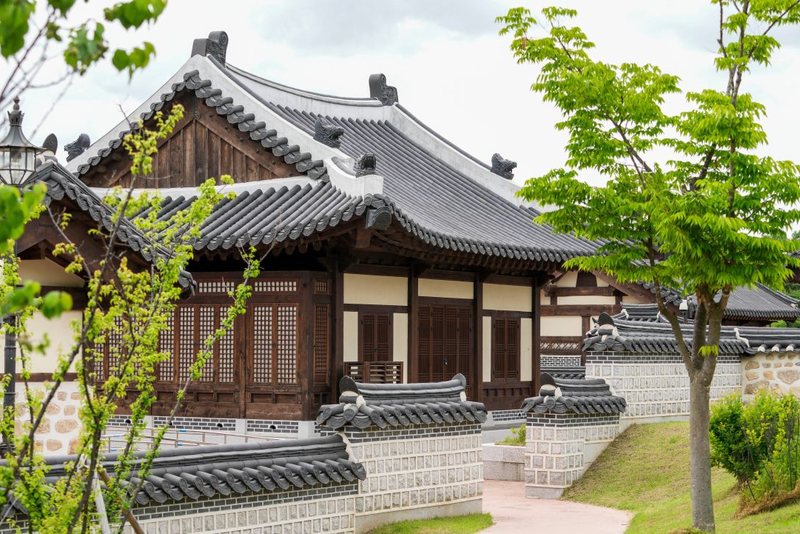
Why do Koreans sit on the floor when they own a sofa?
Fire has given way to hot-water pipes and electric panels, but the warm floor survived, and ondol culture became a National Intangible Heritage on April 30, 2018. Sofas, by contrast, only spread widely in the late 1980s and 1990s, according to the Korea JoongAng Daily, which notes that in reality shows about celebrities' homes the sofa is often just a backrest. People sit on the floor and lean against it. Many eat there too, at a low folding table. Even on a chair, plenty of Koreans end up sitting cross-legged.
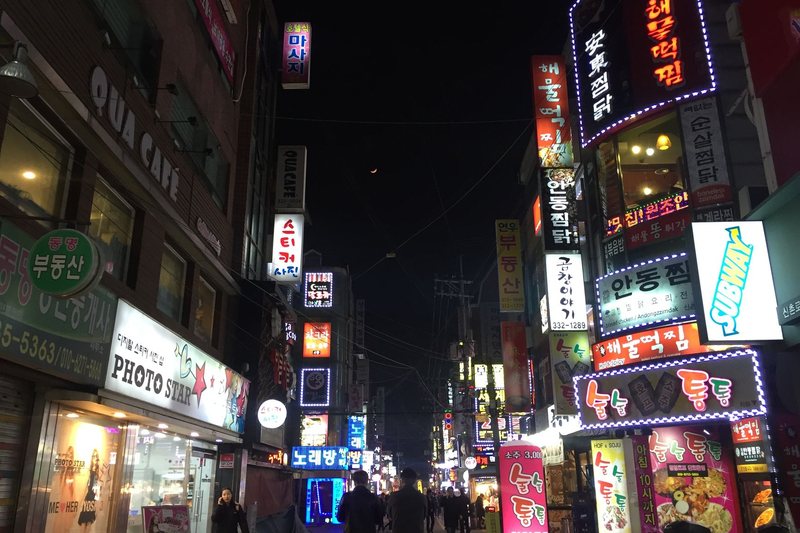
Do you take off your shoes in Korean restaurants?
Only sometimes. Not every Korean place forbids shoes, and most restaurants, cafés and shops keep them on. The signal is the floor: a shoe rack at the entrance or a floor that rises a step means shoes off. In a 좌식 (jwasik, floor-seating) restaurant, you leave them on the shelf, take a cushion (방석, bangseok) at a low table and sit in 양반다리 (yangban-dari), the cross-legged pose named after the Joseon-era elite. The table manners from our Korean barbecue guide still apply, only closer to the ground.
These rooms are shrinking. The Korea Times reported in 2018 that a growing number of restaurants were switching to chairs. Staff mentioned back and knee pain, diners mentioned skirts and tables for two, and a waiter at a Michelin-selected restaurant said only families with babies still wanted the floor. Local governments now help pay for the switch: Wando County offered to cover half the cost in 2025.
Are bare feet rude? Socks, slippers and the three-stripe office
At home, no. The Korea Herald says Koreans generally go barefoot in their own homes, though soft indoor slippers are increasingly common. As a guest, no rule demands socks, but clean ones without holes are the safe choice, especially in an older person's home. Temples are stricter: the official Templestay site says bare feet are not allowed, and Korea.net notes that shoes are left facing outward.
Slippers have their own borders. The rubber pair at the bathroom door belongs to that often-wet floor, and the Herald warns that it is not interchangeable with indoor slippers.
The habit also leaves the house. Students have long changed into indoor shoes at the school entrance, and a 2017 JoongAng Ilbo feature reported that most middle and high schools used 삼선 슬리퍼 (samseon seullipeo, three-stripe slippers) as indoor shoes. It also found an office worker keeping a pair under the desk.
The one night shoes were brought inside
Folk belief offers one glorious exception. On the night of Seollal, the Lunar New Year, a ghost called 야광귀 (yagwanggwi) was said to come down and try on people's shoes, walking off in any pair that fit. According to the National Folk Museum of Korea, the owner could expect a bad year. So families hid their shoes in the room or turned them over, and hung a sieve on a wall or gate. The ghost would stop to count the holes, lose track, start again and keep counting until the rooster crowed. The Encyclopedia of Korean Culture cites the tale from the Gyeongdo japji, a Joseon-era record of Seoul customs.
The one time shoes were welcome indoors, it was for their own protection.
If you are invited to a Korean home
In 2024, a tip in a New York Times party guide calling it rude to ask guests to remove their shoes drew pushback from Korean and Korea-based communities. In Korea, the rude move runs the other way.
- Wear shoes that slip off easily and clean socks without holes.
- Stop at the step. Take your shoes off on the low tiled floor, then step up.
- Line up your shoes neatly, side by side. Turning them toward the door is a nice touch.
- Accept slippers if your host offers them, but leave the bathroom pair in the bathroom.
- Ask if you are not sure: 신발 벗어야 돼요?
- Hand over any gift with two hands.
Quick answers
Do Koreans wear shoes in the house?
No. Shoes come off at the hyeongwan by the front door. Inside, people go barefoot or wear socks or indoor slippers.
Why do some K-drama characters wear shoes indoors?
Fans sometimes wonder whether rich Koreans skip the rule after seeing a character walk into a bedroom in shoes. We know of no such custom. The likeliest answer is costume, not etiquette, so copy real life rather than the drama.
How do you say "take off your shoes" in Korean?
The polite way is 신발 벗으세요 (sinbal beoseuseyo). A host may also say 신발 벗고 들어오세요 (sinbal beotgo deureooseyo, "Please take off your shoes and come in").
Getting there
Changdeokgung Palace 창덕궁
- Subway
- Line 3, Anguk Station, Exit 3 (about 5 min walk); or Lines 1, 3 and 5, Jongno 3-ga Station, Exit 7 (about 10 min). Bus: Seoul Donhwamun Traditional Performing Arts Center stop (109, 151, 162, 171, 172, 272, 710, 7025)
- Hours
- Now 9:00–17:30 (November–January); 9:00–18:00 February–May and September–October; 9:00–18:30 June–August; last entry 1 hour before closing; closed Mondays (open if a public holiday, then closed the next non-holiday)
- Admission
- Adults (foreigners 19–64) 3,000 won; free in hanbok. Huwon (Secret Garden) tour 5,000 won extra, palace ticket also required
- Tip
- Huwon is guided by time slot only: book online from 10:00 six days ahead, or buy on site from 9:00 on the day
Checked on November 5, 2026; confirm on the official site before you go.