Pay at a convenience store in Seoul and watch how your card comes back. Quite often the clerk returns it with both hands, or with one hand while the other lightly touches the wrist, as if steadying an invisible weight. A new employee passing a report to a manager does the same. So does a teenager taking a present from a grandparent.
So why do Koreans give and receive with two hands? It is a sign of respect. Handing something to an older or more senior person with a single hand can come across as careless, and as the Korea Herald points out, the rule covers almost anything that changes hands. The touch on the forearm is the everyday shortcut, and it counts as two hands. What decides how many hands you need is who is standing on the other side.
What two hands say in Korea
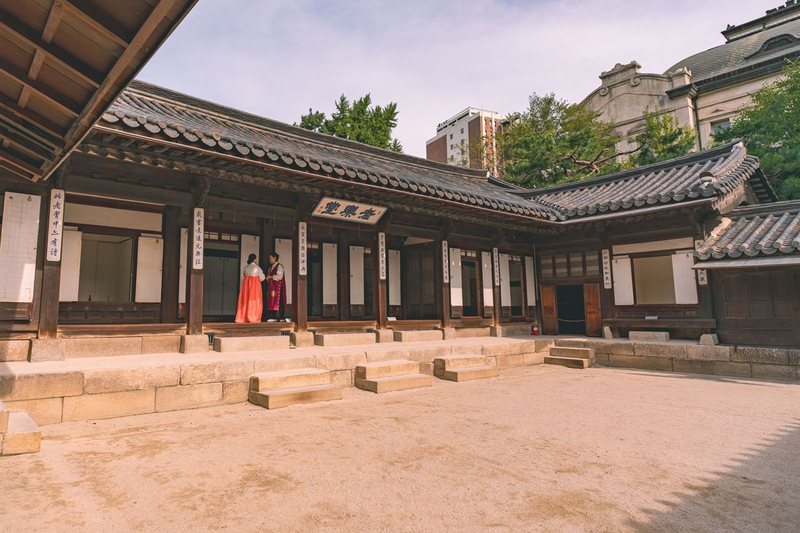
The habit grows out of Korea's Confucian respect for age and rank, the same instinct behind bowing and the careful ritual of pouring drinks. The hands and the language even work as a pair. Korean has an everyday verb for "to give," 주다 (juda), and a humble one, 드리다 (deurida), used when the person receiving is someone you look up to. You juda a snack to your little brother; you deurida it to your grandmother.
Two hands are the body's way of saying deurida. They slow the moment down and show that the object, and the person taking it, have your full attention. A one-handed pass to your boss is hardly a scandal, but it can feel offhand, a bit like answering a formal question with "yeah."
The hand on the forearm, explained
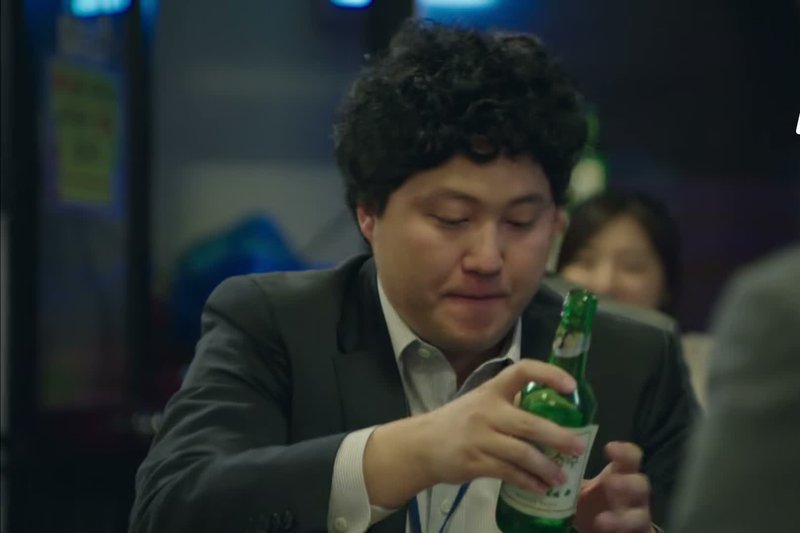
Holding everything with two full hands isn't always practical, so there is a lighter version. The right hand gives or takes while the fingertips of the left rest on the right wrist or forearm; some people tuck the left hand near the right elbow instead. When pouring a drink, many simply place the left hand flat on their chest. All of these read as "two hands."
Where did the touch come from? One clue sits in the Sohak (Lesser Learning), a Confucian book of manners that shaped Korean etiquette for centuries. Material from Korea's National Research Institute of Cultural Heritage, published on Korea.net, explains that its rules told a person pouring a drink to hold the bottle in the right hand and use the left to hold back the right sleeve, so the cloth would not touch the food. The Encyclopedia of Korean Culture describes the same care about sleeves at the table. With the wide sleeves of traditional dress, that left hand had a real job.
A popular explanation holds that today's light touch is an echo of that sleeve. It is a plausible theory, but no record draws a straight line between the two, so treat it as an educated guess rather than settled history.
Who uses two hands for whom
The custom runs upward: younger to older, junior to senior, student to teacher, employee to boss, and just about everyone to a friend's parents. Most Korean children pick it up at home long before they ever see a business card.
It does not have to run the other way. An older or higher-ranking person can hand something to a younger one with a single hand, and nobody finds that rude; the Korea Herald's guide to company dinners notes that seniors may pour for, or take a drink from, younger colleagues one-handed. A grandparent passes a gift with one hand, and the grandchild takes it with two. It looks lopsided to outsiders, but to Koreans it is simply how respect is spelled out, and one reason Koreans care so much about exactly how old everyone is.
Between people of about the same age, things relax. A traditional drinking rule recorded by the same heritage institute allows one-handed pouring and receiving when the age gap is under five years, while people who speak formally to each other still use both hands. That makes a handy rule of thumb: if you use polite speech with someone, lean toward two hands.
Business cards, drinks, gifts and change
- Business cards: Offer yours with both hands, turned so the other person can read your name, and take theirs the same way. Traditionally the junior person offers first. Look at the card for a moment before putting it away; stuffing it straight into a pocket can seem dismissive.
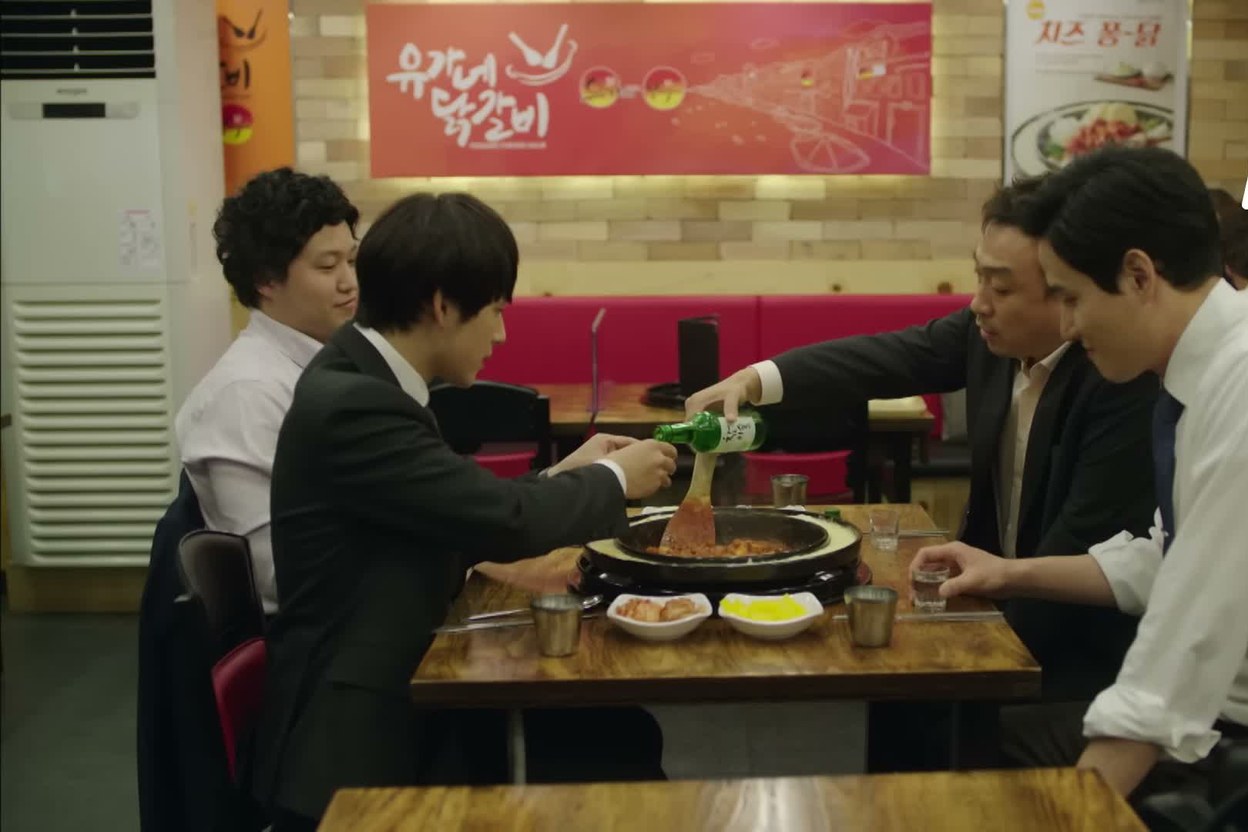
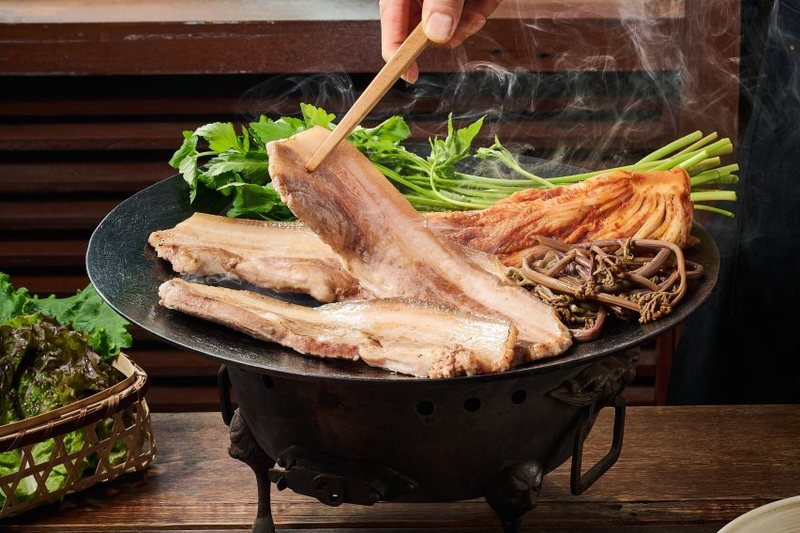
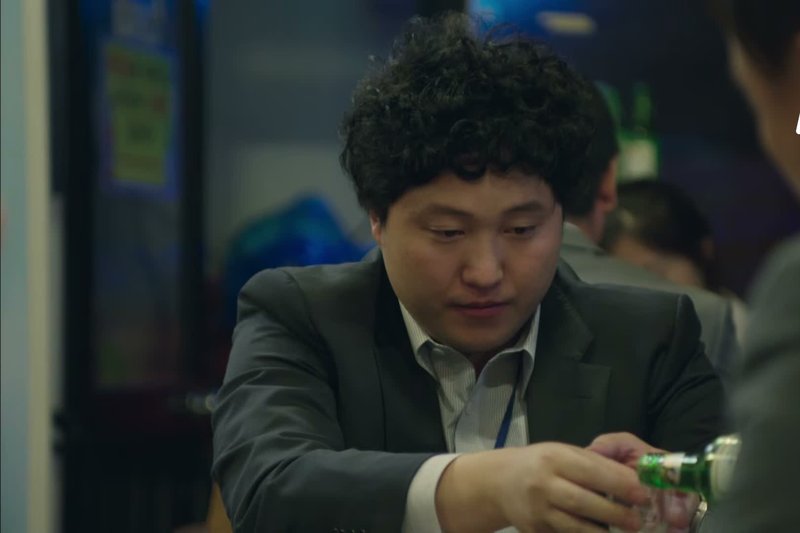
- Drinks: When you pour for someone older or hold out your glass to them, use two hands or the hand-on-chest version. The rest of the choreography, from the turned head to the empty glass, is in our guide to drinking with elders in Korea.
- Gifts and envelopes: Present gifts with both hands and accept them the same way. That includes the envelope of cash handed over at the front desk of a Korean wedding.
- Handshakes: The older or higher-ranking person usually offers a hand first. The junior shakes with the right hand, often with the left supporting the forearm, and many add a slight bow.
- Money at the counter: Day to day, most people pay one-handed, and when you pay by phone or insert the card yourself, the question barely comes up. Many shop staff still hand back cards and receipts with both hands or the forearm touch, especially to older customers.
Korean insider tip: Two hands are only half the courtesy; the other half is making the object easy to take. Turn a document so they can read it, and pass scissors or a knife handle first, never the point. Match their level, too: sit down to hand something to an elder seated on the floor, but stand for someone on a chair. In a meeting, leave the business cards you receive lying on the table in front of you until it ends.
When one hand is perfectly fine
Koreans do not go through life with their hands glued together. One hand is normal with close friends, people your own age, anyone younger, and whenever you are in a rush, like passing a menu across a crowded table or grabbing a receipt while juggling bags. If you are with someone older and only one hand is free, a quick touch of the other hand to your wrist, or just a small nod, does the job.
The habit worth dropping around elders is handing things over with the left hand alone. In this etiquette the right hand gives and the left hand supports, so a lone left hand reads as the most casual option of all. Among friends, nobody notices which hand you use.
And if you are visiting, relax. Koreans don't expect foreigners to know every rule, but they do notice when you try, and a two-handed thank-you usually earns a warm smile.
Before you meet a Korean elder or boss
- Do give with both hands, or with the right hand while the left touches your forearm, whenever the other person is older or more senior.
- Do receive the same way, especially gifts, business cards and drinks.
- Do wait for the senior person to offer a handshake first.
- Don't hand things to elders with only your left hand.
Quick answers
Is it rude to use one hand in Korea?
With older or senior people it can seem careless, so two hands, or one hand with the other touching the forearm, is the safe choice. With friends your age, younger people or a busy cashier, one hand is fine.
Why do Koreans touch their arm when they hand you something?
It is a shortcut for using two hands and shows the same respect. A popular theory links it to old table manners in which the left hand held back a wide sleeve while serving.
Do older Koreans use two hands with younger people?
They don't have to. The custom runs from younger to older and junior to senior, so a senior can hand things to a junior with one hand without seeming rude.
Do I need two hands at a convenience store?
Nobody expects it. Many clerks return your card with two hands as a courtesy, and returning the gesture is a nice touch, but paying one-handed is completely normal.