Two Hands and a Turned Head: Drinking With Elders in Korea
Why Koreans pour with both hands, look away to sip and never fill their own glass, and how a new generation is easing the rules.
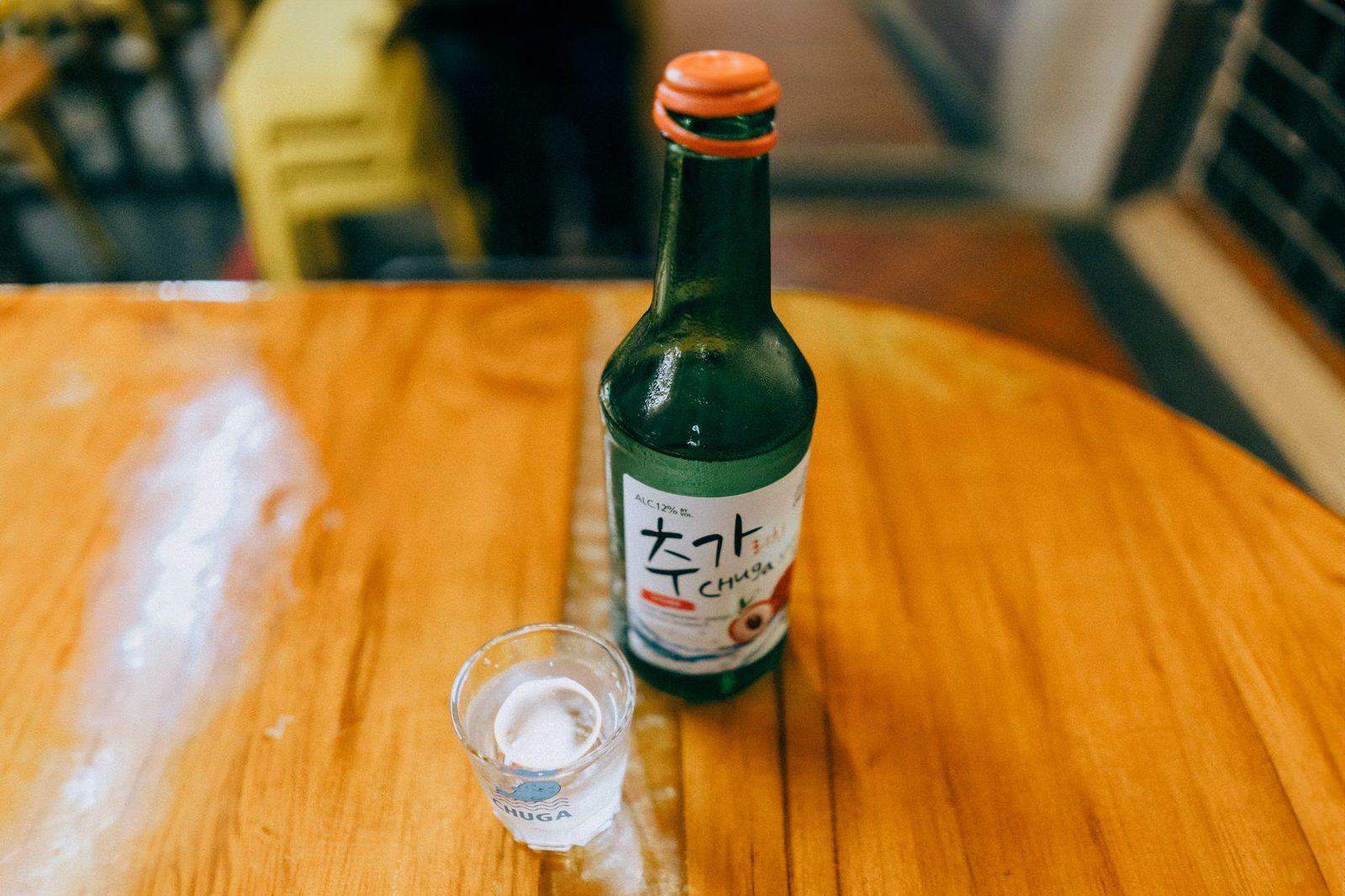
Sit down at a Korean table with a green bottle of soju and you will notice a small piece of choreography. The youngest person reaches for the bottle first. Glasses are held out with two hands. Someone turns slightly to the side before taking a sip. Nobody fills their own glass, yet nobody's glass stays empty for long.
None of this is random. In Korea, drinking together, especially with someone older or more senior, is also a way of showing respect. The core rules are simple: pour and receive with two hands, turn your head away from elders when you drink, don't pour your own glass, and let the most senior person set the pace. Here is what each one means, and how much of it still matters today.
Respect, poured with two hands
Koreans sometimes call drinking manners 주도 (酒道, judo, "the way of drinking," no relation to the martial art). The Encyclopedia of Korean Culture describes traditional drinking etiquette as rooted in respect for elders: you received a cup from an elder with a bow, offered drinks with both hands and a respectful posture, and never drank before the elder had raised his cup. Someone who could not drink was expected to simply touch the cup to their lips and set it down.
A common saying sums up the spirit: 술은 어른에게 배워야 한다 (sureun eoreun-ege baewoya handa), "You should learn to drink from your elders." The idea is that manners, and moderation, are learned at a table where someone is looking out for you.
In practice, that respect shows up first in your hands. When you pour for someone older, hold the bottle in your right hand and touch your left hand to your right forearm or wrist, or rest it lightly on your chest. When an elder pours for you, hold your glass in your right hand, support the bottom with your left, and lift it slightly toward the bottle. A small nod of thanks completes the gesture.
The same logic applies to the toast. When glasses clink (Koreans say 건배, geonbae, "cheers," or the more casual 짠, jjan), it is polite to hold your glass a little lower than the elder's. Among friends of the same age, one hand is perfectly fine. Nobody expects ceremony from your college roommate.
Turn your head, not your back
This is the rule that surprises visitors most. When you drink in front of someone older or more senior, turn your head slightly to the side, away from them, and take your sip. Some people also cover the glass with their free hand. The Encyclopedia of Korean Culture describes the traditional version as turning the body so the cup is shielded from the elder's view.
The reasoning many Koreans give is that drinking face-to-face with someone you respect feels too casual, so you look away as a small act of deference. It doesn't need to be dramatic. A gentle quarter-turn is enough: you are not hiding, just being polite.
Your glass is someone else's job
In Korea, you generally don't pour your own drink, a habit called 자작 (jajak). A folk saying even claims that pouring for yourself brings bad luck, in some versions to the person sitting across from you. Instead, everyone keeps an eye on everyone else's glass. When you spot an empty one, offer to fill it, and someone will soon return the favor.
Two related habits:
- Wait until the glass is empty. Topping off a half-full glass, 첨잔 (cheomjan), is usually avoided. Many Koreans connect it to ancestral rites (제사, jesa), where wine is added to a cup offered to the spirits of the dead, which is not something you do for the living.
- The first glass is shared. Many groups drink the first glass together right after the opening toast, often emptying it in one go. After that, people usually drink at their own pace.
How to say no gracefully
Turning down a drink is completely acceptable today; the trick is doing it smoothly. The simplest signal is to leave your glass full, since a full glass means nobody needs to refill it. You can still accept a pour from an elder with two hands, raise your glass for the toast and take a token sip, much like the old custom of touching the cup to your lips.
Useful lines include 술을 잘 못 마셔요 (sureul jal mot masyeoyo, "I'm not much of a drinker") and 차를 가져왔어요 (chareul gajyeowasseoyo, "I drove here"). Driving is a reason nobody argues with: since June 25, 2019, Korea's legal blood-alcohol limit for drivers has been 0.03 percent. Filling your glass with soda or water for the toasts is common too.
One custom you may still see but needn't join is 잔 돌리기 (jan dolligi), passing a single glass around the table. Critics in Korea have long pointed out that it pushes people to drink more than they want and spreads germs, and it fell further out of favor during COVID-19.
The company dinner is changing
For decades, 회식 (hoesik), the after-work team dinner, was where these rules were tested, often late into the night and often with pressure to keep drinking. That culture is shifting. Since July 16, 2019, Korea's Labor Standards Act has prohibited workplace harassment, and the Ministry of Employment and Labor's guidance lists forcing someone to drink or to attend company dinners against their will as an example.
Many workplaces have also embraced a "119" rule promoted by public health campaigns: one kind of drink, one round, finished by 9 p.m. Younger workers have been especially vocal. In a 2021 JobKorea survey reported by The Korea Times, 44.9 percent of employees in their 20s and 30s said they wanted after-work get-togethers to stay off the calendar even after the pandemic. Today a team dinner might be a lunch, a movie or a shorter meal with an early exit. The two-handed pour has survived; the pressure to drink, much less so.
If you visit Korea
- Do use two hands when pouring for, or receiving from, anyone older than you, including your boss or a friend's parents.
- Do turn slightly away when you sip in front of elders. A small turn is plenty.
- Do watch other people's glasses and offer to refill the empty ones.
- Don't fill your own glass when drinking with elders, and don't top off half-full glasses.
- Don't feel obliged to drink. Leave your glass full and use a polite line instead.
- Know the law: the legal drinking age is 19, counted from January 1 of the year you turn 19, and drunk-driving rules are strict.
Visitors are rarely expected to get every detail right. Most people simply appreciate the effort, and a two-handed pour is the easiest way to show it.
Quick answers
Why do Koreans turn their heads when drinking?
It is a sign of respect. When drinking with someone older or more senior, Koreans turn slightly away so they are not drinking face-to-face with that person.
Is it rude to pour your own drink in Korea?
Around elders, yes. It is better to let someone else pour for you and to pour for them in return. Among close friends, the rule is much more relaxed.
How do you politely refuse a drink in Korea?
Leave your glass full, take a token sip for the toast, and say something like 술을 잘 못 마셔요 ("I'm not much of a drinker"). Most people will understand.
Sources
- 술 (Alcohol and drinking etiquette) — Encyclopedia of Korean Culture
- 직장 내 괴롭힘 판단 및 예방·대응 매뉴얼 (Workplace harassment manual) — Ministry of Employment and Labor
- On working from home, no 'hoesik,' young workers prefer COVID-era work culture — The Korea Times
- 권커니 잣거니 하는 미풍양속?…이젠 술 마실 때 '수작' 부리지 말자 — Kyunghyang Shinmun
- Toughened DUI law to come into effect June 25 — The Korea Herald