Picture your first afternoon in a Seoul cafe. You finish your latte and wait for someone to clear the table. Nobody comes. Then you notice the couple next to you carrying their tray to a shelf by the counter, tipping their leftover ice into a sink and walking out. Everyone just knows.
Korean cafe etiquette comes down to a few quiet rules: order and pay at the counter or a kiosk before you sit, wait for the buzzer, buy one drink per person, take a mug if you are staying, and bring your tray back. Most of it follows from two facts: the typical Korean cafe is a tiny business, and what you are really paying for is the seat.
Pay first, then wait for the buzz
Nobody brings a menu to your table. You order at the counter or at a 키오스크 (kioseukeu, a self-order touchscreen) and pay on the spot. Then you get a 진동벨 (jindong-bel, a vibrating buzzer), or a number that flashes on a screen when your drink is ready. The first thing staff ask is 드시고 가세요? (deusigo gaseyo?, “Having it here?”), and your answer decides your cup.
Korean insider tip: Keep your receipt. In cafes inside office or shopping buildings, the restroom is often out in the hallway behind a keypad lock. The door code, and sometimes the Wi-Fi password too, tends to be printed at the bottom of the receipt or posted by the counter. Kiosks also ask 매장 (maejang, for here) or 포장 (pojang, to go), usually on the very first screen: tap 매장 if you want a mug.
The self-service style makes sense once you see who runs these places. More than 84 percent of Korea's coffee shops in 2022 had four or fewer staff, according to Statistics Korea figures reported by Korea JoongAng Daily. There is no bill at the end, either: as our story on tipping in Korea explains, the price on the board is the whole price, with no service charge and no tip.
One drink per person: the seat comes with the cup
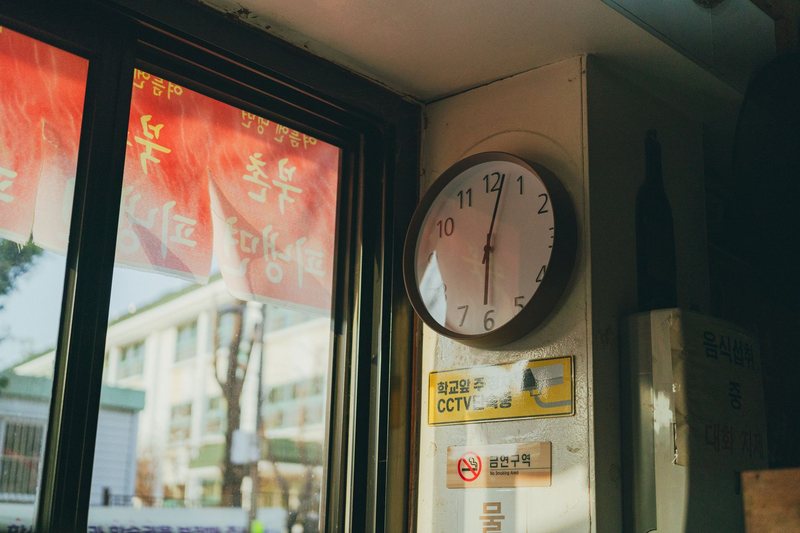
Many cafes post a small sign reading 1인 1음료 (il-in il-eumnyo, “one drink per person”). Even where it isn't written, it is expected: four friends at a table means four drinks. Sharing one big latte between two, or ordering for one and saving seats for three, is the classic visitor mistake.
To owners, the drink is basically rent for the chair. One industry calculation, cited by Korea JoongAng Daily, found that a small cafe with eight tables, selling a 4,100-won Americano, breaks even only if each customer leaves within about 1 hour and 42 minutes.
Koreans argue over the gray areas too. Some cafes accept a cake or a sandwich as your order; others insist on a drink. In July 2026, a post about four adults who spent more than 60,000 won on food and three coffees, and were still asked to add a fourth coffee, split opinion online, Asia Economy reported. The easy fix: anything on the drinks menu counts, so the friend who skips coffee can order tea or juice.
Mug or takeout cup? The rule behind the question
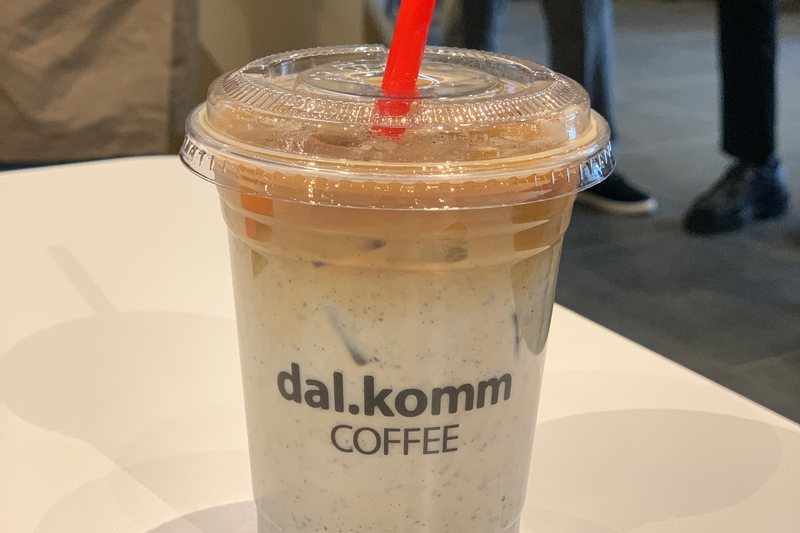
Say you are staying and you will usually get a mug or a glass. Say takeout and you get a disposable cup, and you are expected to leave with it. That comes from a rule that has changed several times:
- 2018: The Ministry of Environment began checking that cafes did not hand disposable cups to customers drinking in the store, Newsis reported. Takeout was the exception, and any fine went to the shop, not the customer.
- 2020–2022: Disposable cups were temporarily allowed again during COVID-19. The in-store ban on plastic cups came back on April 1, 2022.
- November 2022: Paper cups, plastic straws and stirrers were added to the ban, with a one-year grace period.
- November 2023: The government dropped the paper-cup ban and extended the straw grace period indefinitely, citing the burden on small businesses, The Korea Herald reported. Plastic cups stayed off-limits for dine-in.
- July 2026: The ministry, renamed the Ministry of Climate, Energy and Environment in October 2025, signed a voluntary pledge with 23 coffee, fast-food and bakery chains plus independent cafes, about 22,000 shops in all. According to the ministry, bringing your own cup can earn up to 800 won in discounts and carbon-neutral points, depending on the shop, and straws come only on request.
So tell the counter honestly whether you are staying. If you change your mind halfway, staff can usually move your drink into a to-go cup.
Saving a seat, then clearing it
In a busy cafe you will spot tables with nobody at them, just a phone, a laptop, a tote bag or a tumbler. That is 자리 맡기 (jari matgi, saving a seat), and it is normal: you put something down, then go and order. The unwritten limit is time. Holding a table while you queue is fine; holding it for an hour while you run errands is not. Some cafes ask you to order before you sit, so check for a sign at the door.
When you leave, the tray goes back. Look for a shelf or window marked 반납 (bannap, return), also called the 퇴식구 (toesikgu). Many have a sink for leftover ice and drinks, and separate bins for cups, sleeves and straws.
The cagongjok debate: one Americano, four hours
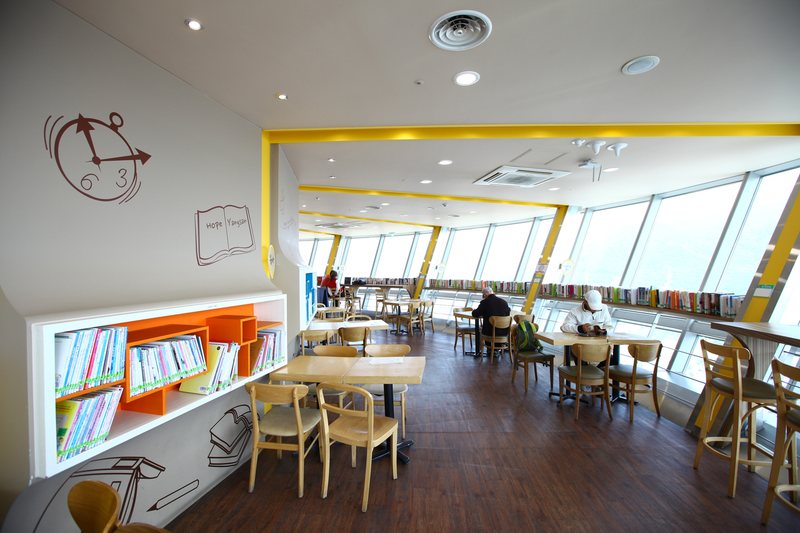
Korea has a word for people who study or work in cafes for hours: 카공족 (kagongjok, usually spelled cagongjok in English), from cafe, gongbu (studying) and jok (tribe). Students say a cafe has just the right background noise, livelier than a library and less distracting than home. Space matters too. As the same Korea JoongAng Daily report points out, many young adults share dorms or live with their parents well into their twenties, and people who live alone often rent small one-rooms. The cafe becomes the living room they don't have.
Owners have mixed feelings: long-stayers fill quiet afternoons, but a table held for five hours on one drink costs money. The debate boiled over in 2025, after photos of customers with partitions and full office setups spread online. On August 7, 2025, Starbucks Korea posted a nationwide notice titled 쾌적한 매장 이용을 위한 안내 (“a guide to a pleasant store visit”), saying personal desktops, printers, power strips and partitions could not be used in its stores, Newsis reported. Leaving belongings on a table for long stretches and one person taking over several tables could also be restricted. Laptops and ordinary studying are still fine, the company told The Korea Herald.
Why Korea has so many big, beautiful cafes
Korea is packed with cafes. Statistics Korea counted 100,729 coffee shops at the end of 2022, the first time the total passed 100,000. An analysis by the Ministry of Agriculture, Food and Rural Affairs put the figure at 106,452 in 2023, about one in seven food-service businesses, Digital Times reported.
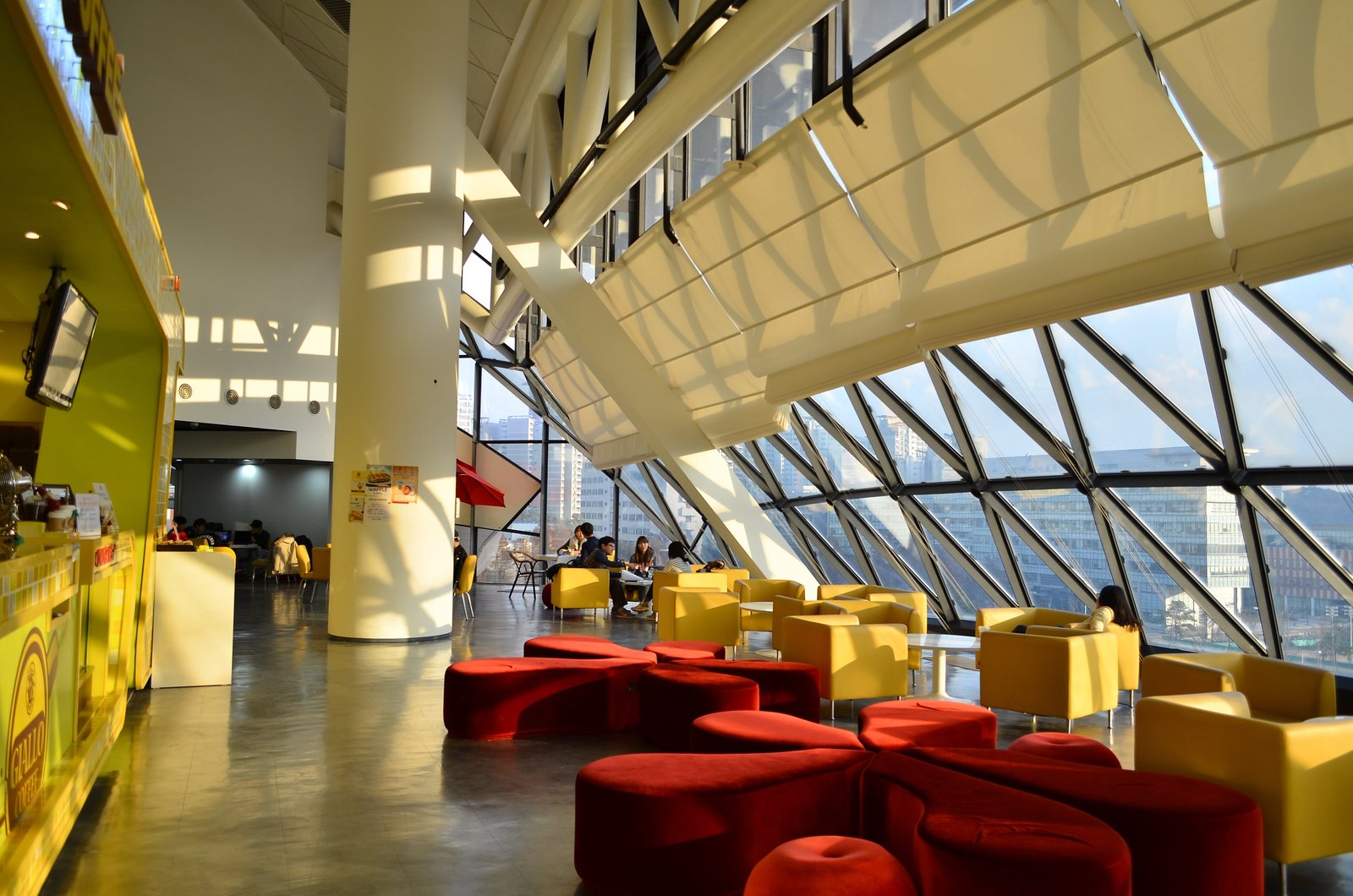
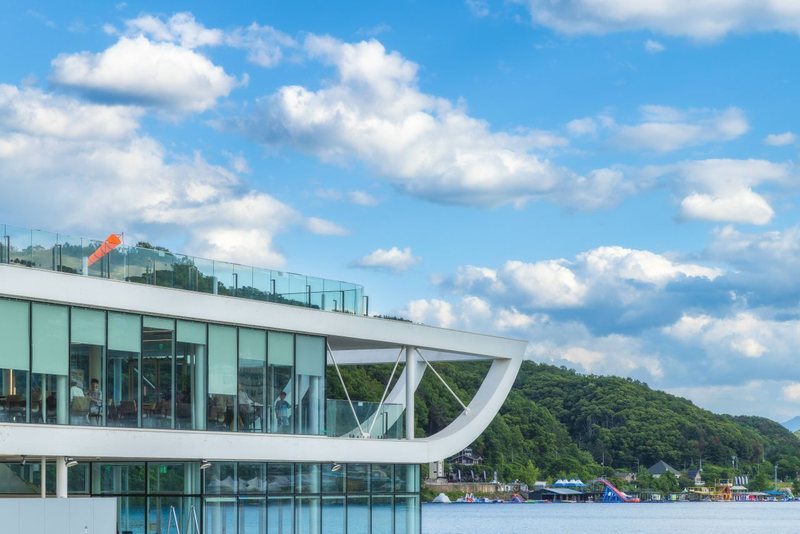
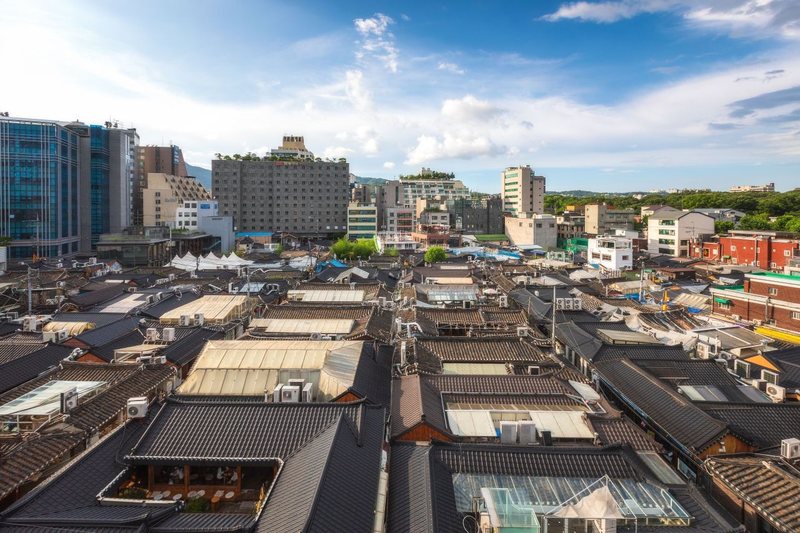
With that much competition, coffee alone rarely stands out. So cafes sell space: rooftop views, forest cafes outside Seoul, old hanok houses and breweries turned into coffee shops, interiors built for photos. Koreans meet friends, go on dates, hold meetings and study in them, and a weekend drive to a big, beautiful cafe counts as a day out. That is why the seat matters so much. In a Korean cafe, the space is the product.
Quick answers
Do I have to order a drink for each person in a Korean cafe?
Usually, yes. “One drink per person” (1인 1음료) is the standard expectation for everyone using a seat, and many cafes post it at the counter. Some accept a dessert instead. The rule doesn't apply to takeout orders.
Do you clean up after yourself in Korean cafes?
Yes. In most counter-service cafes you carry your tray, cup and plates to the return shelf.
How long can you stay in a Korean cafe?
Most cafes set no official limit, and staying a couple of hours over a drink is normal. Some small or busy cafes post time limits, and ordering again during a long stay is seen as good manners.