The meal is over, the grill has gone quiet, and you are waiting for someone to bring the check. Nobody comes. At the next table, someone presses a small button on the edge of the table, a soft chime rings somewhere in the back, and a server appears. Your Korean friend has already picked up the order slip and is walking to the counter by the door. They pay exactly what the menu said, say thanks, and you are back on the street. No tip line, no mental math, no bills tucked under a glass.
So, do you tip in Korea? In everyday life, no. Restaurants, cafés and taxis charge the listed price, and that is the whole bill; good service is simply part of the job. Leave extra money on the table and you are more likely to get a puzzled look, or a server hurrying after you with the cash you “forgot,” than a thank-you. The few places that do have a service charge, mostly upscale hotels, add it to the bill for you.
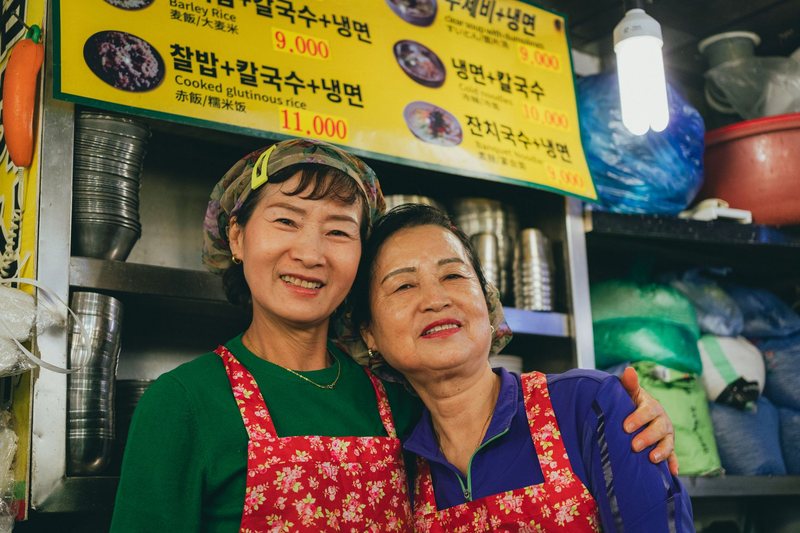
The price on the menu is the final price
In Korea, the menu price is not a starting point. By law, it is the finish line. Under Food Sanitation Act rules in force since January 2013, restaurants, cafés and other food businesses must show the final price a customer actually pays, with value-added tax and any service charge already included. The old habit of adding “+10% VAT, +10% service” in small print at the bottom of the menu was banned. Korea's food safety ministry told The Korea Times in 2023 that asking customers to pay more than the listed price breaks the law.
Wages are the other half of the story. Restaurant staff in Korea are covered by the national minimum wage whatever customers leave behind, and, as The Korea Herald has pointed out, tips do not count toward it. In the past, pressing extra cash on a waiter tended to look less like gratitude and more like a big shot showing off, and that image has not fully faded. A tip is not illegal, though. It is just rare, and staff may not quite know what to do with it.
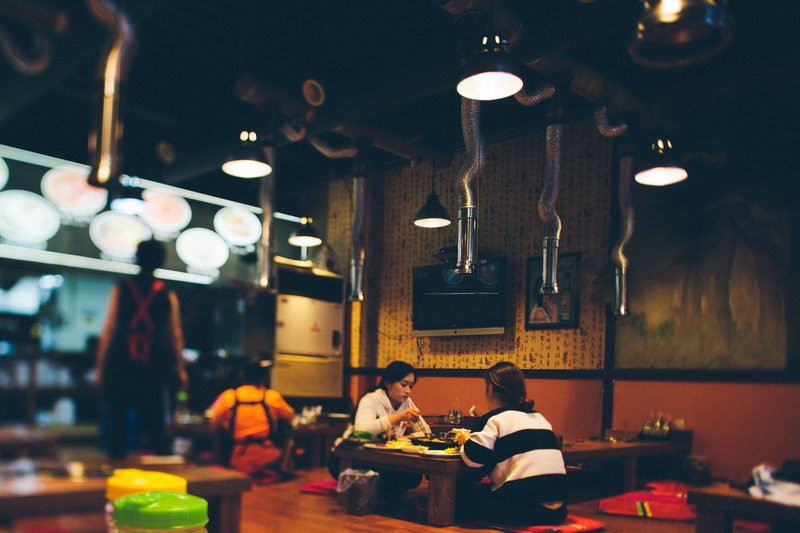
A bell on the table, a counter by the door
Where tipping cultures reward a server who keeps checking in, Korean restaurants run on request. Many tables have a small wireless call button, the 호출벨 (hochulbel). Press it, a chime sounds, and your table number lights up on a display the staff can see. It is not rude; that is exactly what it is for. No button? Raise a hand and call out 저기요 (jeogiyo, “excuse me”) or 여기요 (yeogiyo, “over here”). It is one more piece of the Korean taste for speed we explore in our story on ppalli-ppalli culture.
Paying works the same way. In most casual restaurants the bill does not come to you; you go to it. When you are done, take the order slip, or simply tell staff your table, to the 계산대 (gyesandae, checkout counter) near the entrance and say 계산해 주세요 (gyesanhae juseyo, “I'd like to pay, please”). In a growing number of places you order and pay at a kiosk or a tablet before the food even arrives.
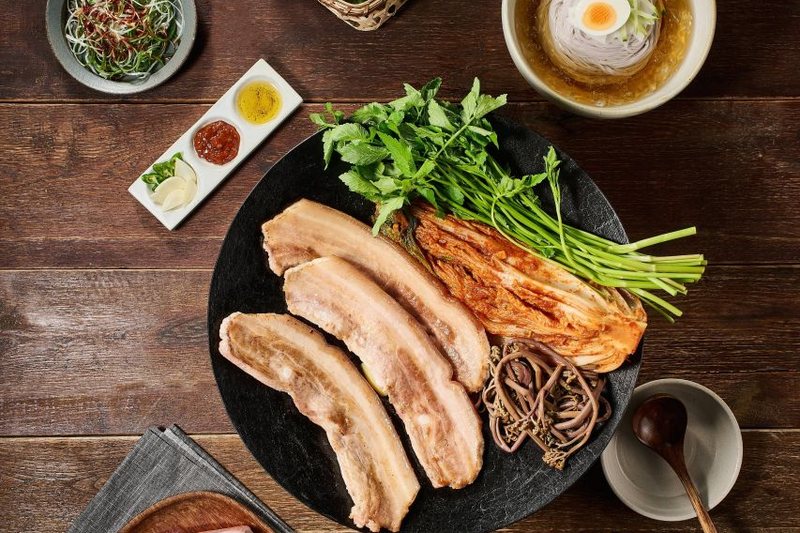
Splitting the bill: Dutch pay and N-bbang
At the counter, the real question is not how much to tip but who pays. Koreans call splitting the bill 더치페이 (deochi pei, “Dutch pay”), a Konglish take on “going Dutch.” The National Institute of Korean Language recommends a native word, 각자내기 (gakja naegi, “each one pays”), though “Dutch pay” is what most people actually say. Its slangy cousin is N빵 (en-ppang, often written “N-bbang” online). Strictly speaking, Dutch pay means everyone covers what they ordered, while N-bbang divides the total by N, the number of people at the table.
You can ask for separate payments with 따로 계산해 주세요 (ttaro gyesanhae juseyo, “separately, please”). But at a busy lunch counter many groups keep it simple: one person pays the whole bill, and everyone else sends their share by mobile transfer, often before the group reaches the subway. The older custom of one person treating the whole table, often the most senior, is alive too. Our story on who pays on dates in Korea looks at how that plays out between couples.
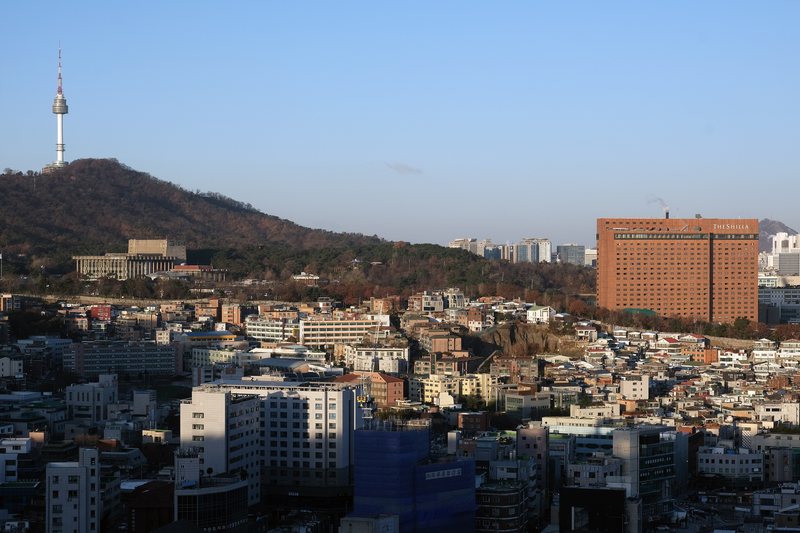
Hotels: where the 10 percent still hides
The one place visitors regularly meet a service charge is a hotel bill. Some hotels, mostly upscale ones, add a 10 percent 봉사료 (bongsaryo, service charge) to the room rate, and then 10 percent VAT on top. According to the Hankook Ilbo, the charge began in 1979 as an administrative order from what was then the Ministry of Transportation, partly to curb excessive tipping and to standardize service. In other words, a fixed charge was brought in to replace the tip.
The government recommended phasing it out in 2006, but it lingered as an industry habit. Some hotels have since folded it into the room rate. The Seoul Shilla did so in 2021. Either way, if you see bongsaryo on your bill, the “tip” is already paid.

The tip jar Korea argued about
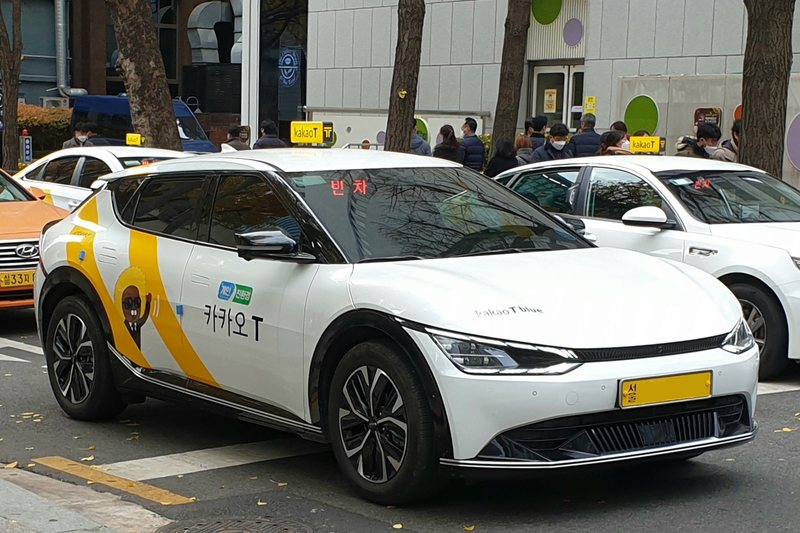
Tipping did try to slip in. In the summer of 2023, a photo of a tip jar beside the register of a popular London-themed bagel shop in Seoul went viral, and the backlash was swift. The jar was soon removed, and the owner said it had been “more of a decoration.” Around the same time, Kakao T, the app that then handled more than 90 percent of Korea's ride-hailing, began testing an optional in-app tip of up to 2,000 won, offered only after a five-star rating. In an SK Communications survey of 12,106 people reported by The Korea Times, more than 70 percent called tipping unacceptable.
People's reasons were simple. The posted price already covers the service. Workers earn at least the minimum wage. At many cafés customers order at the counter and carry their own trays, so what would the tip even be for? Many also feared tips would creep in the way delivery fees did, from an optional extra to something nearly everyone charges.
When “service” means free food
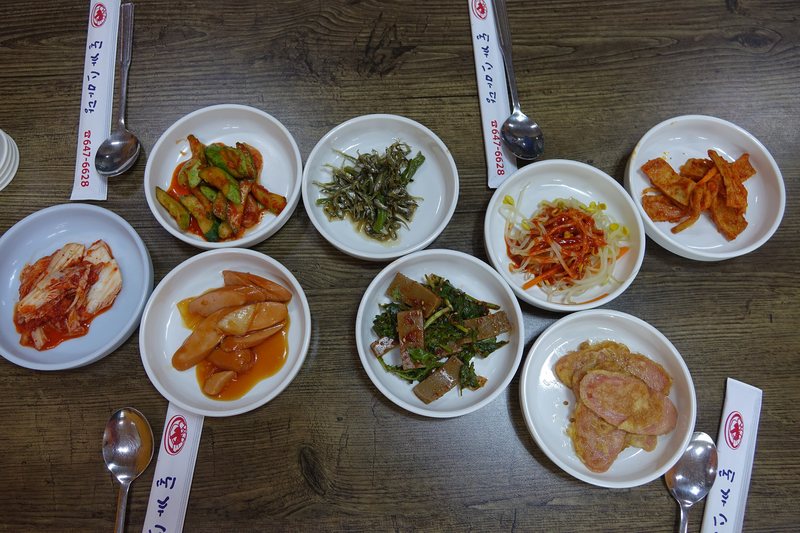
Here is the part many visitors end up loving. In a Korean restaurant, 서비스 (seobiseu, “service”) often has nothing to do with waiting tables. It means something extra, on the house: a plate of dumplings, another side dish, a soda for a big table or a regular. When the owner sets it down and says 이거 서비스예요 (igeo seobiseu-yeyo, “this one's on the house”), the generosity is flowing the other way, from the restaurant to you.
That says a lot about how Koreans thank a place they like. The thanks is not a percentage on the bill. It is a warm word at the counter and, above all, coming back.
Korean insider tip: Want to thank a small restaurant or café you loved? Keep your receipt instead of leaving cash. On Naver Map you can post a review verified with a receipt or a Naver Pay record, and Koreans tend to trust those more than an unverified rating. Many places also put up a 리뷰 이벤트 (ribyu ibenteu, “review event”) notice: write a review, show it to staff, and get a free drink or dessert.
Before you pay in Korea
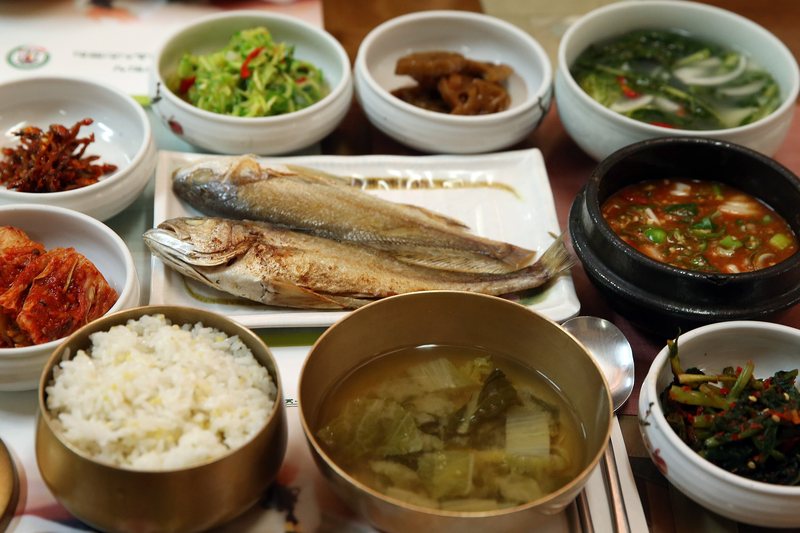
- Do pay the number on the menu. Tax and service are already in it.
- Do use the call button or a polite 저기요.
- Do take the bill to the counter by the door, unless staff bring it to you.
- Do say 잘 먹었습니다 (jal meogeotseumnida, “I ate well”) on your way out. It is the closest thing Korea has to a tip, and it is free.
- Don't leave cash on the table. Staff may think you forgot it.
- Don't add a tip for taxi drivers or café staff. The fare or the price is the whole payment.
Quick answers
Is it rude to tip in Korea?
Not rude, just unusual. Tipping is not expected in daily life, and staff may be confused or politely say no. A sincere thank-you is the normal way to show you were happy.
Do you tip taxi drivers in Korea?
No. You pay the metered fare. A taxi app tested an optional tip button in 2023, but tipping drivers is not a Korean custom.
In Seoul, a regular sedan taxi's meter starts at 4,800 won for the first 1.6 km, then adds 100 won for every 131 meters, or every 30 seconds when traffic crawls. Between 11 p.m. and 2 a.m., the base fare rises to 6,700 won. Those are the rates on the Seoul Metropolitan Government's official taxi page, which also states that all taxis must charge only by the meter.
What is the 10% service charge at Korean hotels?
It is the 봉사료 (bongsaryo), a fixed charge some hotels add to room rates. It began in 1979 as a replacement for tips, so there is no need to tip on top.