Ppalli-ppalli: Inside Korea's Everyday Love Affair With Speed
Dawn deliveries, lightning internet, a well-worn "close door" button. Why Korea runs so fast — and why more Koreans are learning to slow down.
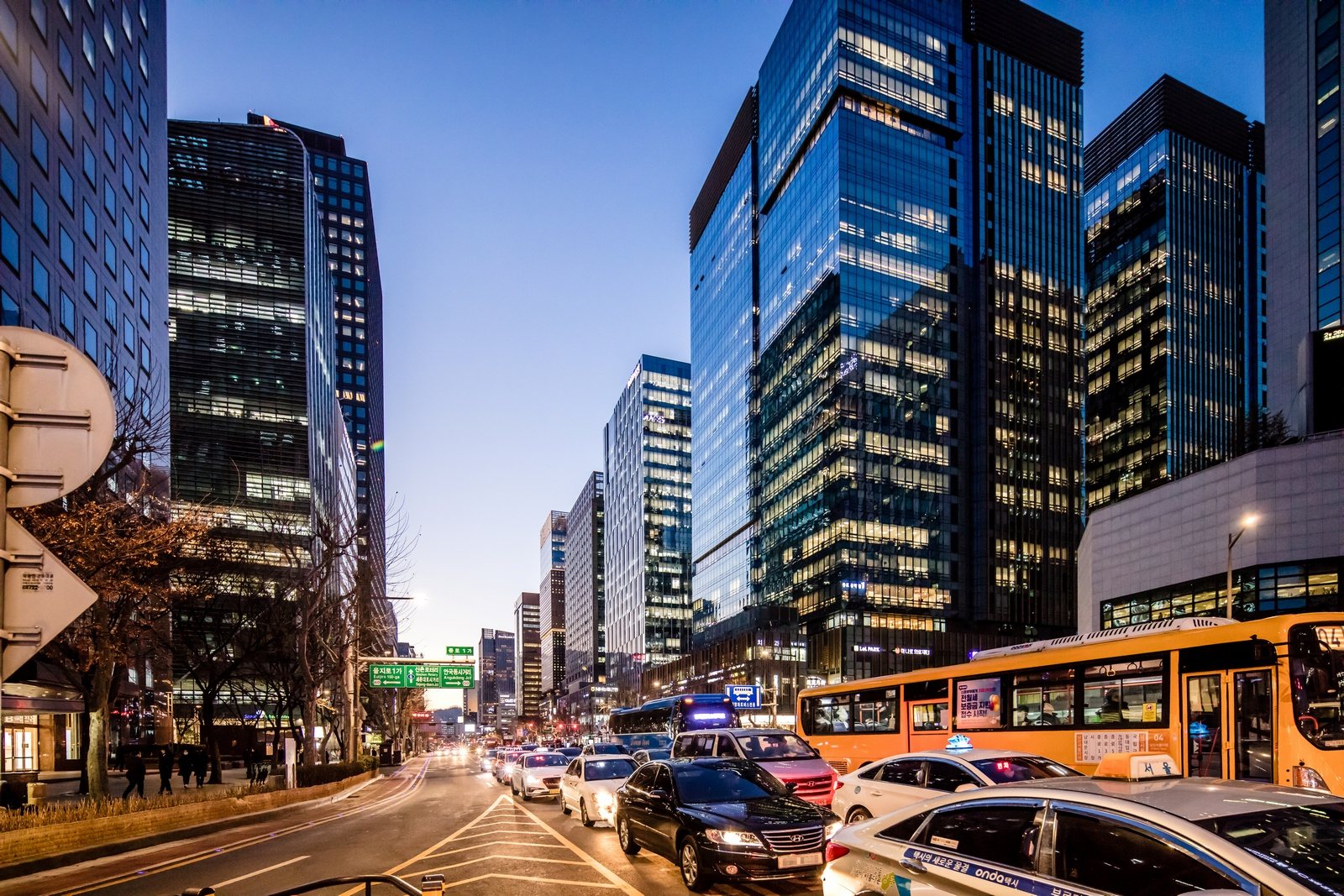
Spend a day in Seoul and you will probably hear it before lunch: 빨리빨리 (ppalli-ppalli). It is simply the word 빨리 (ppalli, "quickly") said twice — "hurry, hurry," or "come on, come on." A parent says it at the school gate, a coworker says it at the printer, a friend says it as the bus pulls in. Over time the phrase has become shorthand for something bigger: a national habit of doing things fast, and of expecting things to be done fast.
So what is ppalli-ppalli culture? In short, it is the everyday preference for speed, convenience and quick results that shapes how Koreans shop, work, eat and handle paperwork. Many Koreans will tell you it is one of the reasons the country changed so dramatically within a few generations — and, in the same breath, one of the reasons so many people feel tired. Both are true, and that tension is what makes it worth a closer look.
Where you can see it
Start with deliveries. In big cities, ordering groceries late at night and finding them at your door before 7 a.m. is perfectly ordinary; we call it 새벽배송 (saebyeok baesong, dawn delivery). Food delivery reaches apartments, offices and even riverside parks. For many Koreans, waiting a whole week for a parcel feels almost exotic.
Then there is the internet. Korea built one of the fastest and most widespread broadband networks in the world, and people notice when a page takes an extra beat to load — the reflex is to hit refresh, not to wait. Plenty of people watch videos at 1.5x or 2x speed, too.
Small habits tell the same story. In many elevators, the "close door" button (닫힘, datim) gets pressed the moment people step in; a running joke says it is the most worn-out button in the country. On city buses, passengers often get up and move toward the exit before the bus has fully stopped.
Public paperwork moves quickly as well. Many certificates that once meant a trip to an office can now be issued online through the government portal 정부24 (Jeongbu 24) or printed at self-service kiosks in a few minutes. Restaurants are built for speed, too: food comes out fast, side dishes often land on the table soon after you sit down, and many tables have a call button so you never have to wait to catch someone's eye.
Even numbers join the joke. In Sino-Korean, 8 is read pal and 2 is read i, so "8282" sounds like ppalli-ppalli — and it has long been used as playful shorthand for "fast."
Where it came from
There is no single origin story, and it is wise to be a little skeptical of anyone who offers one. The explanation you will hear most often points to the decades after the Korean War (1950–53). A country left poor and badly damaged went through rapid, state-led industrialization from the 1960s onward, squeezing into a few decades the kind of growth that took many economies far longer — the period often called the "Miracle on the Han River." In that world, finishing first and finishing fast were treated as virtues, at work and in national life.
Some writers reach further back. Royal records from the 15th century are sometimes cited as already grumbling that people rushed things, and others point to a crowded, competitive society in which exams and jobs rewarded whoever moved first. These are interpretations rather than settled history. What most people agree on is that the habit was reinforced by experience: for several generations, moving quickly seemed to pay off.
The upside
Ppalli-ppalli is not just impatience. It comes with a genuine service mindset: problems tend to get fixed quickly, a repair is often booked for tomorrow rather than next month, and public systems are designed so that ordinary tasks take minutes instead of afternoons. Many Koreans are quietly proud of this. When people praise how "convenient" (편리하다, pyeollihada) life in Korea is, a lot of that convenience is ppalli-ppalli at work.
It also creates a particular kind of energy. Cities stay awake late, neighborhoods change fast, and new ideas spread quickly, from café trends to new ways of paying with your phone. For visitors, that buzz is a big part of what makes Seoul feel so alive.
The downside — and the slow-down
The same speed has costs, and Koreans talk about them openly. In public debate, rushing is linked to stress, careless mistakes and safety problems, from traffic accidents to construction done too hastily. Korea has long had some of the longest working hours among OECD countries, and the borrowed word "burnout" (번아웃, beon-aut) is now part of everyday Korean.
There has been a real push back. In 2018 the country began phasing in a 52-hour cap on the working week, down from 68, starting with large employers. In 2007, Cheongsando Island, Jeungdo Island and Changpyeong village in Damyang — all in South Jeolla Province — became Asia's first members of the international Cittaslow ("slow city") network, and more Korean towns have joined since. And since 2014, Seoul has had a "space-out competition" (멍때리기 대회, meongttaerigi daehoe), now held by the Han River, in which people try to sit still and think about nothing for 90 minutes — a playful protest against the idea that rest is wasted time.
You can hear the shift in new slang, too. 불멍 (bulmeong) means zoning out while gazing at a fire, and 물멍 (mulmeong) means doing the same in front of water. That one of the world's fastest-moving societies coined cozy words for staring at flames tells you something.
If you visit Korea
- Don't read speed as rudeness. Brisk service, quick replies and food that arrives in minutes are meant as good service, not as a hint to leave.
- Use the call button. If your table has one, pressing it is normal and polite. No need to wave or shout.
- Keep queues moving. At counters and ticket gates, decide what you want before your turn and have your card or transit pass ready.
- Step aside to think. On escalators, at subway doors and on narrow sidewalks, move out of the flow before you stop to check your map.
- Hold on when the bus slows down. You don't have to rush to the door like the locals. Wait until you feel steady.
- It's fine to ask for a moment. A friendly 잠시만요 (jamsimanyo, "just a moment") buys you a pause, and most people will happily give it.
Quick answers
What does ppalli-ppalli mean?
It is 빨리 (ppalli, "quickly") repeated, roughly "hurry, hurry." The phrase also names Korea's wider culture of speed and convenience.
Why are Koreans always in a hurry?
The most common explanation is the country's rapid industrialization after the Korean War, when speed was rewarded for decades. It is a habit, not a rule, and many Koreans are now deliberately slowing down.
Is ppalli-ppalli culture good or bad?
Both. It powers fast, convenient services, but it is also tied to stress and long hours — which is why slow cities and "space-out" contests have found such a warm welcome.
Sources
- Koreans do things quickly. Is it efficiency or lack of patience? — The Korea Herald (2024)
- The 2018–2021 working time reform in Korea: A preliminary assessment — OECD
- Korean 'Slow Cities' give visitors respite from busy city life — The Korea Times
- Seoul Hosts 10th Anniversary 'Hangang Space-Out Competition' — Seoul Metropolitan Government