The Corner Store Koreans Treat as a Kitchen, a Pub and a Lifeline
Korea has almost as many convenience stores as Japan, with less than half the people. Here is how they became the neighborhood's 24-hour living room.
It is almost midnight on a quiet Seoul street. Inside the brightly lit shop on the corner, a student tears open a triangle of rice wrapped in seaweed, fills a cup of instant noodles at the hot-water machine and settles in at the window counter. Outside, under a faded parasol, two coworkers clink cans of beer at a plastic table. Nobody seems in a hurry to leave.
This is the Korean 편의점 (pyeonuijeom, convenience store), and for many Koreans it is less a shop than an extra room of the neighborhood: a cheap kitchen, a study break, a patio pub and a service desk that never closes. It became a destination because Korean life made space for it, with small homes, long days, late nights and a strong taste for getting things done right away. Lately, visitors from abroad have started adding it to their itineraries too.
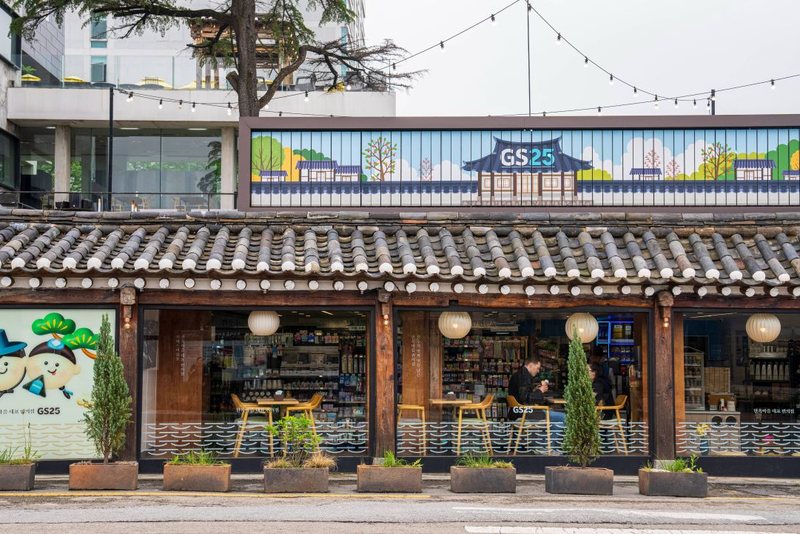
A store on almost every corner
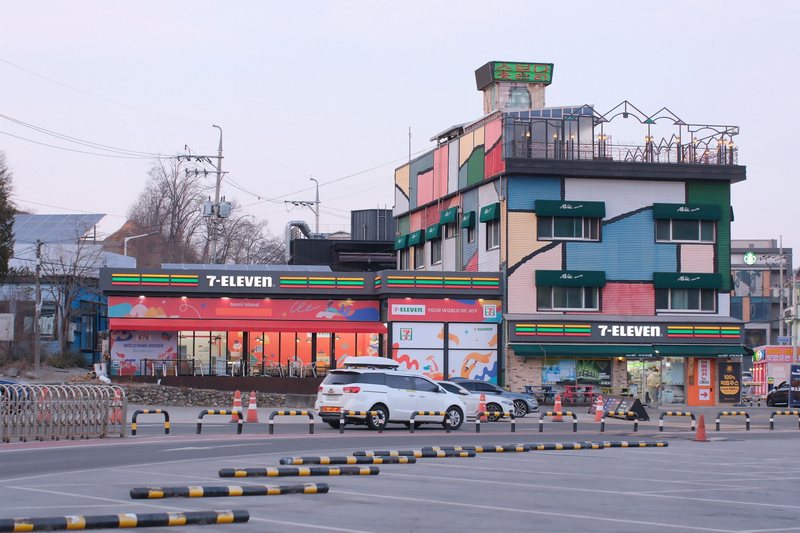
The modern story began in May 1989, when a 7-Eleven opened in southeastern Seoul. What caught people's attention was that it stayed open all night, something Korean shops simply did not do back then. Growth since has been remarkable. According to Korea's trade and industry ministry, the four biggest chains alone ran 53,266 stores at the end of 2025, roughly one for every thousand people.
Japan, the country many people picture when they think of convenience stores, had 56,054 at the end of 2025, according to the Japan Franchise Association, for a population more than twice the size of Korea's. The Korean count may finally have hit its ceiling: in 2025 it fell 2.9%, the first drop since the ministry began tracking it in 2020, as chains closed weaker branches and focused on what happens inside the stores that remain.
A kitchen for small homes and long days
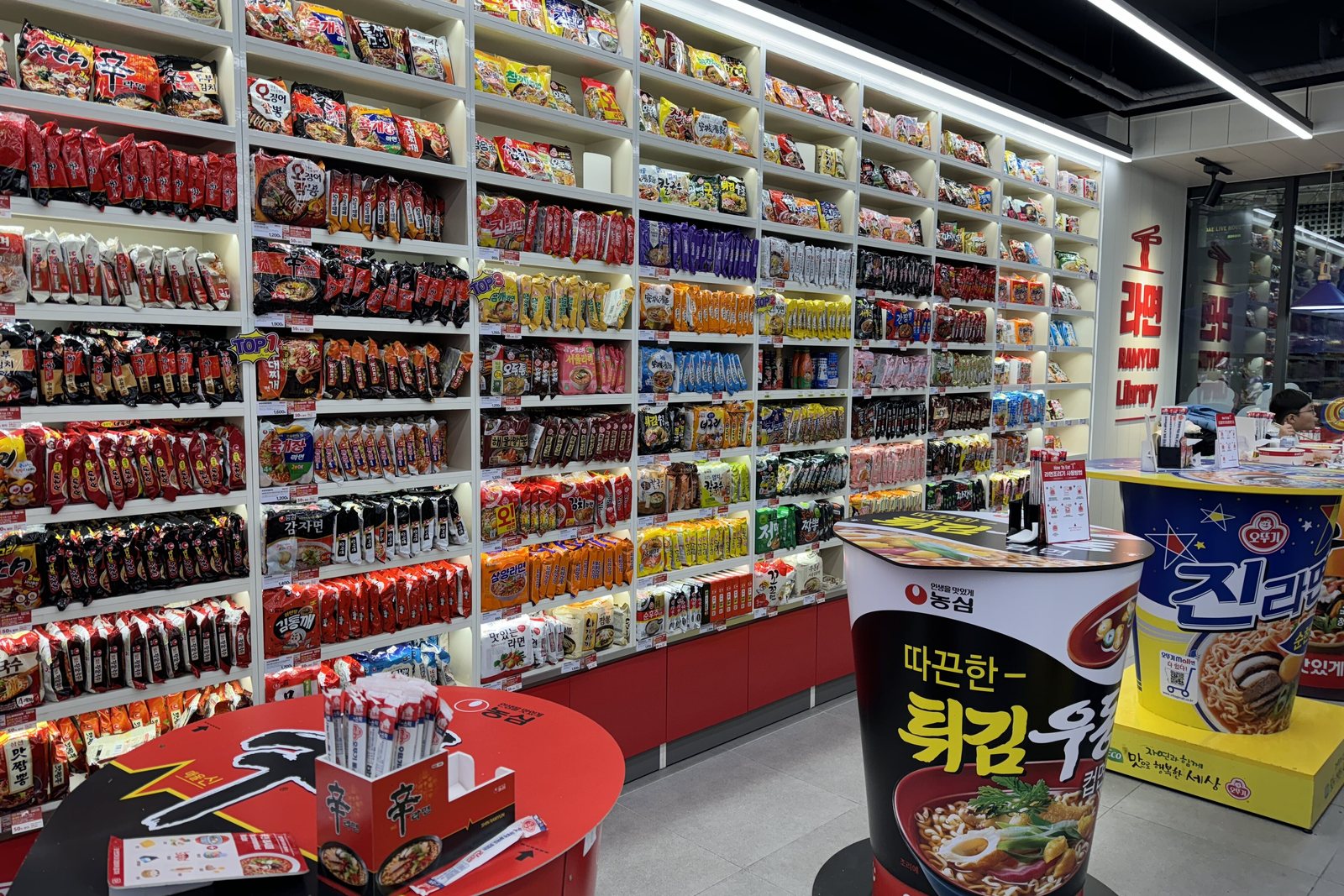
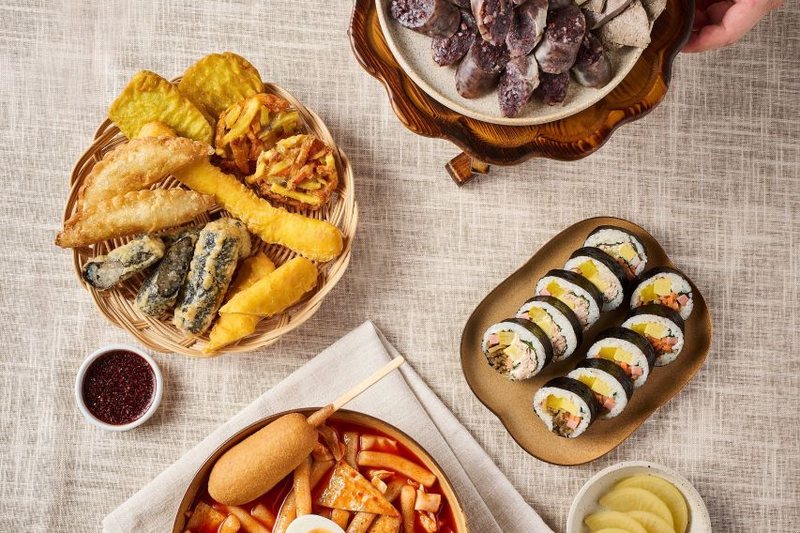
More than a third of Korean households are now a single person (here is why so many Koreans live alone), and many of them live in small studios where cooking for one hardly feels worth the effort. The convenience store fills that gap. Most have a counter or a few tables, a hot-water dispenser and a microwave for heating what you buy.
The menu grew in stages. 삼각김밥 (samgak-gimbap, triangle kimbap), rice and a filling wrapped in seaweed, appeared in 1992 and was so unfamiliar that staff had to show customers how to open the wrapper. It took off after the late-1990s Asian financial crisis sent people looking for cheap, quick meals, and a tuna-mayonnaise version drove the boom. Later came the 도시락 (dosirak, lunchbox): rice, meat and small side dishes packed into one tray. And then there is ramyeon. Filling a cup of instant noodles to the line at the hot-water station and waiting a few minutes at the counter is a small ritual many Koreans first learn as students and never quite give up.
Deals, banana milk and a student budget
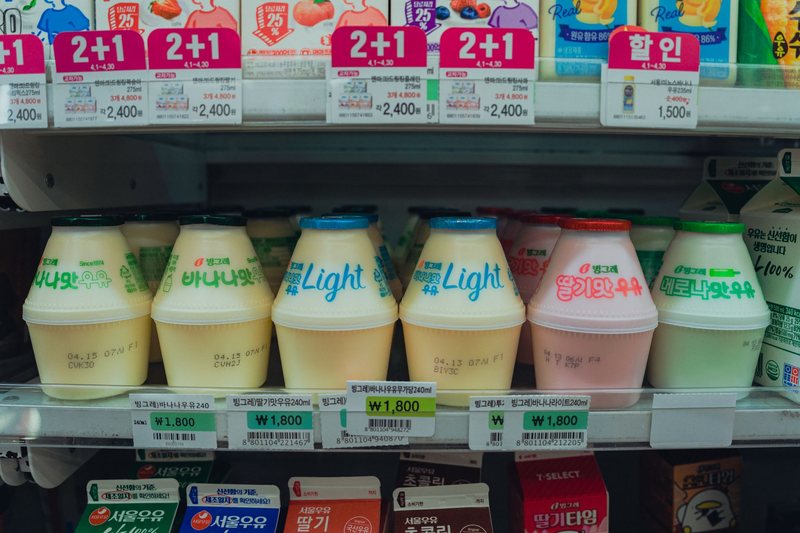
Walk the aisles and small signs are everywhere: 1+1, read 원 플러스 원 (won peulleoseu won, "one plus one"), and 2+1. Buy one, get one free; buy two, get a third. The offers change regularly, and they help explain why students and young workers drop in so often. This is where a tight budget can still buy a small treat.
Some treats carry a whole childhood with them. 바나나맛우유 (banana-mat uyu, banana-flavored milk) has been sold since 1974, when bananas were still an expensive import in Korea, in a squat bottle inspired by the traditional moon jar. Many Koreans remember it as the reward that made a trip to the public bathhouse with their parents worth it. Picking one up today is partly a snack and partly a dose of nostalgia.
The patio pub: pyeonmaek
On warm evenings, the plastic tables outside many stores turn into a neighborhood terrace. There is even a word for it: 편맥 (pyeonmaek), short for "convenience store beer." Friends buy cans and snacks inside, sit down outside and talk for hours. It costs little, nobody rushes you to order another round, and there is none of the ceremony of a company dinner. Think of it as the relaxed cousin of formal Korean drinking etiquette.
There is a catch most visitors never hear about. Under Korea's food hygiene rules, convenience stores are generally classed as light-food businesses, not places where drinking is allowed, and tables set out on a public sidewalk can break road rules. It is the store owner, not the customer, who risks a fine. Enforcement varies from district to district and often depends on complaints, so pyeonmaek lives in a gray zone. Keeping your voice down is part of the deal.
More than a shop
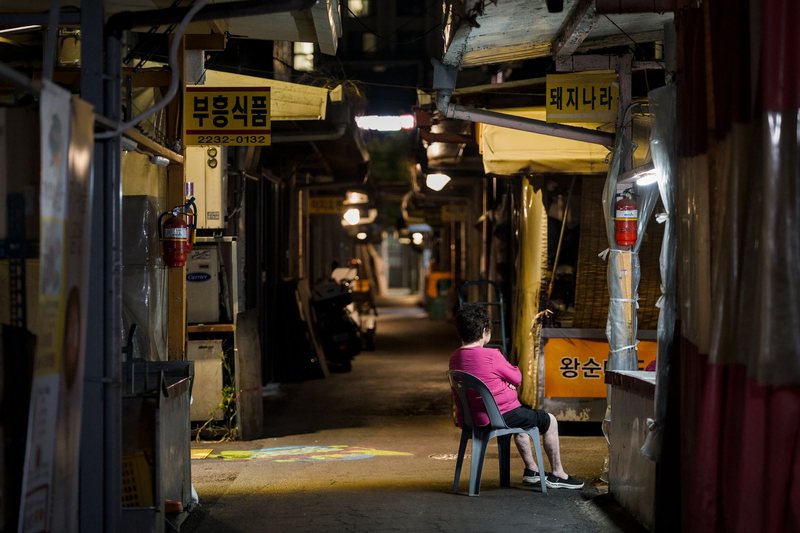
Part of the appeal is that the store quietly does the work of several other places. Over the years, Korean chains have added parcel shipping, bill payments, ATMs and phone charging. Since 2012, stores open around the clock have been allowed to sell a short list of basic over-the-counter medicines, such as fever reducers and digestive remedies, for nights when the pharmacy is closed. Travelers top up their transit cards there. It is ppalli-ppalli culture in store form: whatever you need, right now, around the corner.
Korean insider tip: Topping up a T-money card at the counter is cash only, and foreign credit cards will not work for it, so keep a few 10,000-won notes in your wallet. Hand the clerk your card with the cash and say how much to load. The same card can often pay for your snacks as well, but acceptance depends on the store's terminal, so ask before you tap.
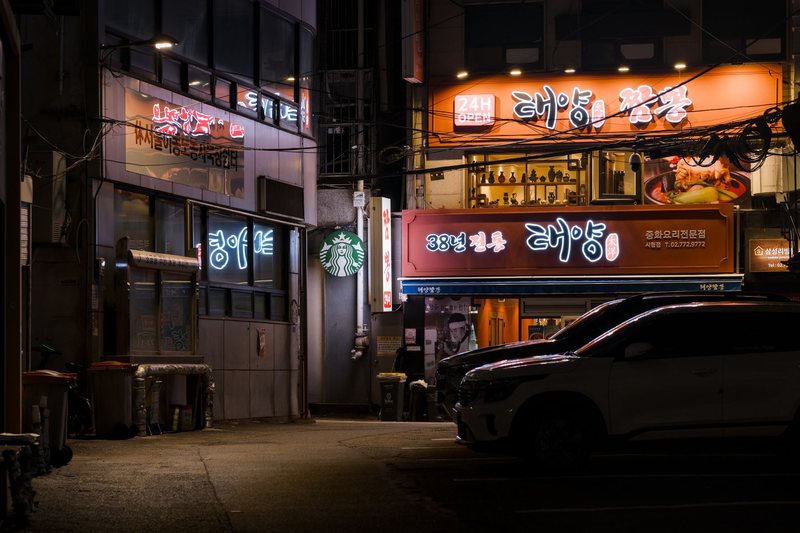
The lights matter too. When the rest of a street goes dark, the convenience store is often the only place still open, with a clerk at the counter and security cameras running. Seoul has built on that. Working with the police and the major chains, the city designated hundreds of 24-hour stores as 여성안심지킴이집 (yeoseong ansim jikimi-jip, "women's safe houses"), where a woman who felt unsafe could step inside and staff could alert the police with an emergency bell.
Why visitors now plan a stop
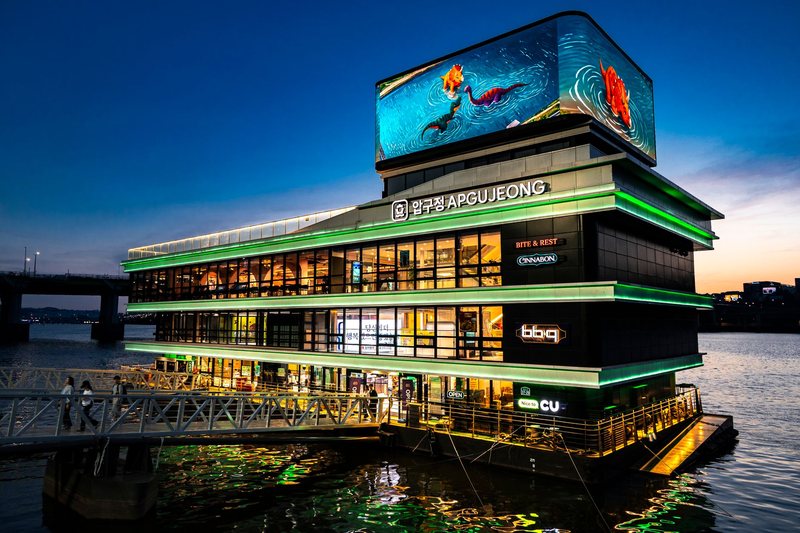
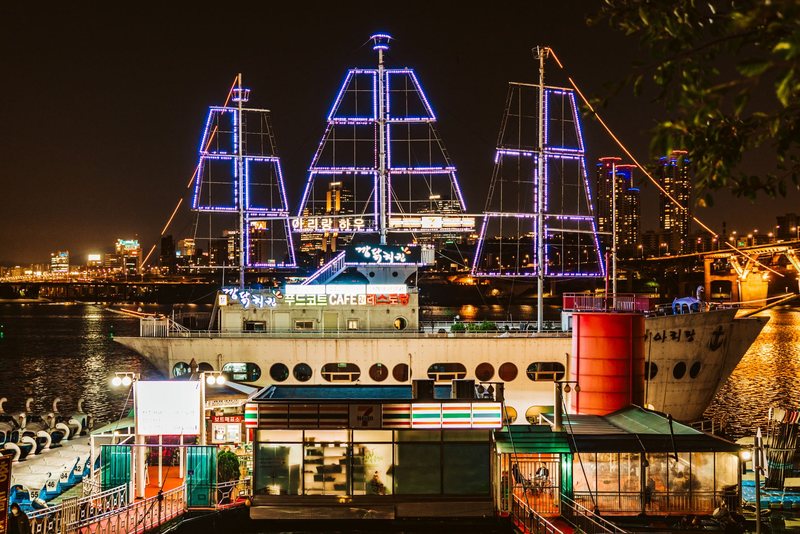
K-dramas helped. Characters slurp ramyeon at the window counter, share late-night beers at the outdoor table and work night shifts behind the register, so fans arrive already knowing the scene. In the convenience stores of Seoul's Han River parks, machines even cook a packet of instant noodles for you, a riverside snack now known as 한강라면 (Hangang ramyeon, "Han River ramyeon").
The numbers show it. In September 2025, the Korea Herald reported that transactions by foreign customers at CU, the largest chain, had jumped 185%, a surge the company linked to the Netflix animated film KPop Demon Hunters. Foreign purchases of kimbap rose 231% over July and August alone. For Koreans, it can feel funny to see a late-night snack treated as a cultural experience. Then again, that is what the corner store has quietly been for us all along.
Before you pull up a stool
- Clear your own spot. At the eat-in counter, you throw away your own trash. Many stores have a separate bin or sink for leftover noodle broth, so look before you pour.
- Know the heating question. Microwaves are usually self-service, but a cashier may still ask 데워 드릴까요? (dewo deurilkkayo?, "Shall I heat it up for you?"). A nod or a 네 (ne, yes) is all you need.
- Carry ID if you buy alcohol. Clerks can ask for proof of age, and for visitors a passport is the safest bet.
- Keep pyeonmaek quiet. Those outdoor tables often sit right below people's windows. Lower your voice as the night goes on.
Quick answers
Why are Korean convenience stores so popular?
Because they do far more than sell snacks. With hot water, microwaves and seating, they work as cheap kitchens for small homes and busy schedules, and as late-night hangouts, service counters and well-lit safe spots that never close.
How many convenience stores are there in Korea?
The four biggest chains ran 53,266 stores at the end of 2025, according to Korea's trade and industry ministry. That is roughly one for every thousand people, and close to Japan's total for less than half the population.
Can you eat inside a Korean convenience store?
Yes. Most stores have a counter or tables with hot water and a microwave, and eating there is completely normal. Just clear your spot when you are done.
Getting there
Yeouido Hangang Park 여의도한강공원
- Subway
- Line 5 to Yeouinaru Station, Exit 2 or 3; the park is about a one-minute walk
- Hours
- Open 24 hours, all year round
- Admission
- Free
Checked on November 5, 2026; confirm on the official site before you go.