Table for One: Why More Than a Third of Korean Homes Have One Person
One-person homes are now Korea's most common household. Meet the honjok, and the seats, portions and rooms Korea has built for a party of one.
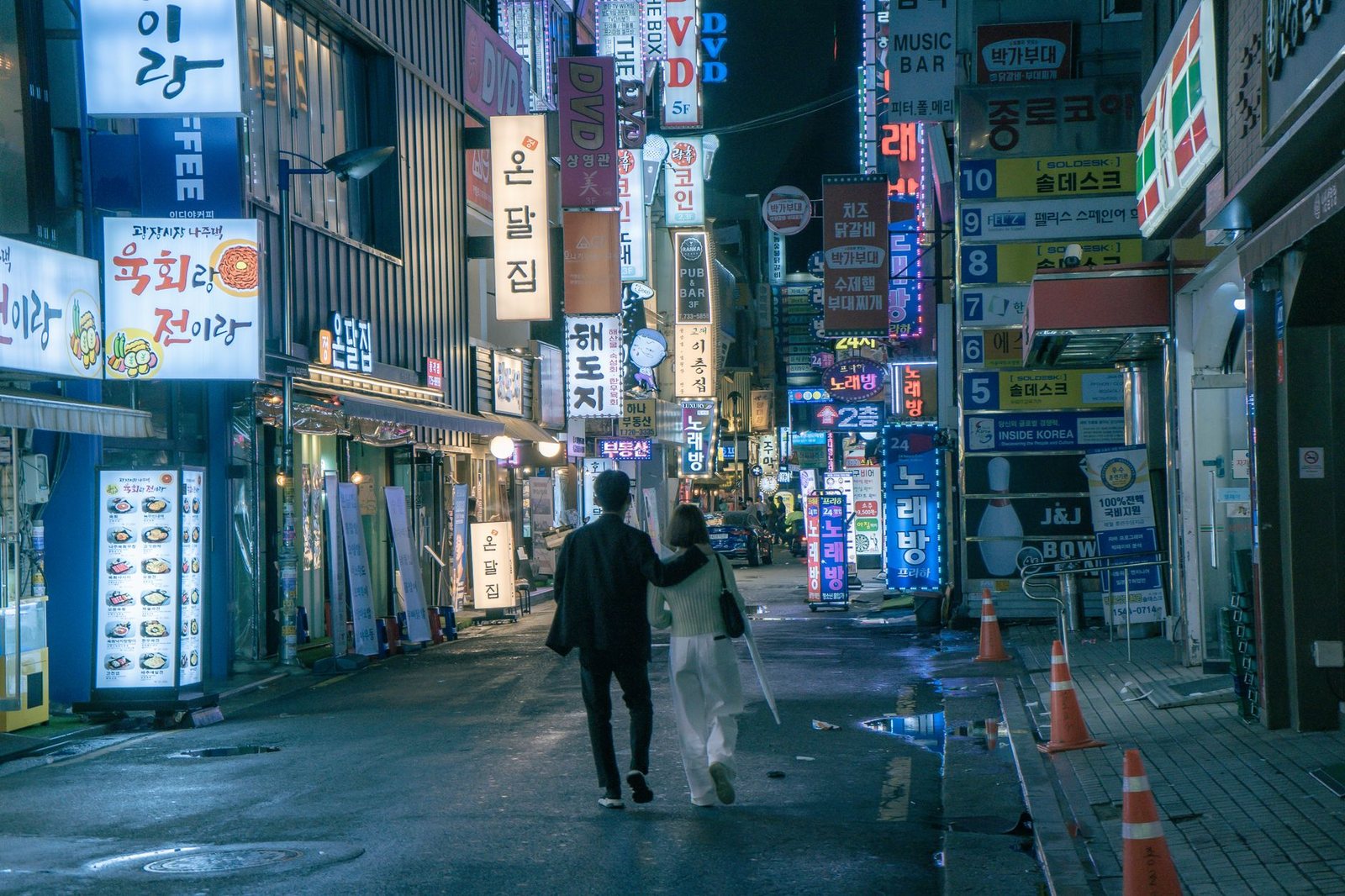
Step into one of central Seoul's one-person barbecue restaurants at lunchtime and you will find a row of seats along the wall, each with its own small grill and a thin divider on either side. Office workers, students and the odd tourist sit side by side, earbuds in, cooking meat for one. Nobody is waiting for friends. Not long ago, grilling meat alone in Korea would have drawn stares. Today it is just lunch.
Behind that scene is a big change in how Koreans live. In the 2025 census, released in July 2026, 8.24 million Korean households had just one person: 36.6% of all households, the highest share on record. Since 2015, one-person homes have been the most common household size in Korea. People live alone because they moved for a job or school, because they marry later or not at all, or because they have outlived a spouse, and the country has been steadily reshaping its restaurants, homes, groceries and even its slang around them.
From a family of four to a party of one
Through the 1990s and early 2000s, the most common Korean household was a family of four. Then the numbers moved fast. Two-person households took the lead in 2010, and in the 2015 census single-person households overtook them at 27.2%. By 2025 the share had reached 36.6%, up from 23.9% in 2010, according to the national statistics agency, long known as Statistics Korea and renamed the Ministry of Data and Statistics in 2025.
Living alone in Korea is not one lifestyle but several. Among men who live alone, the largest age group is men in their 30s; among women, it is women in their 60s. When the 2020 census asked people why they lived on their own, the most common answer, given by about a third, was their job. In the same count, about half of people living alone had never married and about one in five had lost a spouse. Older Koreans are a growing part of the picture: in 2025, roughly one household in ten was a person aged 65 or older living alone.
Honjok: a word for doing it solo
As solo living spread, the language caught up. Take 혼자 (honja, alone), clip it to 혼 (hon), and attach it to almost anything. 혼밥 (honbap) is eating a meal alone, from bap, rice or a meal. 혼술 (honsul) is drinking alone, from sul, alcohol. 혼영 (honyeong) is going to the movies by yourself. People who happily do all of the above are the 혼족 (honjok), with 족 (jok) meaning a tribe or group of people.
The words sound playful, but they eased a real awkwardness. Korean meals are built for sharing: a stew in the middle of the table, side dishes for everyone, and a greeting that literally asks whether you have eaten. Eating alone could look like having nobody to eat with, and many people felt other diners' eyes on them. A cheerful name helped turn it from something to hide into something to choose. Television helped too. MBC's 나 혼자 산다 (Na Honja Sanda, “I Live Alone”), which follows celebrities who live on their own, first aired in 2013 and has run for more than a decade, and in 2016 the tvN drama 혼술남녀 (Honsul Namnyeo, “Drinking Solo”) put the word honsul in its title.
Honbap levels, and the restaurants that leveled up
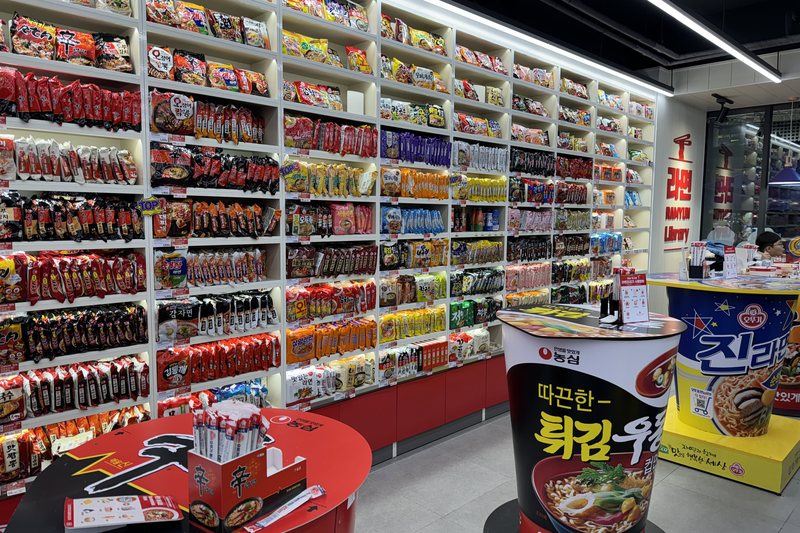
Korean internet users even turned solo dining into a game. A widely shared “honbap level” chart ranks places by how much nerve it takes to eat there alone. Versions differ, but the ladder usually starts with instant noodles at a convenience store, climbs through school cafeterias, fast food and ordinary restaurants, and puts Korean barbecue near the top. In many versions, the final level is drinking alone at a bar.
Barbecue ranks high for a reason. Korean barbecue is a group ritual of shared grills, tongs and lettuce wraps, and some group-style restaurants sell certain dishes only in orders of two portions or more. In late 2024, one restaurant that had sold only two-portion orders made the news by offering single portions for an extra 1,000 won to cover the side dishes. It said solo diners seemed more at ease once the rule was clear.
More and more places are now designed for one from the start. One-person barbecue and shabu-shabu restaurants with individual grills and partitions have opened in Seoul, and noodle shops seat customers at counters with dividers. Delivery changed too. Minimum order amounts long made it hard to order a single meal, so in 2025 a leading delivery app launched a section for single-bowl orders with no minimum; it passed a million users in about two months.
Honsul: finally pouring your own glass
Drinking alone quietly breaks one of Korea's best-known table rules. In company, you don't pour your own drink: pouring for yourself, called 자작 (jajak), is generally avoided. Honsul simply sets that rule aside. At home or on a bar stool, you pour your own, and nobody minds.
When the word caught on in the mid-2010s, it described people in their 20s and 30s who were too busy for a proper night out with friends, or who simply preferred a quiet drink alone. Bars and restaurants answered with counter seats and drinks by the glass. In May 2024 the government amended its liquor-licensing rules to state clearly that restaurants may sell any alcohol, soju included, by the glass, so ordering a single 잔 (jan, glass) is no longer a grey area.
Rooms for one: one-rooms and officetels
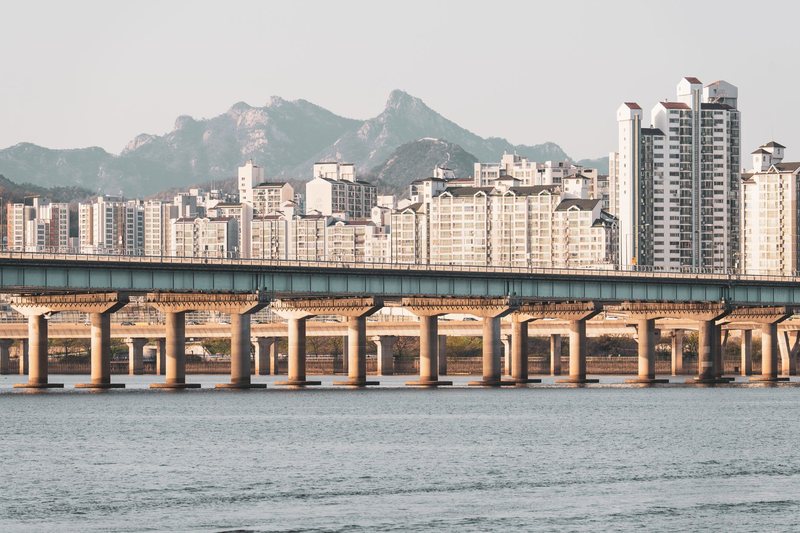
Korea's famous apartment complexes are mostly family territory. In 2024, 35.9% of single-person households lived in an apartment, compared with 53.9% of all households. Many solo dwellers instead rent a 원룸 (wonrum, “one room”), the Korean word for a studio: bed, kitchenette and bathroom in one compact space, often in small multi-unit buildings near universities, offices and subway stations. In 2020, about four in ten single-person households paid monthly rent, 월세 (wolse), which usually comes on top of a refundable deposit.
The other classic solo address is the 오피스텔 (opiseutel, officetel), a blend of “office” and “hotel.” Under the Building Act it counts as an office building, but the Housing Act treats it as “quasi-housing,” and many officetels are lived in full time as compact studios close to public transit.
Groceries have shrunk to fit as well. Supermarkets sell small packs and cut fruit for one- and two-person homes; in the summer of 2025, when a whole watermelon averaged close to 30,000 won, a major supermarket reported a clear jump in sales of watermelon sold in pieces. And for many people who live alone, the neighborhood convenience store, with its single-serve meals and window counters, works almost like a shared kitchen.
If you're eating alone in Korea
- Answer the door question. Staff usually ask 몇 분이세요? (myeot bun-iseyo?, “How many?”). Hold up one finger or say 한 명이요 (han myeong-iyo, “one person”). Not sure a place takes solo diners? Ask 혼자인데 괜찮아요? (honja-inde gwaenchanayo?).
- Read the signs. 1인분 (il-inbun) means one portion, and 1인석 (il-inseok) means a one-person seat. Counter seats and ordering machines by the door are good signs too.
- Check for a two-portion minimum. Some barbecue and stew restaurants serve certain dishes only as 2인분 이상 (i-inbun isang, two portions or more). It is a rule about portions and table space, not about you.
- Pour freely, but only when alone. Filling your own glass is fine at a solo table. When you drink with Korean elders or colleagues, the old etiquette returns.
Quick answers
Why do so many Koreans live alone?
Jobs and school draw people to cities, many marry later or not at all, and more older Koreans live on their own after losing a spouse. In the 2025 census, 36.6% of Korean households had just one person.
What does honbap mean in Korean?
혼밥 (honbap) means eating a meal alone. Honsul is drinking alone, and the honjok are people who enjoy doing things solo.
Is it weird to eat alone in Korea?
Not anymore. Solo diners are everywhere, many restaurants have counter seats or one-person menus, and only some group-style places, such as barbecue restaurants, may ask for two portions.