The Korean Birthday Where a One-Year-Old Picks Their Future
Thread, money, a pencil and one tiny hand that decides. Behind the game is an older story: relief that a baby had lived to see its first year.
Picture a one-year-old in a tiny silk hanbok, set down in front of a tray. Within reach lie a skein of white thread, a pencil, a folded banknote, a toy stethoscope and a microphone. Phones come up, and relatives lean in, each quietly rooting for a different object. Then a small hand closes around one, and the room cheers as if a fortune has just been read.
This is 돌잡이 (doljabi, roughly "the first-birthday grab"), the highlight of a 돌잔치 (doljanchi), the party Koreans hold when a baby turns one. The grab is a playful forecast: thread for a long life, money for wealth, a pencil for a life of learning. But the party itself began as something more serious. For most of Korean history, a first birthday was not guaranteed, and the celebration grew out of gratitude that a child had made it.
Why the first year was worth a feast
돌 (dol) is the day a baby completes a full year of life. It is not the dol that means "stone," and today the word also counts anniversaries of all kinds. The Encyclopedia of Korean Culture notes that families marked the dol whether they were rich or poor, in the capital or the provinces. The reason was sobering: before modern medicine, illness and hard times took many infants, so a baby who reached one had come through the riskiest stretch of childhood.
There was an earlier checkpoint, too: 백일 (baegil), the hundredth day of life, counting the day of birth as day one, when a baby was thought to have passed a dangerous period. That morning, families set a small table for 삼신 (Samsin), the spirit believed to watch over babies and mothers, with white rice and seaweed soup, the same pairing behind the seaweed soup Koreans eat on their birthdays. The baby, kept in plain white until then, wore colored clothes for the first time.
Then came the rice cakes: snow-white 백설기 (baekseolgi) for purity, and 수수팥떡 (susu-patteok), sorghum balls rolled in red bean, whose red color was believed to keep misfortune away. According to the National Institute of Korean History, a baby was said to live longer if a hundred people shared the cakes, so plates went out to the neighbors. They came back unwashed, which was considered good for the baby, carrying a little thread, money or rice as a wish in return. The hundred-day count lives on: it is the reason Korean couples celebrate their 100th day together.
Today the odds are very different. According to Statistics Korea, the country's infant mortality rate in 2023 was 2.5 per 1,000 births, below the OECD average. Baegil and dol stayed anyway, turning from relief into pure celebration.
What each doljabi object means
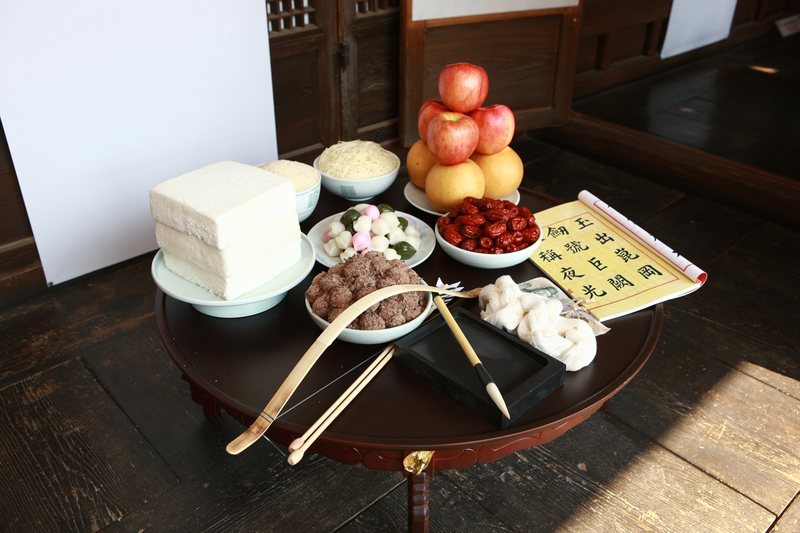
The Encyclopedia of Korean Culture lists the classic doljabi set and what each item was said to foretell:
- Thread and noodles: a long life, stretching on like the strand.
- Rice and money: wealth.
- Books, a brush and ink: passing the state examination and becoming a scholar-official, the dream career of the Joseon era.
- A bow and arrows: a career as a military officer.
- Jujubes: many children and grandchildren.
- A needle, scissors, a ruler and a small iron: skill at sewing. These were laid out for girls, while boys got the bow and a small ornamental knife.
The split between boys and girls has largely faded, and the brush has mostly given way to a pencil. Korea.net's guide to the dol lists newer arrivals as well: a stethoscope for a doctor, a gavel for a career in law, a microphone for an entertainer, a computer mouse, a soccer ball or a golf club for an athlete. Each family picks its own lineup and decides what the items mean. It is a game, not a prophecy, and the photo of the moment usually matters more than the result.
A royal grab in 1791
Letting a baby "choose" a future is an old idea, and not only a Korean one. In sixth-century China, the scholar Yan Zhitui described a southern custom called "testing the child": on the first birthday, boys were offered bows and arrows, paper and brushes, girls scissors, rulers, needles and thread, and the family watched what the baby reached for to judge whether the child would be greedy or honest, foolish or wise. China still has a version today, called zhuazhou.
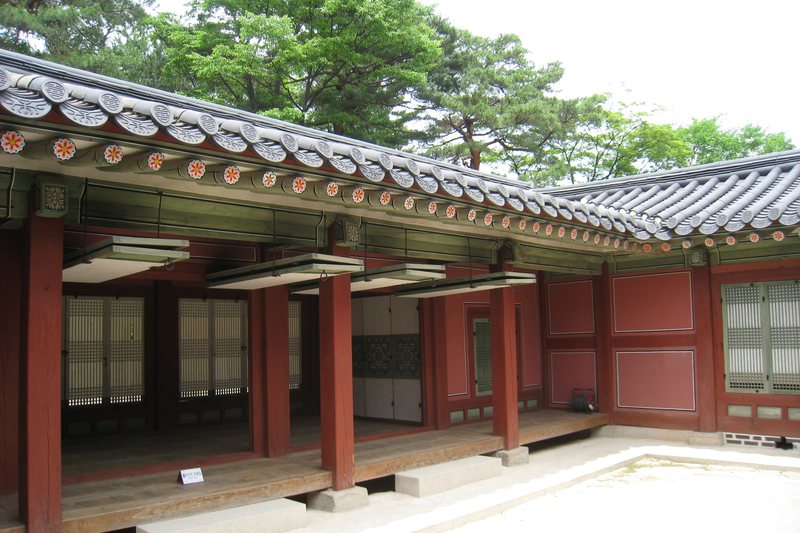
In Korea, the grab even made it into the royal chronicles. The Annals of the Joseon Dynasty record that in 1791, on the first birthday of King Jeongjo's heir, a tray of playthings was set out in Jipbokheon, a hall of Changgyeonggung Palace in Seoul. The baby, in a ceremonial cap and a purple silk jacket, sat with notable composure, the chronicler wrote, then picked up colored thread first, followed by arrows and a musical instrument. That baby grew up to become King Sunjo.
The table and the tiny hanbok
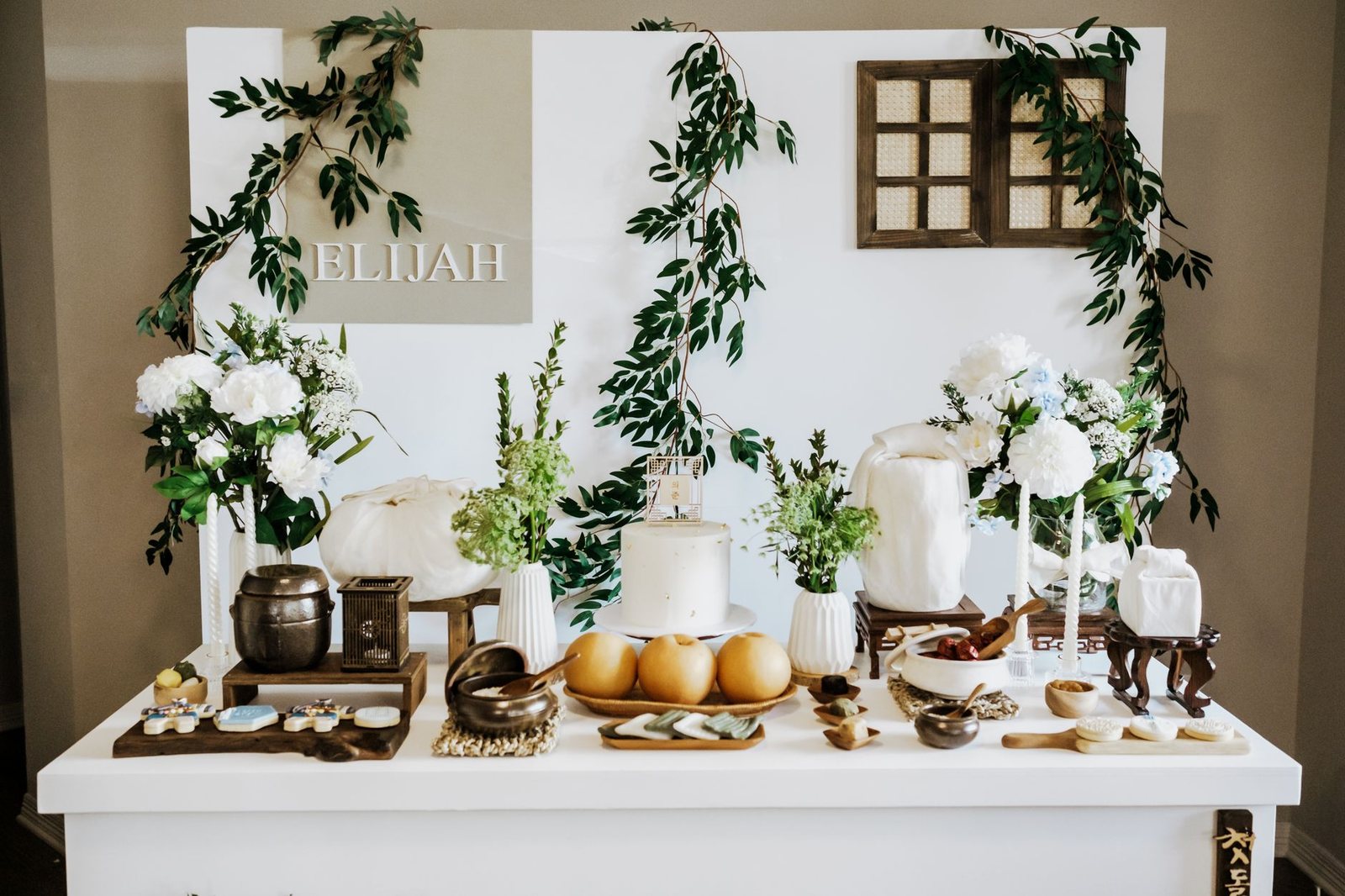
The grab happens in front of the 돌상 (dolsang), the first-birthday table. Traditionally it was piled with rice cakes, fruit and sweets like 약과 (yakgwa, honey cookies), plus foods chosen for their wishes: noodles for a long life, white baekseolgi and red susu-patteok for good health and protection from harm. Rice cakes went out to the neighbors again, now called 돌떡 (dol-tteok), and once more the plates came back with money, rice or thread.
The birthday child wore full hanbok. Boys traditionally had a navy sleeveless robe called a 쾌자 (kwaeja) and a 복건 (bokgeon) cap; girls had a jacket with rainbow-striped sleeves, the 색동저고리 (saekdong jeogori), and a long red skirt. Both wore a long sash around the chest, the 돌띠 (dolti), and carried small pouches. A first birthday is still one of the days when many Koreans put on hanbok, along with weddings and the big holidays.
How doljanchi looks now
For a while, a doljanchi could look like a small wedding: a rented banquet hall, a buffet and a guest list stretching from relatives to coworkers. Many young parents have since gone the other way. The Korea Times reported in 2026 that small, family-only gatherings are now common, and some families simply book a studio photo shoot, share a restaurant meal with both sides of the family or make a donation in the baby's name.
Two things survive every version. One is the small gold ring, the 돌반지 (dolbanji), which the Korea Times describes as a fixture of a first birthday, party or no party. The other is the grab itself. However small the gathering, the tray usually still comes out, and everyone waits for that tiny hand.
If you're invited to a doljanchi
- Bring cash in an envelope or a small gold ring. Both are classic first-birthday gifts.
- Congratulate the parents with 돌 축하드려요 (dol chukhadeuryeoyo, "congratulations on the first birthday").
- Cheer for whatever the baby grabs. Every object is a good wish, so there is no wrong answer, and a baby who cries or grabs two things at once is part of the fun.
Quick answers
What is doljabi?
It is the highlight of a Korean first-birthday party. Objects such as thread, money and a pencil are laid out in front of the baby, and the one the baby grabs is playfully said to predict the child's future.
What does it mean if a baby picks money at doljabi?
Money, like rice, traditionally stands for wealth. Thread means a long life, and a pencil, book or brush a love of learning. Newer items carry career wishes, like a stethoscope for a future doctor.
Why do Koreans celebrate a baby's 100th day?
Because in the past many babies did not survive their first months. Reaching baegil, the 100th day, was celebrated with rice cakes shared among the neighbors, and many families still mark the day.