Wear Hanbok, Walk In Free: Seoul's Palace Rules, Explained
Put on a hanbok and the palace gate waves you through — if your outfit passes the check. What counts, where it works and where it doesn't.
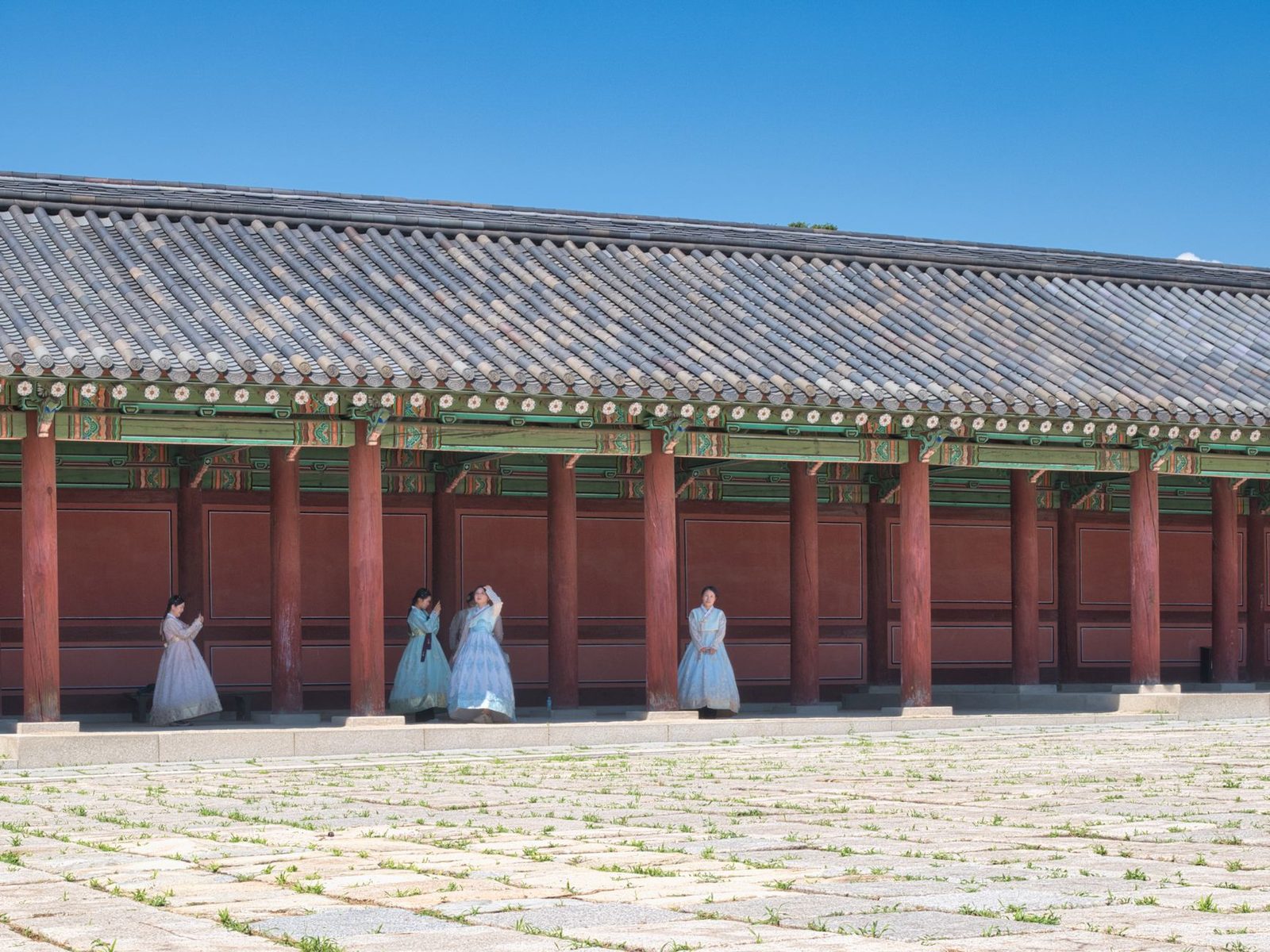
Walk through Gwanghwamun Gate on a sunny weekend and you will see them everywhere: friends in silk skirts and wide-sleeved jackets, couples in matching colors, parents chasing kids in tiny hanbok. Many of them never bought a ticket. For more than a decade, Korea has let people wearing 한복 (hanbok, traditional Korean clothing) into its royal palaces free of charge — Koreans and foreign visitors alike.
Here is the short answer. If your outfit meets the official hanbok guideline, you can enter Gyeongbokgung, Changdeokgung, Changgyeonggung and Deoksugung palaces, Jongmyo Shrine and the Joseon royal tombs run by the Korea Heritage Service without paying. The big exception is the Secret Garden at Changdeokgung, which still needs its own ticket. Everything else is in the details, and the details are worth knowing before you rent.
Why the palaces let hanbok in free
The idea is simple: get people wearing hanbok again. Over the 20th century, Western clothes became everyday wear in Korea, and hanbok turned into something most of us put on mainly for weddings, first birthdays and holidays like Seollal and Chuseok. Since 2013, free palace entry has been a way of bringing it back into daily life and sharing it with the world. Today the program is run by the Royal Palaces and Tombs Center of the Korea Heritage Service (국가유산청, Gukga Yusancheong), and its guideline states plainly that foreign visitors in hanbok qualify too.
The policy caught on. Rental shops now cluster around Gyeongbokgung, and for many young Koreans and travelers, an afternoon at the palace in hanbok has become a small ritual of its own.
Where it works — and the exceptions
- Gyeongbokgung (경복궁) — the largest and most photographed palace. Closed Tuesdays.
- Changdeokgung (창덕궁) — a UNESCO World Heritage Site. Closed Mondays.
- Changgyeonggung (창경궁) — open into the evening. Closed Mondays.
- Deoksugung (덕수궁) — right in downtown Seoul, also open into the evening. Closed Mondays.
- Jongmyo Shrine (종묘) — the royal ancestral shrine, also on the UNESCO list. Closed Tuesdays.
- Joseon royal tombs (조선왕릉, Joseon wangneung) managed by the Korea Heritage Service, several of them in and around Seoul.
When a regular closing day falls on a public holiday, the site generally opens anyway. Opening hours change with the seasons, so check them before you go.
Now the exceptions. The Secret Garden (후원, Huwon) at Changdeokgung is not covered. It is visited on a separate, timed ticket, and the official fee page lists a much narrower group who get in free; hanbok wearers are not on it. Your hanbok still covers the palace grounds you pass through to reach the garden, but book the garden like everyone else. Separately ticketed special programs also set their own terms. Gyeongbokgung's seasonal night openings have recently let hanbok wearers in free after an outfit check, but conditions are announced season by season, so read the notice first.
Jongmyo has its own rhythm, too. On most weekdays the shrine is seen on timed, guided tours, while weekends and public holidays allow free-roaming visits. Plan your day around that schedule.
What counts as hanbok
This is where people get turned back at the gate. Staff check outfits against a published guideline, and the core rule is about structure: you need a top and a bottom.
- The top must be a 저고리 (jeogori, short jacket) that keeps the traditional wrapped, overlapping collar. Whether it fastens with long ribbon ties (고름, goreum) or knot buttons does not matter.
- The bottom can be a 치마 (chima, skirt) in any style, wrap-around or not, or 바지 (baji, trousers) cut along the lines of traditional hanbok trousers.
- Modern hanbok counts. Everyday, modernized hanbok (생활한복, saenghwal hanbok) qualifies as long as it keeps that structure.
- Any gender can wear any style. Since July 1, 2019, men may wear women's hanbok and women may wear men's hanbok and still enter free.
What does not count: a 두루마기 (durumagi, long overcoat) or another robe thrown over everyday clothes; a jeogori with jeans; a hanbok skirt with a T-shirt; T-shirt-style tops; and one-piece dresses without a separate jeogori. The guideline also asks for hanbok that suits the dignity of a palace and avoids excessive exposure, so very short or open-chested designs can be refused. On a regular daytime visit, an outfit that doesn't pass simply means buying a normal ticket.
Renting hanbok respectfully
Most visitors rent, and the shops near the palaces make it easy: you choose a set, staff help you dress, and many also offer simple hairstyling and accessories. A few habits make the day better for everyone.
- Ask for a palace-ready set. Tell the shop you plan to use free entry, and make sure you are getting a real jeogori plus a skirt or trousers, not a one-piece costume dress.
- Let the staff dress you. Hanbok has layers and ties that are easy to get wrong, and a properly tied goreum looks better and holds all day.
- Know your return time. Rentals run on the clock. Plan one or two palaces, not four.
- Move with care. Long skirts and old stone steps need attention; lift the hem slightly on stairs and thresholds.
- Treat it as clothing, not a costume. Hanbok is still what many Koreans wear to weddings and family holidays. Have fun with it, but wear it the way you would wear your best clothes.
A word on style. In the late 2010s, Koreans debated rental hanbok with flashy prints, sheer fabrics and shapes borrowed from other costumes, and whether they deserved the free pass. The current guideline does not ban modern designs; it focuses on the basic structure. Choosing a set that looks recognizably Korean is the easiest way to avoid any question at the gate.
If you visit Korea: photo etiquette
Palaces and hanbok are made for photos, and snapping pictures with your phone or camera is completely fine. A few rules and courtesies still apply.
- Big shoots need a permit. Palace rules treat hanbok as formal wear. If you bring a hired photographer with extra gear such as tripods, lighting or reflectors, or a crew of two or more helpers, you need a photography permit from the palace office in advance.
- No drones. Flying them is limited to approved public bodies.
- Stay on the paths. Don't climb stone platforms or railings, don't cross ropes, and don't step into buildings that aren't open to visitors.
- Share the frame. Famous gates and halls get busy. Take your shots, then step aside so the next group can take theirs.
- Ask before photographing strangers. Other people in hanbok are visitors like you, not part of the scenery.
- Smoking is banned everywhere on the grounds, and eating is allowed only in designated areas.
One last thing: rules can change. The palaces update their guidelines, hours and programs from time to time, so check the Royal Palaces and Tombs Center website before you go.
Quick answers
Is Gyeongbokgung free if you wear hanbok?
Yes. Gyeongbokgung, Changdeokgung, Changgyeonggung, Deoksugung and Jongmyo let hanbok wearers in free, foreigners included, as long as the outfit meets the guideline.
Does modern or fusion hanbok count?
Modern hanbok counts if it has a jeogori with a wrapped collar plus a skirt or traditional-style trousers. A jeogori with jeans, a robe over everyday clothes or a one-piece dress does not.
Is the Changdeokgung Secret Garden free with hanbok?
No. The Huwon tour needs its own ticket; hanbok only covers the main palace grounds.
Sources
- Hanbok free admission guideline (한복무료관람 가이드라인) — Royal Palaces and Tombs Center, Korea Heritage Service
- Admission fees and free admission (관람요금) — Royal Palaces and Tombs Center
- Opening hours and closing days (관람시간) — Royal Palaces and Tombs Center
- Photography permits (촬영허가 신청) — Royal Palaces and Tombs Center
- 궁·능 한복착용자 무료관람 가이드라인 개선 (2019 guideline revision) — korea.kr