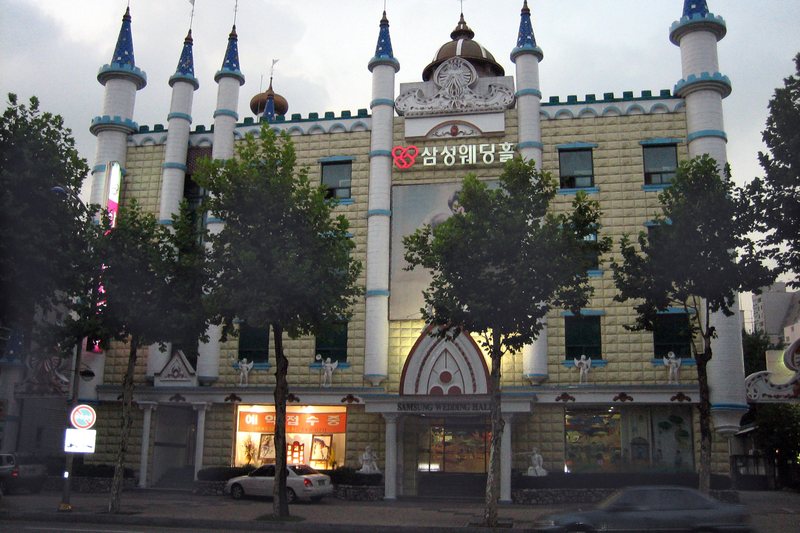
Walk into a wedding hall in Seoul around noon on a Saturday and you may notice something odd: there is more than one bride. One couple is posing for photos, another bride is waiting in the bridal room, and a third ceremony is booked for later in the afternoon. At the front desk, guests line up with white envelopes, sign a book and walk off with a small meal ticket. The ceremony itself takes about 30 minutes.
Nothing has gone wrong. This is a typical Korean wedding. Most of Seoul's wedding halls, called 예식장 (yesikjang), start a new ceremony every 60 to 90 minutes, and the day is built as much around families, guests and cash gifts as around the couple. Tucked inside all that speed, though, are much older customs, including a deep bow to the in-laws and a skirt held open to catch flying jujubes.
Why it is over so fast
Part of the answer is space. Seoul is crowded, a wedding venue needs a large hall, parking and a central location, and most halls only do their business on weekends. So ceremonies are booked back to back, and a couple who wants a longer slot often has to pay about double, as one professor told the Korea Herald.
The other part is who the wedding is for. In Korea, a marriage is widely seen as the union of two families, and many guests are the parents' colleagues, friends and distant relatives rather than the couple's. Plenty of them drop off an envelope, skip the ceremony and head straight for the meal. Seen that way, a short ceremony is also a courtesy: nobody loses a whole Saturday. It suits a country known for its ppalli-ppalli (“hurry, hurry”) spirit.
Inside the 30 minutes
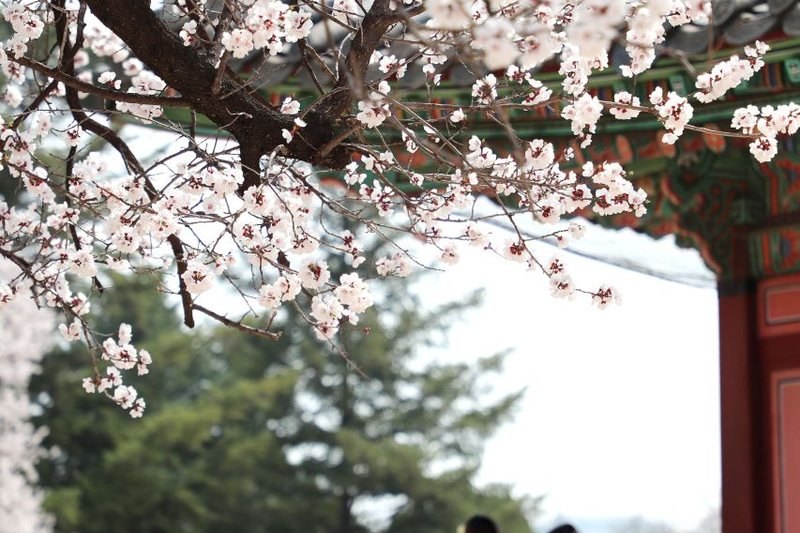
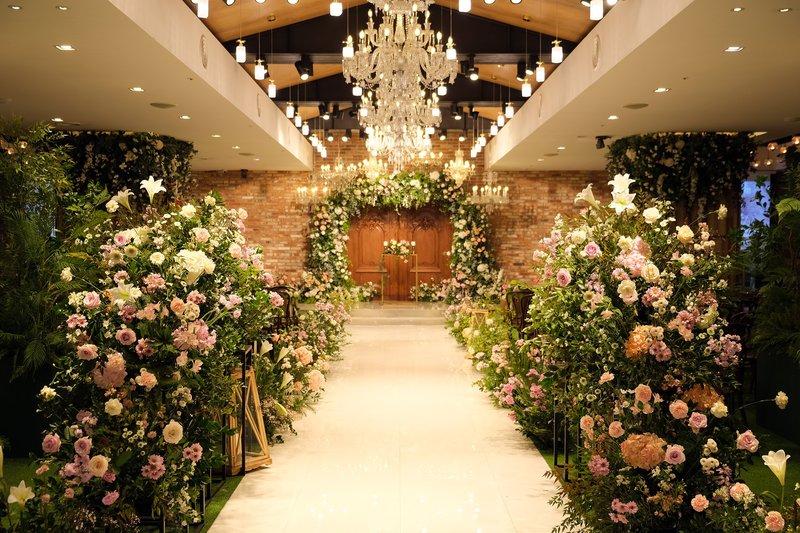
Couples add their own touches, but the running order is strikingly similar from hall to hall. It often opens with the two mothers in hanbok walking down the aisle hand in hand and lighting candles at the front. Their colors are a quiet code: the groom's mother usually wears shades of blue and the bride's mother shades of red or pink, a pairing linked to the harmony of yin and yang. A wedding is still one of the days when many Koreans put on hanbok.
Then the groom walks in, followed by the bride, traditionally on her father's arm. An officiant offers a few words of advice, a friend often sings, the couple turns to bow deeply to each set of parents, and the newlyweds march back up the aisle together. Family and friends crowd in for group photos, and then everyone moves on to the meal, most often a buffet, where the couple goes from table to table to thank guests.
The envelope at the front desk
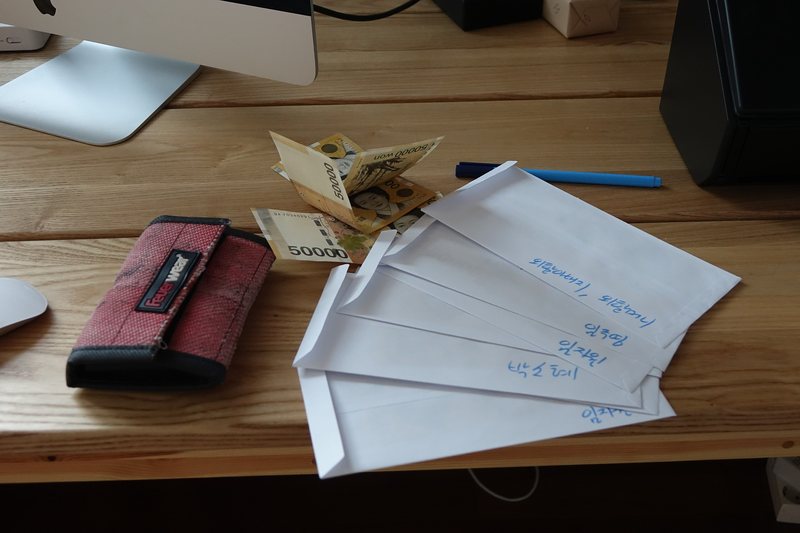
The gift at a Korean wedding is almost always money. It is called 축의금 (chuguigeum, congratulatory money), and it goes in a white envelope with your name written on it. Near the entrance there are reception desks, usually one for the groom's side and one for the bride's, staffed by relatives or close friends. You sign the guestbook, hand over the envelope and receive a 식권 (sikgwon, meal ticket) for the banquet.
Korean insider tip: Write your name on the back of the envelope, not the front, usually in the lower left corner. The front is for a short blessing, and many envelopes sold in Korea already have one printed, such as 축결혼 (chukgyeolhon, “congratulations on the wedding”). If the couple's parents may not know you, add your company or team above your name so the family can tell whose guest you are. And don't seal it too tightly.
To many visitors this feels transactional. Koreans tend to see it differently. A sociologist quoted by the Korea Herald traces cash gifts back to mutual aid: weddings were expensive, so the community chipped in. That is also why the envelope is never quite forgotten. Many families keep track of who gave what, and people are generally expected to give back a similar amount when it is the giver's turn to marry, or to marry off a child. For parents who have handed out envelopes for decades, a child's wedding is when those gifts come home, which helps explain guest lists in the hundreds.
How much goes in the envelope
There is no official price, but there are unwritten rules. Traditional etiquette leans toward odd amounts such as 30,000 or 50,000 won, because odd numbers have long been considered lucky, and it avoids 40,000 won because the number 4 sounds like the word for death. A round 100,000 won is the accepted exception, since ten is seen as a number of completeness, according to a folklorist cited by the daily Maeil Shinmun.
Today the two amounts you hear most are 50,000 and 100,000 won. In NH NongHyup Bank's analysis of 5.33 million wedding-gift transfers from 2023 to 2025, 50,000 won was still the most common amount in 2025 (42.3%), just ahead of 100,000 won (39.7%), while the average rose to 117,000 won.
The meal is a big reason for the climb. In the Korea Consumer Agency's February 2026 survey, the median wedding meal cost 59,000 won per guest. So a common rule of thumb has formed: about 50,000 won if you only send an envelope, about 100,000 won if you attend and eat, and more for close friends and family. In the end, how close you are matters more than any formula.
Pyebaek: a deep bow and flying jujubes
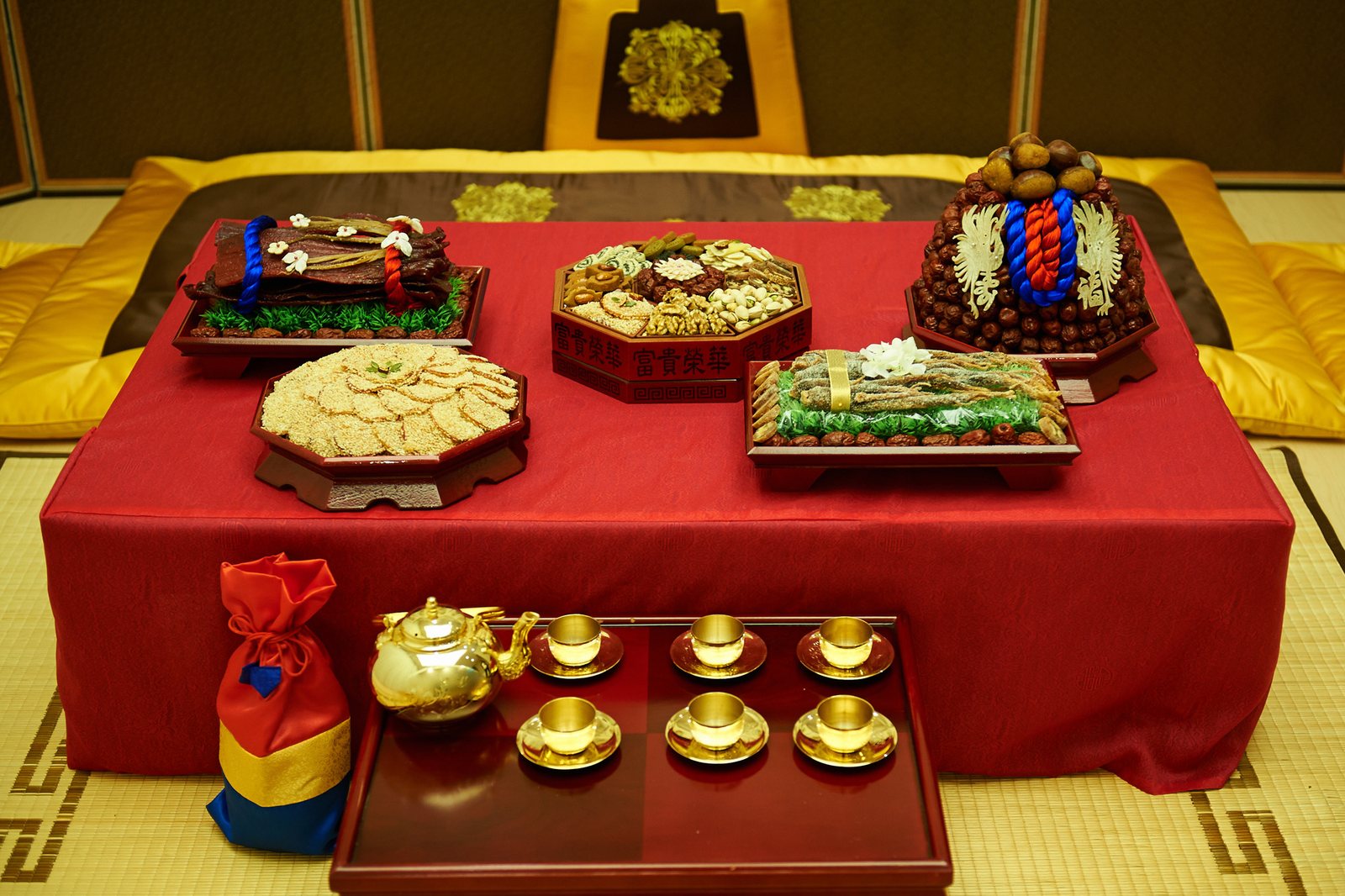
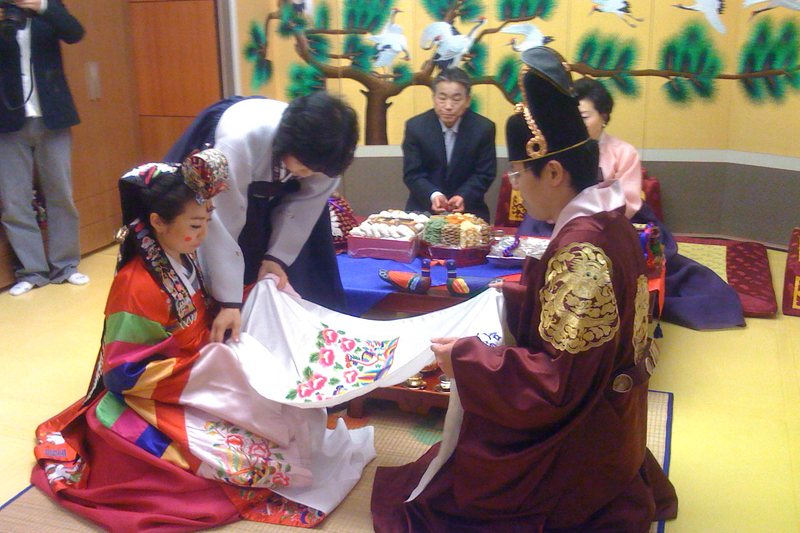
In the old way of marrying, the wedding usually took place at the bride's family home, and she moved in with her husband's family later, traditionally on the third day. There she formally met her new family in a rite called 폐백 (pyebaek). According to the Encyclopedia of Korean Culture, she laid out jujubes, chestnuts, wine, side dishes and fruit prepared by her own family, then bowed deeply and offered wine to her parents-in-law and the other elders, in order of kinship. The rite announced to the ancestors, relatives and neighbors that she had become part of the family.
Then came the best-known moment. The parents-in-law tossed jujubes into the bride's skirt with a wish for 부귀다남 (bugwi danam, “wealth, honor and many sons”). Jujubes, often called red dates in English, and chestnuts have long stood for fertility and children, and a popular saying goes that the number the bride catches tells how many children the couple will have.
Today pyebaek usually follows right after the ceremony, at the venue or the in-laws' home, with the couple bowing together in hanbok. It is also optional: Korea.net notes that couples now decide by their own values, and plenty skip it.
A few couples go further and hold the entire wedding the old way. Namsangol Hanok Village in central Seoul stages traditional ceremonies on spring and autumn weekends at 11 a.m., 1 p.m. and 3 p.m., at the Min family house of Gwanhun-dong, and each one runs about 30 to 40 minutes. Its official wedding page lists a base price of 1,534,500 won including VAT, covering costumes for the couple, the ceremonial table, the props and the officiant and staff. Photos, makeup and music cost extra, there is no banquet on site, and up to 100 guests can attend, with 60 seats.
Photos first, ceremony later
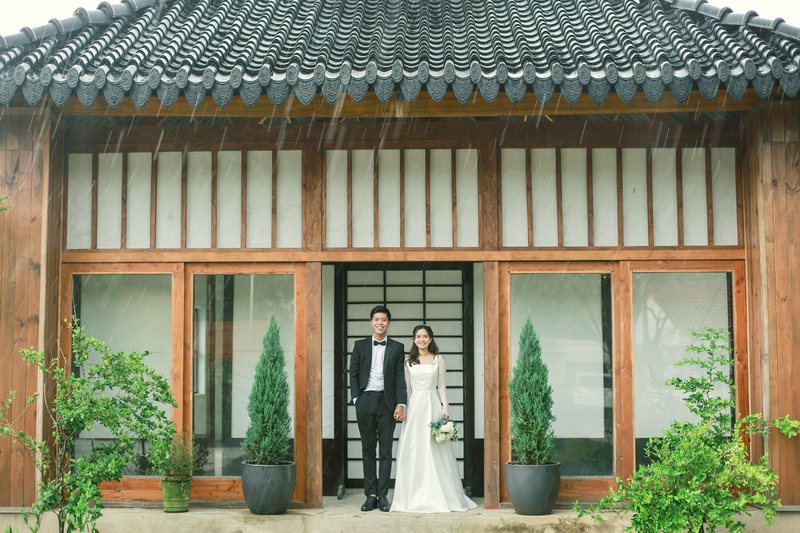
Much of a Korean wedding happens before the wedding day. The standard planning package goes by a nickname, 스드메 (seudeume), short for studio, dress and makeup: a pre-wedding photo shoot in a studio, then the gown and makeup for the day itself.
That is changing too. According to Korea Consumer Agency data reported by the Economist Korea, the share of planning contracts that drop the studio and keep only dress and makeup rose from 11.0% in April 2025 to 19.2% in June 2026.
If you're invited to a Korean wedding
- Bring cash in an envelope with your name on it, and give it at the desk for the side that invited you.
- Think 50,000 or 100,000 won, depending on how close you are and whether you will stay for the meal. Avoid 40,000 won.
- Keep your meal ticket. You will usually need it at the banquet.
- Be on time. The ceremony is short, and the next couple is waiting.
- Congratulate in Korean. 결혼 축하드립니다 (gyeolhon chukadeurimnida) is the polite way to say it to the couple or their parents.
Quick answers
How much money do you give at a Korean wedding?
There is no fixed amount, but 50,000 and 100,000 won are by far the most common. Many people give about 50,000 won if they only send an envelope and about 100,000 won if they attend and eat. Close friends and family give more.
What is pyebaek at a Korean wedding?
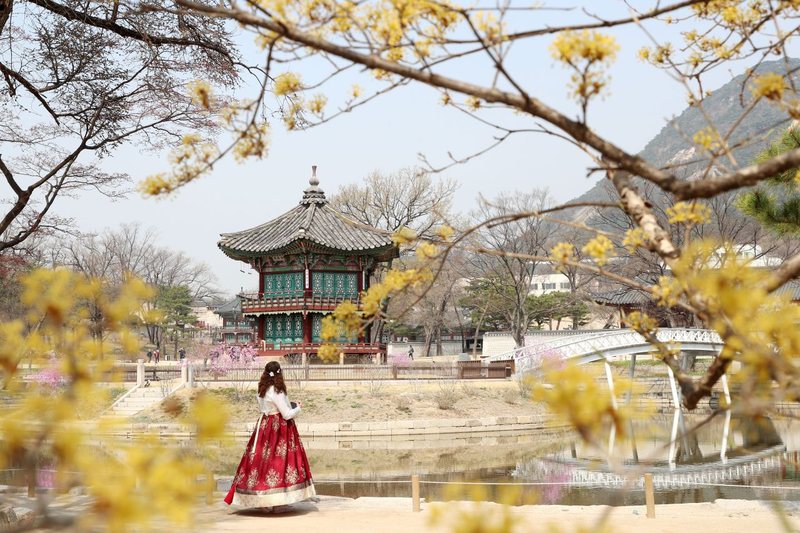
A traditional rite in which the newlyweds, dressed in hanbok, bow to their parents and elder relatives. The parents toss jujubes and chestnuts into the bride's skirt as a wish for children. It is optional today, and many couples skip it.
How long is a Korean wedding ceremony?
Usually about 30 minutes, and many Seoul halls start a new ceremony every 60 to 90 minutes.