The Missing Fourth Floor: Why Koreans Tiptoe Around the Number 4
Elevators that go 1, 2, 3, F and an airport with no Gate 4: one Korean syllable explains it all. Here's how seriously people still take it.
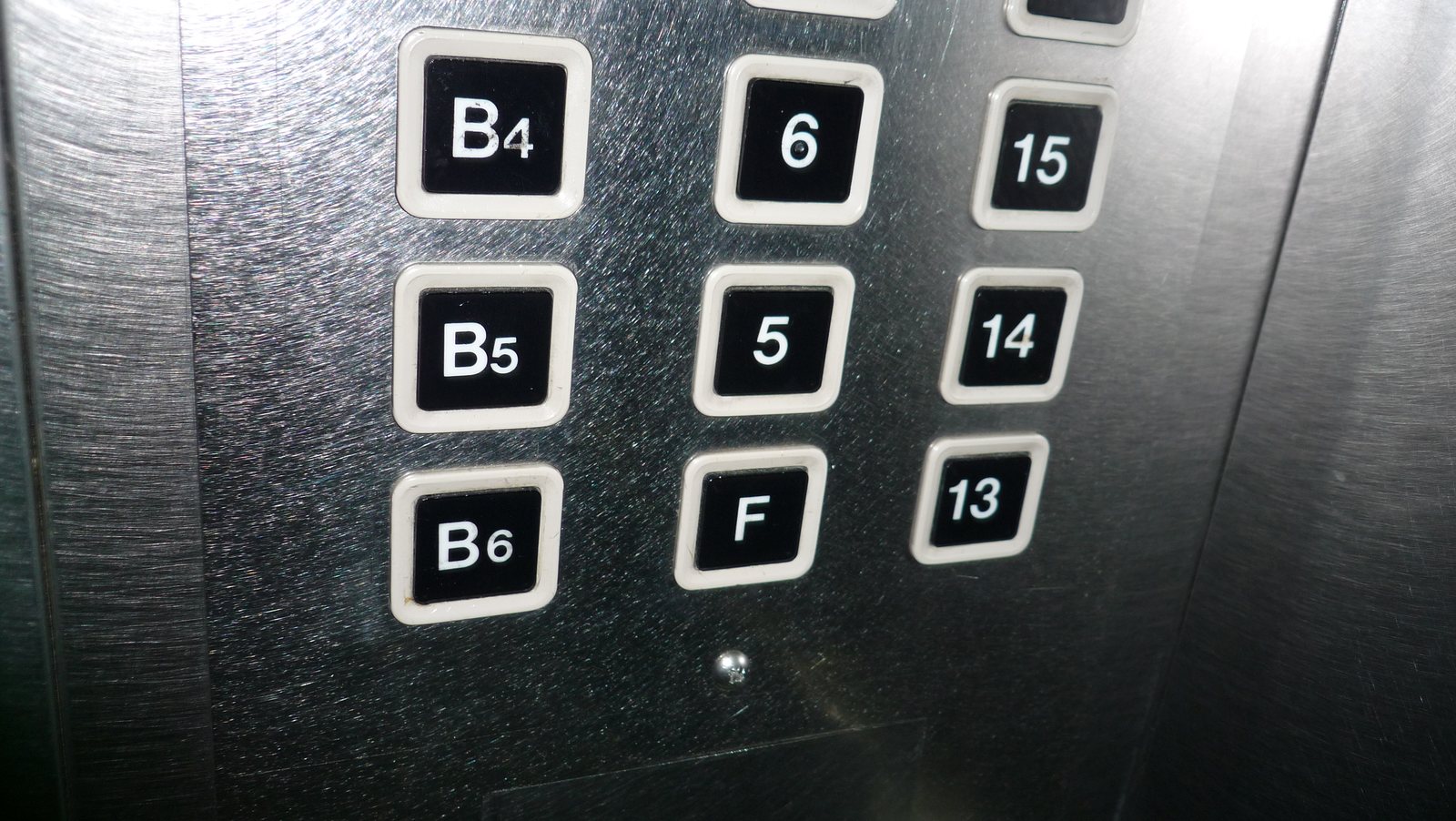
Step into the elevator of an older Korean apartment block or hospital and you may find a button panel that reads 1, 2, 3, F, 5. Nobody forgot how to count. The F stands for "four," and it is there because of a single syllable: in Korean, the number four is 사 (sa), and so is the Sino-Korean word for death, 사 (死, sa).
That accident of pronunciation has quietly shaped floor plans, room numbers and even airport gates. Yet the fear is softer than those elevator buttons suggest. For many Koreans today it is more habit than real belief, and the history of the number turns out to be far friendlier than its reputation.
One sound, two meanings
Korean has two sets of numbers. Native Korean numbers, such as 하나, 둘, 셋, 넷 (hana, dul, set, net), are used for counting things and, in everyday speech, for age. Sino-Korean numbers, 일, 이, 삼, 사 (il, i, sam, sa), come from Chinese characters and handle dates, money, phone numbers and floors. So the fourth floor is 4층 (sa-cheung), and the four in it sounds exactly like the 死 in 사망 (samang, death).
Notice what that means: the unease clings to the sound, not to the quantity. Nobody hesitates to ask for 네 개 (ne gae, four pieces) at a bakery, because the native word never sounds like death. It is the Sino-Korean sa, the one printed on buildings and calendars, that carries the echo.
Korea is not alone here. In Mandarin, four (sì) and death (sǐ) differ only in tone, and in Japanese both can be read shi, which is why Japanese speakers often say yon for four instead. The superstition traveled across the region along with the characters themselves.
Where you will notice it
The most famous sign is the F button. Rather than print a 4, some buildings label the fourth floor F, for the English word "four." The floor is still there; only the digit is hidden. Other buildings simply jump from 3 to 5.
Hospitals have traditionally been the most careful, which makes sense: a ward is the last place anyone wants a reminder of death. Some avoid 4 in floor or room numbers, and older buildings may skip unit numbers that repeat it, such as 404.
The habit even reaches the country's main gateway. Incheon International Airport says it has no Gate 4, 44 or 244, explaining that 4 is avoided in East Asian countries that use Chinese characters because it sounds like death. In a thoughtful touch for visitors, it also skips Gate 13, a number considered unlucky in Western cultures.
How strong is the belief today?
Weaker than you might think. In 2024, Gallup Korea asked 1,777 people aged 13 and over to name their favorite number. Only about 2% chose 4, roughly the same as 6 (3%) and 10 (2%). In other words, 4 is not singled out for hatred so much as simply passed over. In its own commentary, Gallup notes that 4 was once skipped in the floor and unit numbers of older buildings, but that the taboo now seems to have largely faded.
That matches everyday life. Plenty of newer buildings print a plain 4 in the elevator, people use phone numbers and prices with a 4 without a second thought, and four friends sharing a table think nothing of it. The old caution lingers longest in places already close to illness and loss, such as hospitals and funeral halls, and among some older Koreans who grew up with it. It is fair to call it a soft superstition: rarely believed literally, but still felt.
It is also worth remembering that 4 was not always a gloomy number. Traditional culture is full of respectable fours: 사주 (saju, the "four pillars" of birth year, month, day and hour used in fortune-telling) and 사군자 (sagunja, the "four gentlemen" of classical painting: plum, orchid, chrysanthemum and bamboo). Korean writers on culture point out that for much of history four was seen as a stable, even auspicious number. Exactly when the link with death took over is still debated.
The numbers Koreans do love
If 4 is the wallflower, 7 is the star. In the same Gallup survey, 34% named 7 as their favorite, followed by 3 (18%), 5 (12%) and 1 (11%). Gallup describes 7 as a "lucky number" that came from the West, and it has topped the list in every edition of the survey since 2004. Overall, odd numbers dominate.
The number with the deepest local roots is 3. Koreans like to settle things in threes, as in 삼세판 (samsepan), the "best of three," or simply the insistence on a third round after losing the second. A feature in K-Gonggam, the government's weekly magazine, traces this fondness back to the Dangun founding myth, in which three heavenly seals are handed down, and points to threes in custom as well, such as three kinds of fruit on the table at ancestral rites. And 8, the number China is said to love? In Korea it is the most popular even number, chosen by 5%.
If you visit Korea
- Press F with confidence. In an elevator, F is simply the fourth floor.
- Count carefully when a floor is skipped. If a building jumps from 3 to 5, the floor labeled 5 is physically the fourth one up. Good to know when someone says "it's on the fifth floor."
- Don't worry about 4 in daily life. Phone numbers, prices, table numbers and seat numbers with a 4 are completely normal.
- Be gentle around hospitals and funerals. Jokes about "the death number" in a hospital room or at a funeral hall can land badly. That is where a little tact goes a long way.
- When in doubt, choose 3 or 5. If you are deciding how many small items to put in a gift for someone in hospital, picking a number other than four costs nothing.
Quick answers
Why is 4 an unlucky number in Korea?
Because the Sino-Korean word for four, 사 (sa), sounds exactly like the Sino-Korean word for death (死, also sa). The same overlap exists in Chinese and Japanese, so 4 became a number many people prefer to avoid.
Why do Korean elevators say F instead of 4?
F stands for "four." Labeling the fourth floor F lets a building keep the floor while avoiding the digit. You will mostly see it in older buildings and hospitals.
Do Koreans still believe 4 is unlucky?
Mostly as a mild habit. Gallup Korea's 2024 survey suggests the old taboo has largely faded from everyday life, though some hospitals and older Koreans still prefer to avoid the number.
Sources
- Gallup Korea — 한국인이 좋아하는 50가지 [일상·자연편]: 숫자 (2024)
- Incheon International Airport — A Gate Number that Does not Exist at Incheon Airport (2024)
- Korea JoongAng Daily — [WHY] Beware fan death and evil mice doppelgangers (2022)
- K-공감 (korea.kr) — 우리는 왜 숫자 3을 좋아할까? (2026)
- Munhwa Ilbo — ‘4’는 불길?… 과거엔 성스럽고 길한 숫자 (2025)