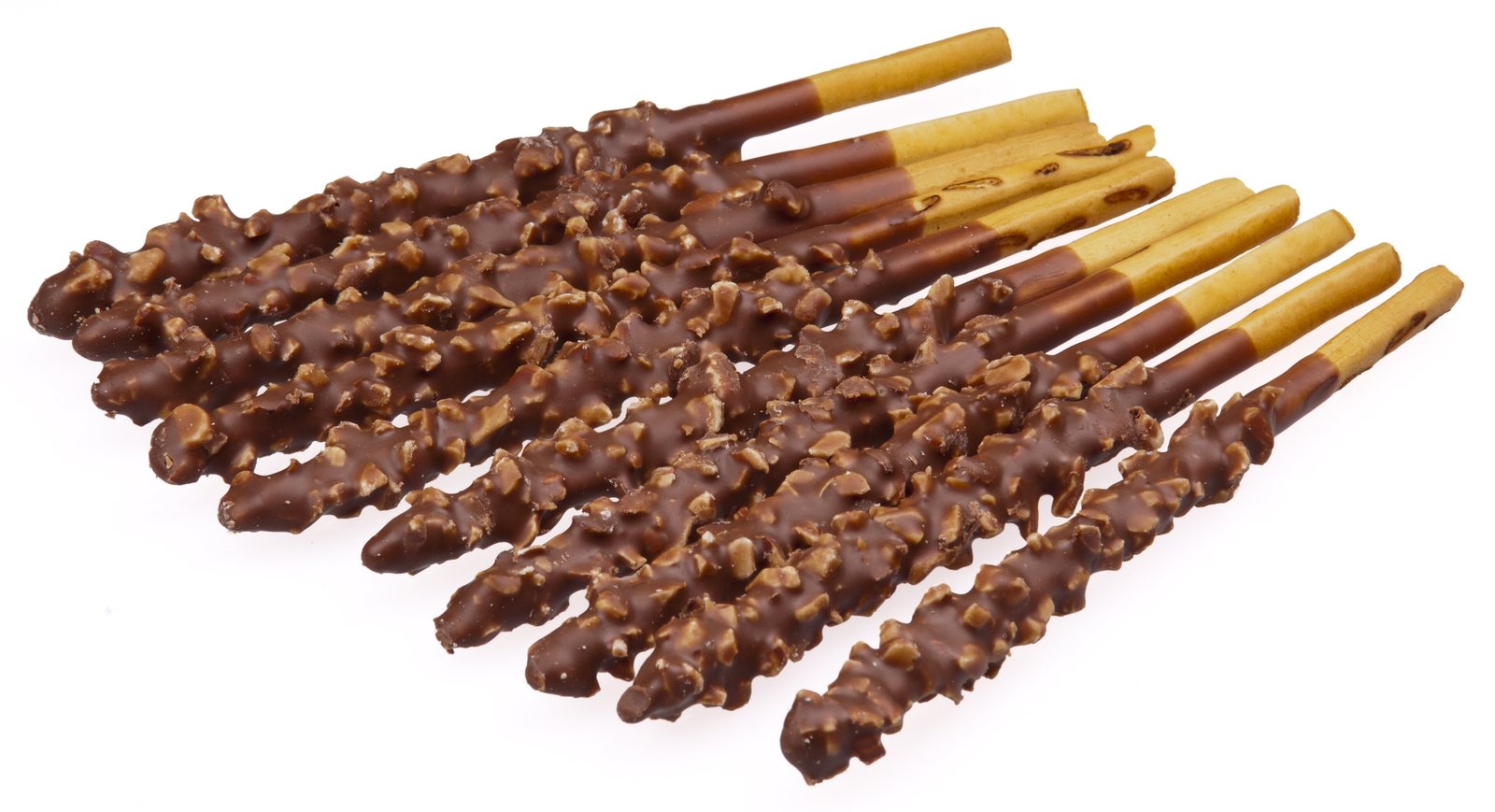
Who do you give Pepero to on Pepero Day? Almost anyone you like, in both senses of the word. On November 11, Koreans hand Pepero (빼빼로, ppaeppaero), thin chocolate-dipped biscuit sticks, to partners and crushes first, then to friends, classmates, coworkers and family. No rule says who has to go first. The catch is that the same box can mean "thanks for covering my shift" or "I have feelings for you," and the person holding it works out which from how you gave it.
That is what sets the day apart from the rest of Korea's calendar of couple days. Valentine's Day traditionally runs from women to men, and White Day sends it back a month later. Pepero Day has no direction at all, so anyone can start it and everyone has to guess what it means.
Who do you give Pepero to on Pepero Day, and what does each box say?
Nobody keeps an official list, but this is roughly how each gift tends to read:
- Your partner: close to expected. In a 2014 survey by the matchmaking company Duo of 520 unmarried Koreans in their 20s and 30s, 64.2% said they would mark the day if they were in a couple.
- A crush: the classic cover for a confession, because a box is small enough for both of you to pretend it meant nothing.
- Friends and classmates: the most relaxed group. A 2005 Korea JoongAng Daily report described children at some elementary schools swapping sticks with classmates at 11:11 a.m.
- Coworkers: common, and usually handled as a group. A 2010 Saramin survey of office workers put the boss at the top of the list (57.1%), ahead of same-year colleagues (48.1%).
- Family: a small treat for parents or siblings, with nothing to decode.
A snack can carry all this because it is cheap enough to deny. Lotte Wellfood raised the suggested retail price of a 54-gram box of chocolate Pepero from 1,800 won to 2,000 won in February 2025, the Korea Economic Daily reported. Store prices vary, and chains run discounts around the day. At that level a box leaves nobody in your debt, which is the whole point.
It can still get awkward. In the Duo survey, 57.1% called the day commercial, and when asked which relationship made it most burdensome, men most often named coworkers (30.6%) while women named opposite-sex friends they were not dating (37.4%). Those are exactly the cases where a box can be misread.
Korean insider tip: At work, treat everyone the same. Leave a box on every desk, or put a shared pile on the team table and say 하나씩 드세요 (hanassik deuseyo, "take one each"). Singling out one colleague, or handing over something handmade or a big gift set, looks like a confession. If you mean it, that is how you say it. Either way, offer it with both hands to anyone senior to you.

Why November 11: four sticks in a row
Write the date as 11/11 and you get four thin upright lines, which look like four Pepero standing side by side. Japan's Glico, maker of the similar snack Pocky, noticed the same thing and established Pocky & Pretz Day on that date in 1999, citing the shape of its products.
How Pepero Day started: the Busan schoolgirl story
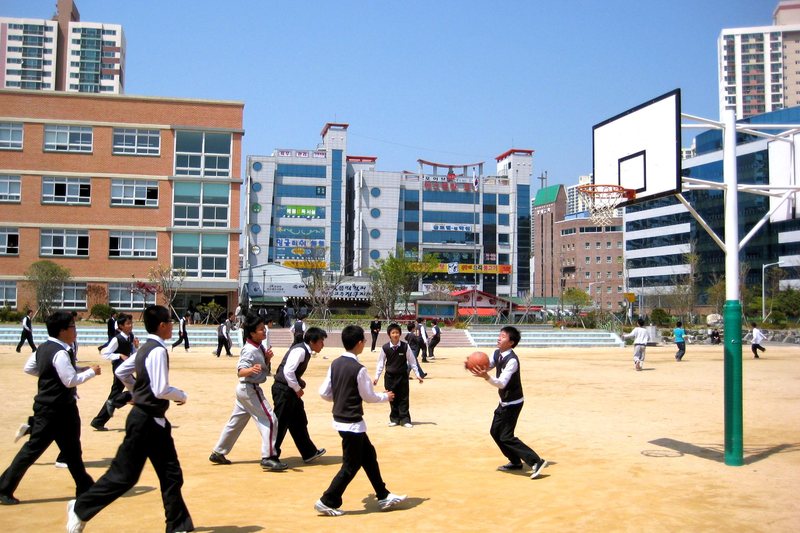
Pepero went on sale in 1983, and the story most Koreans know begins about a decade later. In the early 1990s, it goes, middle school girls in the Busan area swapped the sticks on November 11, wishing each other to grow tall and slim. YTN dates this to 1993 or 1994 and says Lotte's website and the first press reports on the day both mention it. The Korea Herald places it more broadly among middle schoolers in Gyeongsang Province, and iNews24 adds a Lotte salesperson in the region who grew curious in 1994 and traced the trend to those students.
Treat the details with some care. We could not find a record naming the school or the students, and the tellings disagree. The company's role shifts too: The Korea Herald says Lotte launched a campaign designating the day in 1996, YTN describes free giveaways from the late 1990s, and iNews24 says full marketing began in the 2000s. One number is harder to argue with. The company says nearly half of all Pepero sales land in November, according to The Korea Herald.
The other 11/11: Garaetteok Day and Farmers' Day
Not everyone wants the date to belong to a snack. November 11 is also 농업인의 날 (Nongeobin-ui Nal, Farmers' Day), a statutory commemorative day set in the mid-1990s; Korean reports give 1996 or 1997. The reasoning is a lovely bit of wordplay. The character 土 (earth) splits into 十 (ten) and 一 (one), so a day for people who work the soil landed on 11/11.
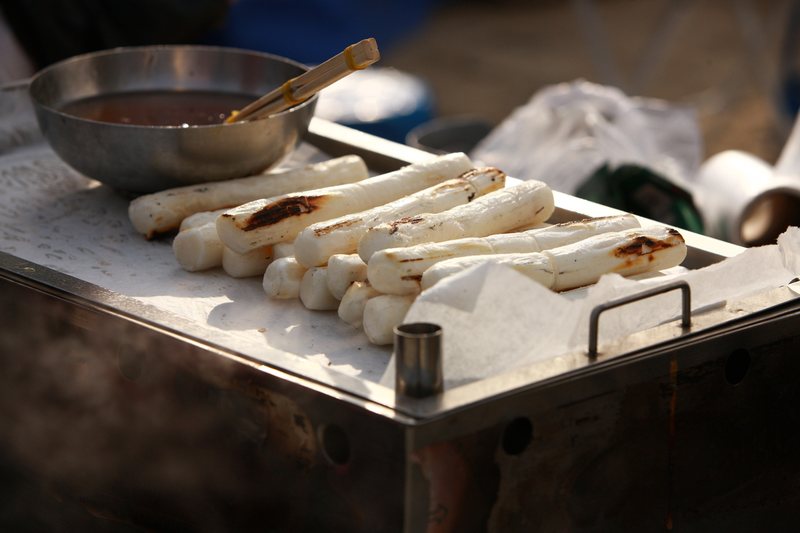
Since 2006, the government has promoted the date as 가래떡데이 (Garaetteok Day) to get people eating more Korean rice and to remember the farmers who grow it. The idea came from the shape: 가래떡 (garaetteok) is a long white rice cake, in effect a very serious number 1, and the same rice cake gets sliced into coins for 떡국 (tteokguk), the New Year soup. In 2023, the farm cooperative Nonghyup and the agriculture ministry handed out 1,111 sets at 11:11 in central Seoul. Few people would confess their love with one, but as a gift for a grandparent it is hard to beat.
A third 11/11 is quieter. At 11 a.m., people at the UN Memorial Cemetery in Busan and around the world turn toward the city for a minute of silence, honoring those who fought under the UN flag in the Korean War. Turn Toward Busan began in 2007 at the suggestion of a Canadian veteran and became a legal memorial day in 2020.
Teachers are the exception
The one box to think twice about is the one for a teacher. Under Korea's anti-graft law, a homeroom or subject teacher who currently grades or guides a student should not accept even a small gift, according to a Yonhap fact-check from May 2026. That guidance was written for Teachers' Day and does not mention Pepero, but we would read a box from a current student the same way. If you teach at a Korean school, ask your co-teacher how your school handles it before you accept anything.
Schools have been wrestling with this day for years. On November 11, 2011, billed as the "millennium Pepero Day," 101 of Daegu's 215 elementary schools closed at their principals' discretion, up from one the year before. The education office insisted Pepero Day had nothing to do with it. One school official told the Seoul Shinmun otherwise.

If you're in Korea on November 11
- Do buy early if you are giving to a whole team. With the day on a Wednesday in 2026, convenience chains expect office workers and students to drive demand.
- Do simply say thank you if someone hands you a box. You don't need one ready in return, and sharing it on the spot is normal.
- Don't suggest the Pepero game to coworkers. It ends with two faces very close together.
- Don't feel you must join in. In the Saramin survey, only 36.1% of office workers planned to mark the day at all.
November's snack calendar keeps going, too. Eight days later, on November 19, 2026, comes the college entrance exam, and the gifts turn from slim sticks to sticky treats for luck.

Quick answers
Does giving someone Pepero mean you like them?
Not by itself. A plain box for a friend or coworker is a friendly gesture. Something handmade or a big gift set for one person, given privately, usually reads as romantic.
Is Pepero Day a public holiday in Korea?
No. Offices, schools and shops stay open. Farmers' Day on the same date is a commemorative day, not a day off.
What is the Pepero game?
Two people bite opposite ends of one stick and nibble toward the middle, trying to leave the smallest piece. It is a staple of Korean variety shows and a flirty party game, which is why viewers abroad so often ask about it.
Is Pepero the same as Pocky?
They are very similar snacks from different companies. Pocky comes from Japan's Glico and dates to 1966. Pepero comes from Korea's Lotte and dates to 1983.