Hangul Day: The King Who Built an Alphabet Anyone Could Learn
Every October 9, Korea takes a day off to thank a 15th-century king. His gift was 28 letters drawn from the mouth, the sky and the earth.
Every year on October 9, South Korea takes a day off to celebrate an alphabet. 한글날 (Hangeullal, Hangul Day) honors 한글 (Hangeul, usually spelled Hangul in English), the script on every Korean phone screen, subway sign and menu. Most of the world's writing systems grew slowly over centuries, but Hangul has a known author and a known date: King Sejong (세종대왕, Sejong Daewang), the fourth king of the Joseon dynasty, finished it in 1443.
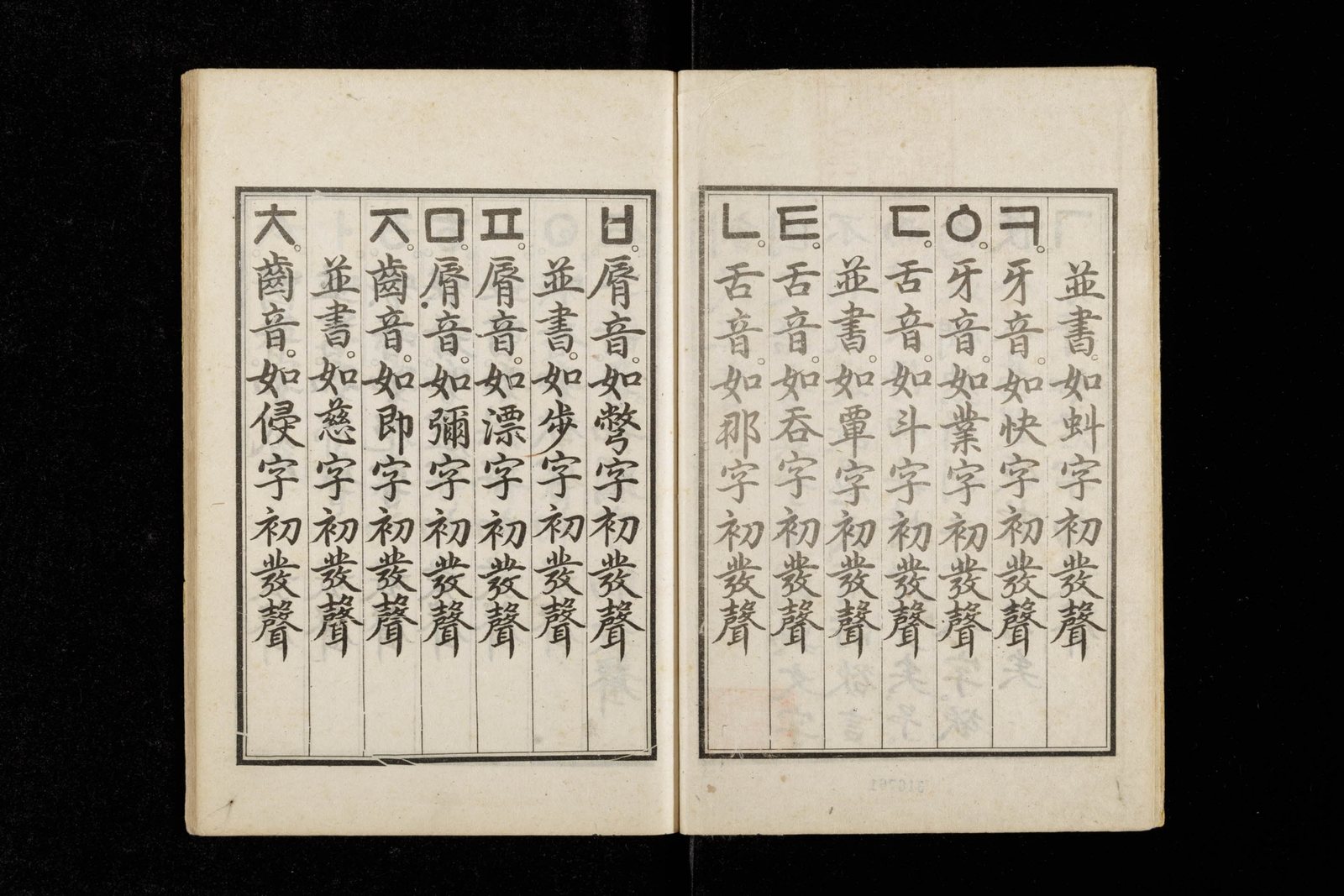
The holiday marks what came next. In 1446, Sejong formally introduced the new letters in a book called 훈민정음 (Hunminjeongeum), "the correct sounds for instructing the people." This year's Hangul Day, which falls on a Friday, is the 580th anniversary of that announcement. Here is why a king set out to invent an alphabet, and why its shapes are cleverer than they look.
Why a king wanted a new alphabet
Before Hangul, Koreans spoke Korean but wrote in Classical Chinese. Mastering thousands of characters took years, so reading and writing belonged mostly to a small educated elite.
Sejong gave his reasons in a short preface that Korean students still learn at school. In short: the language of our country differs from China's and does not fit Chinese characters, so many ordinary people have something to say but cannot write it down. Taking pity on them, he made 28 new letters, so that everyone could learn them easily and use them comfortably every day.
The Annals of the Joseon Dynasty record that the king personally created the 28 letters in the twelfth lunar month of 1443. Scholars of the 집현전 (Jiphyeonjeon, Hall of Worthies), the royal research institute, wrote the official commentary, and historians still discuss how much help Sejong had. Not everyone approved: in 1444, a group of officials led by the scholar Choe Man-ri sent the king a memorial objecting to the new script. Sejong went ahead anyway.
The 1446 book came with a detailed commentary, the 해례 (Haerye, "explanations and examples"). In its postscript, the scholar Jeong In-ji made a bold promise: a clever person could learn the letters before the morning was out, and even a slow learner could manage within ten days. The letters, he added, could write anything, even the wind, a crane's cry, a rooster's crow or a barking dog.
Letters drawn from inside the mouth
Hangul's shapes are not arbitrary. According to the Haerye, the five basic consonants are pictures of the speech organs at work:
- ㄱ (g/k) shows the back of the tongue blocking the throat.
- ㄴ (n) shows the tip of the tongue touching the ridge behind the upper teeth.
- ㅁ (m) shows the shape of the mouth.
- ㅅ (s) shows a tooth.
- ㅇ shows the throat. It is silent at the start of a syllable and sounds like "ng" at the end.
Other consonants were built by adding strokes, with each extra stroke marking a stronger or breathier sound. ㄱ gains a line to become ㅋ (k, with a puff of air). ㄴ grows into ㄷ (d/t) and then ㅌ (t), ㅁ into ㅂ (b/p) and ㅍ (p), and ㅅ into ㅈ (j) and ㅊ (ch). Today, writing a letter twice, as in ㄲ or ㄸ, gives the tense sounds that learners often find hardest to hear. Related sounds look related on the page, which makes the system unusually logical to learn.
Sky, earth and a person
The vowels follow a different idea, rooted in traditional East Asian thought. Three basic marks stand for the three elements of the world: a round dot (ㆍ) for the sky, a flat line (ㅡ) for the earth and a standing line (ㅣ) for a human being. Put the dot above or below the earth line and you get ㅗ (o) and ㅜ (u). Put it to the right or left of the person line and you get ㅏ (a) and ㅓ (eo). Over time the dot came to be written as a short stroke, which is why it looks like a tiny dash today.
Letters are not lined up one after another as in English. They are stacked into square blocks, one per syllable: ㅎ + ㅏ + ㄴ makes 한 (han), and ㄱ + ㅡ + ㄹ makes 글 (geul). Put them together and you have 한글.
The original set had 28 letters: 17 consonants and 11 vowels. Four later fell out of use, including the sky dot as a vowel of its own, so modern Korean uses 24. For centuries, much of the elite kept writing in Chinese characters and called the new script, somewhat dismissively, 언문 (eonmun, "vernacular writing"). Only in 1894 did a royal decree make it the basis of laws and official documents, and the name Hangul caught on in the early 20th century, popularized by the linguist Ju Si-gyeong and his circle.
From "Gagya Day" to a national holiday
The first celebration came in 1926, under Japanese colonial rule, when the Korean Language Research Society (조선어연구회) marked the 480th anniversary on a date in the lunar calendar. They called it 가갸날 (Gagyanal), after the "ga, gya, geo, gyeo" chant children used to learn their letters. In 1928 it was renamed Hangul Day.
The date kept shifting until a discovery around 1940: an original copy of the Hunminjeongeum, Haerye included, turned up in an old house in Andong. Jeong In-ji's postscript was dated to the first ten days of the ninth month of 1446. Scholars took the last of those ten days, converted it to the solar calendar and arrived at October 9, the date used since 1945.
October 9 became a public holiday in 1946, the 500th anniversary. In 1990, the government decided Korea had too many days off, and from 1991 Hangul Day was kept only as a commemoration day. After years of campaigning by Hangul organizations, a 2005 law made it one of Korea's five national days (국경일, gukgyeongil) from 2006, and it became a day off again in 2013.
The Andong copy, now kept by the Kansong Art Museum, is a designated National Treasure, and in 1997 it was inscribed on UNESCO's Memory of the World Register. UNESCO's King Sejong Literacy Prize, created in 1989 with Korean government support, carries the king's name.
If you visit Korea around October 9
- Do plan around the holiday. Government offices, banks and schools close on Hangul Day, while most shops, restaurants and sights stay open. In 2026 it creates a three-day weekend, so expect busy trains and highways.
- Do visit Gwanghwamun Square in central Seoul, where a large seated statue of King Sejong was unveiled on Hangul Day in 2009. Beneath it, a free exhibition hall called 세종이야기 (Sejong Iyagi, "Sejong Story") walks through his life and the making of Hangul. It is closed on Mondays.
- Do check before heading to the National Hangeul Museum in Yongsan. It was damaged by a fire in February 2025 and is scheduled to reopen in 2028.
- Do learn to read Hangul before your trip. Jeong In-ji's ten-day promise was a bit of a boast, but many learners can sound out menus and subway signs after a few days of practice. Then ask a Korean friend: 제 이름을 한글로 써 주세요 ("Please write my name in Hangul").
- Don't expect a family holiday like Chuseok. There is no special meal or ritual. For most people Hangul Day is a quiet day off, marked by an official ceremony and Hangul-themed events.
- Don't get a Hangul tattoo or print anything in Hangul without asking a native speaker to check it first. Move a single stroke and ㅏ becomes ㅓ, changing the word.
Quick answers
Why is Hangul Day on October 9?
The original 1446 Hunminjeongeum is dated to the first ten days of the ninth lunar month. The last of those days, converted to the solar calendar, falls on October 9, the date Korea has used since 1945.
Is Hangul Day a public holiday in Korea?
Yes. It was a holiday from 1946, dropped from the list in 1991, made a national day in 2006 and restored as a day off in 2013.
Who invented the Korean alphabet?
King Sejong of the Joseon dynasty, who completed it in 1443 and announced it in 1446. Scholars of his Hall of Worthies wrote the official commentary explaining how the letters work.
Sources
- 훈민정음 (Hunminjeongeum) — Encyclopedia of Korean Culture
- 한글날의 어제와 오늘 그리고 내일 (Hangul Day, from 1926 Gagyanal to today) — National Hangeul Museum
- 한글날, 다시 법정공휴일로 (2013) — National Archives of Korea
- 알고 싶은 한글: 한글의 창제 원리 — National Institute of Korean Language
- Hunminjeongum Manuscript (Memory of the World) — UNESCO