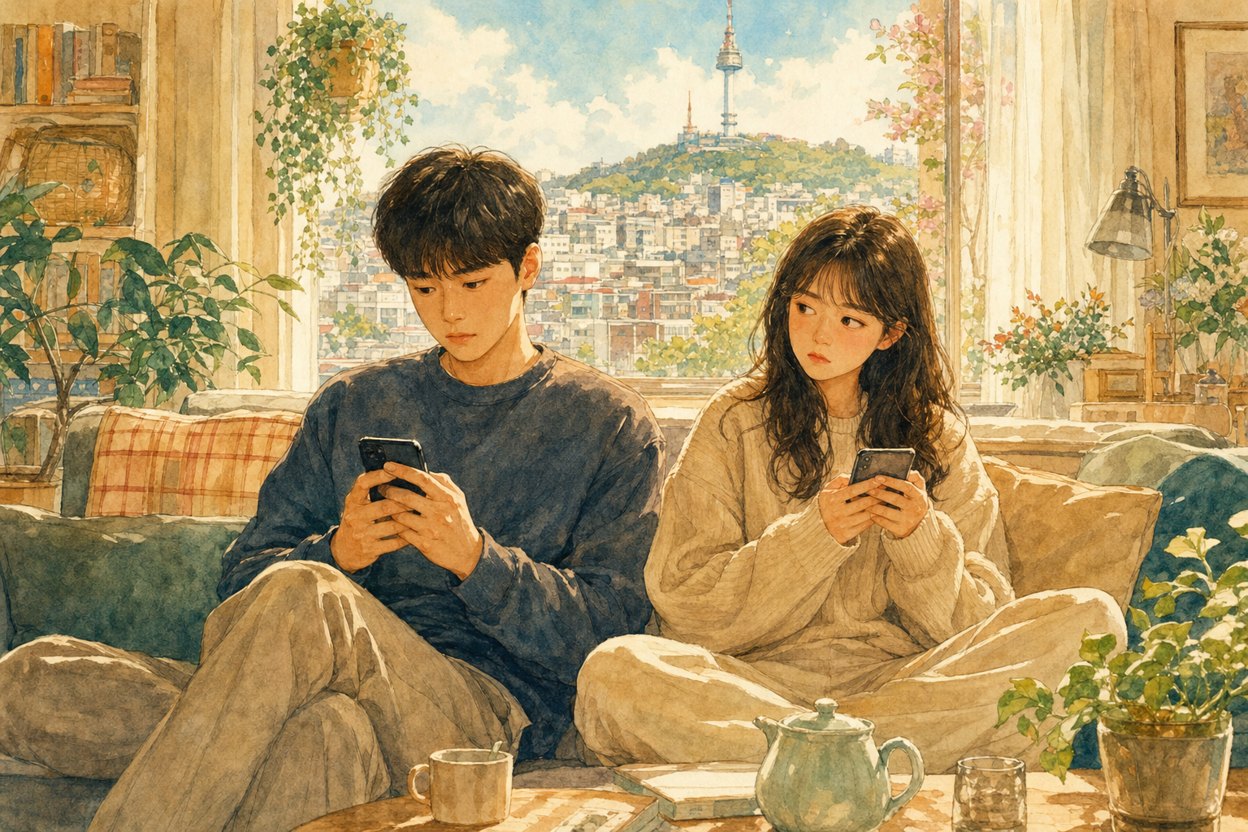
It is 7:40 a.m. in Seoul, and the first message of the day arrives before the alarm has stopped ringing: 잘 잤어? (jal jasseo?, “Did you sleep well?”). By lunchtime there will be a photo of a tray of rice and soup, a 밥 먹었어? (bap meogeosseo?, “Did you eat?”), a “Just left work,” and, close to midnight, 잘 자 (jal ja, “Sleep well”). For many Korean couples, this is not an especially intense day. It is just a day.
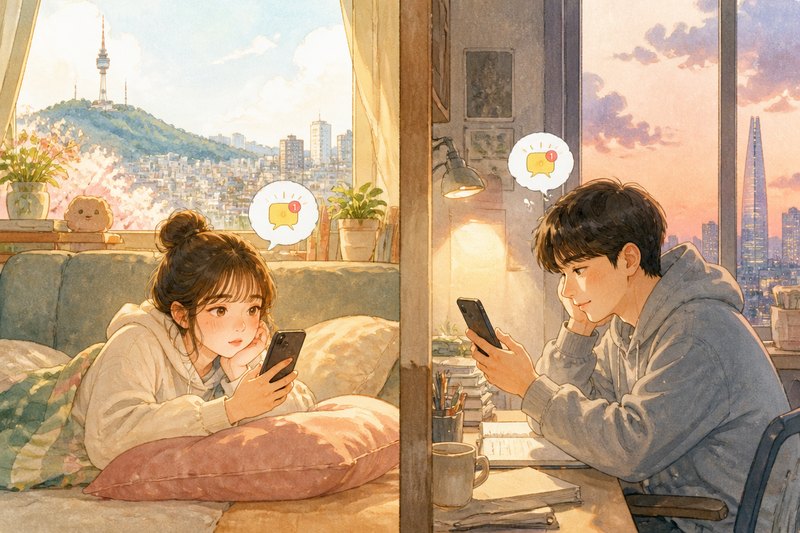
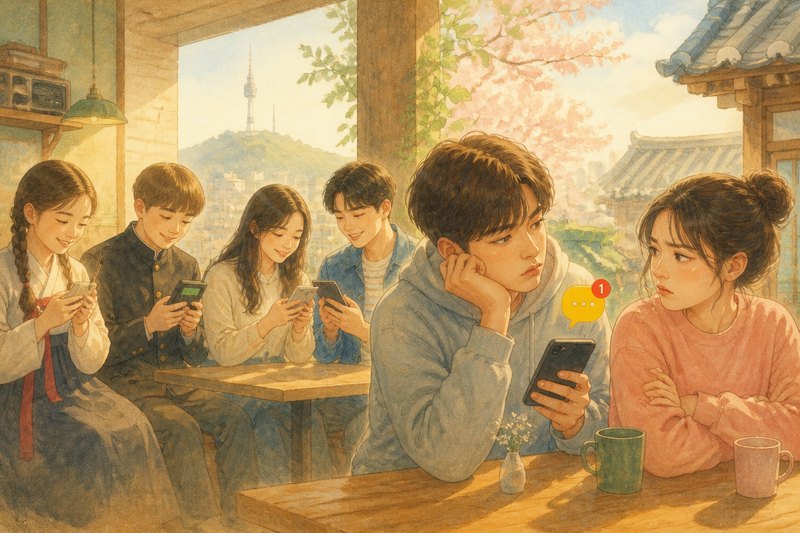
So why do Korean couples text all day? For many of them, small, constant check-ins are how affection is shown: not grand words, but proof that you are on each other's mind. Almost all of it happens on KakaoTalk, which adds a twist. A small “1” sits beside every message until it is opened, then vanishes, so your partner can see exactly when you read their message, and how long you have taken to answer.
Is it normal for Korean couples to text all day?
In many relationships, yes. When the Korea Herald interviewed five international couples for a 2022 series on Korean dating, staying connected was one of the differences foreign partners noticed most. Koreans, the paper wrote, tend to keep in touch throughout the day, asking where their partner is, what they are doing and what they are eating. A Swedish woman dating a Korean man said she was surprised that couples kept messaging even at work or out with friends.
Koreans have a word for this side of a relationship: 연락 (yeollak), literally “contact,” and arguments over it, too little or too much, are a staple of Korean dating advice columns. The messages themselves are tiny: “What are you doing?”, a photo of lunch, a sunset from the bus window. What matters is the rhythm: I am still here, and I am thinking of you. Many come down to “Did you eat?”, which we unpack in our story on the “have you eaten” greeting.
It is not universal. Some couples text a few times a day and call at night, and the same series quoted a Canadian woman married to a Korean man who said time alone matters as much as close contact. Still, if your Korean partner texts far more than you are used to, they most likely mean it as care, not clinginess.
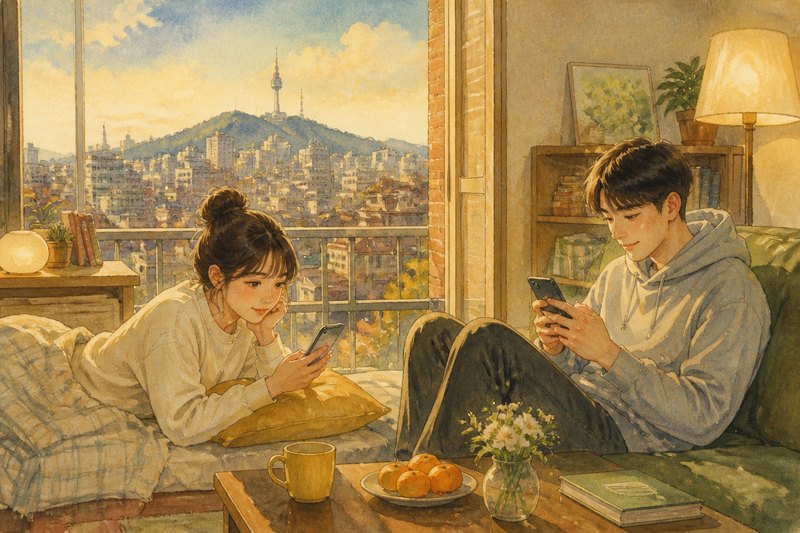
KakaoTalk: the app almost everyone already has
All of this runs on 카카오톡 (Kakaotalk), or 카톡 (katok) for short. It launched in March 2010 as a free smartphone messenger at a time when, as the Korea JoongAng Daily recalled on the app's 10th anniversary, a short text message cost 20 won. Suddenly the hundredth “what are you doing?” of the day cost nothing. In the first quarter of 2023, according to the Korea Herald, KakaoTalk had more than 48 million monthly users in South Korea, a country of about 51 million people. Grandparents, bosses and couples all live in the same app, and 카톡해 (katok-hae, “text me on Kakao”) sounds as natural as “call me.”
Not every reply is typed, either. Many come as emoticons, the cartoon stickers Kakao sells for KakaoTalk chats, and Kakao also offers them by subscription. According to Kakao's help center, Emoticon Plus costs a discounted 3,900 won a month when you sign up through Kakao's web subscription page.
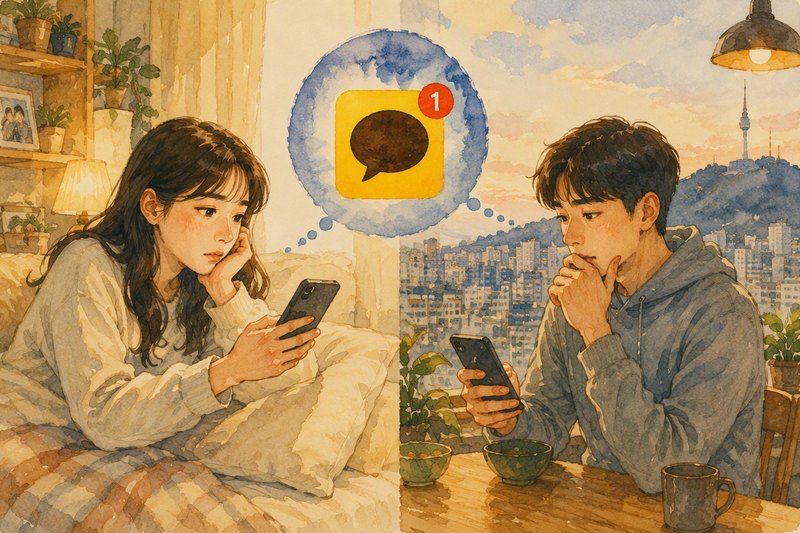
What the “1” means on KakaoTalk
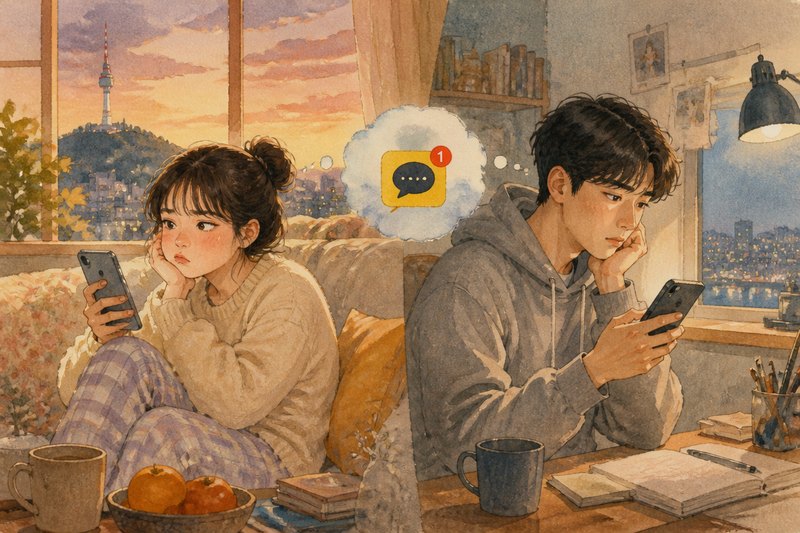
Every foreigner meets this feature sooner or later. Next to each message you send, KakaoTalk shows how many people in the chat have not read it yet. In a one-on-one chat that number is a 1, and it disappears the moment the other person opens the conversation. There is no “Seen at 14:02” label. The 1 simply goes away, and that says enough.
That small disappearance has given Korean two words. 읽씹 (ikssip) joins 읽다 (ikda, to read) and 씹다 (ssipda, to chew), which in slang also means ignoring someone or leaving their message unanswered. Urimalsaem, the open dictionary of the National Institute of Korean Language, defines ikssip as reading a text message and not replying; its cousin, 안읽씹 (an-ikssip), is not even opening it. English has “left on read,” but in Korea it comes with a very specific picture: a 1 that vanished an hour ago, and still nothing.
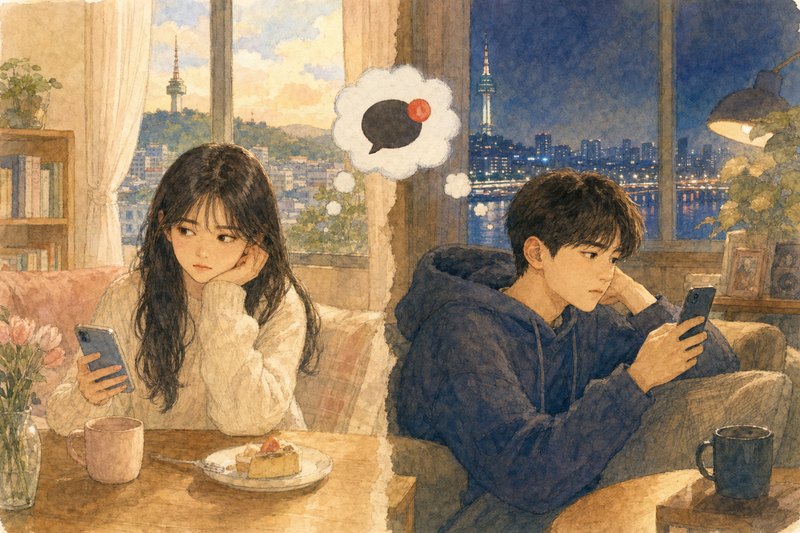
Is it rude to leave someone on read in Korea?
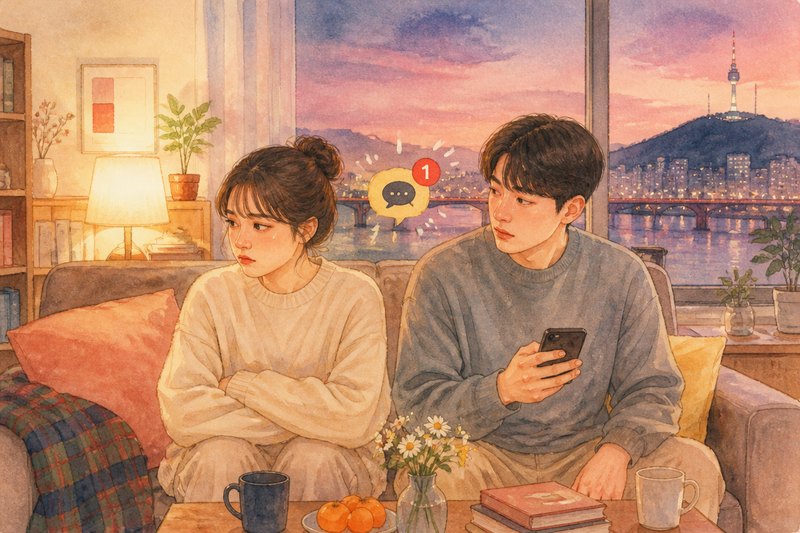
Between partners, it can sting, and the reason is the 1 itself. An unread message can mean anything: a meeting, a nap, a dead battery. A message that was read and not answered looks like a choice. In the Korea Herald series, a Turkish woman dating a Korean man put it simply: a late reply that people back home would shrug off as “just busy” might get a different reaction from a Korean partner.
So Koreans have developed small habits around it. Some peek at new messages in the notification preview, which leaves the 1 in place, and open the chat only when they have time to answer properly. Many announce it before they go quiet: “In a meeting!”, “Going to shower,” “Driving, talk later.” The most useful line of all is our phrase of the day: 이따 연락할게 (itta yeollakhalge, “I'll get back to you later”).
Korean insider tip: Want to send a goodnight text without waking your partner, or a quick note while they are in a meeting? Since a November 2025 update, KakaoTalk lets you type the message, press and hold the send button, and choose 조용히 보내기 (joyonghi bonaegi, “send quietly”). It arrives with no push notification, sound or vibration, whatever their settings, and it works for photos and videos too.
Before two people are officially a couple, timing can be strategic. In the hazy stage Koreans call sseom, reply speed becomes part of 밀당 (mildang, “push and pull”), the game of not looking too eager, and the Korea Herald reported in 2018 that some young Koreans deliberately answer late to keep the tension going. Once the relationship is official, the game usually stops, and a long silence after the 1 disappears is more likely to start an argument than a spark.
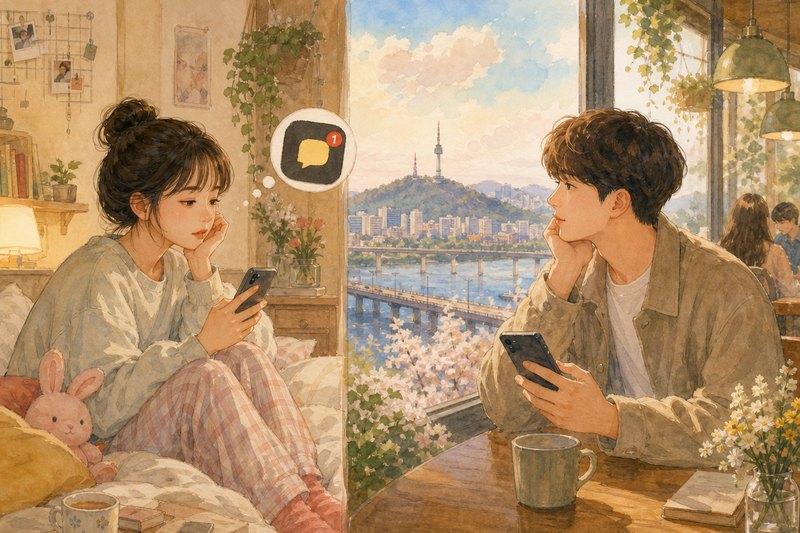
Couple apps and “Where are you right now?”
Some couples move part of their chat into apps built for two, such as Between, a couples-only space for messages and photos that the Korean startup VCNC launched in November 2011. By 2018 it had passed 26 million downloads in Korea, Japan, Singapore and elsewhere, according to the business daily Asia Economy.
“Where are you?” has gone digital too. Kakao Map has let KakaoTalk friends share their location since 2019, at first only for short periods. A November 2025 update renamed the feature 친구위치 (chingu wichi, “friend location”) and let sharing run until someone switches it off. Kakao stressed that it works only when both people agree and that users can hide their location at any time, but Korean media coverage quickly turned into a debate: a handy way for families to check that everyone got home, or a tool for checking up on a partner? Plenty of Koreans draw the line well before live tracking.
From pagers to Instagram: how each generation texts
Texting all day is not new in Korea; only the device has changed. In the 1990s, couples sent number codes to each other's pagers, called 삐삐 (ppippi): 486 for 사랑해 (saranghae, “I love you”); 1004, read aloud as “cheon-sa,” the same sound as 천사 (cheonsa, “angel”); and 8282, which sounds like “ppalli ppalli,” “hurry up!” Then came pay-per-message texts on flip phones, and in 2010 the free, bottomless chat of KakaoTalk.
Comfort zones still differ by age. In a 2022 Embrain survey of 1,000 people cited by the Korea Herald, 43.6 percent of those in their 20s said they felt pressure before making a phone call, against 19.6 percent of those in their 50s. A younger partner may hear an unexpected call as alarming, while an older one may feel a texts-only day as distant.
The youngest Koreans are drifting again. In a Woori Bank youth report covered by the Korea Herald in January 2025, 70.3 percent of 3,729 teens aged 14 to 18 said they share social media handles when connecting with someone new, and only 15.8 percent a KakaoTalk ID. KakaoTalk is not going anywhere, though: 94.2 percent use it to talk to their parents.
If you're dating a Korean
- Talk about yeollak early. How often and how fast to reply is a fair question in Korea, and asking beats guessing what a silence means.
- Say it before you go quiet. “In a meeting,” “Going to sleep,” “Phone's dying.” One line prevents most misunderstandings.
- A short reply beats a perfect late one. A quick “Busy, I'll call you tonight” usually lands better than a thoughtful message three hours later.
- Watch the tone, not just the timing. One-word answers can read as cold in a Korean chat; the laughs and shorthand that soften a text are in our guide to ㅋㅋ and Korean texting slang.
- Don't treat the 1 as a verdict. A read message with no reply often just means “saw it on the subway, answering later.” Location sharing is a choice too, and many couples never use it.
Quick answers
Is it normal for a Korean boyfriend or girlfriend to text all day?
Yes, for many couples. Regular check-ins from good morning to good night are a common way to show care in Korea, though every couple finds its own rhythm.
What does the 1 mean on KakaoTalk?
It shows how many people have not read your message yet. In a one-on-one chat, the 1 disappears as soon as the other person opens it.
Is it rude to leave someone on read in Korea?
Between partners it can feel like a small snub, called ikssip (read and ignored). If you can't reply yet, a quick “I'll get back to you later” avoids hurt feelings.