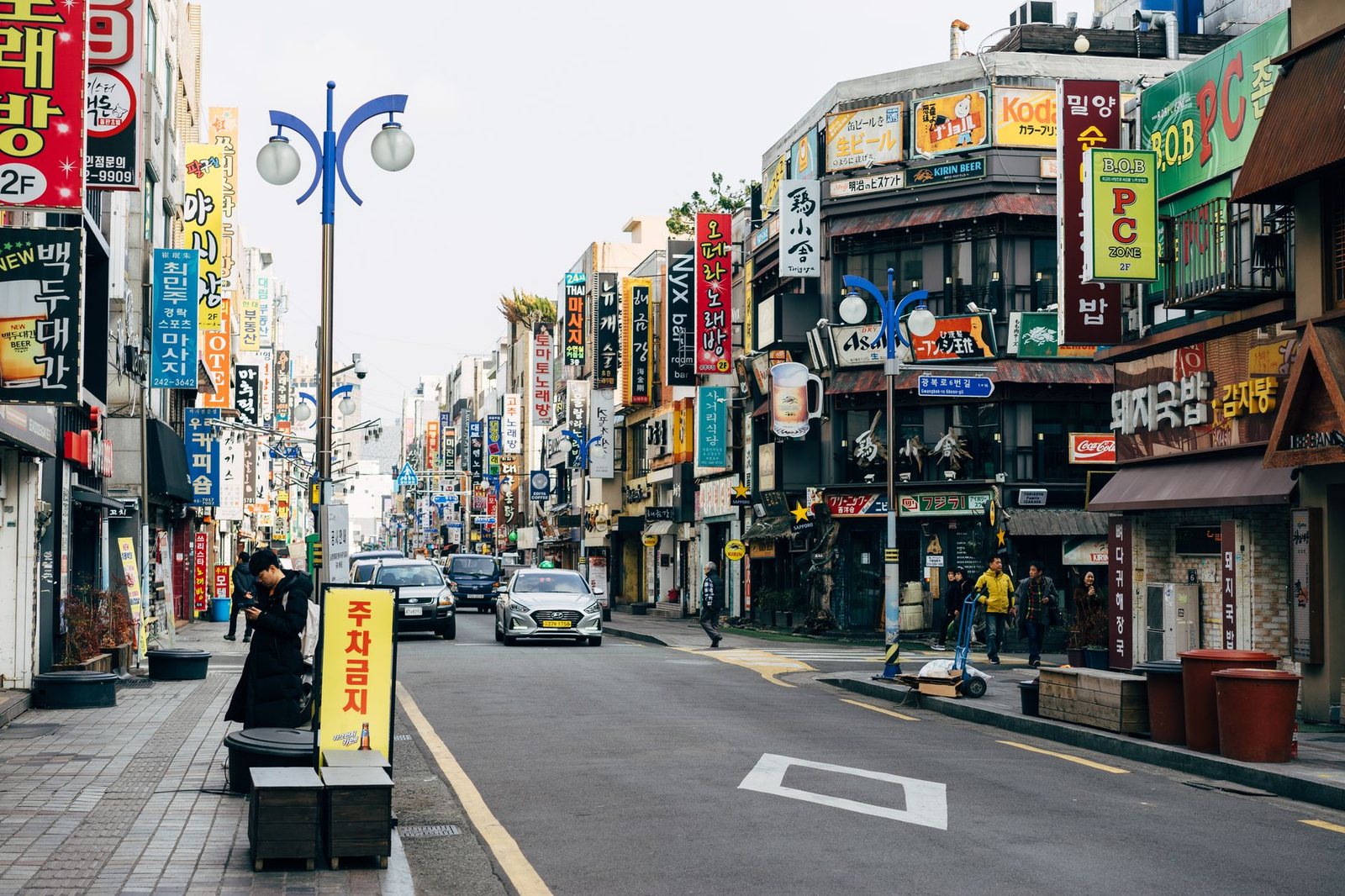
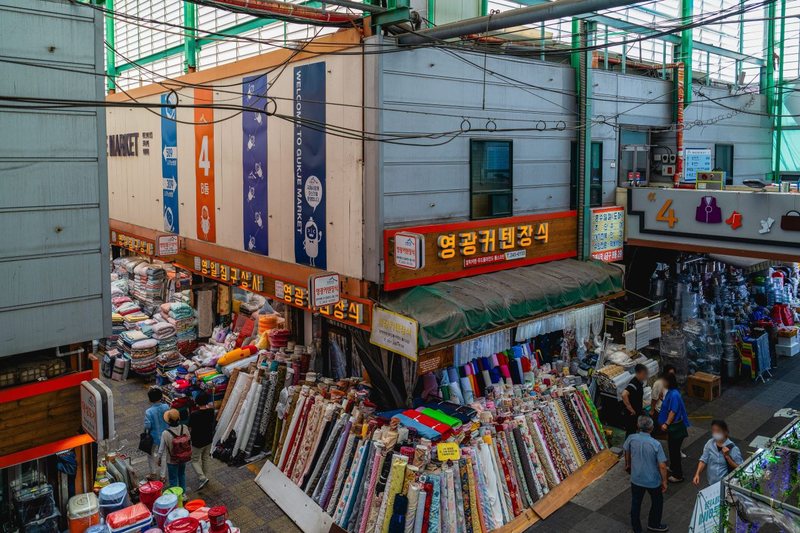
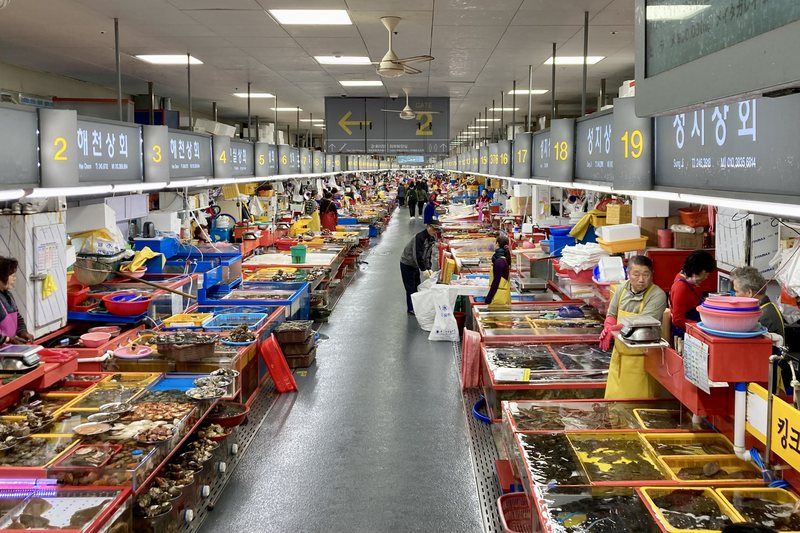
Spend a few minutes in a Busan fish market and you might think a fight is about to break out. Voices leap up and down, sentences end in a clipped 노 (no), and someone barks what sounds like an accusation. Then everybody laughs. Nobody was angry. You were just hearing 경상도 사투리 (Gyeongsang-do saturi), the dialect of Busan, Daegu and Korea's southeast.
So why does Busan Korean sound angry? Mostly because of pitch. Gyeongsang speech still uses pitch to tell words apart, so its syllables rise and fall far more than Seoul speech does. Most foreigners learn Korean from Seoul-based textbooks and K-dramas, so those jumps sound like emotion to them. Add short, punchy endings, and a simple “What are you doing?” can sound like a challenge.
What saturi means, and how many dialects Korea has
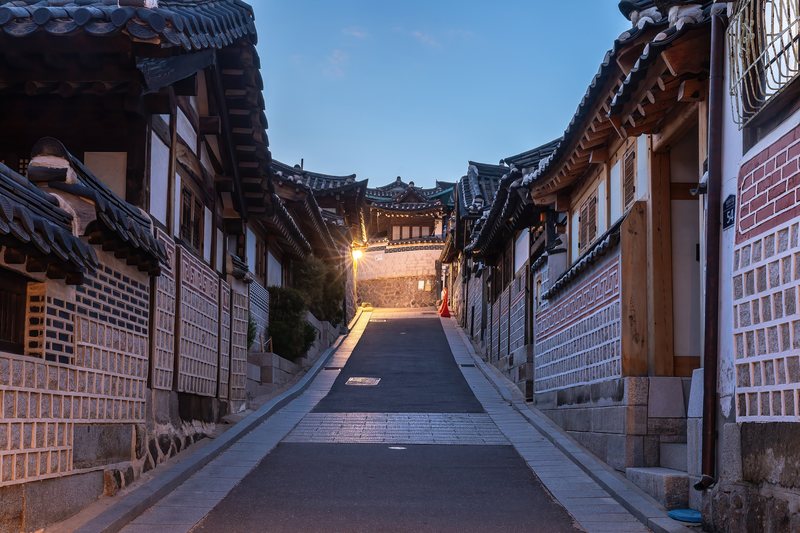
Korean has two words for dialect: the everyday 사투리 (saturi, often spelled “satoori” by learners) and the more academic 방언 (bangeon). Linguists usually divide the language into six zones: the northeast and northwest (mostly in North Korea today), the central zone around Seoul, the southeast (Gyeongsang), the southwest (Jeolla) and Jeju Island. Day to day, though, Koreans simply name accents after the provinces explained in our guide to Korea's province names.
On the mainland, people from different regions understand each other without much trouble. The differences lie in melody, sentence endings and a share of everyday words. Jeju is the real exception.
Why Busan and Daegu Korean sounds angry
Korean once used tones, and according to the Encyclopedia of Korean Culture, the Gyeongsang and Hamgyeong (northeastern) dialects still do. Its example: in Gyeongsang dialect, 말 (mal) means “horse” when said high, a traditional measure for grain when said low, and “speech” when it rises from low to high. A National Institute of Korean Language column describes Gyeongsang speech as tonal, with each syllable of a word pronounced at its own pitch according to set rules. Seoul speech works differently, which is why a Seoulite's 진짜 (jinjja) means the same thing at any pitch, as we explained in our story on Korean reaction words.
Pitch carries so much meaning that a 2024 Maeil Shinmun feature on Korea's dialect boom cites 가가 가가가 (gaga gagaga), roughly “That person took it, so…”, and recalls how surprised Seoul people were to learn that Gyeongsang speakers can tell the number 2 from the letter E, both pronounced “i” in Korean, by pitch alone.
Then come the endings. Where Seoul asks 뭐 해? (mwo hae?, “What are you doing?”), Busan asks 뭐하노? (mwohano?). The National Institute of Korean Language's open dictionary lists -노 (-no) as a Gyeongsang question ending for sentences that contain a question word such as “what” or “where,” while -나 (-na) generally handles yes-or-no questions. So 어디 가노? (eodi gano?) means “Where are you going?” but 어디 가나? (eodi gana?) means “Are you going somewhere?” Usage varies from town to town, but these short, falling endings land with a thump that outsiders easily mistake for irritation.
Korean insider tip: At Jagalchi Market, listen for 오이소, 보이소, 사이소 (oiso, boiso, saiso), Busan dialect for “Come, look, buy” and the slogan of the market's autumn Jagalchi Festival. The -이소 (-iso) ending is the local polite form of Seoul's -세요 (-seyo), so a vendor calling it out is being courteous, not bossy. Reply in ordinary polite Korean; nobody expects a visitor to answer in saturi.
Reputation does the rest. Koreans joke that Gyeongsang people, especially older men, are 무뚝뚝하다 (muttukttukada): gruff and sparing with words, but loyal underneath. In Busan, even a one-syllable 마! (ma!, “Hey!”) becomes a crowd chant at Lotte Giants baseball games.
Jeolla's -dangkke, Chungcheong's -yu and Jeju's own language
Jeolla, the southwest. The Encyclopedia of Korean Culture notes that South Jeolla speakers tend to pronounce the ending -으니까 (-eunikka, “because”) as -응깨 (-eungkkae). The same pattern shows up in the region's famous -당께 (-dangkke), the local version of “I'm telling you!” Sentences often close with a soft, nasal 잉 (ing), like a friendly “okay?” And then there is 거시기 (geosigi), “whatchamacallit.” Linguist Lee Tae-young wrote for the National Institute of Korean Language that people in Jeolla use it so often that it sounds like the region's signature word.
Chungcheong, just south of Seoul. Here the polite 요 (yo) becomes 유 (yu), so “It's fine” turns into 괜찮아유 (gwaenchanayu). Koreans from other regions often describe the accent as slow and unhurried, and a long-running joke says Chungcheong people are so polite and indirect that you have to guess what they really mean.
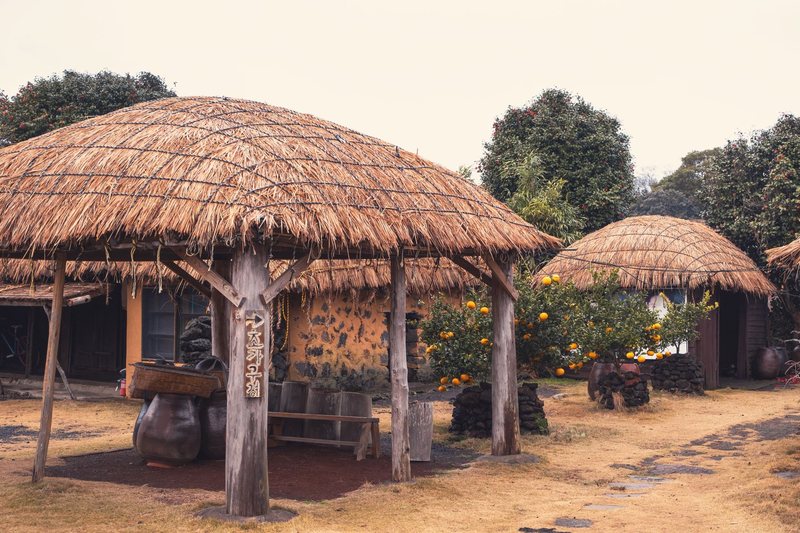
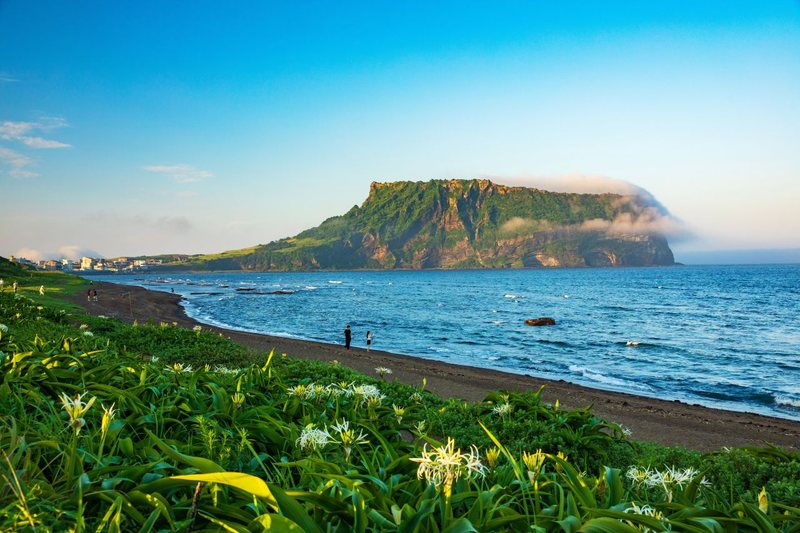
Jeju, the island. In December 2010, UNESCO added Jeju speech to its Atlas of the World's Languages in Danger as critically endangered, spoken by no more than 10,000 people, Yonhap reported. Even basic words differ: a man is 소나이 (sonai), not 남자 (namja), and a young woman is 비바리 (bibari), not 처녀 (cheonyeo). That is why it is increasingly called a language of its own, 제주어 (Jejueo), and why Jeju passed a provincial ordinance to protect it in 2007. Many K-drama fans met it through Netflix's When Life Gives You Tangerines (2025). Its Korean title, 폭싹 속았수다 (pokssak sogatsuda), is Jeju for “You've worked so hard,” The Korea Times explained, even though in standard Korean 속았다 (sogatda) means “was fooled.”
Why Seoul speech became “standard Korean”
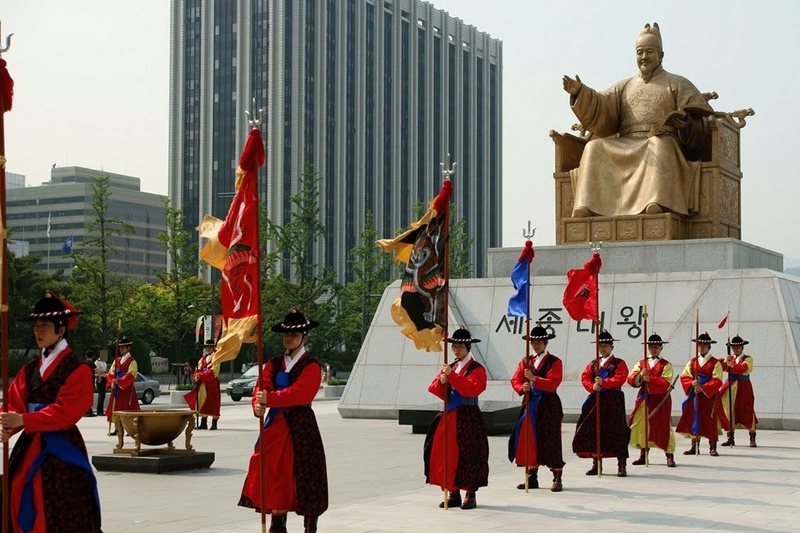
Why do news anchors, textbooks and most K-drama leads sound like Seoul? Because the rules say so. The Standard Korean Language Regulations, issued in 1988 and published by the National Institute of Korean Language, define 표준어 (pyojuneo, standard Korean) as, in principle, 교양 있는 사람들이 두루 쓰는 현대 서울말: “the modern Seoul speech widely used by educated people.” The idea is older still: the 1933 Unified Hangul Spelling System had already chosen the Seoul speech of the middle class.
“Standard” here means shared, not better. Many Koreans switch registers every day: dialect with family and hometown friends, standard Korean at work and in Seoul.
Saturi on screen: from Reply 1997 to BTS
K-dramas have long used dialect to show where a character grew up, and tvN's Reply series made it a star. Reply 1997 (2012) is set in Busan, and much of its main cast actually comes from the region and speaks authentic Gyeongsang dialect. Reply 1994 (2013) turned a Seoul boarding house into a map of Korean accents, with college students from Samcheonpo and Masan in South Gyeongsang, Suncheon and Yeosu in South Jeolla, and Goesan in North Chungcheong.
In K-pop, BTS's Jimin and Jungkook were both born and raised in Busan, and in 2019 the Busan Tourism Organization ran fan tours through the neighborhoods where they grew up, Korea JoongAng Daily reported. The Maeil Shinmun feature describes a full-blown saturi boom in Korean media, complete with YouTube dialect lessons and debates over actors' unconvincing accents.
If you meet someone from Busan
- Listen to the words, not the volume. A loud 뭐하노? usually just means “What are you up to?”
- Ask about their hometown. 고향이 어디예요? (gohyang-i eodiyeyo?, “Where are you from originally?”) is an everyday question in Korea, and many people enjoy talking about their accent.
- Learn standard Korean first. Every Korean understands it, and dialects get much easier once you know the base.
- Use saturi as a wink, not a costume. Many dialect phrases, including 뭐하노?, are casual speech, so save them for friends, and never imitate an accent to make fun of someone.
Quick answers
Is the Busan dialect rude?
No. It sounds strong to outsiders because Gyeongsang Korean uses pitch to separate words and has short, falling endings. The Busan dialect has polite and casual forms, just like Seoul Korean.
Can Koreans from different regions understand each other?
On the mainland, yes, apart from the odd unfamiliar word. Traditional Jeju speech is the big exception: its vocabulary is so different that mainland Koreans can struggle to follow it.
Is Jeju a dialect or a separate language?
Both labels are used. Many Koreans still say “Jeju saturi,” but UNESCO lists Jeju speech as a critically endangered language, and Jeju itself promotes it as Jejueo, the Jeju language.
Getting there
Jagalchi Market 자갈치시장
- Subway
- Busan Metro Line 1, Jagalchi Station Exit 10 or Nampo Station Exit 2, then about a 3-minute walk. From Busan Station, take Line 1 toward Sinpyeong (about 10 minutes)
- Hours
- Per the operator, the first-floor fish market opens around 5:00 and closes around 21:00, and the second-floor raw-fish center runs about 9:00–21:00. Closed on the 1st, 3rd and 5th Tuesdays of each month, and on Seollal and Chuseok day and the day after
Checked on November 5, 2026; confirm on the official site before you go.