There is an old joke in Seoul: throw a stone from Namsan, the hill in the middle of the city, and it will land on a Kim, a Lee or a Park. The census agrees. In the 2015 count by Statistics Korea, still the latest surname data, 21.5 percent of Koreans were Kims, 14.7 percent were Lees and 8.4 percent were Parks. That is about 10.7 million Kims alone, and 44.6 percent of the population sharing just three names.
So why do so many Koreans have the last name Kim? For most of Korean history, a surname was something the elite had and many others did not. When ordinary people finally took surnames, mostly between the late Joseon dynasty and a 1909 registration law, huge numbers of them chose the most prestigious names around. That is how a few names tied to royal and noble clans, above all Kim, Lee and Park, came to cover nearly half the country.
When a surname was a privilege
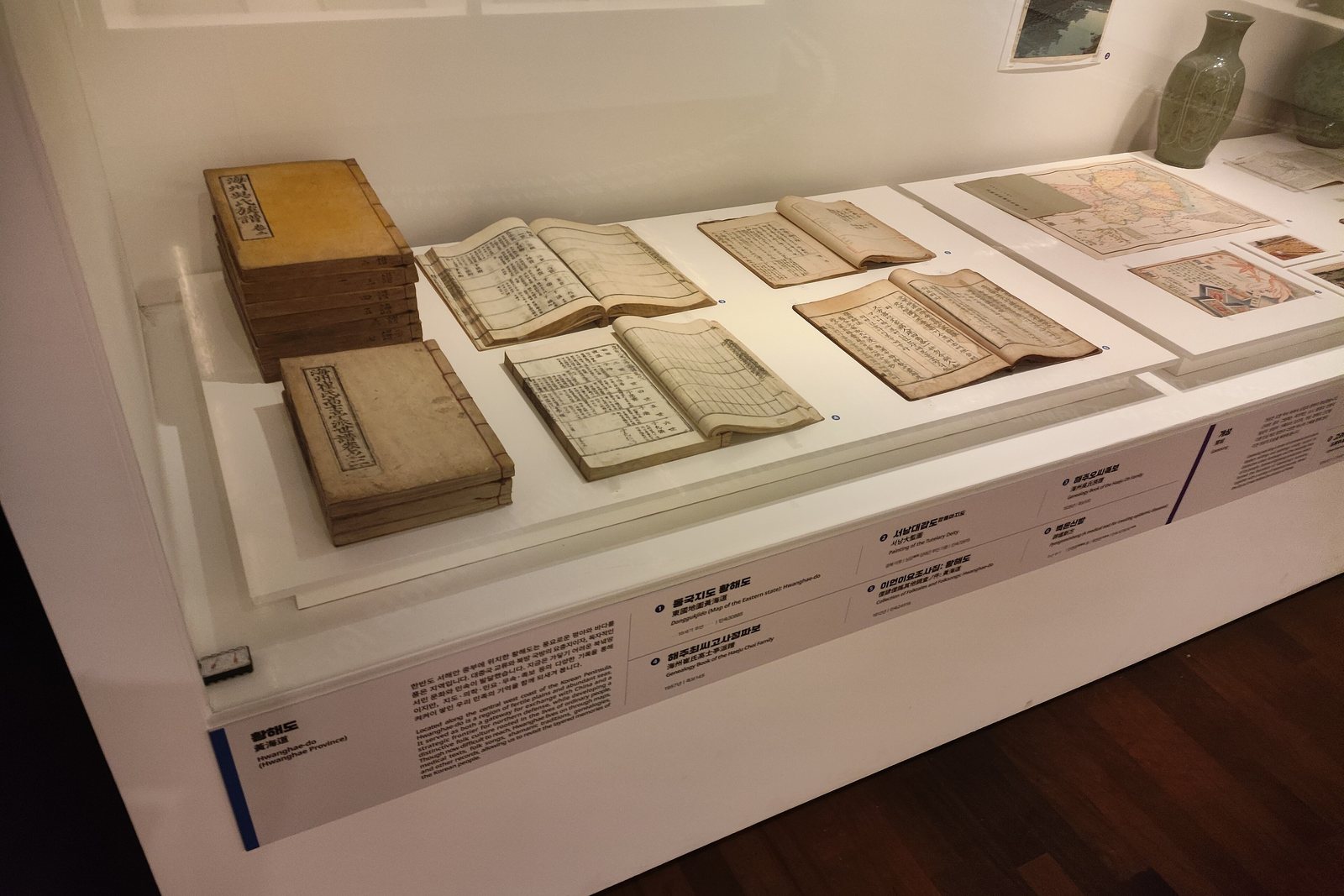
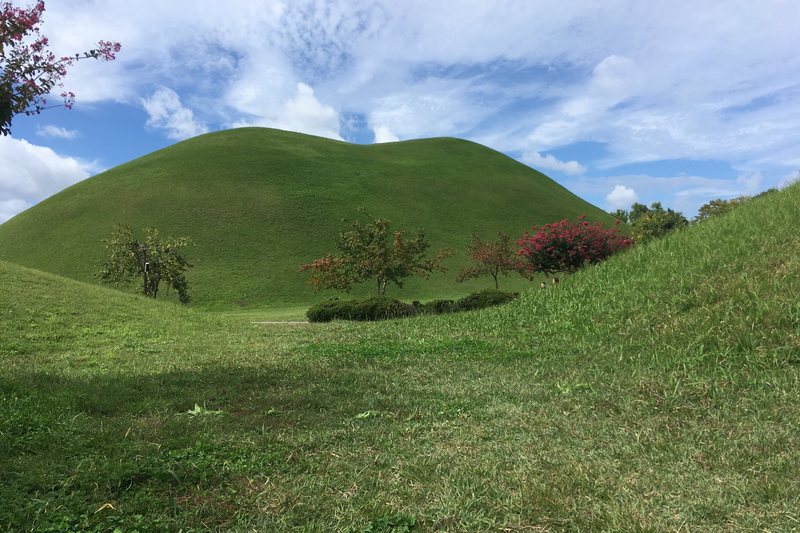
Chinese-style surnames began spreading in the Three Kingdoms period and became firmly established under the Goryeo dynasty (918–1392), according to the Encyclopedia of Korean Culture. At first they belonged to rulers and nobles. Silla's royal house used the name Kim from around the 6th century, and early Chinese records described Silla's king as a Kim and its nobles as Parks, while ordinary people had only given names.
Even under the Joseon dynasty (1392–1910), surnames were far from universal. The encyclopedia estimates that in the 15th and 16th centuries roughly half the population belonged to the 천민 (cheonmin), the lowborn class that included enslaved people, and most of them had no family name.
Forged family trees and a 1909 law
Over the last three centuries of Joseon, the old class order slowly loosened. A family without a 족보 (jokbo, clan genealogy) was treated as common and faced heavier duties such as military service, so the pressure to move up was real. Some people bought official titles, forged genealogies appeared in large numbers, and rising families attached themselves to famous, established clans. As a result, the encyclopedia notes, families with no blood tie were sometimes taken for one clan.
The last push came after the Gabo Reform of 1894 abolished the legal class system. The 민적법 (Minjeokbeop, Civil Registration Act) of 1909 required every person to have a surname and a clan seat on record. In some places a registry clerk or a police officer simply picked a surname for people. Servants often took their master's, and many people adopted the most prominent name in their home area, such as Lee in Jeonju, or Kim or Choi in Gyeongju. A few of today's rare surnames, the encyclopedia adds, began as clerks' slips of the pen. In effect, every Korean surname became an aristocratic one.
Gimhae Kim or Gyeongju Kim? The clan seat
Ask whether two Kims are related and the answer depends on a second word: the 본관 (bon-gwan, clan seat), the place tied to the clan's founding ancestor. Surname plus clan seat makes a clan. Gimhae Kims trace their line to King Suro, the legendary founder of Geumgwan Gaya, said to have been born from a golden egg. Gyeongju Kims trace theirs to the royal house of Silla. Same surname, different families.
The largest clans are enormous. In the 2015 census, Gimhae Kim had about 4.46 million members, roughly one in eleven South Koreans, followed by Miryang Park (3.17 million) and Jeonju Lee, the royal clan of the Joseon dynasty (2.63 million). Gyeongju Kim had 1.89 million. The census also counted 5,582 surnames in all, but about 73 percent of them have no Chinese characters; according to The Korea Herald, they were registered by foreigners who became Korean citizens. Statistics Korea, now the Ministry of Data and Statistics, counts surnames only every 15 years, so the next figures will come from the 2030 census.
Here is what confuses many learners: the clan seat is not part of anyone's name. A Korean ID card or passport shows only the surname and the given name. The clan seat has its own column, marked 본 (bon), on the family relations certificate (가족관계증명서, gajok gwangye jeungmyeongseo), and it is passed down along with the surname. In daily life it mostly comes up when two people with the same surname meet, and some Koreans still ask 어디 김씨세요? (Eodi Kim-ssi-seyo?), “Which Kim are you?”

Surname first, and the syllable brothers share
Korean names put the family name first. Take 김부식 (Kim Bu-sik), the 12th-century scholar who compiled Korea's oldest surviving history: Kim is the surname, Bu-sik the given name. The standard pattern is a one-syllable surname and a two-syllable given name, written together in Hangul, though a few surnames have two syllables, such as 남궁 (Namgung) and 제갈 (Jegal).
His brothers were Kim Bu-il and Kim Bu-ui, and the shared 부 (bu) is no coincidence. It is a generation marker, the 항렬자 (hangnyeolja), more often called 돌림자 (dollimja) in everyday speech. According to the Encyclopedia of Korean Culture, a clan gives each generation one shared character, often following the cycle of the five elements (metal, water, wood, fire, earth), and many clans list the characters for future generations at the front of their genealogy. Relatives of the same generation carry the same syllable, so kin can tell someone's generation from the name alone. Traditionally the custom applied to sons; daughters' names often did not follow it. Today, whether to use one is up to each family.
With so many shared surnames, calling someone by surname alone rarely works. At work, people use a full name or a surname plus a job title, such as 김 과장 (Kim gwajang, “Manager Kim”). For the family words Koreans often use instead of names, see why Koreans call friends oppa and unni.
Korean insider tip: The “Kim-ssi” in 어디 김씨세요? means the Kim clan. As a form of address, 씨 (ssi) works differently: it goes after someone's full name or given name, and only for peers or people junior to you. A surname-only “Kim-ssi” sounds curt to many Koreans, and using ssi for your boss or someone older is a real faux pas. When in doubt, a job title is always safe.
Married women keep their own surname
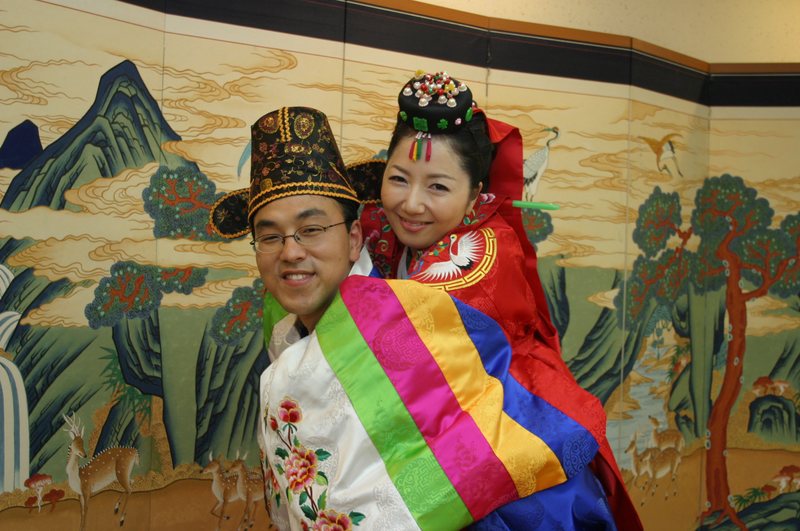
Korean women do not take their husband's surname. The Encyclopedia of Korean Culture describes this principle, that a person's surname never changes, as rare in the world: in one household the husband can be a Lee, the wife a Kim and the daughter-in-law a Park. So the wife of a Mr. Lee is not “Mrs. Lee,” and calling her by her husband's surname is a common mistake among foreigners.
Children traditionally take their father's surname and clan seat. Since a 2005 revision of the Civil Code took effect in 2008, parents may give their children the mother's surname and clan seat instead, but they must agree on it when they register their marriage. (For how Korean couples tie the knot, see our guide to Korean weddings.)
Why some Kims could not marry other Kims
Huge clans created a marriage problem. Confucian custom banned marriage between people with the same surname and the same clan seat, 동성동본 (dongseong-dongbon), however distant the link, and the ban was written into the modern Civil Code. Among millions of Gimhae Kims or Miryang Parks, couples with no traceable kinship still could not legally marry. According to the Encyclopedia of Korean Culture, special one-year laws let such couples register their marriages in 1978, 1988 and 1996.
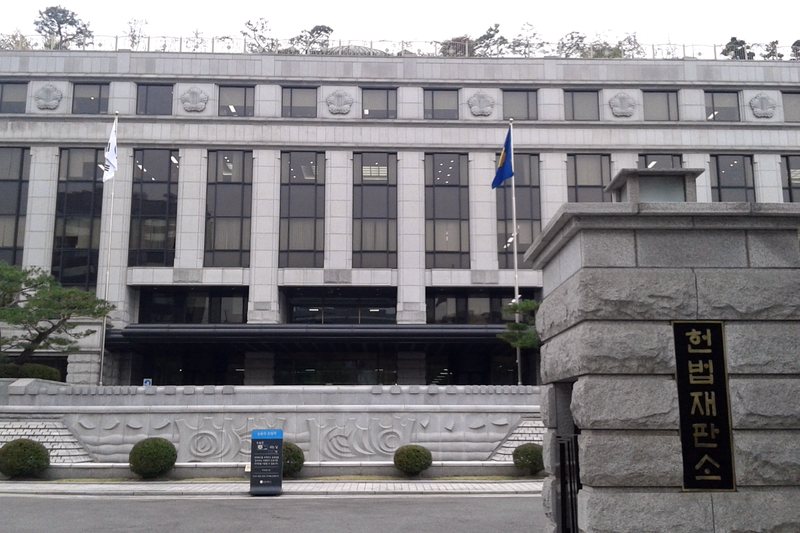
On July 16, 1997, the Constitutional Court ruled the ban incompatible with the Constitution. Lawmakers were slow to act, but the 2005 Civil Code revision replaced the blanket ban with a narrower rule: blood relatives within the eighth degree of kinship, 8촌 (palchon), roughly third cousins, may not marry. Two Gimhae Kims can now marry like anyone else, as long as they are not close relatives.

Lee, Yi or Rhee? Why one name has several spellings
Under the Revised Romanization of Korean, the official system since 2000, 이 would be written I, 박 Bak and 최 Choe. Almost nobody writes them that way. The rules leave room: they say the romanization of surnames “shall be determined separately,” and that people may keep the spellings of names they already use (National Institute of Korean Language). The government tried to standardize surname spellings, dropped the effort amid disputes in 2002 and reopened the debate at a 2009 public forum; the rule still leaves surnames to be decided separately.
So family habit wins, most visibly on passports. Passport data from 2007, discussed at that forum, showed that 98.5 percent of people named 이 spelled it Lee, 95.9 percent of those named 박 used Park and 93.1 percent of those named 최 used Choi, while 정 was split, with only 48.6 percent writing Jung (Maeil Shinmun). Lee, Yi and Rhee are the same name in Hangul, as are Park, Pak and Bak, or Choi and Choe. BTS shows the gap in one line: under the official system, 박지민 and 전정국 would be Bak Jimin and Jeon Jeongguk, yet the world knows them as Park Jimin and Jungkook.
When a Korean tells you their name
- Family name first. In Korean order, the first syllable is almost always the surname. Many Koreans flip the order when they use another language, so if you are unsure, simply ask which part is the family name.
- Copy their spelling. Lee, Yi and Rhee are all correct. Use the one the person uses.
- Don't assume family ties. Two Kims are not necessarily relatives, and a married couple almost always has two different surnames.
- Mind the ink. When you write a Korean friend's name by hand, skip the red pen. Here's why.
Quick answers
Are all Koreans with the last name Kim related?
No. Kims belong to many separate clans, such as Gimhae Kim and Gyeongju Kim, each with its own founding ancestor. In the late Joseon period, many families also joined famous clans without any blood tie.
Is the clan name part of a Korean's full name?
No. A full name is the surname plus the given name. The clan seat (bon-gwan) is recorded separately on family records and never appears on an ID card or passport.
Can Koreans with the same surname and clan seat get married?
Yes. The Constitutional Court struck down the old ban in 1997, and the 2005 Civil Code revision replaced it with a ban only on marriage between relatives within the eighth degree.
Getting there
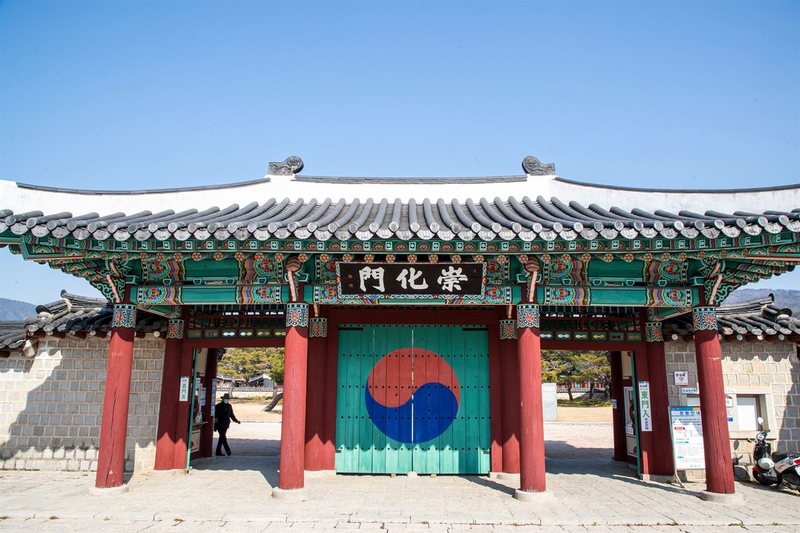
Royal Tomb of King Suro, the founding ancestor of the Gimhae Kim clan 김해 수로왕릉
- Subway
- Busan–Gimhae Light Rail, Royal Tomb of King Suro Station (수로왕릉역)
- Hours
- March and October 08:00–19:00; April–September 08:00–20:00; November–February 09:00–18:00
- Admission
- Free
Checked on November 5, 2026; confirm on the official site before you go.