Oppa, Unni, Hyung, Noona: Why Koreans Call Friends Family
It means 'older brother' — but only when a woman says it, and it can mean much more. A guide to Korea's family words for friends.
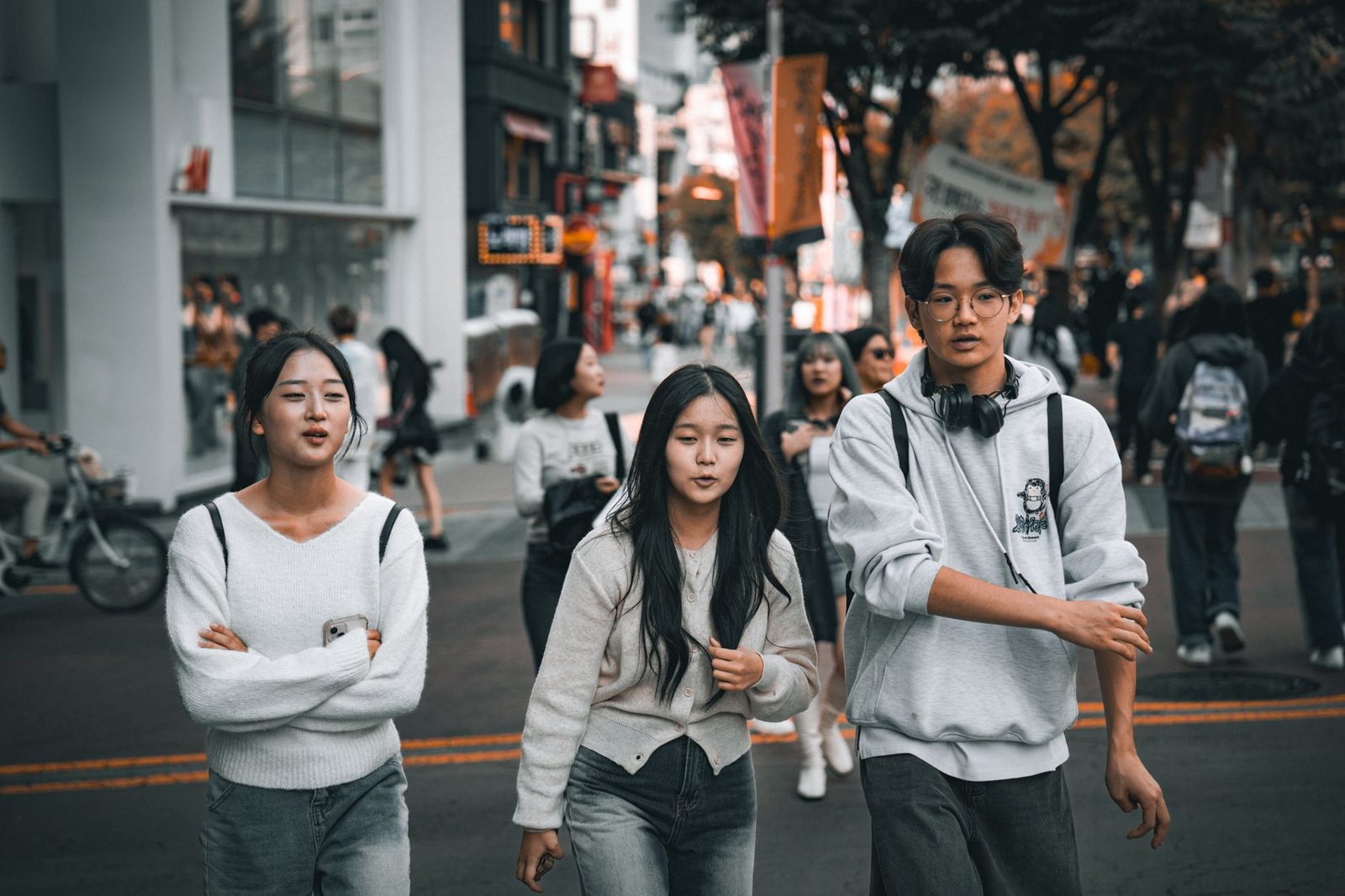
If you have ever sung along to Psy's 2012 hit "Gangnam Style," you have already said the word. "Oppan Gangnam style" squeezes together 오빠는 (oppaneun, "oppa is") — the singer is calling himself oppa and showing off about it.
So what does 오빠 (oppa) actually mean? Literally, it is what a girl or woman calls her older brother. But Korean dictionaries give it a second job: a younger woman can use it, warmly, for an older man she isn't related to at all. That is how one family word came to cover older male friends, boyfriends, quite a few husbands and almost every male K-pop star. There are two catches. The speaker has to be female, and the word assumes real closeness. Miss either one, and it starts to sound strange.
Four words, two questions
Korean has no all-purpose word for "brother" or "sister." When you speak to an older sibling — or an older friend — the word depends on two questions: is the speaker male or female, and is the older person male or female?
- 오빠 (oppa) — a woman speaking to an older man
- 형 (hyeong, often spelled "hyung") — a man speaking to an older man
- 언니 (eonni, often "unni" or "unnie") — a woman speaking to an older woman
- 누나 (nuna, often "noona") — a man speaking to an older woman
Notice the direction: these words always point upward. Nobody calls a younger person "little brother" to their face; older people simply use the younger one's name, and talk about them as 동생 (dongsaeng, younger sibling). Most of the titles also have a more respectful form — 형님 (hyeongnim) and 누님 (nunim) — while oppa's formal cousin, 오라버니 (orabeoni), now sounds old-fashioned and turns up mostly in historical dramas.
Oppa itself is younger than you might expect. According to the Encyclopedia of Korean Culture, it does not appear in a Korean dictionary compiled in 1895 but does appear in one from 1938, and it most likely took shape in the 20th century, much like 아빠 (appa, dad).
Friends, partners and idols
Turning friends into family is one of the warmest habits in the Korean language. Two university friends a year apart become hyeong and dongsaeng; a coworker a few years older, once you are close, becomes eonni. The National Institute of Korean Language, which publishes the Standard Korean Language Dictionary, defines this extended oppa as a word a younger woman uses for an older man 정답게 (jeongdapge) — "warmly, with affection." That one adverb does a lot of work. Oppa is not just a label for an older male; it is a small declaration that the two of you are close.
Because oppa blends closeness with a hint of admiration, it also slid easily into romance. Many Korean women call their boyfriends oppa, and some keep doing so after marriage. Is that "correct"? The National Institute of Korean Language says there is no official rule for what spouses call each other, and that couples can choose freely — but it suggests checking whether the word makes the people around you uncomfortable when you are not alone. Married couples also have their own vocabulary, such as 여보 (yeobo), the classic word spouses use for each other.
Then there is the stage. Korean media have long used the phrase 오빠부대 (oppa budae, "oppa brigade") for crowds of young female fans cheering for male singers. Today fans all over the world call their favorite male idols oppa, and female fans call female idols eonni. It works the other way, too: SHINee's 2008 debut song "Replay" is known in Korean as 누난 너무 예뻐 (Nunan neomu yeppeo, "Noona, you're so pretty").
When oppa sounds wrong
- When a man says it. Oppa belongs to female speakers. A man calling another man oppa is making a joke, playing around as a fan or simply slipping up; between men, the word is hyeong. The reverse is unusual too: the National Institute of Korean Language notes that women calling men hyeong is not common usage.
- When you have only just met. The warmth oppa implies needs an existing bond. Asked whether a woman could call a man about 40 years older "oppa" on first meeting, the National Institute of Korean Language answered that it was not appropriate: there is no emotional closeness yet, and the gap is closer to a parent's generation than a sibling's. With a new acquaintance, jumping straight to oppa can also come across as flirting.
- At work. Korean offices mostly run on job titles. Close colleagues may use eonni or hyeong over lunch, but in meetings and emails people stick to titles or names.
Seonbae, hubae and the safe middle ground
Not every older person is an oppa or an eonni. At school, in clubs and at work, Koreans use 선배 (seonbae, often "sunbae") for someone who started before you and 후배 (hubae) for someone who started after. The dictionary ties seonbae to being ahead of you in status, age or skill in the same field, or to having entered your school earlier — and the National Institute of Korean Language points out that a colleague who joined first can be your seonbae even if they are younger. In the entertainment world, juniors greet seniors as 선배님 (seonbaenim). Seonbae is also a handy middle path for a woman who wants to be friendly with an older male classmate without the closeness of oppa.
And when there is no relationship yet, there is 씨 (ssi), placed after someone's full name or given name. The Standard Korean Language Dictionary describes it as a respectful way to address someone, but adds that outside official settings it is hard to use toward people above you — it is mostly for peers and juniors. Many workplaces now prefer 님 (nim) after a name or a job title instead.
If you visit Korea
- You never have to say oppa. Nobody expects visitors to adopt family titles. A name — with ssi if you want to be polite — is perfectly fine.
- Wait for the invitation. When a Korean friend says something like 편하게 언니라고 불러 (pyeonhage eonnirago bulleo, "Just call me eonni"), that's your green light.
- Men, use hyeong. If you are a man and a close older male friend is happy with it, hyeong is the word. Leave oppa for jokes.
- Keep it simple with strangers. To catch someone's attention in a shop or restaurant, 저기요 (jeogiyo, "excuse me") works everywhere.
- Use titles for teachers and professionals. 선생님 (seonsaengnim) is the safe, respectful way to address a teacher, and it is widely used for doctors and other professionals as well.
- When in doubt, ask. Asking how someone would like to be called is a perfectly normal question in Korean.
Quick answers
Can a guy say oppa?
Not in the usual sense. Oppa is for female speakers; men call an older brother or male friend hyeong (hyung). When a man says oppa, it is usually a joke.
Does oppa mean boyfriend?
Not by itself. Women also use it for brothers, older male friends and idols. But because it signals closeness, many women call their boyfriends oppa — and using it with a man you have just met can sound flirtatious.
What is the difference between unni and noona?
Both mean "older sister." Eonni (unni) is said by women; nuna (noona) is said by men.
Sources
- National Institute of Korean Language — Q&A on the dictionary meaning of 'oppa' and how far it can be used (온라인가나다)
- National Institute of Korean Language — Q&A on a wife calling her husband 'oppa' (온라인가나다)
- National Institute of Korean Language — Q&A on using '~ssi' (씨) as a form of address (온라인가나다)
- National Institute of Korean Language — Q&A on calling a younger colleague who joined first 'seonbae' (온라인가나다)
- Encyclopedia of Korean Culture — 오빠 (oppa)