Brazil Sang 'Maria' in Korean: K-pop's First Night at Rock in Rio
A sold-out Rio crowd sang Hwasa's 'Maria' in Korean and lit up Stray Kids' set with lightsticks. Here is why Korea was watching.

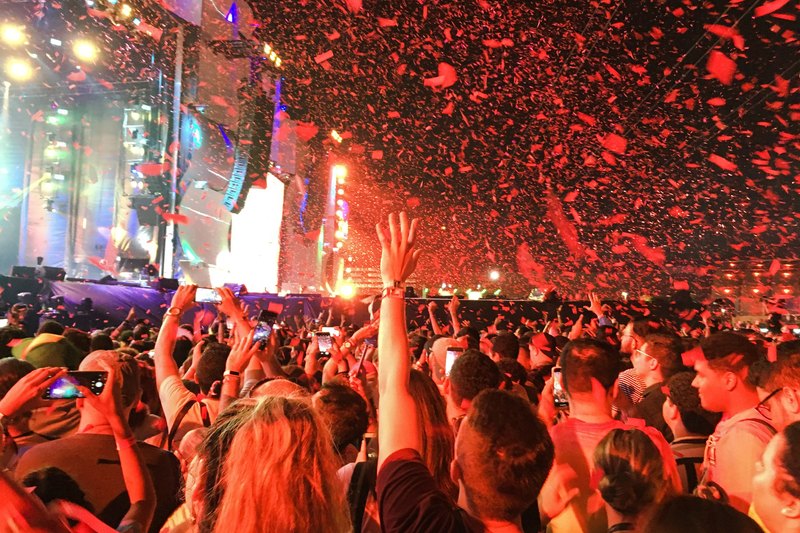
On September 11, 2026, Rock in Rio did something it had never done in more than four decades: it gave an entire night to K-pop. By the end of it, a Brazilian crowd had sung a Korean chorus back to Hwasa, and the festival had bent its own rules so Stray Kids fans could wave their lightsticks. Brazil's biggest news site, g1, later ranked Hwasa's show the second best of the whole festival, right behind Elton John.
In Seoul it was already the next day when the clips started to arrive, and for many Koreans it was a proud and slightly surreal morning. Here is what happened in Rio, and the pieces of Korean fan culture that made the night look the way it did.
A first for K-pop at Rock in Rio
Rock in Rio, first held in 1985, is one of the biggest music festivals in the world. Its main stage, the Palco Mundo ("World Stage"), has hosted everyone from Queen to Foo Fighters. The 2026 edition ran for seven days with more than 120 acts, and one of those days, Friday, September 11, was K-pop day. According to g1, all 100,000 tickets for the night sold out.
Hwasa took the Palco Mundo before the headliner and became the first K-pop solo artist, and the first K-pop woman, ever to play the festival. Stray Kids then closed the night. In between, the British band Jamiroquai played the second stage, and g1 noted with some amusement that most Stray Kids fans simply refused to leave their spots in front of the main stage.

Who is Hwasa, and why Koreans cheer for her
Hwasa (화사, real name Ahn Hye-jin) is a member of MAMAMOO, a girl group that debuted in June 2014 and is known in Korea above all for singing properly live. Her solo career began in February 2019 with "Twit" (멍청이, meongcheong-i, "fool"), and "Maria," released in June 2020, became her signature song.
What Koreans love about her is less a single hit than an attitude. K-pop idols are often expected to be polished and careful; Hwasa built a solo career singing openly about confidence and her own body. g1 described her as a firm, pioneering and even feminist pop star by K-pop standards. In 2023 she joined P NATION, the label run by PSY, and her first single there was called, simply, "I Love My Body." Her October 2025 song "Good Goodbye" then became one of the biggest hits in Korea, logging 750 "perfect all-kills" (number one on every major Korean chart at once) on the chart tracker iChart.
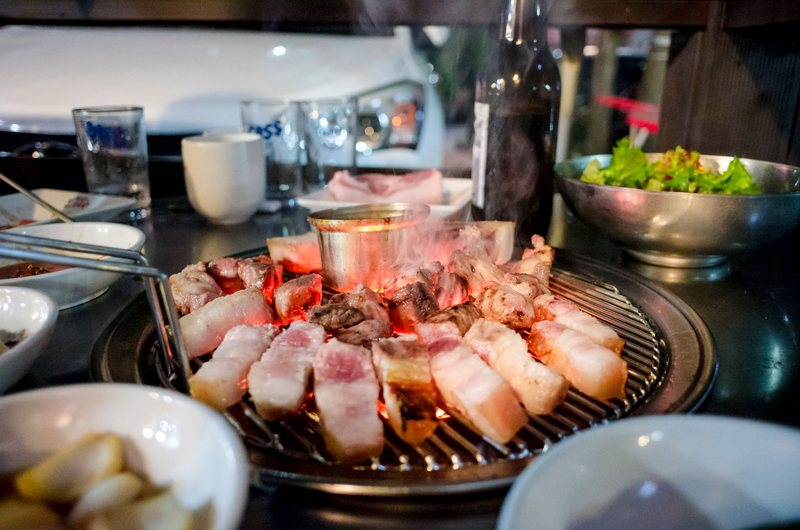
She is also famous for something much more ordinary: loving food. In June 2018 she appeared on the MBC reality show I Live Alone (나 혼자 산다) happily eating grilled beef intestines, 곱창 (gopchang), by herself, and Korean newspapers soon reported gopchang selling out at restaurants across the country.
Brazil sings "Maria," in Korean
In Rio, Hwasa played for about an hour: 13 songs, opening with "HWASA," a track named after herself, followed by "Chili." She added a medley of MAMAMOO hits, and during "So Cute" she climbed down from the stage to meet fans in the crowd.
Then came "Maria." In the official video of that night, Hwasa turns the microphone to the audience for the last chorus, and thousands of Brazilians sing the Korean lyrics back to her. Korean media reported the crowd doing the same with "Twit" and "Good Goodbye."
Koreans have a word for this: 떼창 (ttechang), a whole crowd singing together as one. At concerts in Korea, fans learn the lyrics in advance precisely so they can join in, and a loud ttechang is the warmest welcome an audience can give. Hearing one in Rio, from people singing in a language that is not their own, is exactly why the clips felt so special back home.
Hwasa closed with "Good Goodbye," wrapped in a Brazilian flag. In a statement released by her agency afterwards, she said she had been waiting for this stage because she knew the history and the weight of Rock in Rio, and that the crowd's response had moved her deeply.

Stray Kids, lightsticks and a runway
Stray Kids, an eight-member group formed by JYP Entertainment through a 2017 reality show, closed the night. It was their second trip to Brazil, after stadium shows in Rio and São Paulo the year before. According to g1, they have had nine albums in a row debut at number one on the US Billboard 200 and have sold more than 30 million albums. The group also writes and produces most of its own music, led by its in-house unit 3RACHA.
The festival made two exceptions for them: a long runway that is not normally part of the Palco Mundo, and permission for fans to bring lightsticks. The members shouted Portuguese phrases such as "Faz barulho!" ("Make some noise!") and slipped a bit of Michel Teló's "Ai se eu te pego" into the show. g1's critic summed it up neatly: at a Stray Kids show, the biggest spectacle is the audience.
That is where the lightsticks come in. In Korea, a lightstick, 응원봉 (eungwonbong, "cheering stick"), is part of the concert itself. Every group has its own official design, and at many K-pop concerts the official lightsticks can be synced by the venue, so tens of thousands of them change color together in time with the music.

If you go to a K-pop concert
- Learn the fan chant. Many K-pop songs come with an official 응원법 (eungwonbeop), a cheering guide that agencies often post online: fans shout the members' names or set lines at fixed points in the song.
- Check the lightstick rules. The official lightstick is the classic accessory, but not every venue allows them, as Rock in Rio's special permission shows. Check before you go.
- Learn one chorus in Korean. You do not need to speak the language. A single chorus is enough to join the ttechang.
- Know the fandom name. Stray Kids fans are STAY; MAMAMOO fans are MooMoo (무무).
- Buy tickets only from official sellers. Big K-pop shows often sell out fast, and resale scams follow.

Quick answers
Who was the first K-pop solo artist at Rock in Rio?
Hwasa of MAMAMOO, on September 11, 2026, the festival's first K-pop night. She was also the first K-pop woman to perform there.
Which K-pop group headlined Rock in Rio 2026?
Stray Kids closed the K-pop night on the Palco Mundo, in front of a sold-out crowd of 100,000.
What does "ttechang" mean in K-pop?
떼창 (ttechang) is the Korean word for a whole crowd singing along together, like the Rio audience singing "Maria."