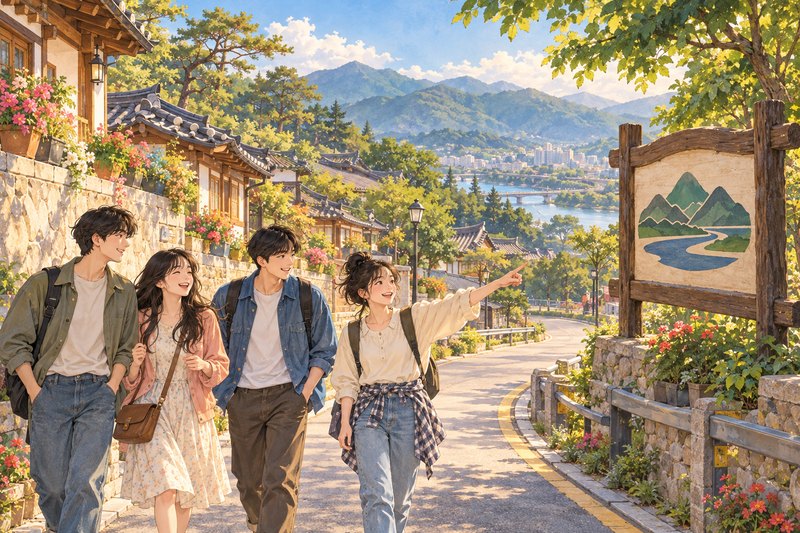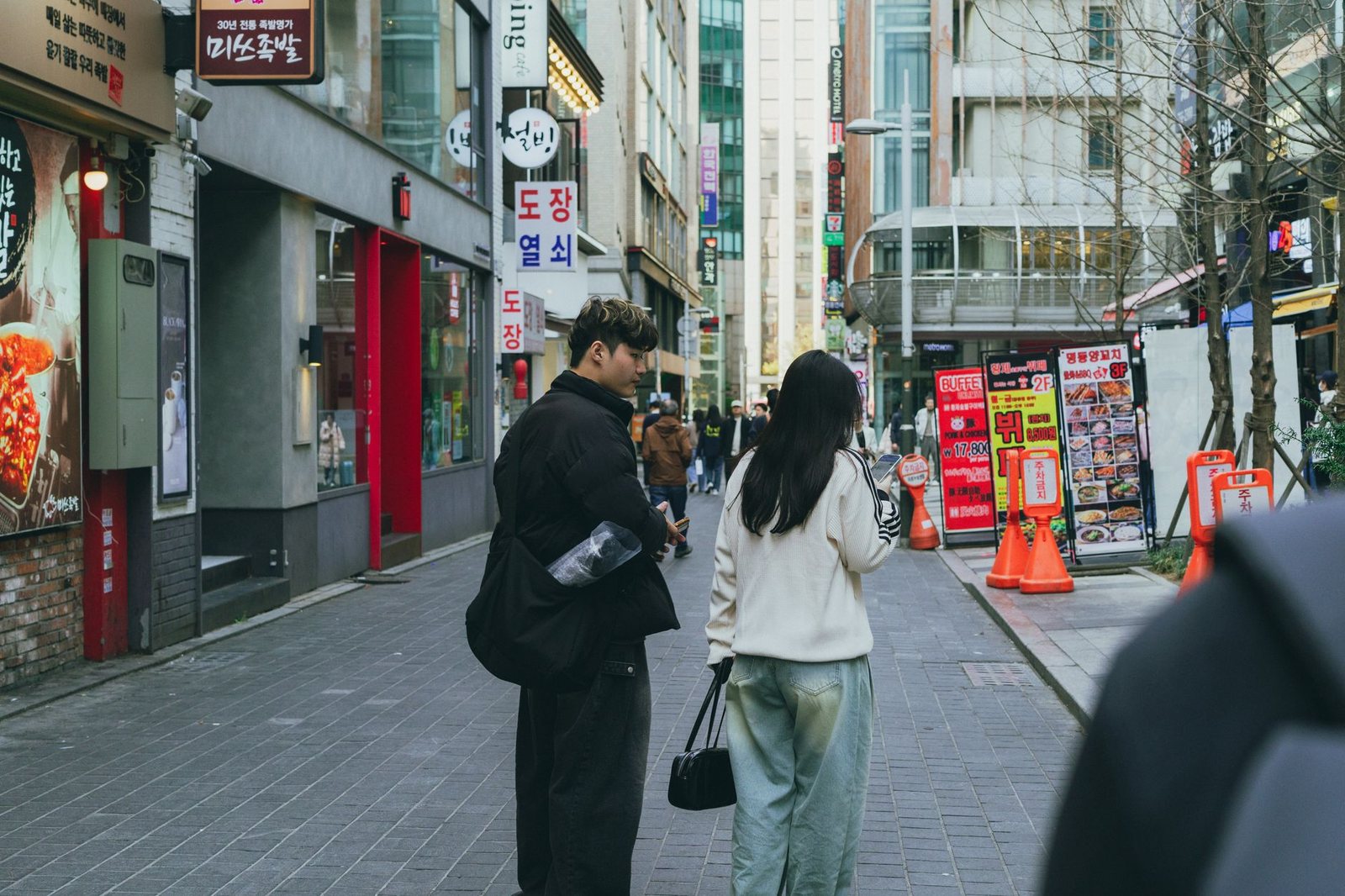
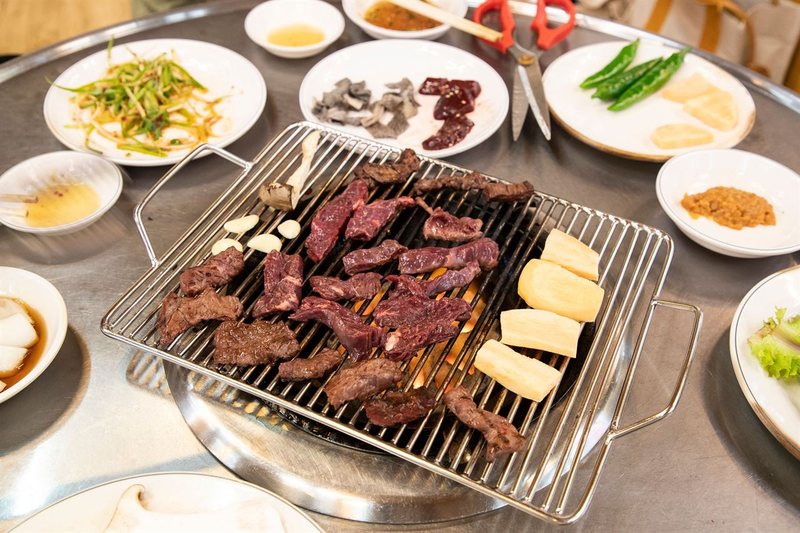
Spend an afternoon with Korean friends and one word keeps coming back: 진짜 (jinjja). Someone shares a bit of news, and it returns as a rising “Jinjja?” The food arrives, and it bursts out as a loud “Jinjja!” A friend begs one more favor, and it stretches into a whiny “Jinjjaaa~.” The bus pulls away just as you reach the stop, and it sinks into a low “Jinjja…” Same two syllables, four completely different feelings.
So what does jinjja mean? Literally “real” or “really.” It is the everyday Korean “for real,” and what it means in the moment depends almost entirely on your voice. The word is so central to how Koreans react that in mid-2026 the Korea Tourism Organization (KTO) built a short ad around it on its official VISITKOREA YouTube channel, “Let’s say ‘JINJJA’ in Korea,” urging viewers to learn the word before they visit. KTO’s posts about the ad describe four friends traveling through parts of Gangwon Province and the Gyeongsang region, starting from Daegu International Airport. Fittingly, Gyeongsang is the part of Korea best known for doing pitch differently, as you will see below.
What does jinjja mean?
진짜 is a standard dictionary word, not slang. The National Institute of Korean Language (NIKL) lists it in its open dictionary, Urimalsaem, as a noun, for something genuine rather than copied or faked, and as an adverb meaning “truly, without pretense.” Its opposite is 가짜 (gajja, fake).
As a noun, it settles whether something is real: 진짜야 (jinjja-ya) means “It’s true” or “I mean it.” As an adverb, it turns up the volume on almost anything: 진짜 맛있어 (jinjja masisseo, “this is so good”), 진짜 피곤해 (jinjja pigonhae, “I’m so tired”). The dictionary also lists 진짜로 (jinjjaro) as an adverb with the same meaning, the form people use to insist they are not joking. Said on its own, jinjja becomes a reaction: “Really?”, “Seriously?” and “No way” rolled into one.

Four ways to say jinjja
Because the word itself never changes, Koreans listen for the melody:
- Short and rising, “Jinjja?” means “Really?” It can be a genuine question or simply a friendly sign that you are listening. A friend says they are moving to Busan; you say “Jinjja?”
- Loud and bright, “Jinjja!” means “For real!” or “Amazing!” It often comes doubled, as in 진짜 진짜 맛있어 (“this is really, really good”).
- Stretched out, “Jinjjaaa~” means “Come on, seriously.” This half-whine is for pleading, teasing or mock complaints, like when a friend swears they are not lying and you are not buying it.
- Low and falling, “Jinjja…” means “Ugh, I can’t believe this.” It carries disappointment or frustration, usually with a sigh attached.
There is also an unofficial fifth: a flat, low-energy “jinjja” mumbled while your eyes stay on your phone. Most Koreans hear that as “uh-huh, whatever,” so when a friend’s news matters to them, let your voice climb a little.
Is Korean a tonal language? Why the melody does the work
Learners often ask whether Korean works like Mandarin, where the pitch of each syllable changes the word itself. Standard Seoul Korean does not. 진짜 means the same thing at any pitch. What changes is the music at the end of the sentence, and Korean leans on that music hard.
An NIKL article on Seoul intonation gives a simple example: 밥은 먹었어 (babeun meogeosseo) is a question, “Did you eat?”, when the end rises, and a statement, “I ate,” when it falls. (That little question doubles as a greeting, as we explain in why Koreans ask “Have you eaten?”) The same article notes that 같이 가 (gachi ga, “come with me”) can be an order or a request depending on how it is said, and that written Hangul has no way to mark this melody, which helps explain why a typed message is so easily misread.
Korean insider tip: In texts, we fake the missing melody with symbols. 진짜?? with two question marks is wide-eyed surprise, 진짜ㅠㅠ (ㅠㅠ is a pair of crying eyes) is the sad, sinking version, and 진짜~ with a tilde is the playful whine. A bare 진짜. with a full stop can read as cold or annoyed, so many younger Koreans leave the period off in casual chats.
Grammar makes the voice even more important. Urimalsaem defines the everyday polite ending -어요 (-eoyo, or -아요, -ayo, after certain vowels) as marking statements, questions, commands and suggestions alike. So 가요 (gayo) can mean “I’m going,” “Are you going?”, “Go” or “Let’s go,” and only the melody tells you which. Stretched vowels add one more layer: the longer the “aaa,” the bigger the feeling.
There is one well-known exception in South Korea. NIKL describes the Gyeongsang dialects of the southeast, the speech of cities such as Busan and Daegu, as tonal: each syllable of a word is pronounced at its own pitch, following set rules. That is why a Gyeongsang accent has such a distinctive, sing-song melody, and why other Koreans recognize it almost instantly.
Jinjja or jeongmal? What to say to older people
정말 (jeongmal) is jinjja’s twin. Urimalsaem lists it as a noun and an adverb meaning “just as said, without a lie,” and in everyday talk the two often swap freely: 정말? and 진짜? both mean “Really?” Many Koreans hear 정말 as a little softer and more polished, and 진짜 as chattier. One difference is fixed: only 진짜 can mean “the real one,” as opposed to a fake. Urimalsaem also notes that 정말, placed after a word for a person, can signal exasperation: 너도 정말 (neodo jeongmal) is roughly “Honestly, you…”
With older people, strangers, teachers or a boss, add the polite particle 요 (yo). Urimalsaem explains that 요 can follow nouns and adverbial words to show respect to the listener, so 진짜요? (jinjjayo?) and 정말요? (jeongmal-yo?) are both polite ways to say “Really?” For a more formal moment, 정말이에요? (jeongmarieyo?, “Is that true?”) is a complete polite sentence. A bare 진짜? to a grandparent or a manager is no disaster, but it sounds like you are talking to a friend.
What do aigoo, omo and wa mean?
If 진짜 is the reaction of friends, 아이고 (aigo) is the sigh of the whole country. Fans usually spell it “aigoo” because many people say it closer to 아이구 (aigu), but Urimalsaem gives 아이고 as the standard spelling. Its four dictionary senses cover a remarkable range: the sound you make in pain, hardship, surprise, bitterness or exasperation; the sound of being glad; a cry of despair; and crying itself, especially the wailing of mourners at a funeral.
In real life, you hear it everywhere: 아이고, 허리야 (aigo, heoriya, “oh, my back”) from someone getting up off the floor; 아이고, 죽겠다 (aigo, jukgetda, literally “I’m dying,” really just “I’m worn out”) after a long day; a soft 아이고, 예뻐라 (aigo, yeppeora, “aww, how sweet”) at a baby; and a warm 아이고, 이게 누구야! (aigo, ige nuguya!, “well, look who it is!”) when a relative walks in. It is not rude and not a swear word. Koreans of every age say it, though it sounds especially at home coming from parents and grandparents.
어머 (eomeo), the word fans usually write as “omo,” is the gasp of surprise, and it sounds closer to “uh-muh” than “oh-moh.” Urimalsaem defines it as the sound you make when something unexpected startles or horrifies you, and notes that women use it more often. Its emphatic form, 어머나 (eomeona), is the full “Oh my goodness!”
와 (wa) is the simplest of all. Urimalsaem lists it as short for 우아 (ua), the sound you make when something unexpectedly good happens. A quick, bright “Wa!” is pure delight at a view, a dish or a performance. A long, flat “Waaa…” can be awe, or disbelief that someone really just did that.
And the two reactions that fill every group chat, 헐 (heol, “no way”) and 대박 (daebak, “awesome,” the star of KTO’s companion ad), get their own explainer in our guide to ㅋㅋ and Korean texting slang.
Before you try them in Korea
- Start with 진짜요? It shows you are listening and works with almost anyone.
- Match your pitch to your feeling. A rising “Jinjja?” is always safe. A low, sighing “Jinjja…” aimed at a person can sound as if you are fed up with them.
- Keep the whine for friends. “Jinjjaaa~” and a drawn-out “Aigooo~” are playful among equals but cheeky toward a boss or an elder.
- Follow the reaction with support. When a friend mentions a big exam or interview, a surprised “Jinjja?” can be followed by a cheerful “Fighting!”

Quick answers
Is it rude to say jinjja to an older person?
Not rude, just casual. 진짜 is a standard word, but on its own it sounds like talk between friends. With elders, strangers and bosses, add 요: 진짜요? or 정말요?
What is the difference between jinjja and jeongmal?
As a reaction or an intensifier, very little: both mean “really.” 정말 feels slightly more polished, 진짜 more conversational, and only 진짜 can mean “genuine, not fake.”
Do only women say omo?
No. The dictionary notes that women use 어머 more often, so it can sound a little feminine, but men say it too. Everyone uses 아이고 and 와.