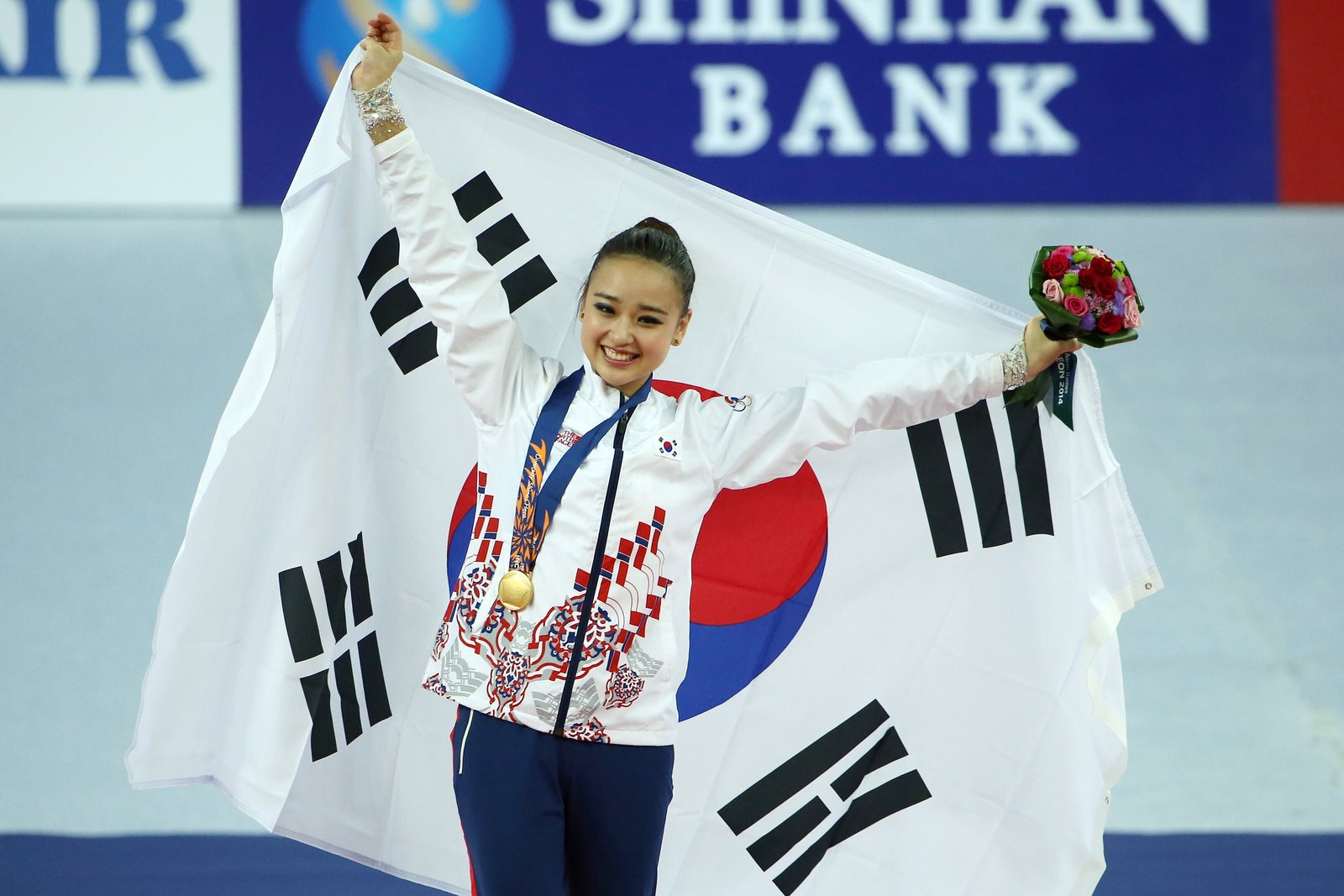
When a Korean team wins an Asian Games final, the news back home usually comes with a second headline. Alongside the gold medal, Korean media report something that puzzles many fans abroad: how many of the young men on that podium have just earned a change to their military service.
The short answer: under Korea's Military Service Act, men who win an Olympic medal of any color or an Asian Games gold can serve as 예술·체육요원 (yesul-cheyuk yowon, arts and sports personnel) instead of joining the military as regular soldiers. Abroad it is usually called an "exemption," but it is not a free pass. They still go through basic military training, then spend 34 months working in their own field and complete 544 hours of public service using their skills.
First, a quick word on Korean military service
Most able-bodied Korean men are required to serve in the military, usually in their late teens or twenties. If the topic is new to you, our story on military service in Korea and what it means for relationships walks through the basics.
Besides active duty, the law has a category called 보충역 (bochungyeok, supplementary service), which covers alternative forms of service such as social service agents. Arts and sports personnel belong to this group, and according to the Korean government's official legal guide, finishing their 34 months counts as completing service as a social service agent. In Korean news, the whole arrangement usually goes by 병역 특례 (byeongyeok teungnye), roughly "special exception in military service."
Who qualifies
The Military Manpower Administration (MMA), the agency that runs conscription, lists the criteria like this:
- Sports: a top-three finish at the Olympics, or first place at the Asian Games.
- Arts: second place or better at an international arts competition designated by the MMA, with no more than two qualifying winners per competition, chosen by ranking. The list is mostly classical music and dance contests, and it has been trimmed many times; since 2024 it has covered 35 competitions.
- Korean traditional arts: in fields with no international contest, such as 국악 (gugak, traditional Korean music), the single best winner of a designated domestic competition. People who have completed at least five years of training as successors to a national intangible heritage also qualify.
Because the sports rule follows the Asian Games program, it reaches well beyond the usual suspects. Football and baseball players tend to make the headlines; Son Heung-min, for example, gained this status after Korea won the men's football gold at the 2018 Asian Games in Indonesia. When esports became a medal event at the Hangzhou Asian Games, held in 2023, the gold-winning League of Legends team qualified too. The MMA's list of service fields even mentions professional players of 바둑 (baduk, the board game known in the West as Go).
What the "exemption" really looks like
Based on the MMA and the government's legal guide, the duties look like this:
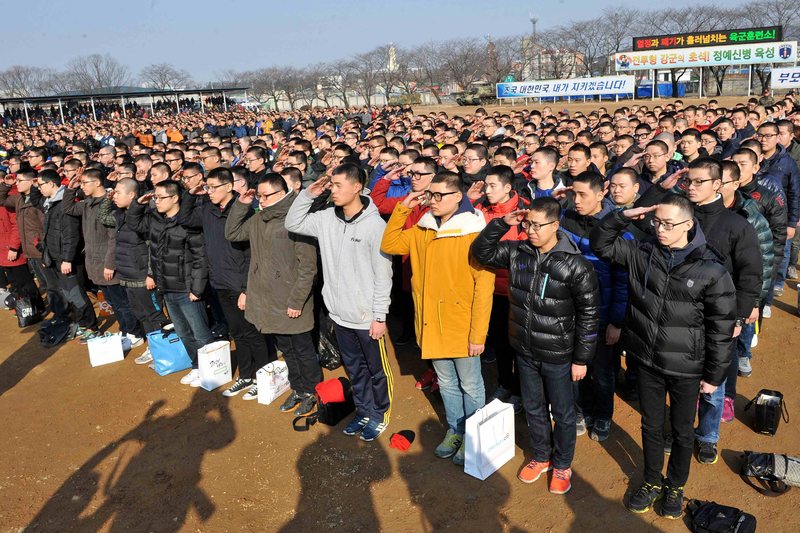
- Basic military training. Like others in supplementary service, they complete a short basic training course, reported as lasting three to four weeks.
- 34 months in their field. For two years and ten months, they must keep working in the area that earned them the status, under the supervision of the Ministry of Culture, Sports and Tourism. Athletes stay registered as players in their sport or work as coaches and instructors; artists study, teach or perform with national and public companies.
- 544 hours of public service. Since July 2015, they must also put their skills to public use: performances, lessons and public campaigns for socially vulnerable groups, young people and preschool children. The minimum is 24 hours every quarter.
The rules are enforced. Anyone who falls short of the quarterly minimum, or submits false records, has to make up twice the missing hours. Those who still have not finished have their service extended, and if the hours are not completed within a year, the status is cancelled.
How it started: a short timeline
- 1973: A law on special cases in military service created the arts and sports category. The MMA describes its purpose as recognizing people who raise Korea's standing in the world (국위선양, gugwi seonyang) and contribute to its culture. The early bar was far lower: a top-three finish at the Olympics, world championships, the Universiade, the Asian Games or Asian championships could qualify, and so could the top 10% of graduates of Korea National Sport University. Musicians qualified by winning or placing second at international music competitions at least twice.
- 1984: The arts rule became second place or better at an international competition, and winners of domestic competitions and heritage trainees were added.
- 1990: The sports rule narrowed to today's standard: an Olympic medal or an Asian Games gold.
- 2002 and 2006: Temporary additions: reaching the round of 16 or better at the FIFA World Cup (2002) and a top-four finish at the World Baseball Classic (2006). Both were dropped from 2008.
- 2015: The 544-hour public service requirement began.
Why K-pop stars are not on the list
The answer lies in how the law is written. It names Olympic and Asian Games results and specific arts competitions, and pop music has nothing equivalent in it: chart positions, music awards and album sales are not criteria.
Bills to add pop culture artists to the arts category were proposed in the National Assembly in the early 2020s, but none passed. What did pass, on December 1, 2020, was a narrower change: pop culture artists who have received an order of cultural merit and are recommended by the culture minister may postpone enlistment until age 30. It took effect in June 2021. It is a delay, not an exemption; for most Korean men, the usual cutoff for postponing is 28.
All seven members of BTS, who received an order of cultural merit in 2018, went on to serve. Jin enlisted first, in December 2022, and the whole group had completed its service by June 2025. That return is the backdrop to BTS's ARIRANG album and world tour.
A system under review
The rules above are current as of October 2026. On October 6, 2026, shortly after the Aichi-Nagoya Asian Games, the Ministry of National Defense said it would pursue scaling back and ultimately abolishing supplementary service, including the arts and sports category, through its defense reform plan. It cited fairness among people who serve and the shrinking number of young men available to enlist. Any change would require amending the law or its decree.
Reading Korean sports news
If you follow Korean athletes, a few words keep popping up in headlines and comments every Olympic and Asian Games season:
- 병역 특례 (byeongyeok teungnye): the everyday news term for this special service track.
- 예술·체육요원 (yesul-cheyuk yowon): the official name of the status.
- 기초군사훈련 (gicho gunsa hullyeon): basic military training, the part athletes still do.
After each Games, Korean media usually count how many athletes gained the status. Now you know what that number means.
Korean insider tip: Korean fans sort young athletes into 군필 (gunpil, already served) and 미필 (mipil, not yet served), and both words fill every Asian Games roster debate. A 미필 player who misses out on gold often applies to 상무 (Sangmu), the Armed Forces Athletic Corps in Mungyeong, where he serves as a soldier and keeps competing; its baseball team plays in the KBO Futures League, the second tier. Before buying a young star's jersey, check whether he is on Sangmu's latest acceptance list.
Quick answers
Do Korean Asian Games gold medalists skip military service completely?
No. They skip regular active duty, but they still complete basic military training, work in their sport for 34 months and do 544 hours of public service.
Does an Olympic medal exempt Korean athletes from military service?
An Olympic medal of any color, bronze included, qualifies a Korean man for arts and sports personnel status on the same terms. At the Asian Games, only gold counts.
Why didn't BTS get a military exemption?
Pop music is not one of the fields the law covers. A 2020 amendment only let top pop artists postpone enlistment until 30, and all seven BTS members have since completed their service.