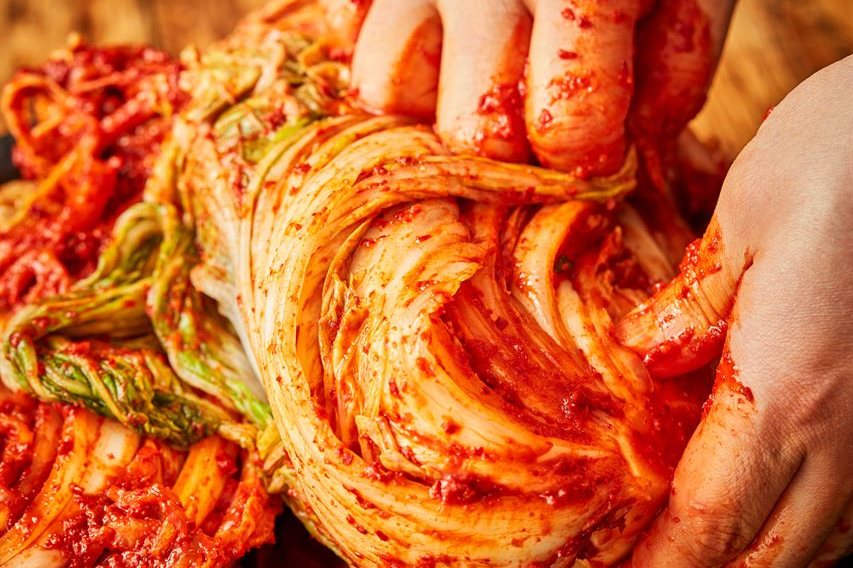
Walk into a Korean home on a weekend in late November and you may find the floor covered in plastic sheeting, a mountain of salted napa cabbage in a giant rubber tub, and three generations in rubber gloves stained red to the wrist. This is 김장 (gimjang, usually spelled kimjang): the once-a-year day, or weekend, when a family makes enough kimchi to last the whole winter.
Kimchi is the food; kimjang is the event. The Encyclopedia of Korean Culture defines it as the custom of making the winter's kimchi all at once, and kimjang kimchi was once called “half of winter's food.” It is the kimchi that shows up among the banchan at almost every meal until spring. The sharing matters as much as the making, which is why UNESCO inscribed “Kimjang, making and sharing kimchi in the Republic of Korea” on its list of the Intangible Cultural Heritage of Humanity in December 2013.
Why November? Ask the weather forecast
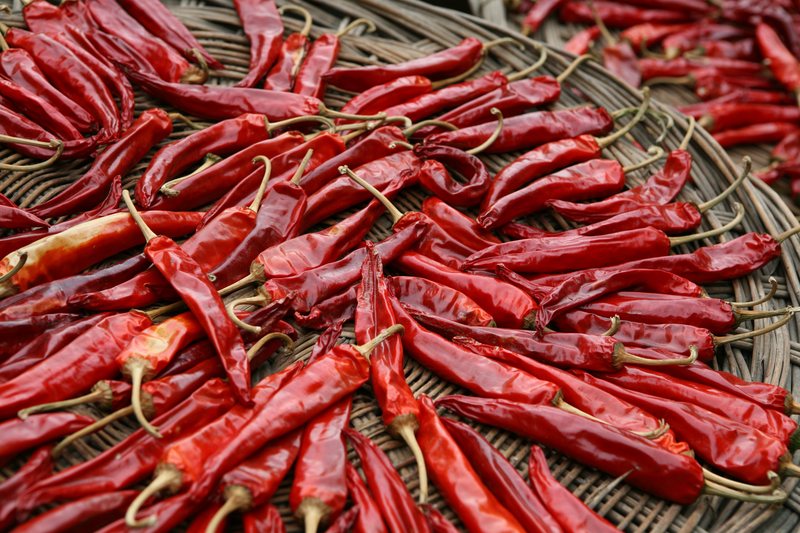
Kimjang starts months before the big day. As UNESCO describes the yearly cycle, households buy shrimp and anchovies to salt and ferment in spring, sea salt in summer, and dry and grind red chilies in late summer. Then they wait for the cold.
The season traditionally opens around 입동 (Ipdong, “the start of winter,” around November 7), about a week earlier in the mountains and later in the warm south. Korea's weather agency has long used a simple rule: kimjang time is when the daily low stays at or below 0°C and the daily average at or below 4°C. Any warmer and the kimchi ripens too fast; any colder and the cabbage and radish freeze. Korean news still runs regional “kimjang forecasts” every autumn, and in a 2025 survey by the Korea Rural Economic Institute (KREI), 73.1% of consumers planned to make theirs between mid-November and early December.
Salt, stuff, wrap, then the pork
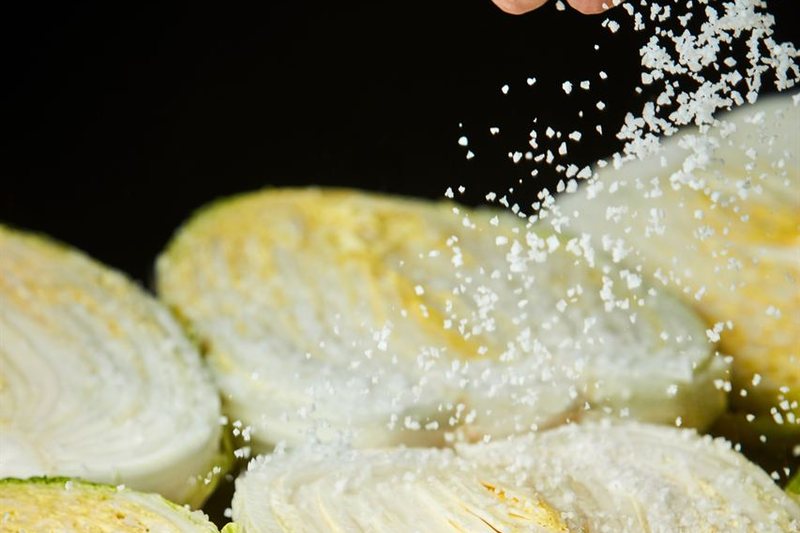
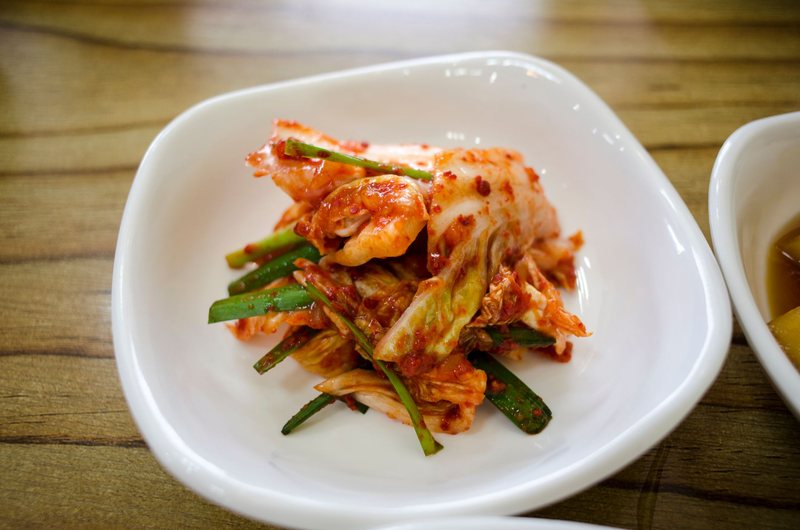
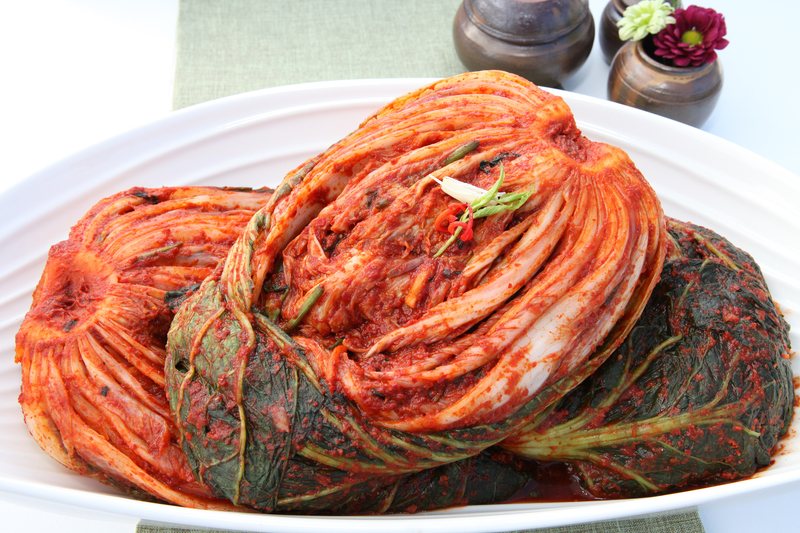
Salting is the hard part. The cabbages are split, soaked in brine and layered with salt for the better part of a day, and someone often has to get up in the night to turn them so they salt evenly. Next they are rinsed and drained while the filling, which Koreans casually call 속 (sok, “the inside”), is mixed in the biggest bowl in the house: radish strips, chili flakes, garlic, ginger, scallions and salted seafood. Then everyone smears it between every leaf and wraps each half in its outer leaf.
The work used to take two or three days, so neighbors took turns, moving from house to house. The National Folk Museum of Korea calls this 김장품앗이 (gimjang pumasi, kimjang labor-swapping), and notes that 100 to 150 heads of cabbage was once a normal family batch. By 2024, a KREI survey put a family of four at about 18.
The payoff is the best meal of the season: boiled pork wrapped in the tender yellow inner leaves with a dab of fresh filling. The encyclopedia calls it 속대쌈 (sokdae-ssam); most families now just say 수육 (suyuk, boiled meat) or 보쌈 (bossam), often with raw oysters on the side. For many helpers, that plate is the real paycheck.
Mild in the north, bold in the south
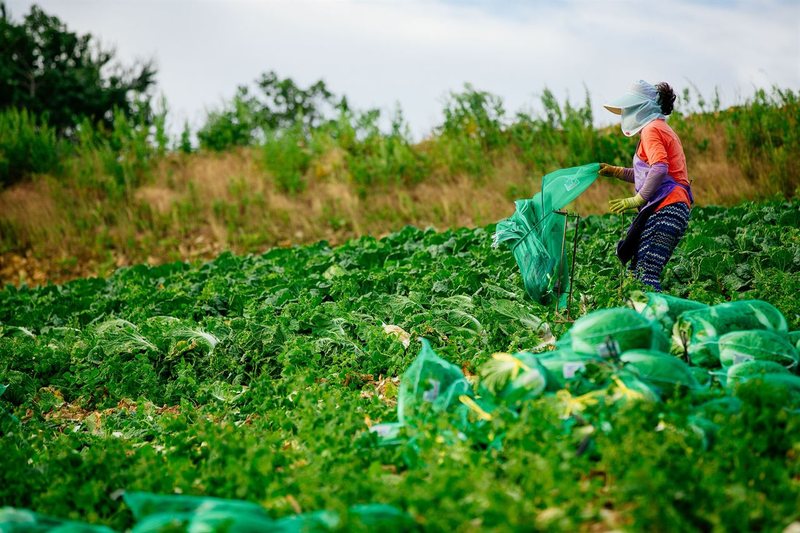
There is no single kimjang kimchi. According to the encyclopedia, the cold north traditionally salted lightly and left plenty of cool brine, while the warmer south salted harder and seasoned redder and thicker so the kimchi would not sour too soon. Salted shrimp and croaker rule in the north and center, anchovy in Gyeongsang and Jeolla, and Jeolla cooks add glutinous rice paste. Every corner of Korea's map has its own accent, and every family swears its version is the right one.
Whole-cabbage kimchi is also younger than you might think. According to the World Institute of Kimchi, the tightly headed napa varieties made for stuffing, such as Seoul and Gaeseong cabbage, were perfected in Korea in the late 1800s. Before they became common, cabbage was usually cut up and mixed with other vegetables in the jar.
From buried jars to the kimchi fridge
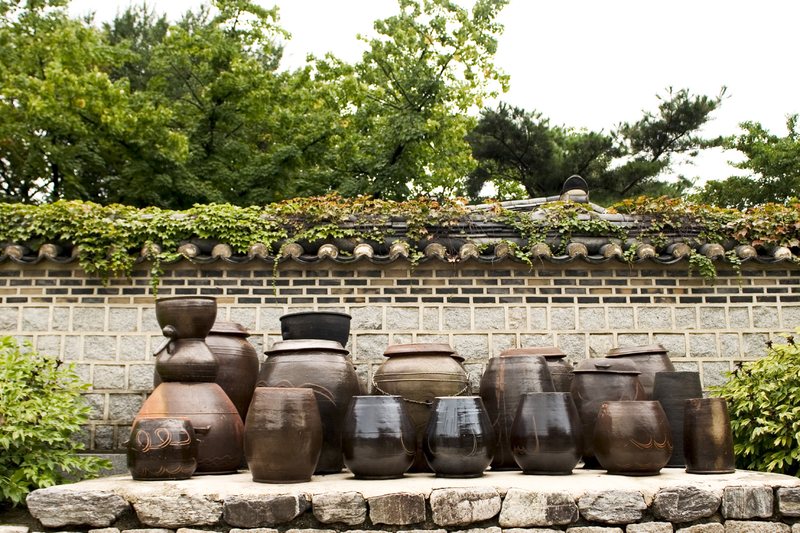
For centuries, kimjang kimchi went into earthenware jars buried in the yard, kept cold but never frozen. Apartments ended that. Korea JoongAng Daily reports that one complaint about Korea's first apartment complex, built in Seoul's Mapo district in 1962, was that there was nowhere to bury the kimchi. The first kimchi refrigerator, made by Daewoo in 1984, flopped because most people still had yards. In 1995, Mando's Dimchae, aimed at families in apartments, became such a hit that its name turned into a generic word.
A 김치냉장고 (gimchi naengjanggo) holds kimchi colder and steadier than a regular fridge, close to freezing, so it ripens slowly, and it keeps the smell away from everything else. That is why so many Korean homes have two refrigerators, and why the second one is not for beer.
“Can't we just buy it?” Kimjang today
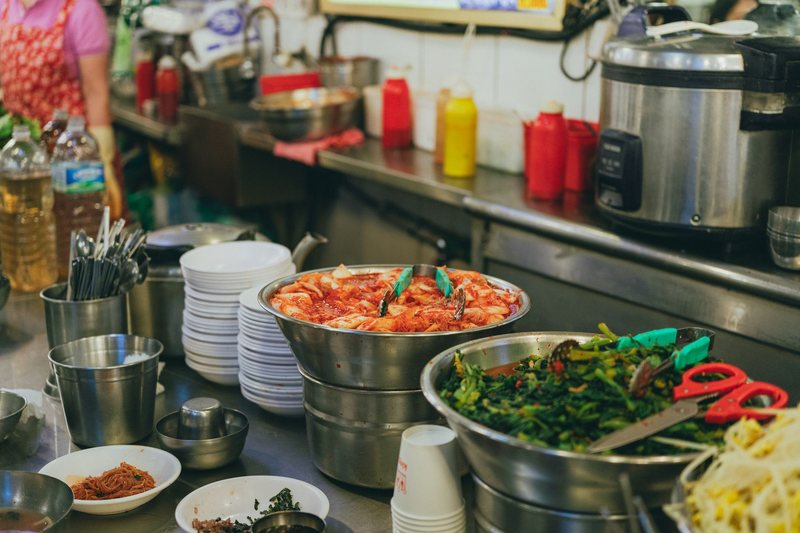
UNESCO notes that a family's kimjang method is typically handed down from a mother-in-law to her new daughter-in-law, and that is exactly where modern friction shows. Young daughters-in-law who would rather buy packaged kimchi and mothers-in-law who prefer homemade can clash over it, as The Asia Business Daily reported in 2020. Korean even has a slang word for people who have given up: 김포족 (gimpo-jok, “kimjang quitters”).
Still, the tradition is shrinking, not dying. In KREI's 2025 survey, 62.3% of consumers planned to make their own kimjang kimchi, down from 64.5% the year before, while 32.5% planned to buy it. The top reason to make it at home: matching the family's taste. Home cooks simply skip the worst step: 58.9% of them bought pre-salted cabbage, 절임배추 (jeorim baechu). The weekend at a parent's house, and the drive home with a trunk full of containers, live on.
Homemade is not free, either. As the 2026 season began, the government put a family of four's kimjang ingredients at 238,280 won as of late October, 4.2% less than last year's 248,609 won, Herald Economy reported. It also set aside a record 64 billion won for discounts of up to 40% on farm goods such as cabbage and radish and up to 50% on sea products such as salted shrimp and sea salt.
Why “sharing” is in the UNESCO name
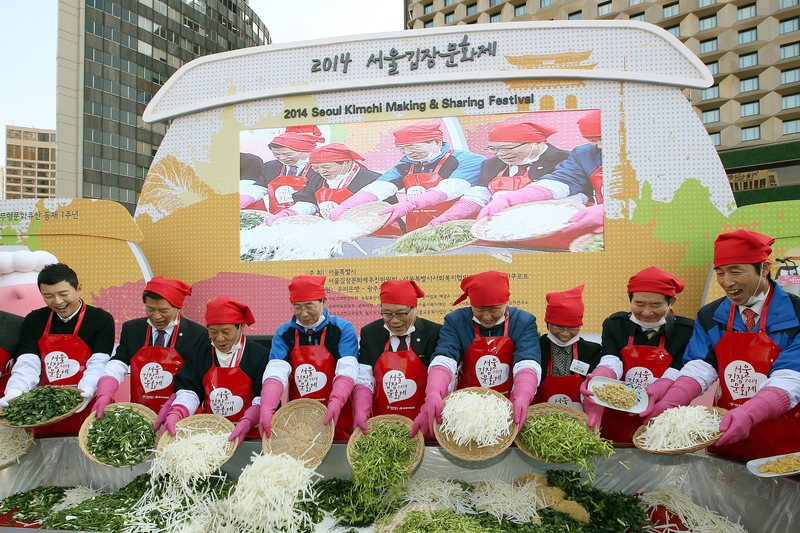
According to the encyclopedia, households once handed out salted cabbage, leftover filling and fresh kimchi when the work was done, and women from poorer homes who helped at a neighbor's kimjang often made their own with what they were given. Today the same instinct behind “Have you eaten?” brings volunteers, companies and church groups to city plazas every November to make kimchi for low-income and elderly neighbors.
Kimjang has even reached fashion. The floral quilted vest that grandmothers wear to stay warm while they work became a trend in 2025, sold to tourists at Seoul's Namdaemun Market as a “K-granny vest,” Financial News reported. And since 2020, Korean law has marked November 22 as Kimchi Day.
If you're invited to a kimjang
- Wear clothes you can ruin. Chili paste stains, and it gets everywhere.
- Take the gloves you're handed. After an hour of stuffing, chili and salt sting bare hands.
- Stay for the pork. The boiled pork and fresh kimchi are the thank-you.
- Expect to leave with kimchi. Sharing is the point. Returning the container with a little fruit inside, rather than empty, is a classic Korean courtesy.
- Praise the 손맛 (son-mat, “hand taste”). It means the flavor only one cook's hands can give.
Korean insider tip: When you pack kimchi to take home, add it in batches and press each layer down hard with your gloved hand to squeeze out the air. Fill the tub only about 80% full, because the brine rises as it ferments and an overfilled tub can leak red juice in the car. Save a few salted outer leaves and lay them on top like a blanket so the surface does not dry out.
Quick answers
What is the difference between kimchi and kimjang?
Kimchi is the fermented dish. Kimjang is the yearly event of making a big batch of it, mostly napa cabbage kimchi, to last through winter, usually made with family or neighbors and shared.
When is kimjang season in Korea?
Mostly from mid-November to early December. It traditionally starts around Ipdong (about November 7) and comes later the farther south you go, timed to when temperatures hover near freezing.
Do Koreans still make kimchi at home?
Many do. In a 2025 survey, about 62% of Korean consumers planned to make their own kimjang kimchi and about a third planned to buy it. More than half of home cooks now save a day with pre-salted cabbage.