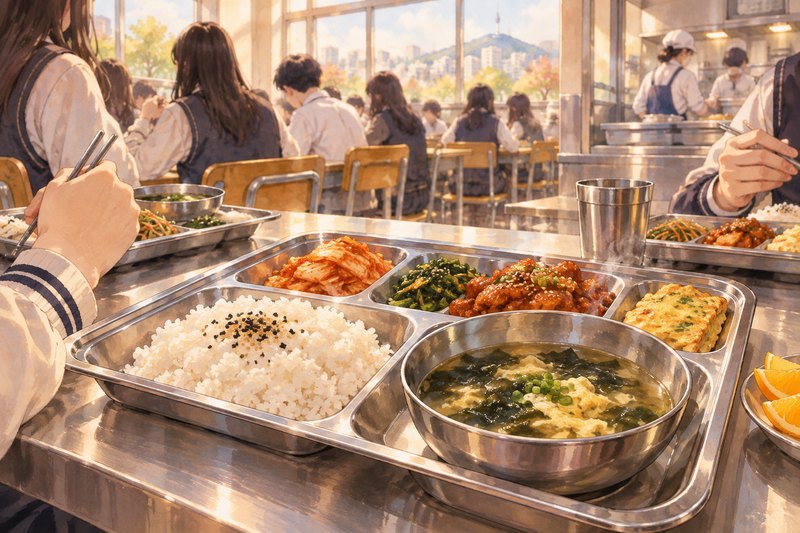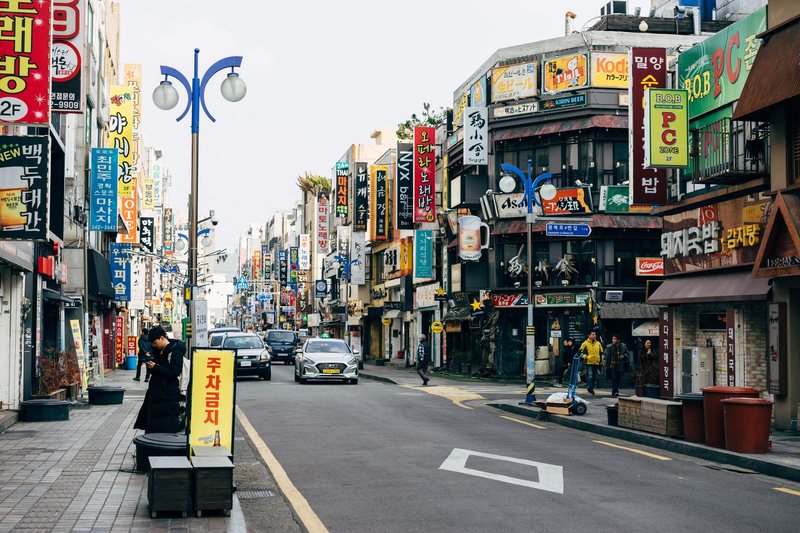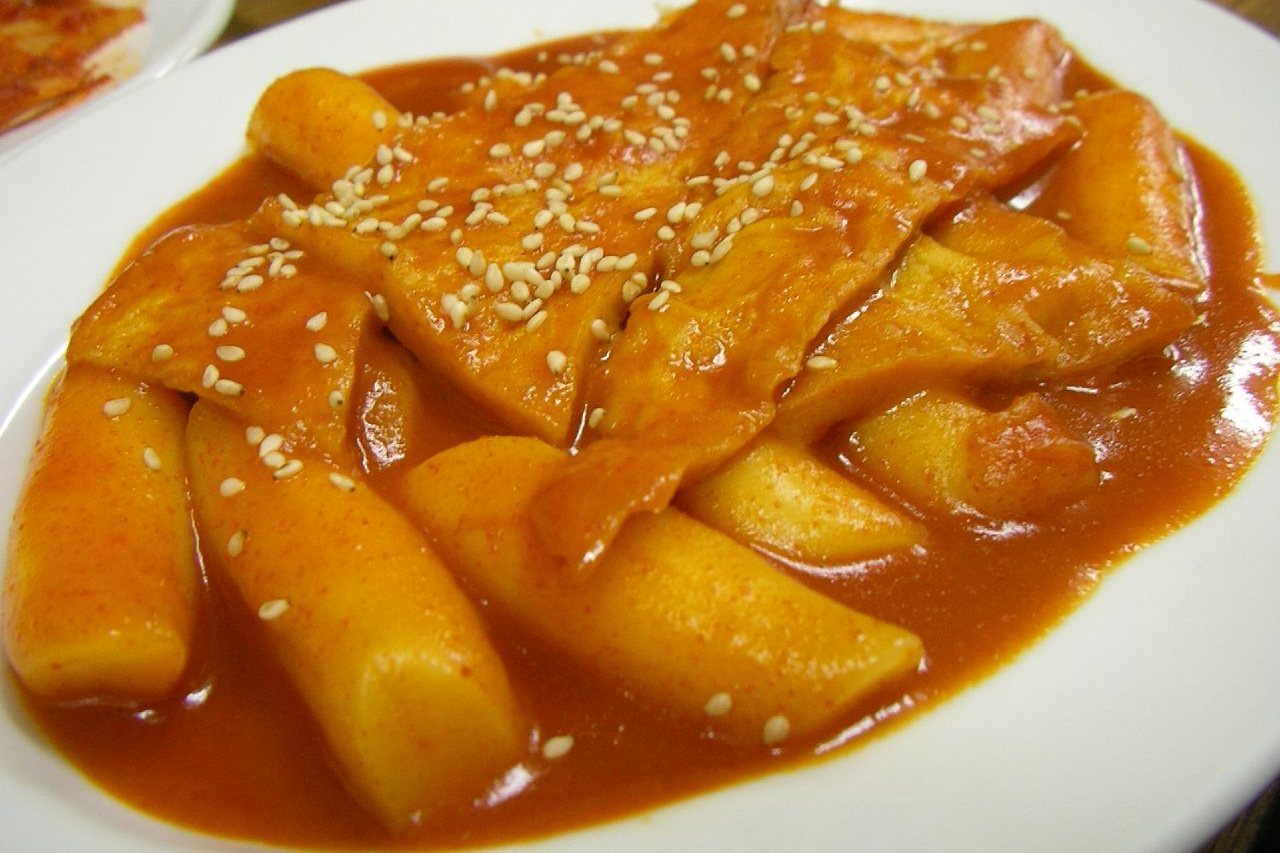
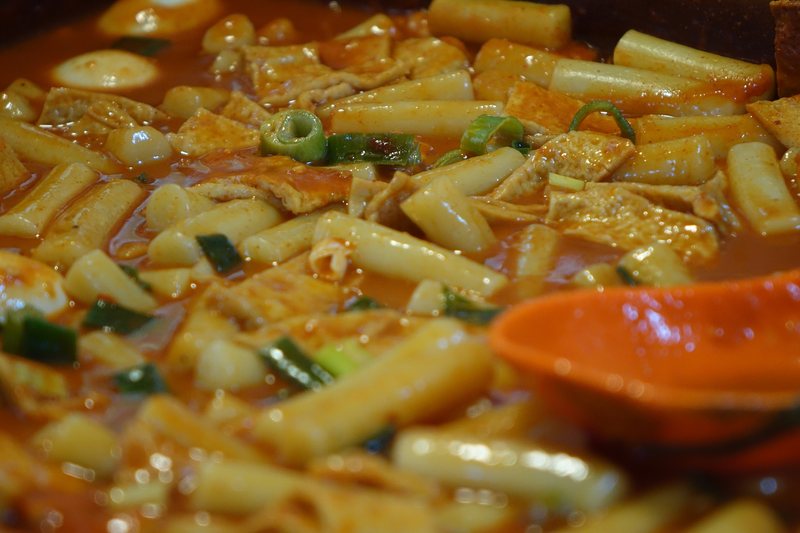
Walk past a Korean school around four in the afternoon and you will often find the same scene: a wide pan of something bright red bubbling away, students in uniform crowded around it, and skewers of fish cake bobbing in broth nearby. The red stuff is 떡볶이 (tteokbokki): chewy sticks of rice cake simmered in a sauce of 고추장 (gochujang, fermented chili paste), sugar and broth, usually with fish cake and a boiled egg.
So why is tteokbokki Korea's favorite comfort food? Because for most Koreans it tastes like growing up. It is cheap, quick, spicy-sweet and made for sharing, and it follows people from the school gate to late nights after work to the evening a relationship ends. When the Seoul Metropolitan Government asked about 10,000 people in 2020 which food comforted them most, tteokbokki came first, ahead of fried chicken and kimchi stew.
After school, after work, after a breakup
Red tteokbokki began appearing outside schools across the country in the late 1960s as a snack students could afford, as agricultural economist Moon Jung-hoon writes in the Korea JoongAng Daily. Generations have spent their pocket money there ever since.
After work, the craving changes shape. Many Koreans say they 매운 걸로 스트레스 푼다 (maeun geollo seuteureseu punda, "blow off stress with spicy food"), and tteokbokki is the easiest way to do it: no reservation, no dress code, one pan for the whole table. In that survey, many respondents explained their picks the same way: it tastes like what mom used to make.
And after a breakup? K-dramas have made it the food of a bad day; the Korea Times points to it in shows such as My Liberation Notes and Be Melodramatic. A best-selling 2018 Korean book about living with depression even put it in the title: 죽고 싶지만 떡볶이는 먹고 싶어 (I Want to Die but I Want to Eat Tteokbokki). Many readers knew the feeling: on the worst day, the craving for something red and chewy is still there.
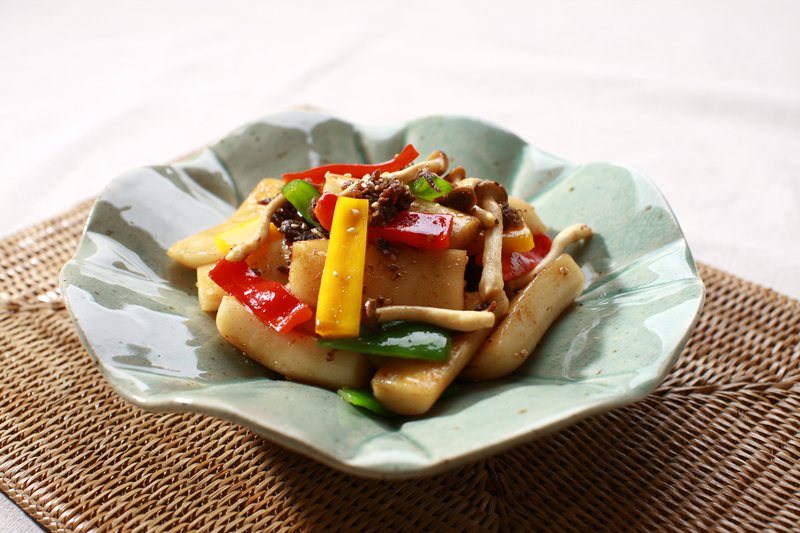
Before it turned red: the "royal court" version
Tteokbokki was not always spicy, or street food. The older style is stir-fried: rice cake tossed with beef and vegetables and seasoned with soy sauce and sesame oil. Nineteenth-century cookbooks describe versions with abalone and sea cucumber, and according to a food history column published by the Rural Development Administration, it was a luxury dish for feasts and drinking tables into the 1950s.
Today this style is called 궁중떡볶이 (gungjung tteokbokki, "royal court tteokbokki"). The name reflects its refined image more than a well-documented palace menu, so take the royal part with a pinch of salt. It is glossy, savory and mild: the one to order if chili is not your friend.
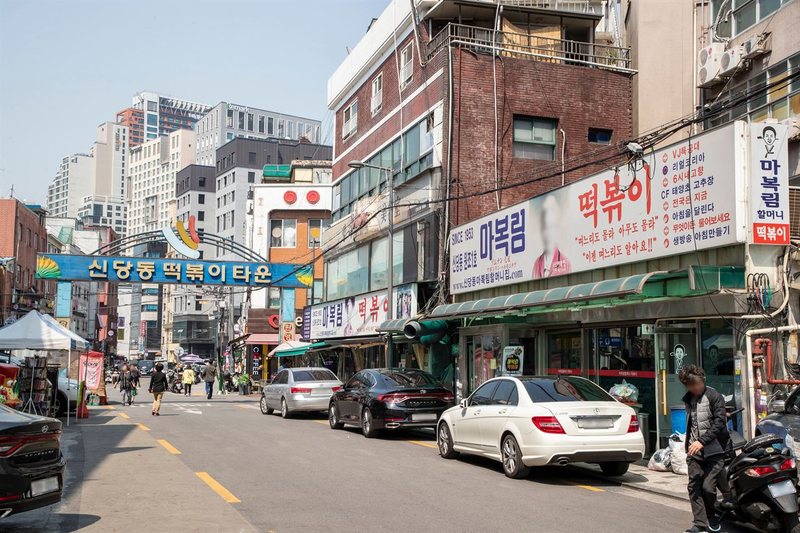
How it turned red: a Sindang-dong legend and a decade of flour
As Seoul city's media site tells it, in 1953, just after the Korean War, a street vendor named Ma Bok-rim tasted rice cake with jajangmyeon (noodles in black bean sauce) and began cooking rice cakes in gochujang mixed with 춘장 (chunjang, black bean paste) in Seoul's Sindang-dong. Her alley grew into Sindang-dong Tteokbokki Town: gas burners arrived in the 1970s, shops filled the street by the 1980s, and some even kept a DJ booth for the teenagers who packed them. In the mid-1990s she starred in a gochujang TV ad with a line Koreans still quote: the secret of her sauce was something "even my daughter-in-law doesn't know." She died in 2011 at 91, and today her daughters-in-law run the shop.
Rice was scarce after the war, and from late 1962 the government campaigned for years to get people eating mixed grains and flour. According to the National Archives of Korea, some restaurants were even limited to flour-based food on certain days. Cheap wheat made 밀떡 (mil-tteok, cakes made from wheat flour) the backbone of street tteokbokki, and factory-made gochujang, a household staple by the early 1970s, turned the sauce red nationwide. Koreans still argue about it: team mil-tteok loves a soft bite that soaks up sauce, while team 쌀떡 (ssal-tteok, rice cakes) wants more chew.
By 2009 the dish had become a national project. A government-backed drive to take it global even opened a Topokki Food Research Institute, choosing a spelling foreigners could pronounce. Hence the topokki on packages abroad.
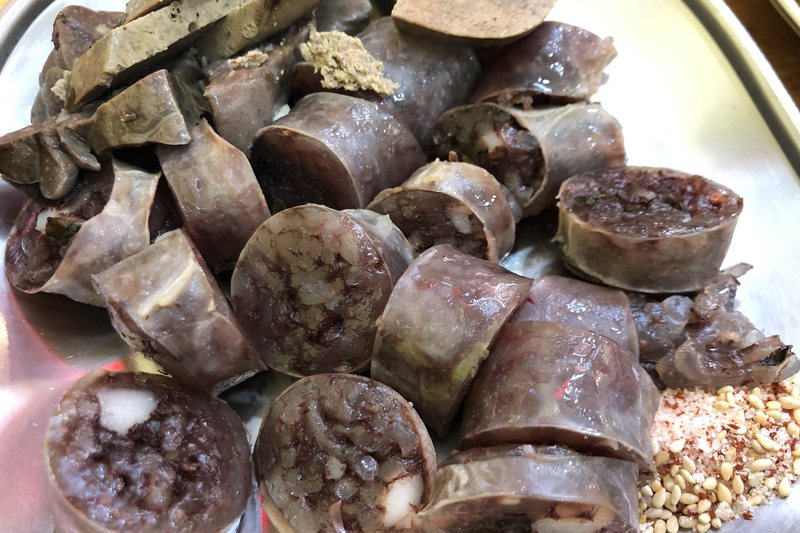
Bunsik: the snack bar that comes with it
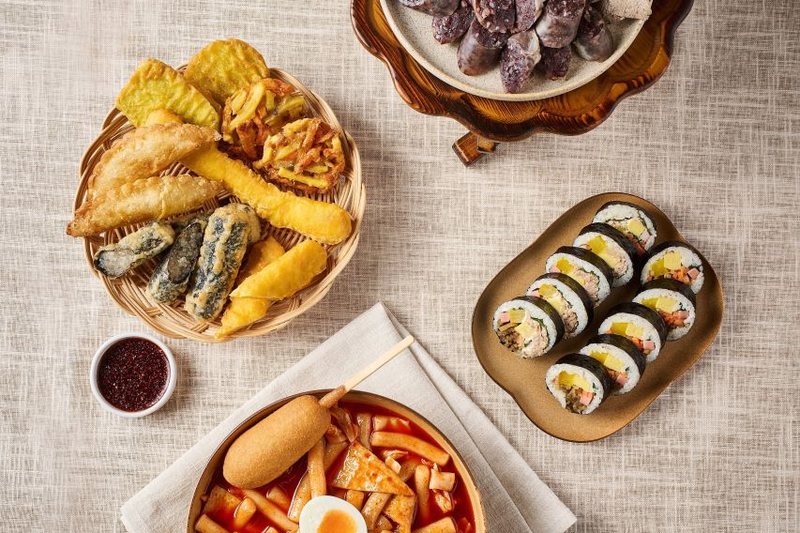
Tteokbokki rarely travels alone. It anchors the menu at the 분식집 (bunsik-jip), the casual snack bar near schools, subway stations and markets. 분식 (bunsik) literally means "flour food," the same word found in the name of that flour campaign, but today it covers almost any quick, casual dish, from gimbap rolls to ramyeon.
The classic order has a nickname: 떡튀순 (tteok-twi-sun), for tteokbokki, 튀김 (twigim, fried snacks such as seaweed rolls and vegetables) and 순대 (sundae, a sausage of pig intestine stuffed mostly with glass noodles). Half the fun is dragging the twigim and sundae through the red sauce. Sundae was a luxury when pork was scarce and became everyday bunsik in the 1970s. What else you dip it in starts regional debates: salt in much of the Seoul area, a ssamjang-style paste in Busan, vinegary chili paste in parts of Jeolla, soy sauce on Jeju.
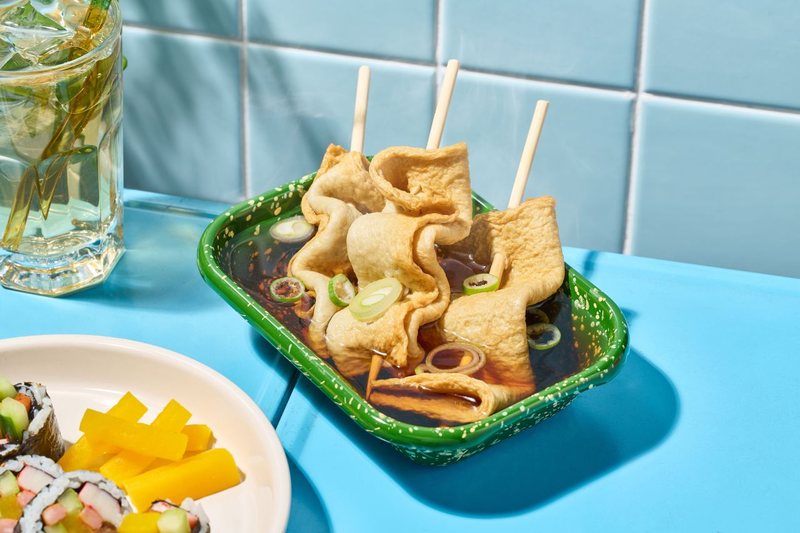
Eomuk and the pojangmacha
The other fixture beside the tteokbokki pan is 어묵 (eomuk, fish cake), folded onto long skewers and soaking in savory broth. Many Koreans still call it 오뎅 (odeng), a word borrowed from Japanese, though eomuk is the standard Korean term. At a stall you take a skewer, sip broth from a paper cup, and pay at the end by counting your empty sticks. In winter, that steam marks the season as surely as the fish-shaped bread carts.
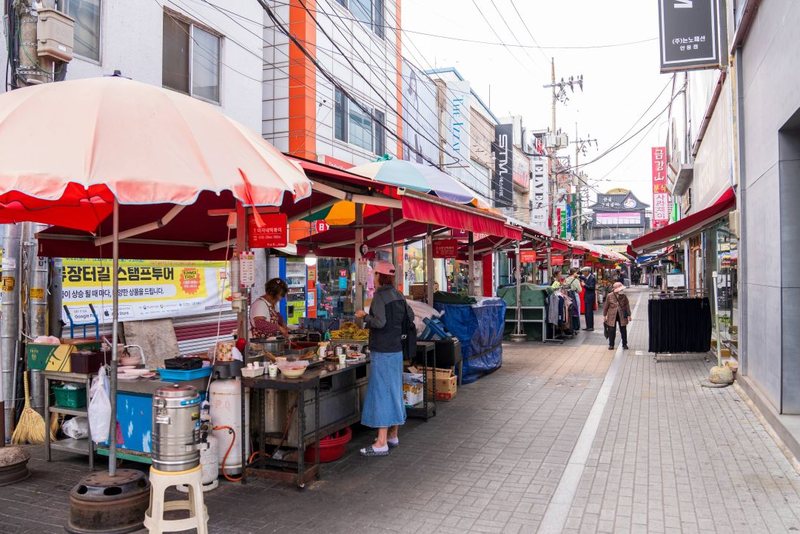
Many of these stalls are 포장마차 (pojangmacha, or pocha), the tented street stalls that, according to the Encyclopedia of Korean Culture, spread through Korean cities after 1945. Their menus run from tteokbokki and fish cake soup to soju. The encyclopedia records a detail every Korean knows: with no running water, vendors often wrap plates in plastic so they don't have to wash them. If you end up at one late at night, our guide to Korean drinking etiquette will help.
How to order tteokbokki like a regular
- Order by the portion. Say 떡볶이 1인분 주세요 (tteokbokki irinbun juseyo, "One portion of tteokbokki, please"). It is usually enough to share.
- Don't expect a spice dial at a stall. Street tteokbokki comes out of one big pan. Sit-down chains often let you pick a heat level.
- Get things sauced. Many places will toss your twigim in tteokbokki sauce if you ask. Order sundae and you may be asked whether you want 내장 (naejang, innards such as liver and lung) mixed in.
- Try the Sindang-dong way with friends. At 즉석떡볶이 (jeukseok tteokbokki, "instant tteokbokki") restaurants, the pan cooks on a burner at your table. Add ramyeon noodles, then fry rice in the leftover sauce.
Korean insider tip: At a jeukseok tteokbokki table, eat the ramyeon noodles first. Left in the pan, they swell and soak up the sauce, and Koreans have a word for that sad state: 불었다 (bureotda, "they've gone bloated"). And don't scrape the pan clean. Leave a few spoonfuls of sauce, then order fried rice; the staff usually stir it into what's left, and many Koreans say that last scrape is the best part.
Quick answers
Is tteokbokki as popular in Korea as K-dramas make it look?
Yes. It is sold everywhere from snack bars to delivery apps and convenience stores, and a 2020 Seoul survey of about 10,000 people voted it the No. 1 comfort food.
Is tteokbokki very spicy?
It depends on the shop. Classic street tteokbokki is sweet, spicy and savory, and the sugar softens the burn, but some places go much hotter. The rice cakes themselves are mild and chewy. If you can't take chili, look for gungjung tteokbokki, which is seasoned with soy sauce.
Is tteokbokki vegetarian or halal?
Usually not, as served in Korea. The broth is often made with anchovies, fish cake is fish, sundae is pork, and some commercial chili pastes contain alcohol. If you eat vegetarian or halal, ask before you order.
Getting there
Sindang-dong Tteokbokki Town (Seoul) 신당동떡볶이골목
- Subway
- Lines 2 and 6, Sindang Station, Exit 8 (about 240 m)
- Hours
- and business days vary by restaurant
- Tip
- Known as the birthplace of jeukseok tteokbokki, cooked at your table. For help in English, call the 1330 Travel Hotline (+82-2-1330)
Checked on November 5, 2026; confirm on the official site before you go.