The 35 Minutes When Korea Stops Its Planes for a Listening Test
Every November, South Korea rearranges its commute and its flights around one exam. Here is what the Suneung is, and why it weighs so much.
At 1:10 p.m. on Thursday, November 19, 2026, a recorded English voice will play in 1,312 test sites across South Korea, and the country will rearrange itself so that nobody misses a word. The Suneung (수능) is Korea's national college entrance exam, and for its listening section the government shifts takeoffs and landings and pauses artillery fire and tank movements. This year, 551,864 people have registered.
Why go that far for one test? Because the Suneung is a deadline many Koreans have in common. Plenty of the adults asked to come to work late that morning once walked into a test site themselves, and they remember the feeling. The country goes quiet less because a rule demands it than because people know what is riding on the day.
What the Suneung actually is
Say it "soo-nung." The word is short for 대학수학능력시험 (daehak suhak neungnyeok siheom), officially the College Scholastic Ability Test, or CSAT. Korean learners often trip on the middle: this 수학 (suhak) is not the word for math but a look-alike meaning "pursuing one's studies."
The first one, in 1993, was held twice, in August and November, so that a single day would not decide anyone's fate. The two papers could not be matched in difficulty, so it moved to once a year, and Korea ended up with exactly the one-shot day it had tried to avoid.
That day is a marathon. Test-takers must be in their seats by 8:10 a.m., and the timetable runs like this:
- 8:40 a.m.: Korean
- 10:30 a.m.: math
- 1:10 p.m.: English, starting with listening
- 2:50 p.m.: Korean history, then social studies or science
- 5:05 p.m.: an optional foreign language or classical Chinese, ending at 5:45
Candidates with severe visual impairments get extended time, which keeps the last rooms going until 9:48 p.m. Phones, smartwatches and Bluetooth earphones cannot come in, and this year smart glasses joined the list: get caught wearing a pair and your exam is void, and next year's is gone too.
Sitting the exam is not free, either. The Kyunghyang Shinmun reported that this year's registration fee is 37,000 won for up to four sections, 42,000 won for five and 47,000 won for six, paid by credit card, virtual bank account or an easy-pay service, never in cash. Candidates who miss the exam because of illness, an early-admission acceptance or military enlistment can get part of it refunded.
Do planes really stop, and does Korea really shut down?
Planes, yes, briefly. Last year takeoffs and landings stopped from 1:05 to 1:40 p.m., five minutes on either side of the listening test, with emergency flights the only exception. Aircraft already in the air held above 3 km, and 140 flights were affected. This year's plan clears the same listening slot, 1:10 to 1:35 p.m.
Shut down, no. Reports abroad can make it sound as if the whole country closes, but most of what happens is a polite request. The government asks offices and companies to start at 10 a.m. or later so the roads stay clear for students. Seoul-area subways add trains from 6:00 to 8:10 a.m. Buses and trains near test sites are asked to slow down and go easy on the horn, and cars cannot enter the last 200 meters before a site. Last year banks and the stock market opened an hour late, at 10 a.m. Shops and cafés carry on, just a little more softly.
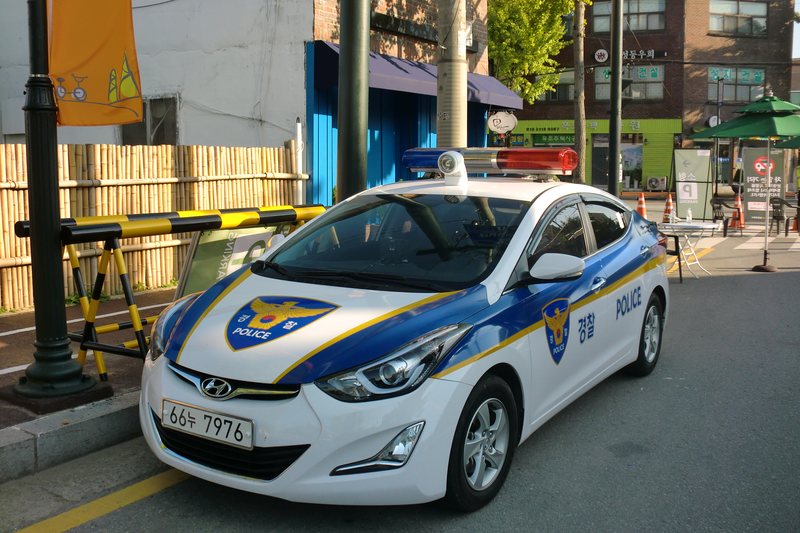
The police car that saves the morning
Every exam morning brings the same kind of local news. Last year in Incheon, police drove or escorted seven students, including one who had switched off the alarm and overslept, and another who turned up at the wrong school and reached the right one by patrol car 25 minutes later. In Pohang, a police motorcycle delivered an exam ticket a student had left at home. It may be the one day a Korean teenager is happy to arrive in a patrol car.
Korean insider tip: If a friend is sitting the exam, tell them not to throw away the paper exam ticket (수험표) when the last bell rings. From the day the exam ends, cinemas, theme parks, theaters and exhibitions roll out deals for test-takers, and several ask to see that slip at the counter. Last year Everland's offer ran until the end of the year, so it is worth keeping the ticket in a wallet well into December.
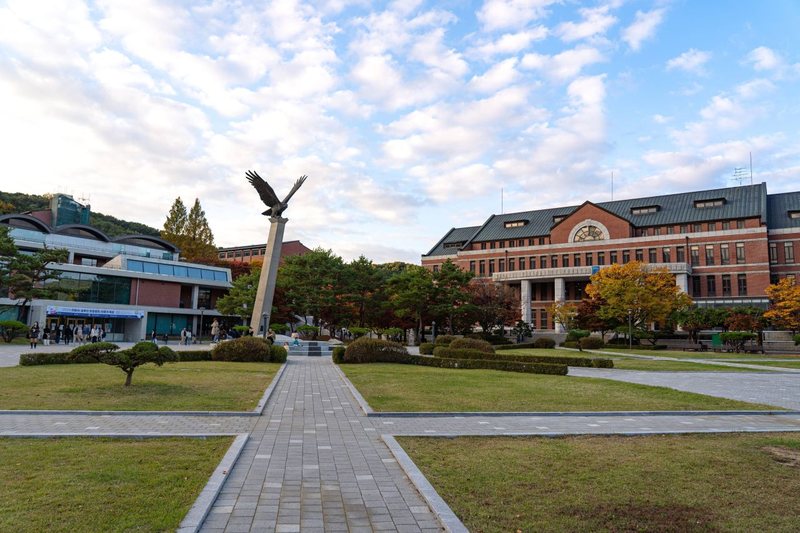
Does one exam really decide your life?
The numbers are more complicated than that. Under universities' plans for 2027, 80.3% of places go through early admission (수시, susi), which leans on school records, and only 19.7% through regular admission (정시, jeongsi), which leans on the Suneung.
Yet the exam keeps its grip. Some early tracks still demand a minimum Suneung grade, and regular admission is the natural road for anyone trying again. That is why 173,706 of this year's applicants, or 31.5%, are graduates, the most in 23 years. Koreans call repeat test-takers N수생 (N-su-saeng), students on their "Nth" attempt. Behind it all sits an old feeling that the name of your university follows you into job hunting and even marriage talks.
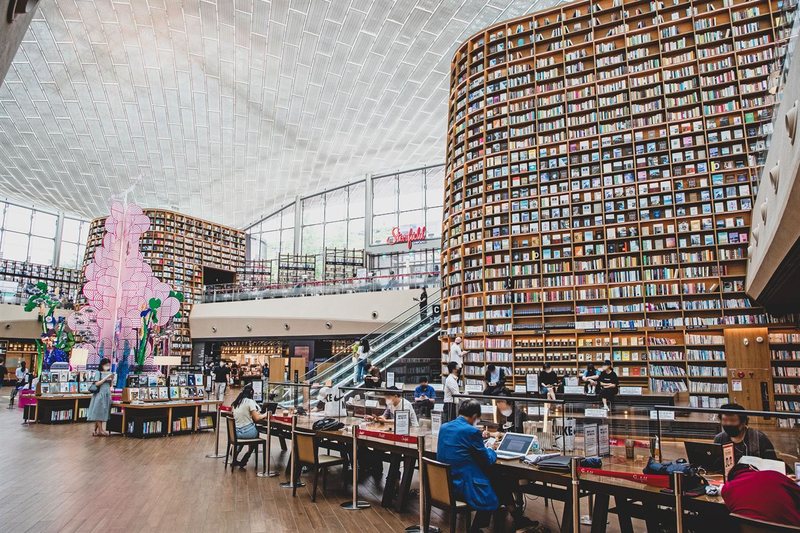
Why the English section stumps native speakers
Last year's paper is the best example. Only 3.11% of test-takers earned the top grade, which takes 90 out of 100, the lowest share since English moved to fixed cutoffs. A passage on Kant's philosophy of law and a text full of gaming terms traveled around the world, native speakers argued online over some answers, and the head of the national institute that writes the exam resigned, the first to do so over difficulty rather than a faulty question.
It also answers a question foreigners ask all the time: how can someone do well on this and still feel nervous speaking English? The section has 45 questions in 70 minutes and no speaking at all. It rewards fast logic on dense text, not small talk. The whole exam is that unforgiving: last year just five of 493,896 test-takers got a perfect score.
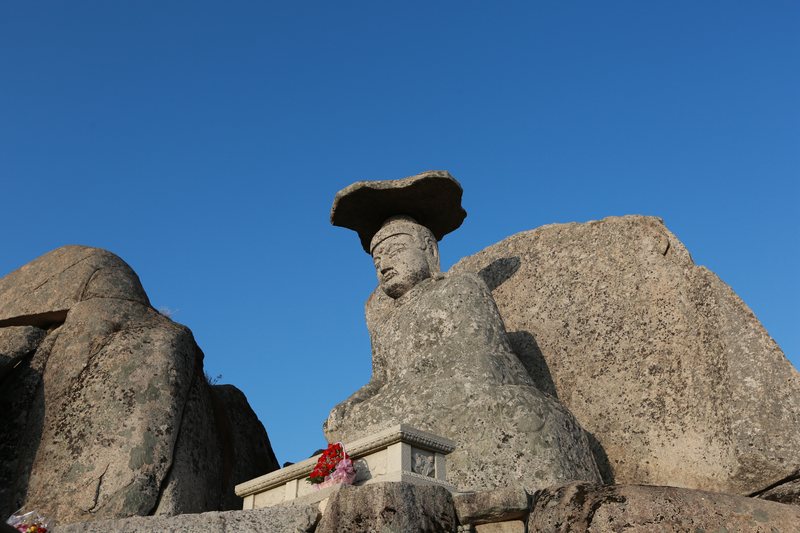
Sticky cakes, forks and a Buddha in a graduation cap
Luck gets its own preparation. To pass an exam in Korean is 붙다 (butda), which also means "to stick," so 엿 (yeot, chewy taffy) and 찹쌀떡 (chapssal-tteok, sticky rice cakes) became the classic gifts. Yeot's link with exam luck goes back at least to the Joseon era, while slippery seaweed soup stays off the table. Wordplay added more gifts: forks (찍다, jjikda, to spear, also to pick an answer), toilet paper (풀다, pulda, to unroll, also to solve) and mirrors (보다, boda, to look, also to take a test).
Teenagers have moved on. YTN reported in 2024 that chocolate, cash and gift vouchers had taken over, and that in a 2021 survey of 200 high schoolers, 34.5% named rice cakes and yeot as the gift they least wanted.
Parents have rituals of their own. Temples and churches hold exam prayers, and one famous stop is Gatbawi on Palgongsan, near Daegu, a stone Buddha said to grant one wish. The flat slab on its head looks like a graduation cap, which is why parents of test-takers seek it out. And every year we brace for the 수능 한파 (suneung hanpa, Suneung cold snap), though the weather agency counted just two in the decade to 2022.
If you are in Korea that week
- Flying on November 19? Check with your airline. Last year's detailed notice was reported only three days before the exam.
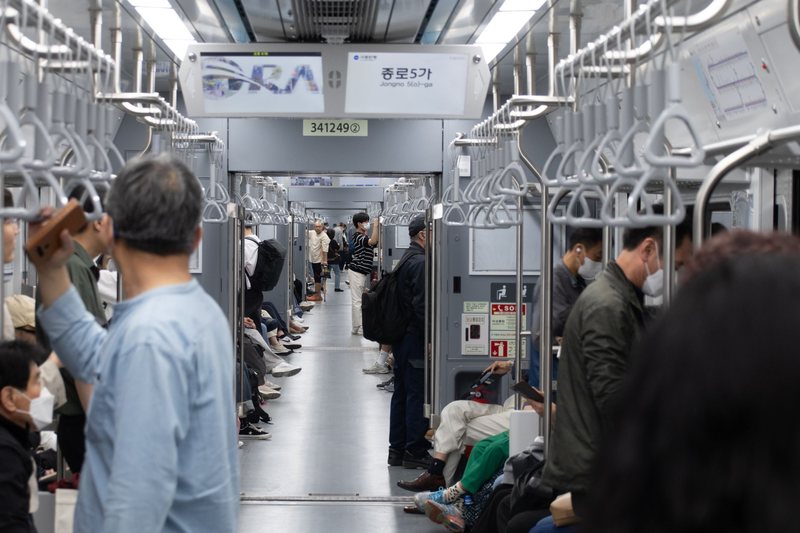
- Take the subway that morning. Cars cannot reach the test sites, and the commute shifts later.
- Cheer them on with 수능 대박 나세요! or a simple hwaiting.
- Don't say "so-and-so already got in early" or "you can always retake it." In a 2019 survey of 987 test-takers, those were the two lines they least wanted to hear.
- Don't tell anyone to "eat yeot." Giving yeot is lucky, but 엿 먹어라 (yeot meogeora) means roughly "screw you."
Quick answers
When is the Suneung in 2026, and when do results come out?
The exam is on Thursday, November 19, 2026, from 8:40 a.m. to 5:45 p.m. Score reports go out on December 11.
Can you retake the Suneung?
Yes. It is held once a year and graduates can register again, as nearly a third of this year's applicants have.
Is the Suneung the same as China's gaokao?
Not quite. China's gaokao began on June 7 this year with about 12.9 million registered and runs for at least two days, while the Suneung fits into one day in November with about 550,000.