Young Koreans Made Reading Cool. So Why Are Fewer Koreans Reading?
Beanbags on Seoul Plaza, a 7 a.m. book fair queue, strangers asking for numbers between shelves. Yet most Korean adults went a whole year without a book.
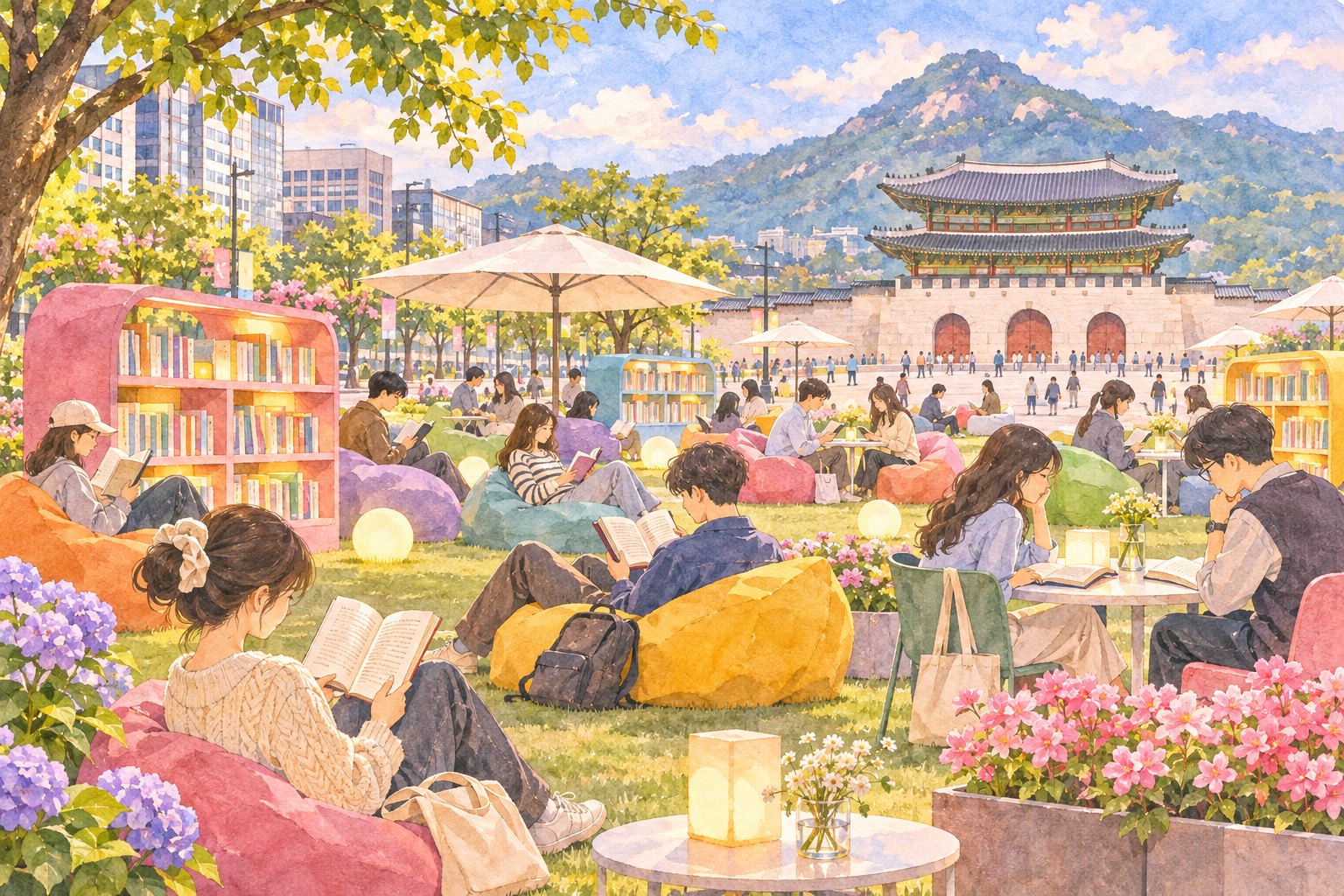
On a Friday evening in spring or autumn, the lawn in front of Seoul City Hall turns into a reading room. Beanbags spread across the grass, office workers stop on their way home, and students lie back with paperbacks held up against the sky. Every so often someone lifts a phone, not to film the crowd but to photograph an open page. Koreans have a name for that small gesture: 텍스트힙 (tekseuteu-hip, “text hip”), the English word “text” glued to 힙하다 (hipada), slang for being hip. So the text hip meaning in Korea is simple. Reading has become cool, above all among people in their twenties, and being seen with a book is part of the point.
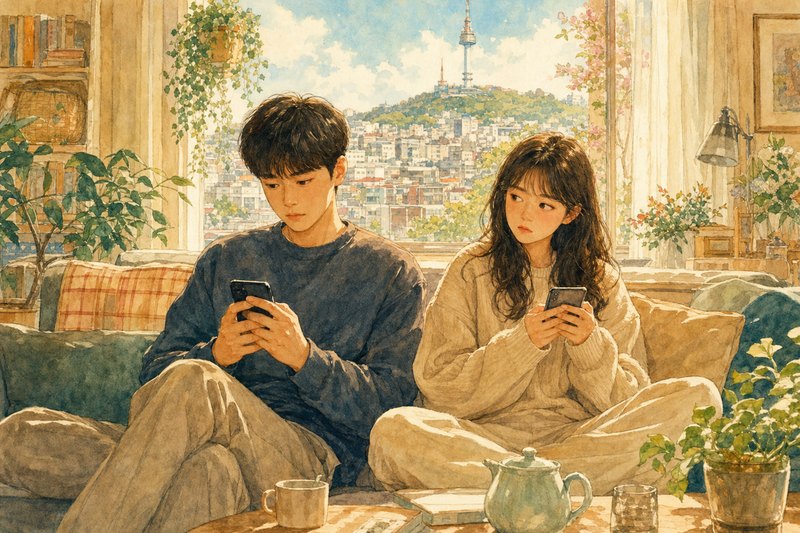
This is not the quiet, private kind of reading. Text hip is reading you can see: a book photographed beside an iced coffee, a favorite line copied out by hand, a cover dressed up with stickers, a book fair that feels like a fan meeting. And it is happening in a country where, by the government's own count, most adults now go a whole year without reading a single book. That contradiction is why Koreans keep asking whether text hip is a revival or just a good look.
From an idol's book to a Nobel: how text hip got its meaning in Korea
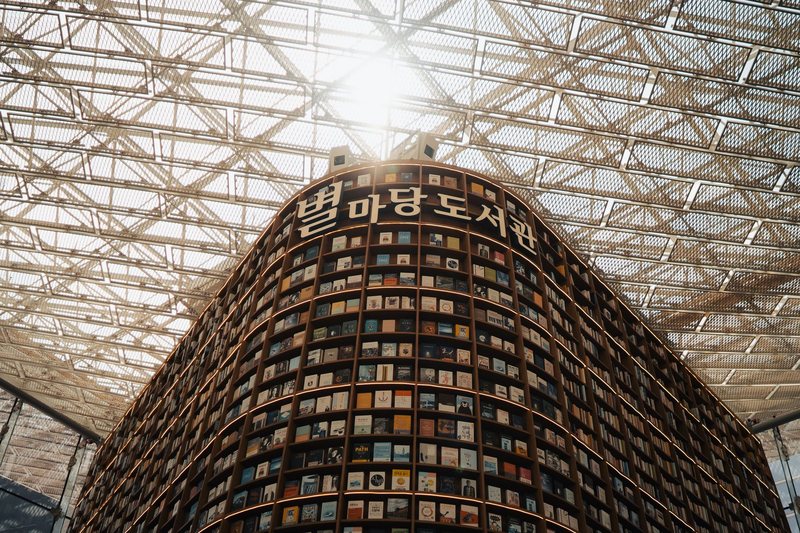
By the summer of 2024 the phrase was all over Korean media, and most explanations began with K-pop. Experts quoted by The Korea Times traced the trend to idols and other celebrities sharing what they read. NewJeans' Minji was seen reading a classic American novel in the music video for “Bubble Gum,” and IVE's Jang Won-young said in an interview that she reads philosophy in her downtime. Korea's overseas culture service described the same chain reaction: idols carrying books through the airport or recommending them, and fans copying the tastes of the stars they follow. In a fandom culture that pauses every frame to identify a jacket or a lip color, a book in an idol's hands gets the same treatment. Fans want to know what it is, and then they want to be seen with one too.
Then, in October 2024, Han Kang became the first Korean writer to win the Nobel Prize in Literature. The prize did not start the trend, but it gave it a crowd. A month later, the culture ministry's overseas service wrote that the award had sparked a cultural phenomenon, and the name it gave that phenomenon was text hip.
From there the habit grew its own rituals. 필사 (pilsa), copying favorite passages out by hand, became a hobby in itself, and the same report said stationery stores were doing brisk business because of it. Young readers met offline to read or copy literature together. Decorating covers with stickers, slipcovers and bookmarks earned a nickname, 책꾸 (chaek-kku, short for “book decorating”), modeled on diary decorating, long known as 다꾸 (dakku), and some publishers released editions that came with their own sticker sheets. By March 2025 the Korea JoongAng Daily was listing transcribing, writing, reviewing and cover decorating among young people's favorite pastimes, and reported that the online bookstore Yes24's sales to teens and young adults had risen 18 percent in 2024. A book had become something to read, to photograph and to carry, not always in that order.
Beanbags, bookstores and a 7 a.m. line
Seoul gave the trend a stage. Since 2022, the city has run the Seoul Outdoor Library, which this year turned Seoul Plaza, Gwanghwamun Square and a stretch of the Cheonggyecheon stream into open-air reading rooms every Friday, Saturday and Sunday from April to November, with a break for the July and August heat. This year's season wrapped up on November 1 after 1.87 million visits, and the total since the first season has now passed 10 million, according to Seoul Library. When the culture ministry looked for signs that young people were warming to books, it pointed to exactly these scenes: book fair visits, outdoor reading, hand-copying and book swaps. Subway exits, hours and a taxi card for Seoul Library, which faces Seoul Plaza, are in the Getting there guide at the end.
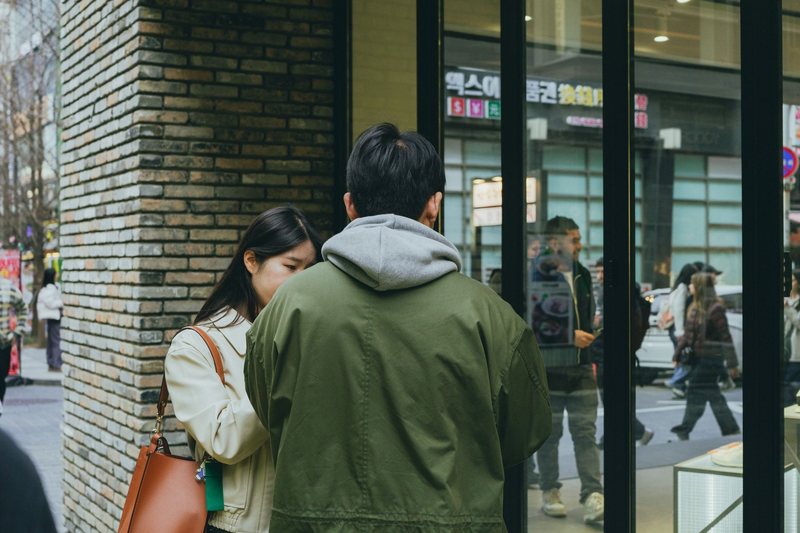
Bookstores picked up a reputation nobody planned. In March 2026, the Korea JoongAng Daily reported that some Koreans in their twenties and thirties had started treating big bookstores, Kyobo Book Centre and Youngpoong Bookstore among them, as places to meet someone, with social media posts about strangers slipping a phone number inside a book or asking for one between the shelves. Kyobo said its staff simply ask people to refrain. The sociologists in the story were more forgiving: a bookstore feels safe, and it carries an unspoken assumption that the stranger browsing beside you shares your appetite for ideas. In a dating culture that savors a slow, uncertain start, the stage Koreans call sseom, a shared shelf can look like a promising first line.
The books are moving, too. Kyobo, the country's largest bookstore chain, sold 19.3 percent more copies of fiction from January through May 2026 than a year earlier, its second straight year of double-digit growth, and in its physical stores people in their twenties were the biggest fiction buyers, Newsis reported.
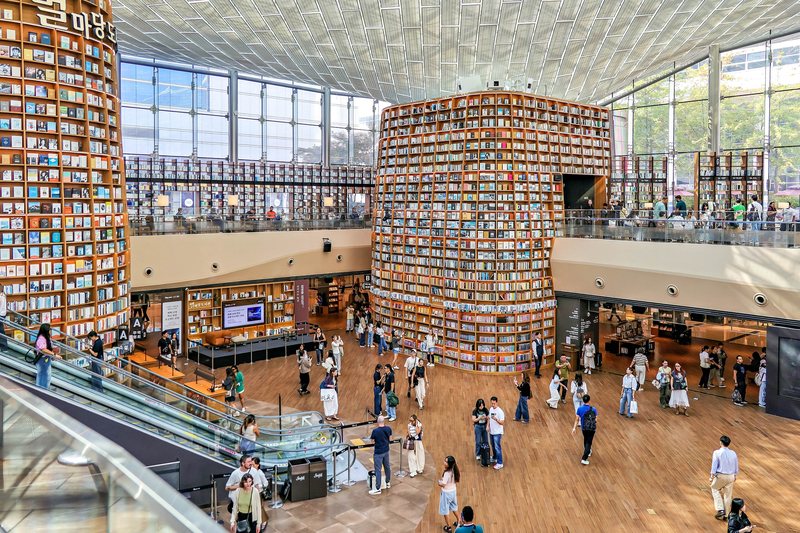
Then there is the line. The Seoul International Book Fair closed on June 28 after five days at Coex, in Seoul's Gangnam district, with about 150,000 visitors by the organizer's estimate, CBS Nocut News reported. Some people were waiting to get in from around 7 a.m. The crowd was led by people in their twenties and thirties, many of them young women, and limited-edition books and goods often ran out before noon.
Korean insider tip: Treat the Seoul International Book Fair, held at Coex in June, like a concert. Tickets sell online in advance: in 2026 the cheaper early-bird batch opened at 10 a.m. on five weekday mornings, and the fair's ticket page warned it could run out the same day. Koreans call that scramble 티켓팅 (tiketing). Then comes 오픈런 (opeun-reon, “open run”), the dash through the doors at opening: go straight to the booth you care about most, because limited editions often sell out by noon.
The number that spoils the party
Here is what the hashtags leave out. The culture ministry's 2025 National Reading Survey, released in March 2026, found that only 38.5 percent of Korean adults had read at least one book over the past year, counting print books, e-books and audiobooks but not textbooks, exam guides, magazines or comics. That was 4.5 points below 2023 and a record low; back in 2015, the figure had been 67.4 percent. The average adult read 2.4 books a year, and among people aged 60 and over the rate was just 14.4 percent.
People in their twenties were the exception. Their rate rose 0.8 points to 75.3 percent, and The Korea Herald noted they were the only age group to go up. Even that looks different from the old picture of a paperback on the subway: more people in their twenties read e-books (59.4 percent) than paper books (45.1 percent). And when adults explain why they don't read, the biggest barrier is the familiar one, no time because of work or study, which will surprise nobody who knows Korea's hurry-hurry pace.
Then comes the sharper question: is this reading, or shopping? For several years, critics have complained that the Seoul International Book Fair is turning into a merchandise fair, and this year some independent and smaller publishers stayed away and held alternative fairs around Seoul that put books and readers first, the Herald reported. A bread that a convenience store chain made with a literary publisher sold 50,000 units in three days. The fair's head answered that it is only natural for young people who love books to want reading goods too.
Inside Korea, the argument runs both ways. Some call text hip pretentious, a way to look clever without doing the reading. Others see a door that opens with a bookmark and ends with a book. In an October 2026 column for the Korea JoongAng Daily, Hongik University art historian Chun Young-paik warned that books risk shrinking from vehicles for thought into accessories, yet concluded that sorting the trend neatly into evolution or decline is too simple, because it holds both possibilities at once.
A book you can be seen with
So is text hip real? The numbers say two things at once. Korean adults as a whole are reading less than ever recorded, and a hashtag has not changed that. But the one age group that held its ground is the one that made reading visible again, and it did so in a very Korean way. Taste here is rarely private. The café you study in, the restaurant you line up for, the idol you follow: all of it gets posted, compared and borrowed. The generation that turned cafés into study rooms, home of the cagongjok, has simply pulled the book into that same public life.
Some of it is performance, and Koreans say so out loud. But performance is often how a habit starts, and someone who bought a book for its cover still owns the book. The beanbags on Seoul Plaza are packed away for the winter now, due back in April. When they return, phones will hover over open pages again, and someone will grumble that half the people holding them are only posing. Maybe so. In a country where most adults let a whole year pass without a book, a generation decided that being seen with one was worth the trouble, and a book that gets carried around has a far better chance of being opened than one left on a shelf.
Getting there
Seoul Library (facing Seoul Plaza) 서울도서관
- Subway
- Line 1 or 2, City Hall Station, Exit 5
- Hours
- General reading rooms Tue–Fri 09:00–21:00, Sat–Sun 09:00–18:00; closed Mondays and public holidays
- Tip
- The Seoul Outdoor Library sets up on Seoul Plaza outside, Fridays to Sundays from April to November, with no sessions in July and August. The 2026 season ended November 1; Seoul Library says it returns in April 2027
Checked on November 14, 2026; confirm on the official site before you go.