Why do Koreans love spicy food like buldak? The most common answer is not about flavor at all. It is 스트레스 풀린다 (seuteureseu pullinda, "it melts my stress away"). Many Koreans say the sweat, the burn and the scramble for something cold to drink work like a reset button after a bad day. Add a streak of spice pride, plus about four centuries of chili in the kitchen, and you have the perfect home crowd for 불닭볶음면 (buldak-bokkeum-myeon), Samyang Foods' "fire chicken" stir-fried noodles.
The noodle was born from exactly that scene. According to Newsis, in 2011 Kim Jung-soo, the Samyang executive who is now the company's chairman, stepped into a spicy-food restaurant in Seoul's Myeong-dong and saw young customers dripping with sweat, telling each other the heat was relieving their stress. Development took about a year, and the noodle launched in April 2012. Early verdicts were harsh: so spicy that no human could possibly eat it.
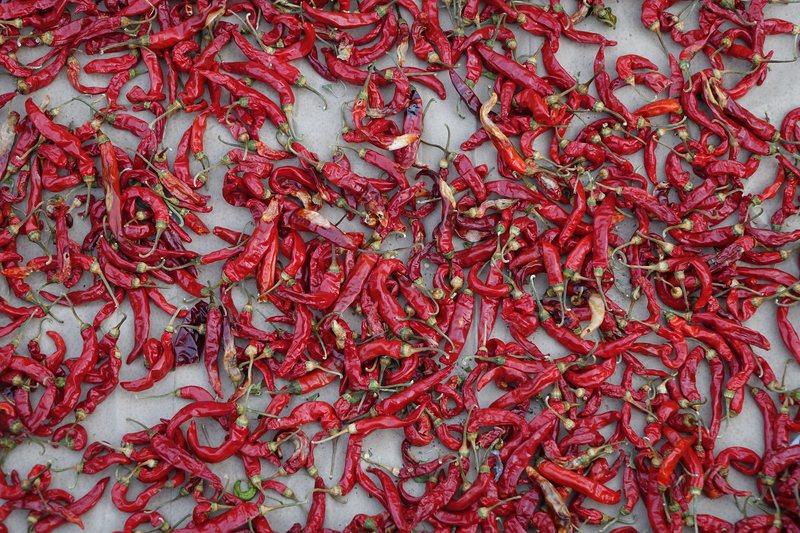
Why do Koreans love spicy food? Many say it melts stress
In Korea, a craving for heat is almost a mood report. After a long day, someone says 매운 거 땡긴다 (maeun geo ttaenginda, "I'm craving something spicy"), and friends understand that the day went badly. Reporting on the trend in January 2026, The Korea Herald spoke with office workers who described spicy food as their outlet: a fast, affordable emotional release. The same report cited a 2025 survey by Seoul National University's Graduate School of Public Health in which 47.1 percent of respondents said they had felt stress severe enough to affect their health over the past year.
Capsaicin, the compound that makes chili hot, triggers pain receptors in the mouth, and the brain reads the burn as pain. Many Koreans swear the moment after the burn feels like release. A psychiatrist quoted by the Korea Herald is more cautious: the pain distracts the brain from stress only briefly. Think of it as a ritual, not a remedy.
Korean food was not always this fiery. Historians say chili peppers reached the peninsula only about 400 years ago, and traditional cooking leaned toward a gentle, savory heat. The Korea Herald traces the extreme turn to the early 2000s, when fire chicken, ultra-spicy tteokbokki and extreme ramyeon reshaped the country's spice landscape. Spicy food has also tended to sell well in hard times; sales of spicy ramyeon jumped during the 1997–98 Asian financial crisis.
What buldak means, and how a noodle got this hot
불 (bul) means fire and 닭 (dak) means chicken. Before it was a noodle, buldak was a restaurant dish of chicken in a punishing chili sauce. While developing the noodle, Samyang's marketers and researchers toured well-known fire-chicken and spicy-tripe restaurants across the country, and Newsis reports that the project went through about 2 tons of hot sauce and 1,200 chickens.
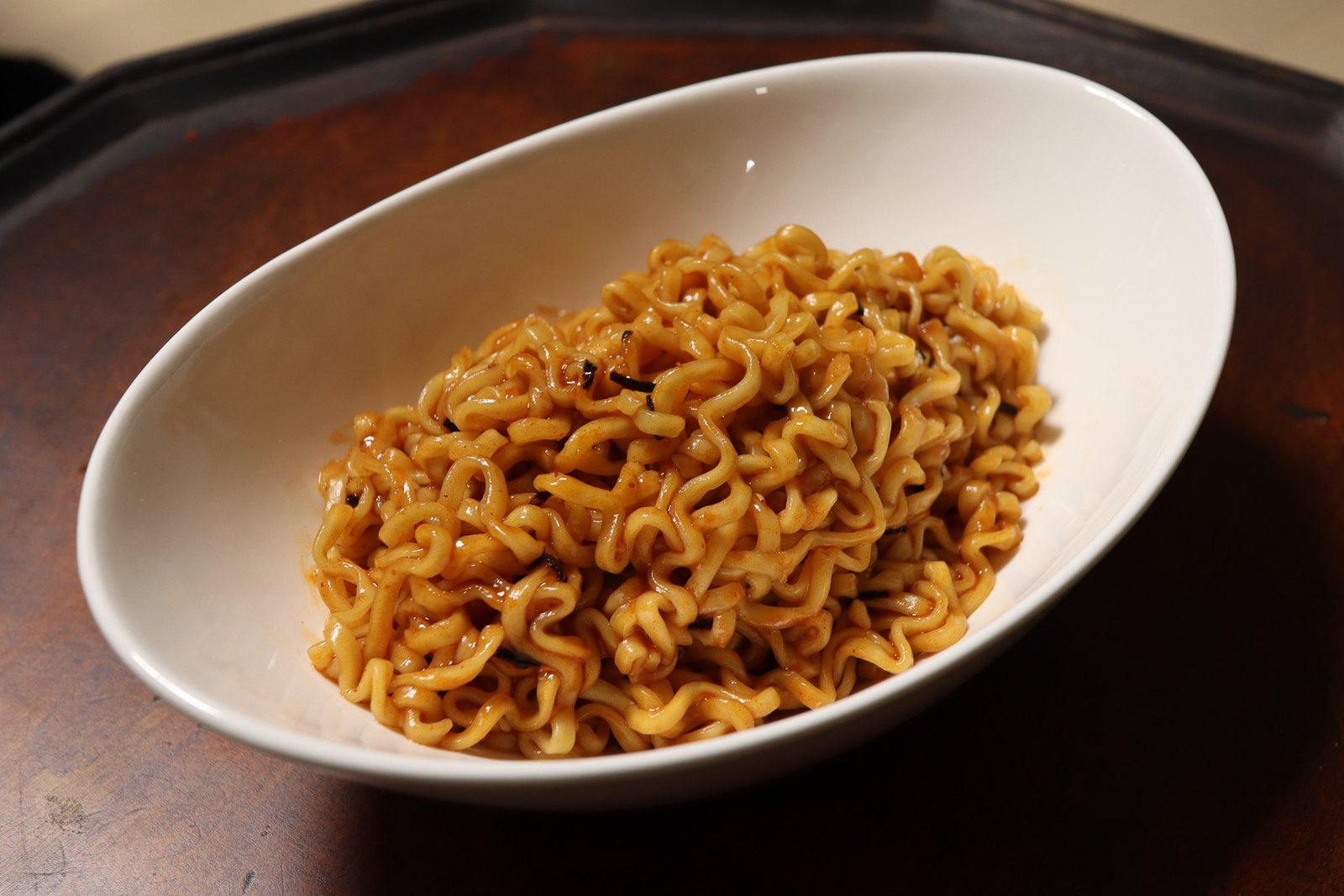
The result is a 볶음면 (bokkeum-myeon), a stir-fried noodle with a thick sauce, not a soup. The Korea Herald puts the original at about 4,404 Scoville heat units, against roughly 3,400 for Shin Ramyun, the noodle many Koreans treat as the benchmark for "mild." Spin-offs turned one packet into a family, from the extra-hot 핵불닭 (haek-buldak, "nuclear buldak") to the creamy Carbo Buldak, which began as a limited edition in December 2017 and became a regular product in May 2018.
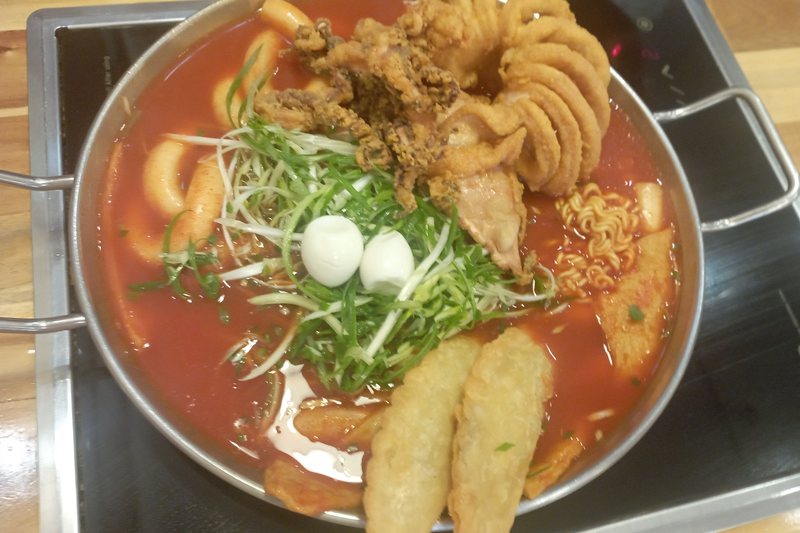
Maepbusim: spice pride and the proud maepjjiri
Korean slang has a word for each end of the heat scale. 맵부심 (maep-busim), from 맵다 (maepda, spicy) and 자부심 (jabusim, pride), is the swagger of someone who picks the hottest level and finishes the bowl without reaching for a drink. 맵찔이 (maep-jjiri) is the teasing word for someone with little tolerance for heat, and plenty of Koreans happily call themselves one.
That is the part visitors often miss: not every Korean can handle buldak, and nobody expects you to. Spice pride is mostly played for laughs. Friends dare each other at tteokbokki places that let you choose a heat level, and among younger Koreans, finishing something brutal is a small victory worth posting.
From a London dare to the fire noodle challenge
In February 2014, the British YouTube channel Korean Englishman, known in Korea as 영국남자 (Yeongguk Namja, "the English guy"), uploaded a video of friends and family trying the noodles against familiar London backdrops to see who could take the heat, the Los Angeles Times reported. Copycat "fire noodle challenge" videos soon spread around the world; one by American competitive eater Matt Stonie, who ate 15 servings, passed 145 million views.
Samyang has said it ran no advertising for the noodle and credits YouTube for the spread, according to Newsis. Yonhap, in a report carried by The Korea Times in May 2026, said Samyang's overseas sales grew almost twentyfold, from 93 billion won in 2016 to 1.9 trillion won in 2025, and that about 80 percent of its sales now come from outside Korea. The noodle once called inedible has become a calling card for Korean food.
How Koreans actually eat buldak
Many Koreans don't eat buldak straight; they tame it. A pairing that just works is called a 꿀조합 (kkul-johap, "honey combo"), and buldak has plenty.
- Cheese: a slice melted over the hot noodles, or the cheese-flavored version of buldak itself.
- Mayo: a squeeze stirred in to make the sauce creamier and milder.
- Egg: a fried egg on top, or a soft 계란말이 (gyeran-mari, rolled omelet) on the side between bites.
- Rice: a 삼각김밥 (samgak-gimbap, triangle kimbap) or a rice ball to mop up the leftover sauce.
- Something cold: milk, or 쿨피스 (Coolpis), a sweet, tangy drink Koreans have long paired with spicy food.
Korean insider tip: Buldak is stir-fried, not a soup, and the classic beginner mistake is squeezing the sauce into a full bowl of cooking water. Koreans pour most of the water off first, keeping just a few spoonfuls so the sauce clings. With a cup at a convenience store, drain it into the broth sink or bin before stirring. Worried about the heat? Use half the sauce packet. Plenty of Koreans do, and nobody will judge.
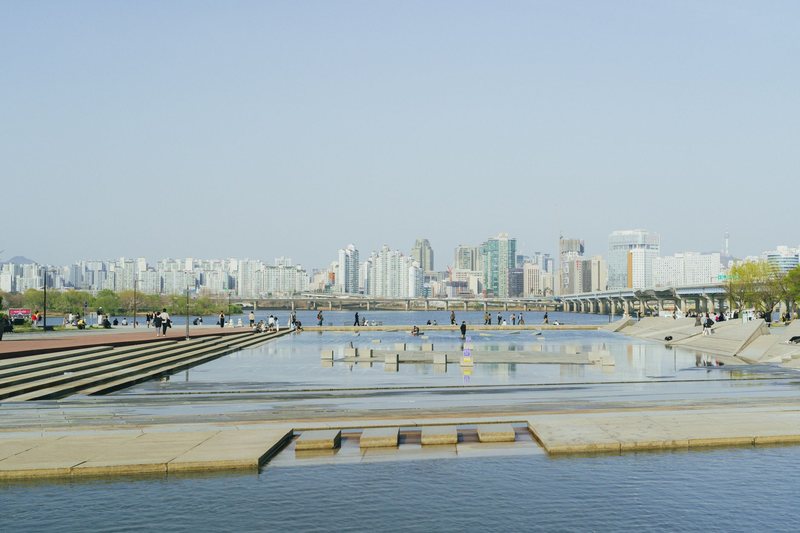
The classic place to eat it is the window counter of a Korean convenience store, cup noodles and triangle kimbap side by side. The same instant-noodle love fills the Han River parks on summer nights. And not every Korean comfort food burns: on cold evenings, the carts selling warm, sweet winter street snacks are the gentler fix.
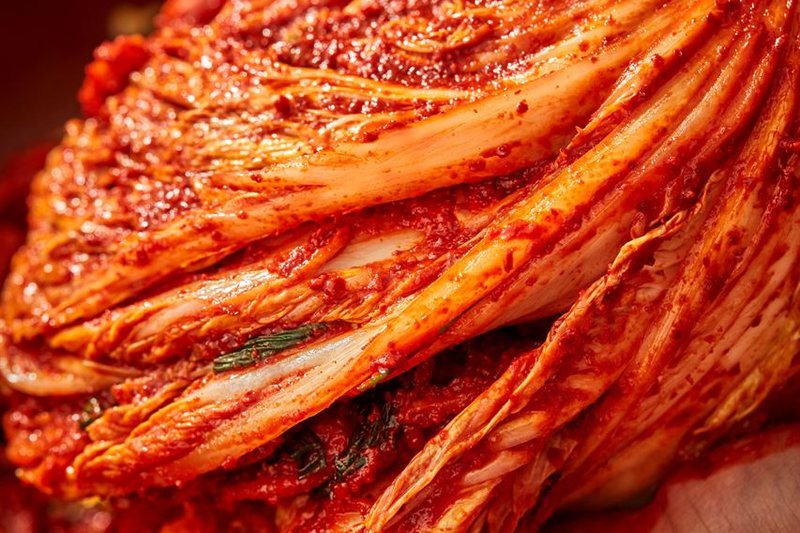
See where Korea's red began
To understand how chili took over the Korean table, start with the dish it turned red. Museum Kimchikan in Seoul's Insa-dong describes itself as Korea's first kimchi museum, founded in 1986, and is devoted to kimchi, its fermentation and 김장 (kimjang), the season of making it together. Admission is 5,000 won for adults and 3,000 won for students, according to the museum's official visitor page. Exact subway exits, hours and a taxi card are in the Getting there guide at the end.
Quick answers
Do Koreans actually eat buldak, or is it mainly for foreigners?
Koreans eat it; it is a convenience-store staple. But the noodle is now even bigger abroad, where about 80 percent of Samyang's sales come from. At home, plenty of people find the original too hot without cheese, mayo or egg.
How spicy is buldak compared with other Korean ramyeon?
The original measures about 4,404 Scoville heat units, according to the Korea Herald, versus about 3,400 for Shin Ramyun. It is not the hottest Korean noodle: the same report lists some at 7,500 and one at around 10,000.
Why was buldak banned in Denmark?
In June 2024, Denmark's food authority recalled three Buldak products, saying their capsaicin levels were too high. In July it lifted the recall on two of them after recalculating, while the 3x Spicy version stayed off shelves, Korea JoongAng Daily reported.
Getting there
Museum Kimchikan (Insa-dong, Seoul) 뮤지엄김치간
- Subway
- Line 1, Jonggak Station, Exit 3, or Line 3, Anguk Station, Exit 6 (about a 10-minute walk from either)
- Hours
- Tuesday to Sunday 10:00–18:00, last admission 17:30; closed Mondays, January 1, December 25 and the Lunar New Year and Chuseok holidays
- Admission
- Adults 5,000 won; students 3,000 won; preschool children 2,000 won; free for children under 36 months and visitors 65 and over (ID required)
- Tip
- On floors 4–6 of the Insadong Maru building; take the elevator to the 4th floor. Free audio guide in English (bring your own earphones)
Checked on November 11, 2026; confirm on the official site before you go.