Who Grills, Who Wraps: The Unwritten Rules of Korean BBQ
The tongs, the scissors and even the lettuce come with unwritten rules. Here is how a Korean barbecue dinner works, from first sizzle to fried rice.
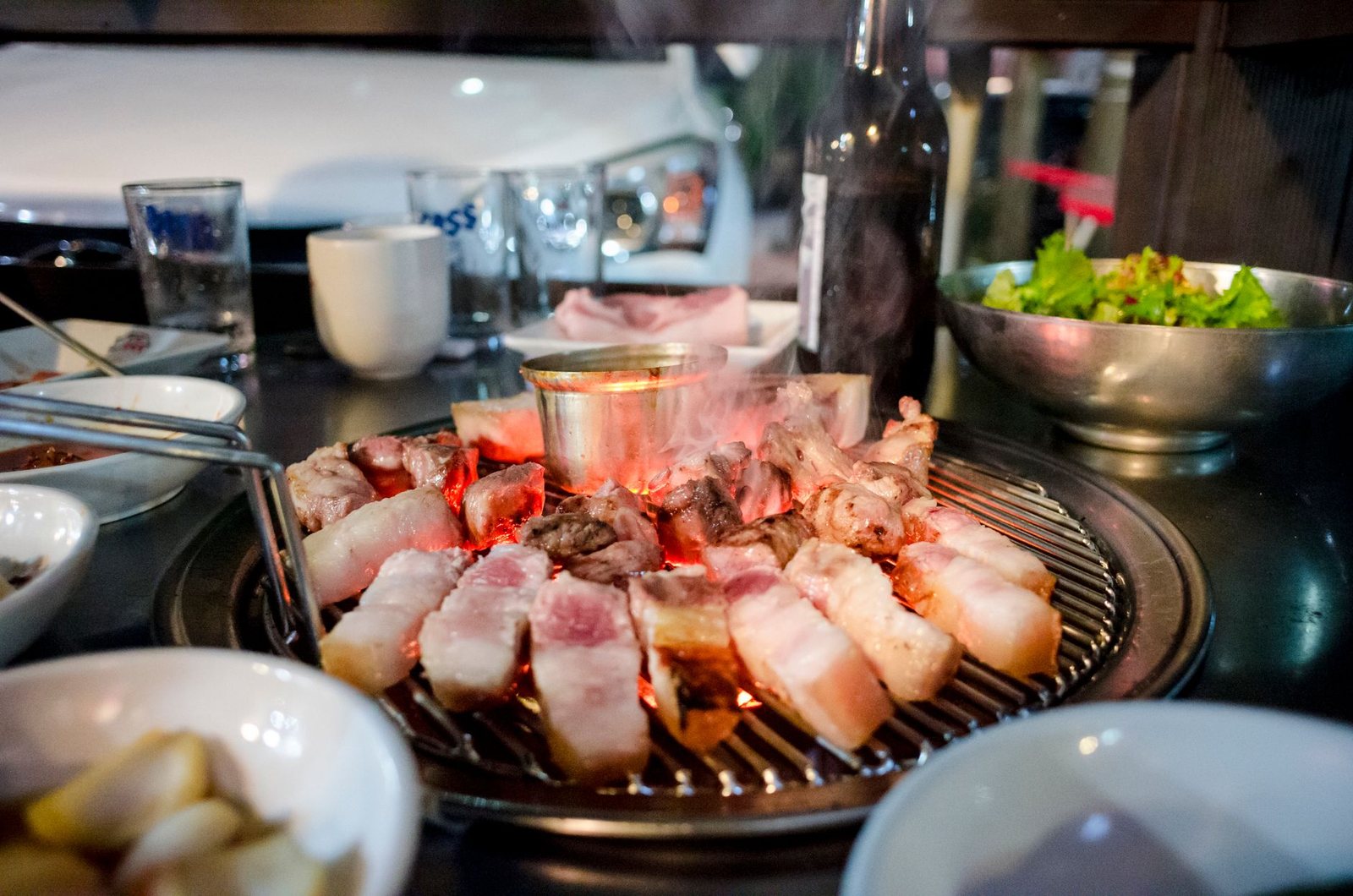
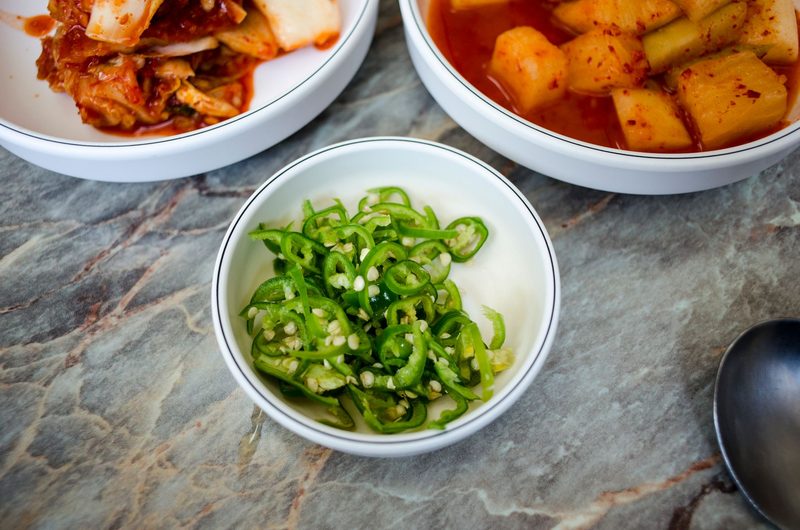
Sit down at a Korean barbecue restaurant, a 고깃집 (gogitjip, literally "meat house"), and dinner arrives raw. There is a grill set into the middle of the table, a plate of pork belly, a basket of lettuce, a spread of small side dishes and, to many first-timers' surprise, a pair of tongs and a pair of kitchen scissors. In most places, nobody from the kitchen is coming to cook for you. The table cooks together, and that is half the fun.
So who grills? There is no written rule, but there is a strong habit. Among friends or coworkers, the youngest or most junior person, the 막내 (maknae), or simply whoever sits nearest the grill, usually offers to take the tongs. At some restaurants the staff do it instead. And once the meat is ready, Koreans rarely eat it plain: they fold it into a small leaf wrap called 쌈 (ssam) and eat it in a single bite. Here is how the whole meal works, from the first sizzle to the last bowl of cold noodles.
Who holds the tongs
Korean table manners start with age. At a shared meal it is polite to wait until the oldest person begins eating, and to say 잘 먹겠습니다 (jal meokgetseumnida, "I will eat well") before your first bite. Grilling follows the same logic. Taking the tongs is a small way of looking after everyone else, so the job tends to fall to the younger people at the table, and a junior colleague who says 제가 구울게요 (jega guulgeyo, "I'll grill") is making a good impression.
In real life it is relaxed: the best griller often takes over, and friends take turns. What people do notice is the opposite, one person cooking all night while everyone else just eats. In December 2022, a post on Blind, an anonymous app for office workers, complained that the new hires at a team dinner never once offered to grill. Reactions split, the Seoul Shinmun newspaper reported: some saw poor manners, others blamed obligatory company dinners, and a few suggested restaurants where the staff grill for you. Those exist too. Visit Korea, the national tourism site, notes that at some places the staff cook at your table and tell you when the meat is ready.
Why there are scissors on the table
Visitors are often startled by the 가위 (gawi, scissors), but the reason is practical. Koreans eat with chopsticks and a spoon, not a knife and fork, so everything has to end up bite-sized. Pork belly usually goes on the grill in long strips, and once one side is browned, whoever is grilling snips it into pieces right there on the grill. Scissors come out for seafood and long noodles too.
The grill holds more than meat. With pork belly, many people set kimchi and garlic on the edge of the grill so they cook in the rendered fat, a tip the national tourism site itself passes along.
The art of the ssam
Visit Korea describes ssam as a distinctly Korean way of eating: meat on a fresh leaf, usually lettuce (상추, sangchu) or perilla (깻잎, kkaennip), with a dab of 쌈장 (ssamjang), all eaten in one bite. Ssamjang is a thick dipping paste made by mixing fermented soybean paste and red chili paste with garlic, green onion, sesame oil and more. Many tables also get a small dish of sesame oil and salt, 기름장 (gireumjang), for a lighter dip.
A common way to build one: open a leaf in your hand (some people stack lettuce and perilla together), add a piece of meat, a little ssamjang, a slice of garlic, some grilled kimchi or any side dish you like, then fold it closed and eat the whole thing at once. Size is the one rule that really matters: a ssam bitten in half tends to fall apart in your hands.
Koreans have fussed over ssam manners for centuries. According to the National Folk Museum of Korea, the 18th-century scholar Yi Deok-mu wrote in Sasojeol, his guide to everyday conduct, that you should not wrap ssam on the palm of your hand, and that you should not make it so large that your cheeks bulge. The first rule did not survive the barbecue age; almost everyone wraps in their palm now. The second is still excellent advice.
The wrap itself is older still. The Encyclopedia of Korean Culture defines ssam as rice and sauce wrapped in leafy greens, and records that during the Goryeo period, Korean palace women taken to the Yuan court grew lettuce in the palace gardens and ate it this way, a habit that caught on with the Mongols.
Pork belly or beef?
On most nights out, the answer is pork. Visit Korea calls 삼겹살 (samgyeopsal) a dish so loved it could be called "the people's food." The name means "three-layer flesh," for its stripes of meat and fat. A 2018 column in the monthly magazine of Korea's national heritage agency notes that a 1934 newspaper already praised the cut under an older name, 세겹살 (segyeopsal), and dates the grilled pork belly boom to the 1980s, when portable gas burners and family cars let people grill almost anywhere. Pork neck, 목살 (moksal), is the other everyday favorite.
Beef is the splurge. 한우 (hanu, often spelled hanwoo) comes from Korea's native cattle and costs noticeably more than imported beef, so a hanu dinner usually feels like an occasion. Beef is generally grilled more briefly than pork, and many people taste the first pieces with a pinch of salt or a dip of gireumjang before reaching for the lettuce. Marinated 갈비 (galbi, ribs), pork or beef, scorches easily, so it needs a watchful griller.
The second act: fried rice and cold noodles
When the meat is gone, the meal is not over. Many Koreans feel dinner is not quite finished without some rice, and Visit Korea names the classic endings: a pot of 된장찌개 (doenjang-jjigae, soybean paste stew) or 볶음밥 (bokkeumbap, fried rice). At many restaurants the fried rice is made right on the grill plate, with chopped kimchi and the last scraps of meat, and the best part is the crispy layer stuck to the bottom.
The other classic finale is 냉면 (naengmyeon), chewy noodles served icy cold, either in a tangy broth (물냉면, mul-naengmyeon) or tossed in a spicy sauce (비빔냉면, bibim-naengmyeon). The Korea Herald describes it as a refreshing way to finish off a meal of grilled meat, and many barbecue menus list it as 후식 냉면 (husik naengmyeon), literally "dessert naengmyeon." After an hour beside a hot grill, a cold bowl works like a reset button.
If you visit Korea
- Do wait for the oldest person to start, and say 잘 먹겠습니다 before you eat.
- Do offer to grill if you are the youngest, or take a turn if one person has been at it all night. 제가 구울게요 works every time.
- Do use the scissors. Cutting meat on the grill is completely normal.
- Do keep each ssam bite-sized and eat it in one go.
- Do call for staff with 여기요! (yeogiyo, "Excuse me!") when you need more lettuce or another plate of meat.
- Don't handle raw meat with the chopsticks you eat with. That is what the tongs are for.
- Don't fill up completely on meat. Leave room for fried rice or cold noodles.
Quick answers
Who grills the meat at Korean BBQ?
Usually the youngest or most junior person at the table, or whoever sits closest to the grill, offers to do it. It is a courtesy, not a strict rule, and at some restaurants the staff grill for you.
How do you eat Korean BBQ with lettuce?
Put a piece of grilled meat on a lettuce or perilla leaf, add a little ssamjang and some garlic or kimchi if you like, fold it up and eat it in one bite.
Why do Koreans eat cold noodles after barbecue?
Icy naengmyeon is a refreshing contrast to rich, fatty grilled meat, so many barbecue restaurants offer it as a finishing dish, often listed as "dessert naengmyeon."
Sources
- About Korean Food — VISITKOREA (Korea Tourism Organization)
- 상추쌈 (Lettuce wraps) — Encyclopedia of Korean Culture
- 한입 가득 '복' 한가득 (A mouthful of good fortune) — National Folk Museum of Korea webzine
- 삼겹살구이에 대한 코미디 같은 '전설' (The comic 'legends' of grilled pork belly) — Cultural Heritage Administration, Munhwajae Sarang
- “신입사원들, 회식 때 고기 안 굽더라… 이게 MZ?” (New hires didn't grill at the team dinner) — Seoul Shinmun