Flat, Steel and Slippery: Why Korea's Chopsticks Are Different
Kings, poison tests, brass bowls and a factory shortcut all play a part. Plus the one chopstick habit that makes every Korean wince.
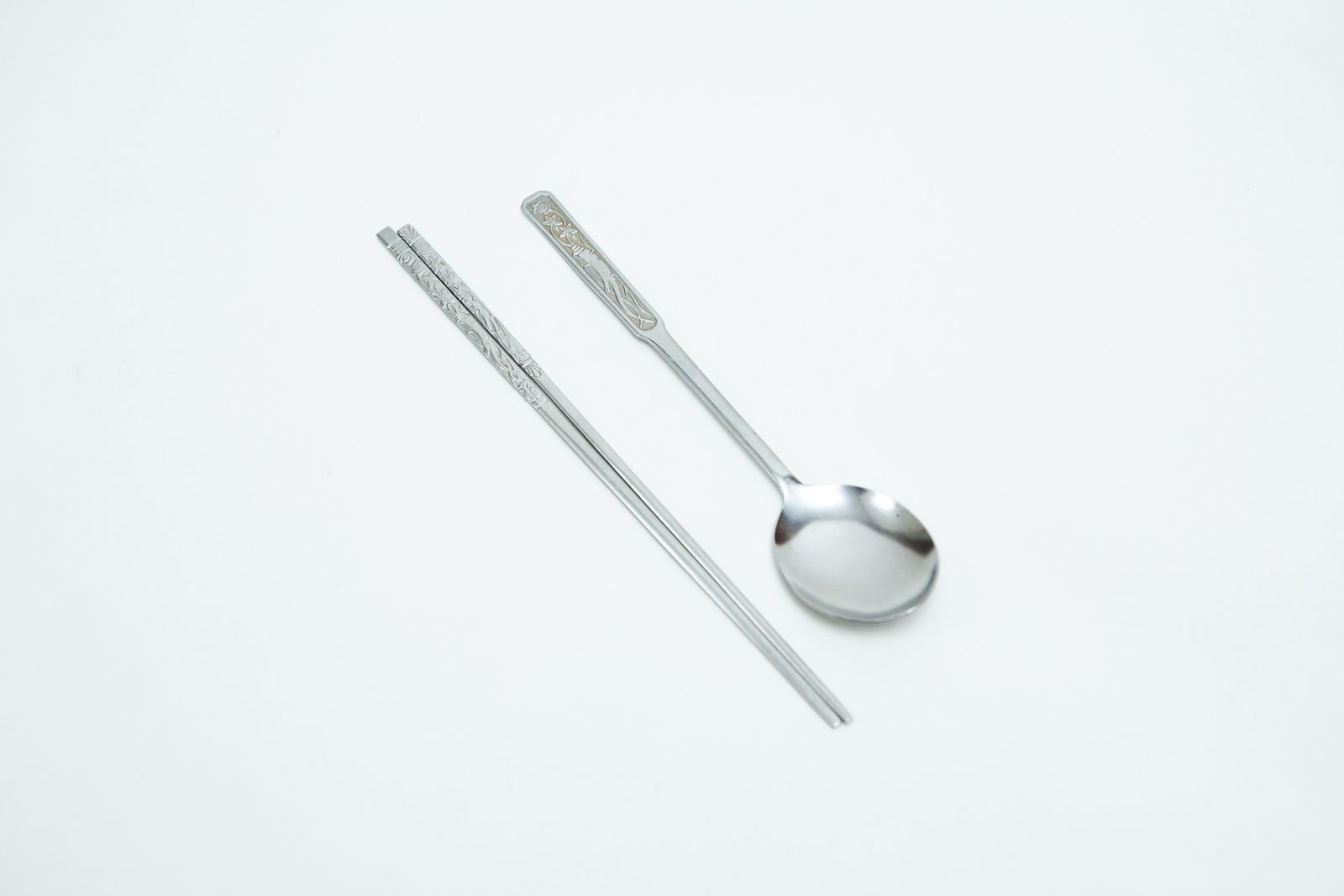
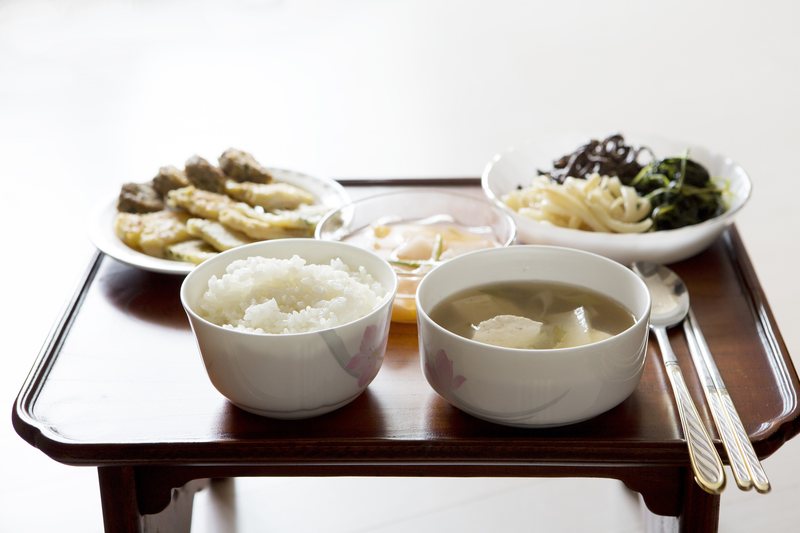
Your first Korean meal can be a small test of dexterity. You open the little drawer at the side of the table, or the box sitting on top of it, and find a stainless-steel spoon and a pair of long, flat chopsticks, also made of steel. Then a strand of kimchi slides straight off them and lands back on the plate. If you have ever wondered why Koreans picked what feels like the hardest chopsticks on earth, you are in good company.
The short answer: Koreans have been eating with metal for a very long time. Bronze utensils were buried with a 6th-century king, and for centuries silver and brass sets were prized in palaces and well-off homes. The flat stainless-steel pair on today's tables is much younger, a product of the factories of the 1960s and 70s. Between those two points sit a famous poison legend, a great deal of brass polishing and one table manner every Korean takes seriously.
Fifteen centuries of metal at the table
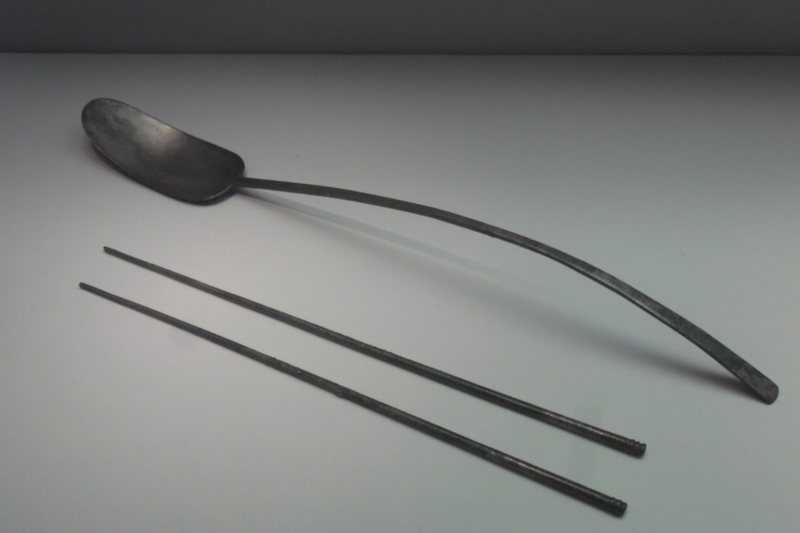
The oldest Korean metal chopsticks we know of come from the tomb of King Muryeong, who ruled the kingdom of Baekje from 501 to 523. When the tomb was discovered by chance in 1971, it held three bronze spoons and two pairs of bronze chopsticks. According to Korea JoongAng Daily, the chopsticks measure 21.2 and 19.6 centimeters, and they are already flat, with rings at the ends so each pair could be joined by a chain.
For most of history, though, metal utensils were a sign of status rather than everyday kit. The National Museum of Korea holds a silver spoon and silver chopsticks said to come from the tomb of Injong, a 12th-century king of Goryeo; the chopsticks were long assumed to be bronze until analysis showed that the corrosion was hiding silver. In early and mid Joseon, chopsticks were used mostly by royals and the upper classes, while many ordinary people ate their rice and soup with a spoon. Writing for the Korea Heritage Service, archaeologist Jeong Ui-do notes that spoons turn up in almost every early Joseon tomb, but chopsticks join them less than 30 percent of the time. Chopsticks only became common in late Joseon, as diets grew more varied and side dishes multiplied. By the 18th century, a painting by Kim Hong-do titled Lunch shows laborers eating with both.
The poison test: half legend, half chemistry
Ask why Korean chopsticks are metal and someone will mention poison. The story goes that kings ate with silver because silver changes color when it touches poisoned food. There is some chemistry behind it: silver darkens when it reacts with sulfur, and the arsenic poisons of the past often carried sulfur impurities, so a silver utensil could sometimes give a warning. A purer poison would leave it shining, which is why Korea JoongAng Daily calls the belief only partially true.
Either way, royal silver does not explain why everyone else eats with steel. For that, you have to look at what Korean families kept in their kitchen cupboards.
From brass bowls to stainless steel
For generations, the treasured tableware of Korean homes was brass, called 유기 (yugi) or 놋그릇 (notgeureut, brassware). It was beautiful, heavy and warmly golden, and it needed constant polishing, because brass tarnishes easily. After the Korean War, homes across the country began heating with 연탄 (yeontan, coal briquettes). The commonly told story is that briquette fumes darkened brass even faster, and families happily traded it for something new: stainless steel, which was cheap, light, rust-free and easy to wash.
As Korea industrialized in the 1960s and began producing stainless steel at home, flat stainless chopsticks appeared and spread quickly. Today they are the default in most Korean homes and restaurants, nearly always paired with a matching spoon.
So why flat?
Korean chopsticks were not always flat. The Goryeo silver pair at the National Museum is round, and a study of royal utensils cited by Korea JoongAng Daily found palace chopsticks ranging from flat to rounded or angled. The uniform flat stick is largely a factory decision. A Korean chopstick manufacturer told the paper that cutting them from sheet metal was simply the most efficient way to mass-produce them.
The shape has stayed because it suits the way Koreans eat. A typical meal comes with several banchan, the little side dishes, from slippery seasoned greens to grilled fish, and Korean chopsticks usually have rough or ridged tips to grip them. Steel doesn't wear down, warp or soak up sauce, it survives endless washing, and a flat pair won't roll off the table. Hygiene is often given as the reason, but it works better as a modern bonus than as an origin story.
Sujeo: the spoon does half the work
In Korea, chopsticks rarely travel alone. They come as 수저 (sujeo), the set of 숟가락 (sutgarak, spoon) and 젓가락 (jeotgarak, chopsticks). What sets Korea apart from its neighbors is that the spoon is not just for soup: rice is traditionally eaten with it too, and spoon and chopsticks stay side by side for the whole meal, the spoon for rice, soup and stew, the chopsticks for side dishes. Jeong Ui-do traces this to soup: since Goryeo times, soup has been so central to Korean meals that eating without a spoon was hardly possible.
The spoon matters so much that it slipped into the language. In 한술 (hansul, “one spoonful”), sul is an old word for spoon. And since the mid-2010s, young Koreans have sorted family fortunes into 금수저 (geumsujeo, “gold spoon”) and 흙수저 (heuksujeo, “dirt spoon”), a twist on the English idiom about being born with a silver spoon in your mouth.
Never stand them in the rice
If there is one rule every Korean will mention, it is this: never leave your spoon or chopsticks standing upright in a bowl of rice. The reason lies in 제사 (jesa), the rites Korean families hold for their ancestors. In one step, called 삽시정저 (sapsi-jeongjeo, “inserting the spoon, straightening the chopsticks”), the spoon is stuck upright into the bowl of rice and the chopsticks are laid neatly in place. According to the Advanced Center for Korean Studies, it belongs to the part of the rite called 유식 (yusik), which means urging the ancestors to eat. Many people also say upright chopsticks look like sticks of incense.
So a spoon standing in rice at an ordinary meal looks like food set out for the dead. The ritual table even reverses the everyday layout from the ancestors' point of view, while the living keep rice on the left and soup on the right. Like writing a living person's name in red ink, it is a small gesture that borrows the language of death, which is exactly why Koreans avoid it.
Why the bowl stays on the table
People who know Japanese or Chinese table manners sometimes notice that Koreans don't lift their rice bowls. In Japan, holding the bowl close is the polite way to eat; in Korea, rice and soup bowls traditionally stay on the table. Neither is more correct. Different tools simply led to different manners.
The spoon explains much of it: with a long-handled spoon, there is no need to bring the bowl to your mouth. Heavy brass bowls played a part too, since they conduct heat so well that a bowl of hot rice or soup was hard to hold, as the Korean daily Financial News noted in a recent piece on the custom. Many Koreans also grew up hearing that eating with your bowl in hand looks like begging. The rule is gentler today, and few people mind if you tip a noodle bowl at a casual meal, but at a formal dinner the bowl stays down.
At a Korean table
- Find the utensils. In many restaurants they sit in a drawer at the side of the table or in a box on top. Often the youngest person sets out a spoon and chopsticks for everyone, usually on a paper napkin.
- Wait for the eldest. Traditionally, nobody starts eating until the oldest person at the table picks up their spoon.
- Use the spoon for rice. It is not a beginner's shortcut; it is the traditional way.
- One utensil at a time. Avoid holding the spoon and chopsticks together in one hand, especially when eating with elders.
- Hold flat chopsticks lightly and let the rough tips do the work. Slippery noodles get easier after a few meals.
- Never stand them in the rice. When you pause, rest them on a napkin or a chopstick rest.
Grilling meat at the table comes with its own manners; our guide to Korean BBQ etiquette walks you through them.
Quick answers
Why do Koreans use metal chopsticks?
Korea has a long history of metal utensils, from 6th-century bronze to the silver and brass of the Joseon era. From the 1960s, cheap and durable stainless steel took over and became the everyday standard.
Why are Korean chopsticks flat?
Older Korean chopsticks came in many shapes. Today's stainless ones are flat mainly because cutting them from sheet metal is the easiest way to mass-produce them, and a flat pair doesn't roll away.
Why shouldn't you stick chopsticks upright in rice in Korea?
Because in jesa, the ancestral rite, a spoon is stuck upright in the rice to offer the meal to the dead. Doing it at an ordinary meal looks like setting out food for the departed.