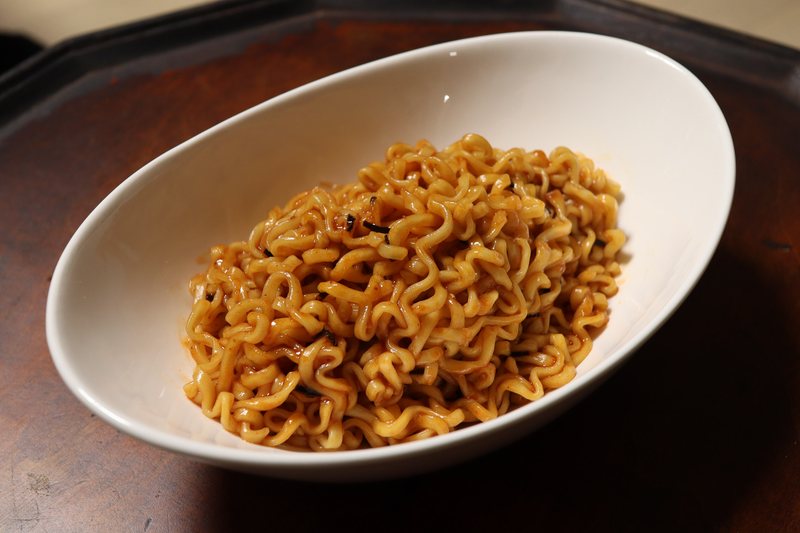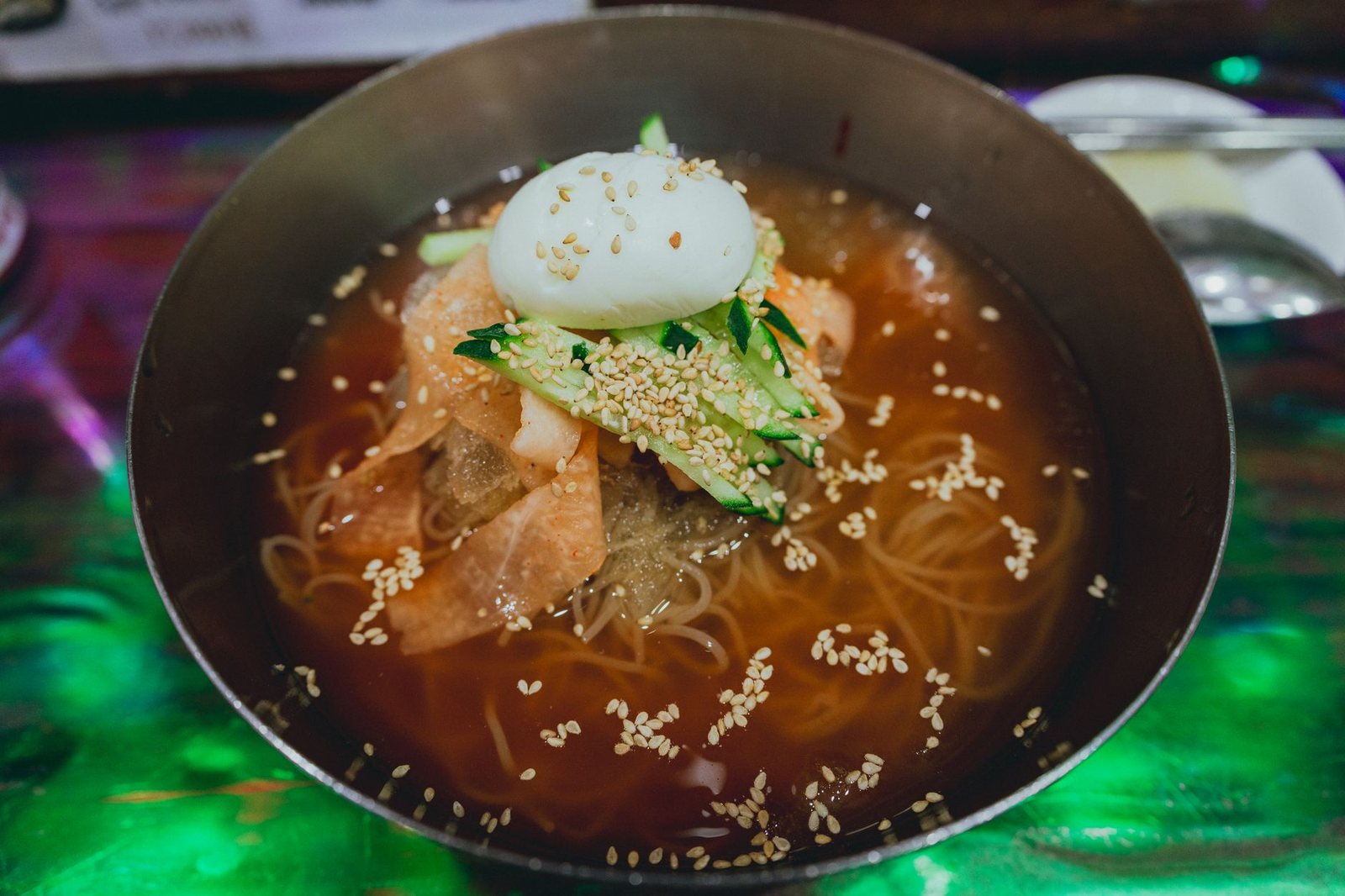
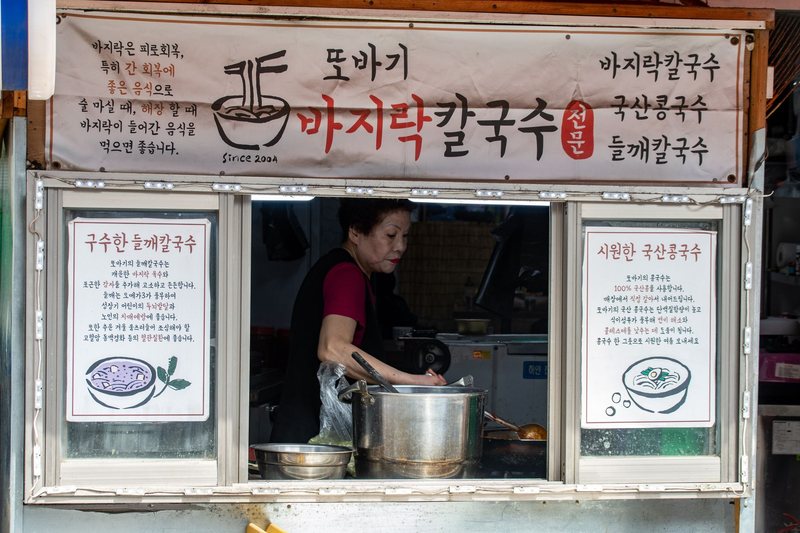
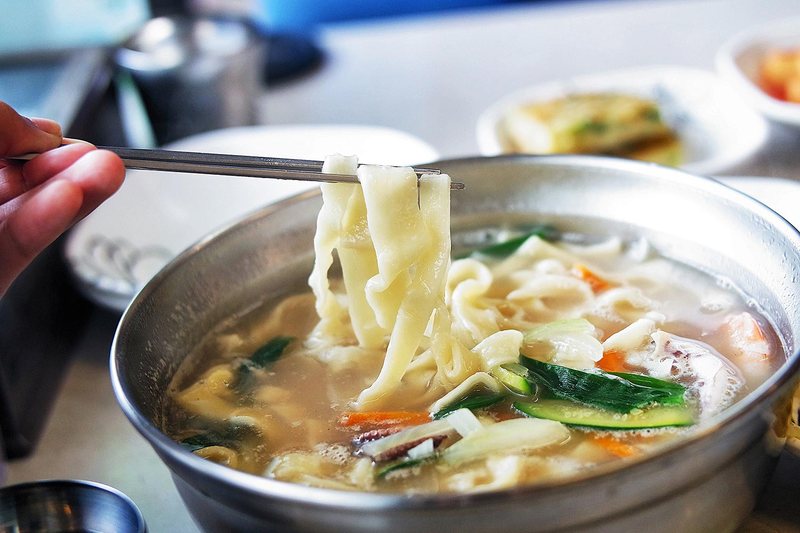
It is lunchtime at a kalguksu restaurant in Seoul, the kind with fogged-up windows and a pot of kimchi on every table. Office workers lean over wide bowls of hand-cut noodles in steaming broth, and the room has its own soundtrack: short, soft slurps, a spoon tapping steel, someone blowing on a bite that is still too hot. Nobody looks up. So, is it rude to slurp noodles in Korea? Usually not. A modest slurp over a hot bowl of noodle soup is an ordinary sound in Korea, and almost no one will think twice about it. Eating quietly is fine too; nobody will take a silent eater for someone who dislikes the food.
But that is only half the answer, and it is the half that a YouTube Short watched millions of times leaves out when it tells viewers that slurping is polite in Korea. Koreans do not treat a slurp as a compliment to the cook. It is tolerated, not encouraged. And the other noises a mouth can make at the table still draw looks, especially from older people: the wet smack of open-mouth chewing that Koreans call jjeopjjeop, a long, loud slurp performed for effect, a burp. The gap between “allowed” and “polite” is where visitors get confused, and it is where the real story is.
The old rulebook says: quietly
Korean etiquette has asked for quiet eating for a very long time. In 1775, the scholar Yi Deok-mu (이덕무) wrote Sasojeol (사소절, “Small Manners”), which the Encyclopedia of Korean Culture describes as a book on everyday courtesy and self-discipline, with parts for scholars, for women and for children. Its section for scholars lists the sounds a well-mannered person avoids: crunching away at radish, pears or chestnuts, letting water gurgle down the throat, and drawing in noodles, soup or porridge in one noisy rush. The line can still be read in the original classical Chinese in the Korean Classics Database.
The idea never went away. Korean children still hear at the dinner table that you chew with your mouth closed and keep the noise down. Writing in the Dong-A Ilbo in June 2026, the food critic Lee Yong-jae (이용재) said he had looked through a children's etiquette book and found that, after some forty years in which the world had changed enormously, it still told readers to eat without making a sound. The Korea Herald's guide for newcomers puts the conventional rule just as plainly: make as little noise as possible, and keep your mouth shut while you eat.
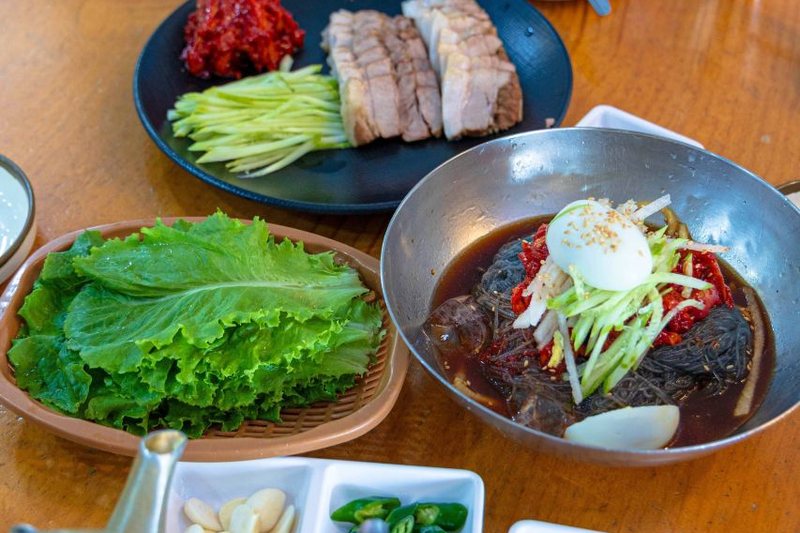
So where does the noodle slurp fit? In practice, Koreans draw a line between a sound that comes with the food and a sound that comes from the eater. Long noodles in hot broth, such as kalguksu, janchi-guksu or a pot of ramyeon, are hard to eat in perfect silence, and a light slurp that cools a scalding mouthful passes without comment. The same goes for icy naengmyeon, the cold noodles many people order to finish a Korean barbecue dinner. What crosses the line is noise that has nothing to do with the noodles: jjeopjjeop (쩝쩝), the smacking of lips and an open mouth; talking while chewing; a loud burp, which in Korea is not the compliment some travel lists make it out to be. A Korean who calls a dinner companion a jjeopjjeop eater is not being playful.
How slurping noodles in Korea got so loud
If quiet eating is the old rule, why does the internet think Korea slurps? Part of the answer is a mix-up with Japan. In Japan, slurping soba and ramen is widely accepted, and that reputation tends to get stretched across the whole region, as if every chopstick culture ate noodles the same way. A traveler who learned noodle manners at a Tokyo ramen counter can easily carry the same rule to a Seoul kalguksu shop without noticing that the room sounds a little different. Lee, the Dong-A critic, even suspects that Korea's loudest noodle habit drifted over from Japan, though that is his hunch rather than settled history.
The bigger push came from screens. Mukbang (먹방), the eating broadcast Korea gave the world, runs on sound: the crunch, the chew and the slurp, caught by a microphone set close to the bowl. In 2023, the Korea Herald noted that a trend of making noise while eating had spread among young Koreans, influenced by the mukbang popularized by TV and YouTube personalities. Variety shows made a star of one move in particular, myeonchigi (면치기): sucking up a big mouthful of noodles in one long, loud pull instead of biting them off. On screen, it reads as gusto. It is also the root of the misunderstanding. What a foreigner sees in a viral clip is a performance, not an ordinary lunch.
Koreans have been arguing about it ever since. In August 2022, a clip from a TV variety show spread online in which a well-known actor quietly bit through his noodles while the host beside him slurped noodles up with gusto, and The Asia Business Daily reported on the debate that followed. Critics said loud slurping makes the people around you uncomfortable; defenders answered that how you eat is your own business, and some viewers hoped “silent” noodle eating would catch on instead. Four years later, Lee's Dong-A column took a harder line, calling myeonchigi painful both to watch and to hear, and asking broadcasters to answer for presenting it as charming.
Beside the elders
None of this means a bowl of noodles should make you nervous. Noodles are everyday food in Korea, priced for weekday lunches: in September 2026, naengmyeon averaged 10,853 won a bowl and kalguksu 9,071 won across the 16 cities and provinces tracked by the Korea Consumer Agency's Chamgagyeok price service, Newsis reported. That makes them the meal you share with coworkers, with in-laws, with grandparents after a family errand, which is exactly when the noise question matters.
With friends your own age in a ramyeon shop, nobody is listening. Beside elders, read the table. A Korean meal traditionally begins when the eldest picks up the spoon, a habit explained in our story on Korea's metal chopsticks and spoons, and the volume follows that person too, out of the same respect for age that has younger Koreans turn their heads to drink. Take smaller bites. Gather a modest bundle with your chopsticks, rest it on your spoon, and bite through the strands instead of drawing the whole length in at once; the rest simply drops back into the bowl. When a spoonful is still too hot, blow on it gently or give it a moment, instead of sucking in air with the noodles to cool them. If an elder slurps contentedly, a soft slurp from you is fine. If they eat quietly, follow their lead. And if spicy broth makes your nose run, step away to blow it, because doing that at the table bothers many Koreans far more than any slurp.
Korean insider tip: At many naengmyeon restaurants, the server arrives with scissors and asks 잘라 드릴까요? (jalla deurilkkayo?, “Shall I cut them?”). Beside elders, a simple 네, 잘라 주세요 (ne, jalla juseyo, “Yes, please cut them”) makes quiet eating easy: a couple of snips turn long strands into short bites you can eat without a long slurp. Some fans of Pyongyang-style naengmyeon prefer their noodles uncut, so glance at what the eldest does first.
What the table hears today
So the viral Short is not entirely wrong. Korea is a noodle country, and few people eat a steaming bowl of kalguksu on a cold day in total silence. But it gets the meaning backwards. In Korea, a slurp is something people forgive, not something they offer as praise. The older rule of eating quietly with your mouth closed still sits underneath everyday life, and the loud slurp is mostly a screen habit that Koreans themselves are still arguing about, in comment sections, in newspaper columns and around family tables.
What the table really listens for is not silence. It is attention: whether you noticed who started eating first, whether you kept pace with the people around you, whether your noise is the sound of food or the sound of a show. Older Koreans may never mention a soft slurp over a hot bowl. Many of them will notice an open mouth. Get that difference right, and you will eat noodles in Korea the way Koreans do: with real pleasure, and with one ear on the people beside you.