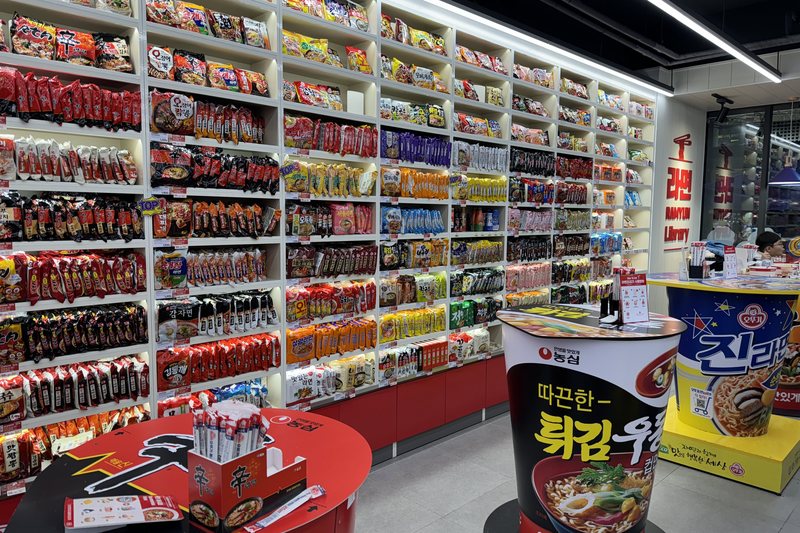
Why are Korean dating shows so popular? Because they slow romance down to the speed of real life, and in Korea real life comes with plenty of unwritten rules. Instead of fast physical flirting, you get long talks, careful texts and one very public moment when someone has to choose. Viewers watch strangers work through questions many people quietly wrestle with: when to show interest, how much to say, and what on earth to do about an ex.
The boom is measurable. A Reuters tally carried by The Korea Times counted at least 20 dating shows on Korean cable and streaming services in 2022, more than triple the number in 2021. In January 2026, pop culture critic Jung Duk-hyun told the Korea Herald that part of the global appeal is cultural: Korean culture tends to express emotions and intentions indirectly, so every small signal counts.

Three hit shows, three very Korean twists
Single's Inferno: your age stays secret
Netflix's 솔로지옥 (Solo Jiok, Single's Inferno) strands a group of singles on a deserted island, the "Inferno," which they can leave only as a couple for a night in "Paradise." Netflix's episode guide notes that matched pairs reveal their ages and jobs to each other once they reach Paradise. That matters in Korea, where age shapes how two people talk, from polite speech to a woman calling an older man 오빠 (oppa). Take age away, and the first days of flirting happen without the usual map.
The formula travels. Season 1 was the first original Korean unscripted series to reach Netflix's Global Top 10 for non-English TV, as Netflix noted ahead of Season 5. That fifth season, released on January 20, 2026, held No. 2 on the global non-English TV chart for three straight weeks and was still No. 8 in its fourth.
I Am Solo: everyone gets an old-fashioned name
나는 SOLO (Naneun Solo, I Am Solo), on SBS Plus and ENA since July 2021, puts about ten non-celebrities in a village the show calls 솔로나라 (Solo Nara, Solo Land) for a week, and nobody uses a real name. The men become 영수 (Yeong-su) or 영철 (Yeong-cheol), the women 영숙 (Yeong-suk) or 옥순 (Ok-sun), names that were among Korea's most popular in the 1950s and 1960s. Producer Nam Kyu-hong told the Korea JoongAng Daily that he didn't think names mattered when you fall in love, so he stripped them away. The paper reported a 4.4 percent average nationwide rating, per Nielsen Korea, for the October 29, 2025 episode, enough to top cable variety shows.
Transit Love: your ex is in the house
TVING's 환승연애 (Hwanseung Yeonae, Transit Love, also known as EXchange), which began in 2021, is the one that makes foreign viewers' jaws drop. The cast is built from former couples living under one roof, and who dated whom stays secret until a reveal partway through. The title borrows 환승 (hwanseung), the everyday word for transferring between buses and subway lines: switch to someone new, or ride home with your ex?
Some Korean viewers were shocked too. At launch, some called it publicized infidelity, the Korea JoongAng Daily reported, and persuading the exes to join took the producers over five months. The show still won best entertainment program at the first Blue Dragon Series Awards in 2022, and its fourth season premiered in October 2025, according to the Korea Herald.
The slow burn: why there is so little kissing
Foreign fans often notice what's missing. In the Reuters report, flirting, hugging and cuddling make it to the screen, but kissing and sex generally don't, and even Single's Inferno revolves around long conversations. The focus is elsewhere. These shows treat the stage before dating as the main event: the stage Koreans call 썸 (sseom), when two people are clearly interested but nobody has said so out loud.
For many Korean viewers, that stage is the drama: who sits next to whom at breakfast, whether a text reply is a full sentence or a single word. None of this means Korean couples are shy. Affection varies from couple to couple, as it does everywhere. For how dating works off camera, see our look at K-drama dating versus real life.
Choosing out loud: date picks and the final choice
Korean dating shows love a choosing ritual. Nam's earlier SBS show 짝 (Jjak, "Partner," 2011–14) added a lunch box selection, with each person picking someone to share lunch with, because cast members were too passive. I Am Solo has date picks, special "super dates" and, at the end, the 최종 선택 (choejong seontaek, final choice): each person names one person or no one, and a couple forms only when the choice is mutual. Single's Inferno also ends with each single choosing who to leave the island with.
Why does this hit so hard? In everyday Korean dating, a clear confession, 고백 (gobaek), is often what turns sseom into a relationship, and it takes nerve. The final choice is that confession with the cameras rolling.
Money is part of the realism. Asked by OSEN in 2023 about a reported appearance fee of 1 million won, Nam said the fee is not fixed and can change, and that cast members pay for their own regular dates, since how someone spends on a date is part of seeing their dating style. The production pays for the super dates.
Why a panel of celebrities watches with you
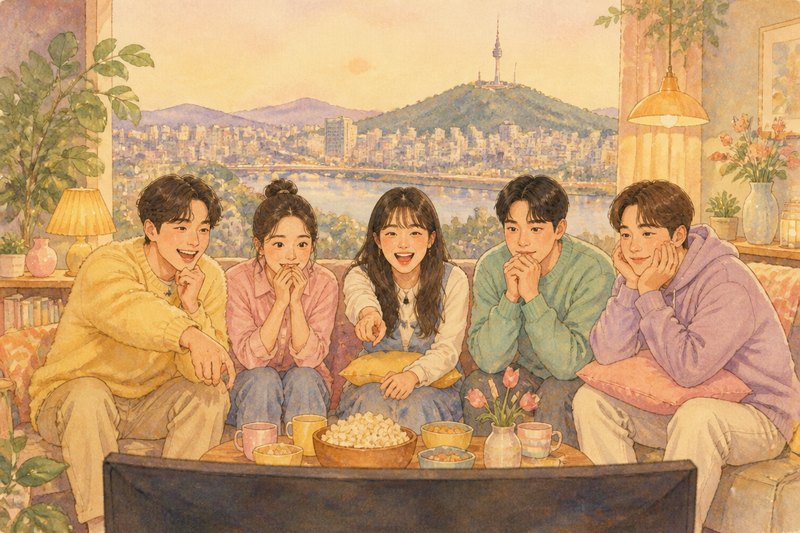
Then there's the studio panel: celebrities who watch the footage, gasp, guess and argue. Channel A's Heart Signal, which began in 2017, used a commentary panel instead of a host, and the panel became a staple of later shows, according to the Korea JoongAng Daily. Single's Inferno's panel has included Hong Jin-kyung, Lee Da-hee, Kyuhyun, Hanhae and Dex.
Because so much goes unsaid, panelists act as interpreters, reading a glance or a one-word reply the way a friend would. They also say what viewers are already shouting at the screen, feeding what Koreans jokingly call 과몰입 (gwamorip, "over-immersion"). Their arguments spill into living rooms, much like the perilla leaf debate over how friendly is too friendly.
What is real and what is edited
"Is it scripted?" is one of the first things foreign fans ask. Nam told the Korea JoongAng Daily in 2025 that I Am Solo gives its cast no script and doesn't interfere in their decisions. Still, days of footage become a handful of episodes, and music, previews and the order of scenes all shape the story. Koreans even have a phrase for editing that makes someone look worse than they were: 악마의 편집 (angma-ui pyeonjip, "devil's editing").
The people are real, and that has a cost. When Transit Love's fourth season brought in a cast member alongside two former partners, critics quoted by the Korea Herald said the twist pushed emotional strain beyond a sustainable limit. The kindest way to watch: get invested in the story, and leave the real people alone.
Watching with Korean friends
- Talk about moments, not people. A surprise date pick, the final choice or a heated panel argument makes great small talk.
- Learn 현커 (hyeon-keo). Short for 현실 커플 (hyeonsil keopeul, "real-life couple"), it's what fans call a pair still together after filming, and the first thing many wonder after a finale. Treat it as a fun guess, not news.
Korean insider tip: With I Am Solo, fans don't say "season 20"; they say 20기 (isip-gi, "the 20th cohort"), the same word used for a graduating class. So ask a friend 몇 기 봤어? (myeot gi bwasseo?, "Which cohort did you watch?"). And keep the chat on the show. The cast are ordinary people with day jobs, so tracking down their workplaces or commenting on their personal social media is widely seen as crossing a line, however angry an episode made you.

Quick answers
Why are Korean dating shows so popular?
They show romance at a slow, realistic pace: long conversations, small signals and a nerve-racking final choice, with a celebrity panel reacting alongside you. Netflix hits like Single's Inferno carried the format worldwide.
Are Korean dating shows scripted?
Producers of shows like I Am Solo say the cast gets no script, but every episode is edited down from days of footage. Think of it as real people, shaped by editing.
Why would anyone go on Transit Love with their ex?
Some participants hope to get back together; others are ready to find someone new, right in front of their ex. The idea divided Korean viewers at first, too.