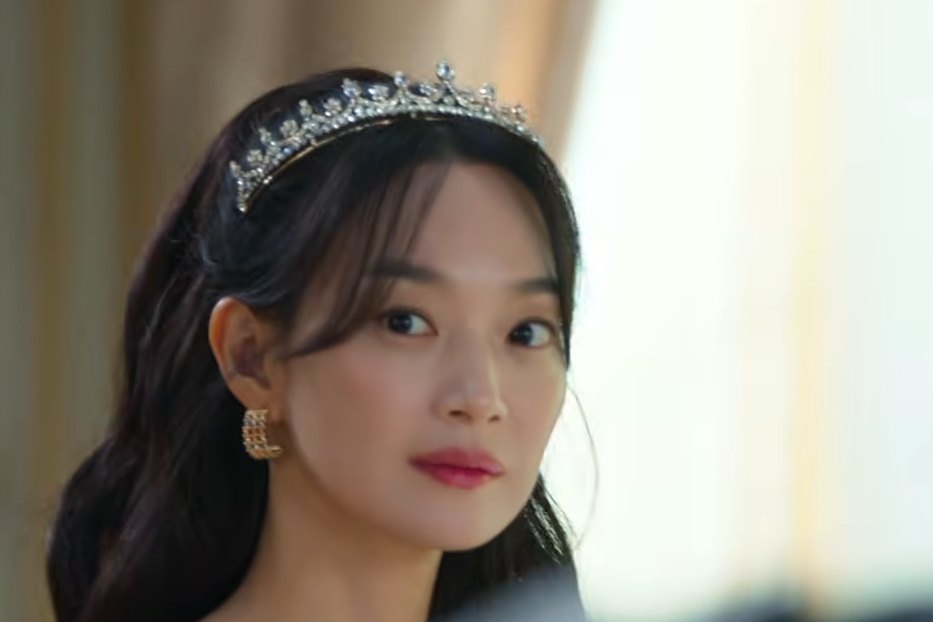
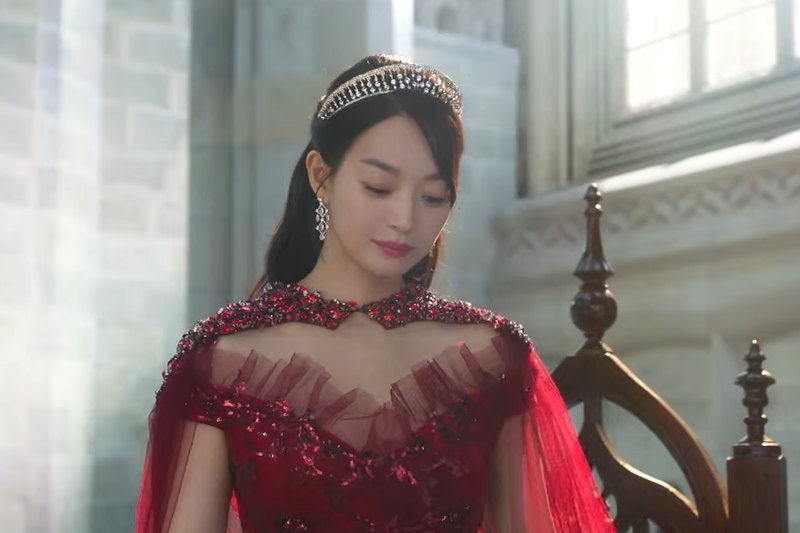
On a late-night subway in Seoul, it is an ordinary sight: a phone screen showing a woman in a jeweled gown facing an emperor in a gold-trimmed coat, in a palace that would look at home outside Munich. Nobody in the panel is called Kim or Park. So why is The Remarried Empress set in Europe? Because the story comes from 로판 (ropan, “rofan”), a Korean web-novel genre whose default world is an invented, European-style empire, and the drama's makers decided not to move it. At a Busan International Film Festival talk, as reported by Starnews, director Cho Su-won said that keeping the characters' names exactly as they were was his biggest reason. So instead of a Joseon court, the crew went to palaces in Germany and gardens in the Czech Republic.
It was a gamble, and the numbers say it worked. The ten-episode Disney+ series, starring Shin Min-a as Empress Navier, Ju Ji-hoon as Emperor Sovieshu, Lee Jong-suk as Crown Prince Heinrey and Lee Se-young as Rashta, premiered a day early on November 3. On November 6, Disney announced that it had become the most viewed local original premiere of all time on Disney+ and Hulu globally, based on three days of views, and the number one Korean title premiere in more than 50 markets, including the US, the UK, France, Spain, Germany, Mexico and Canada. The hook is the same one that made the book a hit. Navier, the flawless empress of the Eastern Empire, is asked for a divorce after Sovieshu brings Rashta, a runaway slave, into the palace. She agrees, and in the same breath asks for his approval to remarry Heinrey of the neighboring Western Kingdom.
Dukes, empresses and a second chance
Rofan is short for 로맨스 판타지 (romaenseu pantaji, romance fantasy), and on Korean web-novel apps it is a genre with its own furniture: empresses and archdukes, counts' daughters, palace balls, marriage contracts and inheritance fights, all served in short episodes built for reading on a phone, one tap at a time. The courts look like Europe, with crinolines, carriages and candlelit ballrooms, but the empires are invented, and nobody expects them to match any real map.
Over the years, the genre has developed favorite engines, so familiar that readers bundle them into one word, 회빙환 (hoe-bing-hwan), a term the Kyunghyang Shinmun noted in 2022 had become firmly established. It stands for 회귀 (hoegwi, regression), where a heroine wakes up years in the past with all her memories; 빙의 (bing-ui, possession), where a modern woman opens her eyes inside a novel as one of its characters; and 환생 (hwansaeng, reincarnation). The same paper observed that regression had become a common element of most web novels. Why a fantasy Europe, though? No one ever issued a rulebook, but the appeal is easy to read: an invented empire comes with ballrooms, titles and succession plots, and no real history for anyone to get wrong. Writing about the drama, Rolling Stone India argued that a fictional Western empire strips away the heavy social baggage of the Joseon era and leaves the more universal drama of a royal divorce.
The Remarried Empress needs none of those time-travel tricks. It began as a web novel by a writer using the pen name Alphatart, serialized on Naver from November 2018 until it ended on March 31, 2020; that spring, the Chosun Ilbo reported 70 million cumulative downloads. In 2019 it became a Naver Webtoon, adapted by Herry and drawn by Sumpul, and Disney says the webtoon has drawn nearly 3 billion views since it was first released. Its pull is a different rofan fantasy: the wronged wife who refuses to cry and calmly negotiates her next marriage instead.
The Joseon detour
For years, that imagined Europe mostly stayed on the page. Live-action rofan has been rare in Korea, as the Kyunghyang Shinmun pointed out this month, and when one did reach TV, the Western costumes could be the first thing to go. In 2025, KBS2 aired The First Night With the Duke (남주의 첫날밤을 가져버렸다), starring Seohyun and Ok Taec-yeon, based on a Naver Series web novel about a college student whose soul lands inside a romance novel as a background extra. Ilgan Sports reported that the drama moved the original's Western-style setting into a fictional era in the style of a sageuk, Korea's costume drama, and the Korea Times notes that KBS gave the characters Korean names in a Joseon setting. Localizing is a familiar Korean TV move; it is how a Japanese medical hit became Kim Ji-won's Doctor X this fall.
The reasons are practical. The Korea Herald pointed out that Western-style romantasy was long considered too expensive to produce and culturally unfamiliar to Korean audiences, who would have to keep track of a whole system of dukes, marquesses and counts. Joseon, by contrast, is home turf. Korean TV has decades of sageuk experience, and the real palaces still stand in central Seoul, where visitors can even get in free wearing hanbok. A Joseon makeover also spares Korean viewers the oddness of hearing familiar actors call each other Sovieshu and Rashta. When The Remarried Empress kept those names, some viewers compared it to Bridgerton, the Kyunghyang Shinmun reported, while others joked that it looked like 서프라이즈 (Surprise), MBC's long-running reenactment show, which dramatizes strange stories from around the world, often with foreign actors and Korean voice-overs.
Why The Remarried Empress is set in Europe, not Joseon
Studio N, Naver's drama production arm, which made the series, went the other way. Its CEO, Kwon Mi-kyung, said, according to the Korea Times, that moving the story into a specific period of Korean history would have weakened what made the original appealing. Director Cho Su-won, who acknowledged at the festival talk that some viewers might wonder why the clothes and backgrounds were Western, chose to build the world rather than translate it.
That meant going to Europe. According to the Korea Herald, the production scouted 16 castles across Europe before settling on Germany and the Czech Republic. Schleissheim Palace in Oberschleissheim, just north of Munich, plays the Eastern Empire's imperial residence; the director picked it partly because its canal and open views matched what he had in mind. The garden scenes between Navier and Rashta were shot in the Flower Garden at Kroměříž, a UNESCO World Heritage site, and the historic Czech town of Kutná Hora became the empire's streets and markets, dressed with horse-drawn carriages and, in a quietly Korean touch, shop signs in Hangul. Large interior sets were built back in Korea, and the location footage was finished with visual effects.
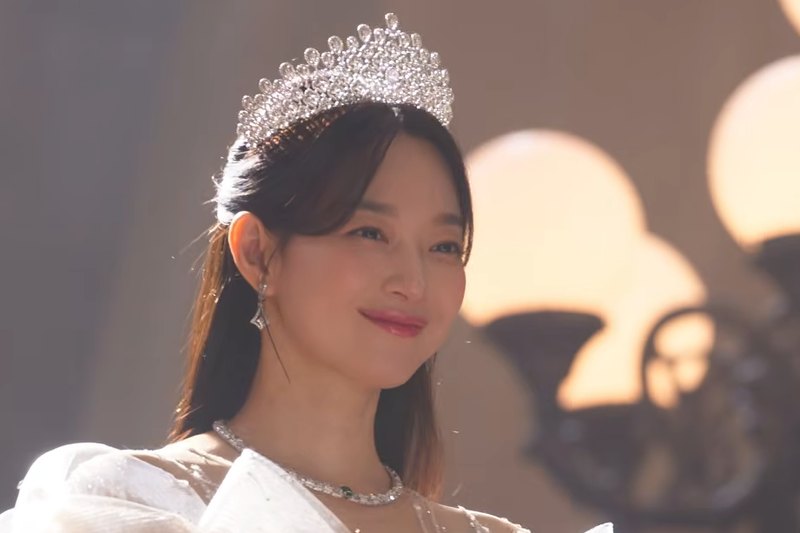
The money went where the eye goes. At the November 3 press conference, Ju Ji-hoon said, as quoted by the Kyunghyang Shinmun, that he understood a large share of the budget had gone into art direction and locations, so that the visuals alone could explain the world without anyone having to put it into words. The marketing leaned on the same images: Disney says the payoff trailer passed 13 million views in its first 48 hours on YouTube and social media.
How to watch The Remarried Empress, and how Koreans read it
All ten episodes are now streaming. The series opened with four episodes on November 3, a day earlier than planned, then added two every Wednesday from November 11 through the finale on November 25. It is a Disney+ exclusive, and in the United States it also streams on Hulu; it is not on Netflix. If the show leaves you wanting the original, the official English webtoon runs on WEBTOON, Naver's global comics app, under the same title.
In Korea, the story lives on Naver's own apps, where paid episodes are unlocked with 쿠키 (kuki, cookies), the digital coin used on both Naver Webtoon and Naver Series. On the Korean App Store, the Naver Series iPhone app lists cookie packs starting at 10 cookies for 1,200 won (checked November 27, 2026). There is also a slower way that costs nothing.
Korean insider tip: Before you spend cookies on a long rofan in the Naver Series app, check whether the title offers 매일 10시 무료 (maeil yeol-si muryo, “free at 10 every day”) and sign up for it. The app then gives you a free rental ticket for that title every night at 10, so the story keeps moving even if you never pay. Cookies are for the nights you cannot wait. Search in Korean, too: the title is 재혼 황후 (jaehon hwanghu).
That slow, nightly habit is what makes the drama feel so striking in Korea right now. An empire that many Korean readers first met on a phone screen, one chapter at a time, is now walking through a Bavarian palace with Korean faces and Hangul shop signs, and Disney counts it as the top Korean premiere in more than 50 markets. Critic Jung Deok-hyun told the Kyunghyang Shinmun that if the series succeeds, more live-action rofan will follow, and the pipeline is already moving: according to the Korea Times, Alphatart's other hit, Men of the Harem, is being filmed as a Netflix series. Korea spent years imagining Europe for itself. Now it is exporting the Europe it imagined.