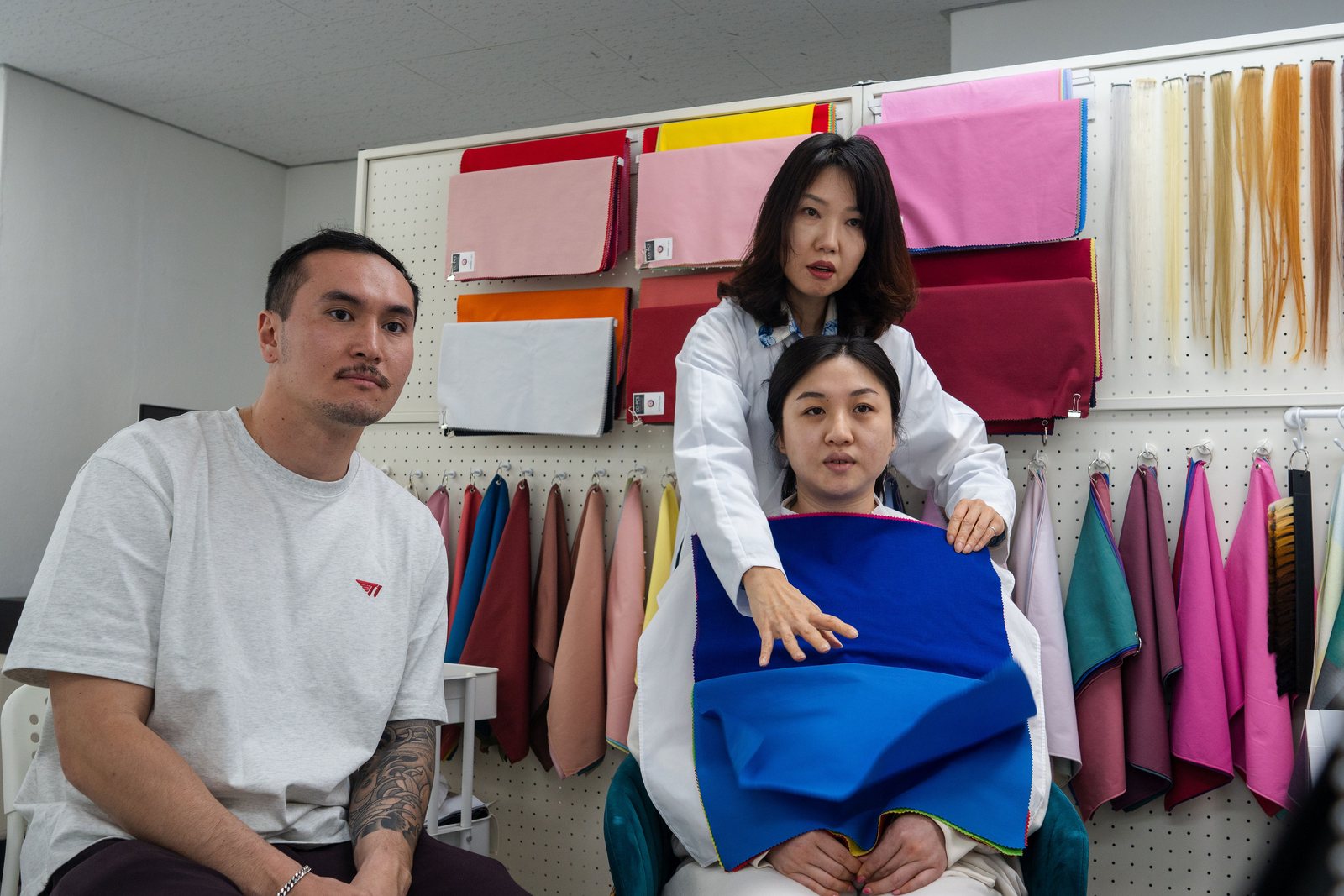
On a weekday afternoon in a small studio above a Hongdae side street, a client sits bare-faced before a large mirror. The consultant lifts a sheet of coral fabric under the client's chin, then swaps it for dusty rose, mustard yellow, icy blue. Nobody is looking at the fabric. Everyone is watching the face: does the skin look clearer, or a shade grayer? Do the shadows under the eyes deepen? After dozens of swaps, the verdict arrives in Korean shorthand, something like 여쿨 (yeokul, short for "summer cool"), and a small card of colors lands in the client's hand. That, for foreigners, is personal color analysis in Seoul: about an hour in a studio, often in English, ending with a palette to dress and shop by.
The Korean name is 퍼스널 컬러 진단 (peoseuneol keolleo jindan), and it has become one of the most-booked beauty experiences for visitors. You do not need to speak Korean to try it. Seoul's official tourism site lists studios that consult in English, Chinese, Japanese or Spanish, and a standard session takes about 40 to 90 minutes, WikiTree reported in August 2026. You leave knowing which colors flatter you, with advice on makeup, hair dye and jewelry to match. Visitors book it because they have watched it on their phones for years. Koreans have been at it far longer: here, "warm tone or cool tone?" is ordinary shopping talk.
Forty colors under a white lamp
Most sessions follow the same arc. You arrive without makeup, because consultants judge bare skin, as the Korea JoongAng Daily explained in a 2022 feature on the trend. Studios try to keep the light steady and close to daylight, since a lamp's color temperature can shift the result. Then the draping (드레이핑, deureiping) begins: fabric after fabric laid across your shoulders, right up to the jaw. When TIME covered the boom in 2023, it described consultants working through hundreds of swatches in about an hour.
The first question is always warm or cool. Cool tones lean toward a blue undertone, warm tones toward yellow. A color that suits you makes the face look brighter and smoother; one that does not makes it look a little darker, a little tired. Next comes the season, with spring and autumn on the warm side and summer and winter on the cool. Koreans shorten them to 봄웜 (bomwom, spring warm), 여쿨 (yeokul, summer cool), 갈웜 (galwom, autumn warm) and 겨쿨 (gyeokul, winter cool), and many studios split each season again into sub-types such as light, bright, muted or deep, for 12 types in all. As the Korea Herald summed them up, spring warm suits light pastels with a yellow base, autumn warm deeper and darker versions of the same, summer cool soft and cooling shades, and winter cool striking colors like forest green, wine red and black.
Then comes the practical part. Many consultants run a pouch check (파우치 진단, pauchi jindan), going through the makeup you actually carry and telling you what to keep using and what to stop buying. They may suggest a foundation shade, which helps a lot when choosing a Korean cushion compact, a hair-dye color, and whether gold or silver flatters you more. You usually leave with a written report or a swatch card of your best colors.
From a 1980s bestseller to Korean small talk
The idea did not start in Korea. Its roots run through Western color theory: the Swiss color theorist Johannes Itten, who split colors into warm and cool and tied them to the four seasons; the American artist Robert Dorr, whose "color key" system grouped colors by a blue or yellow undertone; designer Suzanne Caygill, who applied that thinking to skin, hair and eye color; and consultant Carole Jackson, whose 1980s bestseller Color Me Beautiful sorted people into four seasons and inspired consulting firms across the U.S. and Europe. According to the Korea Herald, the tests first reached the Korean market in 1993 and caught on only gradually.
What changed was scale. Brands began marketing makeup palettes by tone and season, and AI apps let people test themselves on a phone; one reported 1.7 million users by December 2022. Interest jumped during the pandemic, the JoongAng Daily noted, as people paid more attention to what suited them, and consultations turned up at job fairs and even marriage agencies. Olympic speed skater Kwak Yoon-gy shared his own session on his YouTube channel. Along the way, 웜톤 (womton, warm tone) and 쿨톤 (kulton, cool tone) slipped into everyday Korean. Friends shorten personal color to 퍼컬 (peokeol), beauty creators pitch a lipstick as one for cool tones, and people mention their season the way they mention their four MBTI letters.
That comparison is no accident. Consumer-science professor Lee Young-ae told the Korea Herald that the craze reflects a wish to belong, the same pull behind Koreans' fondness for MBTI and blood-type labels. The paper also pointed to a practical side: when so much shopping happens online, where you cannot swatch a lipstick on your hand, a personal color gives shoppers a fallback rule.
A souvenir in swatches: personal color analysis in Seoul for foreigners
Abroad, the service went viral before most travelers knew its Korean name. By July 2023, TIME reported, the search "Personal Color Analysis Korea" had drawn 375 million views on TikTok, and a YouTube video of BLACKPINK's Jisoo detailing her own results had passed 2.6 million views. The Korea Tourism Organization even set up a pop-up color analysis studio at New York's Rockefeller Center for its Celebrate Korea summer event. That June, one Hongdae studio told TIME it had seen 470 clients instead of the roughly 300 of a typical busy month; it had only two English-speaking consultants, and appointments were snapped up almost as soon as they opened. Since then, on Creatrip, an inbound travel platform, personal color made up about 80 percent of beauty-shop transaction value in the first half of 2024, WikiTree reported.
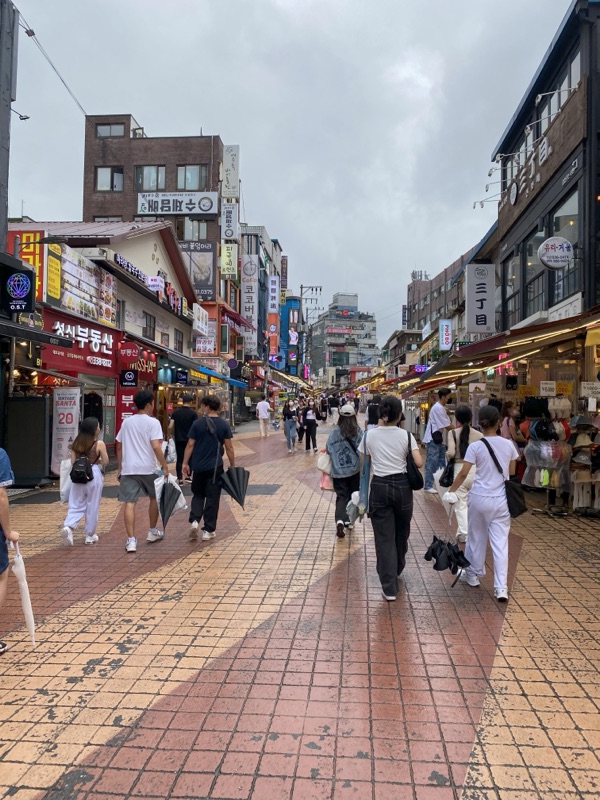
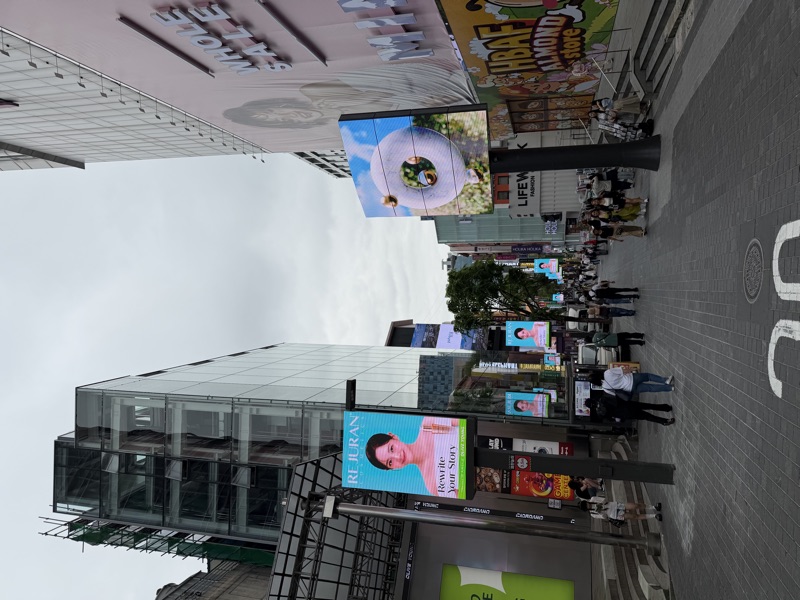
Studios that welcome visitors cluster around Hongdae, Gangnam and Seongsu, with more near Myeongdong's shopping streets. Koreans tend to book through a studio's Naver listing, while visitors more often use inbound travel apps such as Creatrip or Klook. When you book, ask whether the consultant speaks English or an interpreter joins, and whether the session is one-on-one or shared. Friends often go together, and shared sessions run longer, while combined packages that add body-shape analysis and a makeup lesson can take around three hours.
Prices depend on length, language and what is included, so compare what each package covers rather than the headline number. When the Korea JoongAng Daily looked at the trend in December 2022, sessions ranged from 50,000 to 150,000 won. A June 2026 Asia Business Daily report on young Chinese travelers' "K-beauty days" in Seoul put personal color analysis at roughly 45,000 to 180,000 won (200 to 800 yuan), depending on duration and components.
Getting ready is simple. Come bare-faced, or at least without foundation, blush and lipstick, and skip tinted contact lenses, since eye color is part of the reading. Wear a plain top in a quiet color, because the drapes sit right at your neckline. And if you plan a new hair color in Seoul, book it after the session, not before: dye, makeup, skin condition and lighting can all change the result, WikiTree noted, and your consultant may suggest a shade anyway.
Korean insider tip: Book your session early in the trip, not on your last day, so you can still shop with your colors. Then save your result in Korean shorthand, such as 여쿨 (yeokul) or 갈웜 (galwom). Type it with what you want, for example 여쿨 립 (yeokul rip, lipstick for summer cool), into a Korean search bar or beauty app and you will find Korean reviewers' own shade picks. Showing the phrase to shop staff works too.
A tool, not a verdict
It is worth saying plainly: personal color analysis is a style tool, not a medical or scientific test. Even its defenders hedge. Shin Hyang-seon, president of the Korea Color Industry Specialist Association, told the Korea Herald in 2022 that the system rests on sound color theory, but she warned that people from other professions, such as makeup artists and stylists, were also handing out diagnoses, which could lead to inaccurate results. She also pointed out that the system was first designed around Western clients, so Asian clients may need one of their own. A 2026 Korean study cited by WikiTree found the warm-versus-cool split fairly clear but the four seasons overlapping considerably. Two studios can hand you two different seasons, and the same face can read differently under a different lamp. The Herald's verdict still holds: do not trust the result blindly.
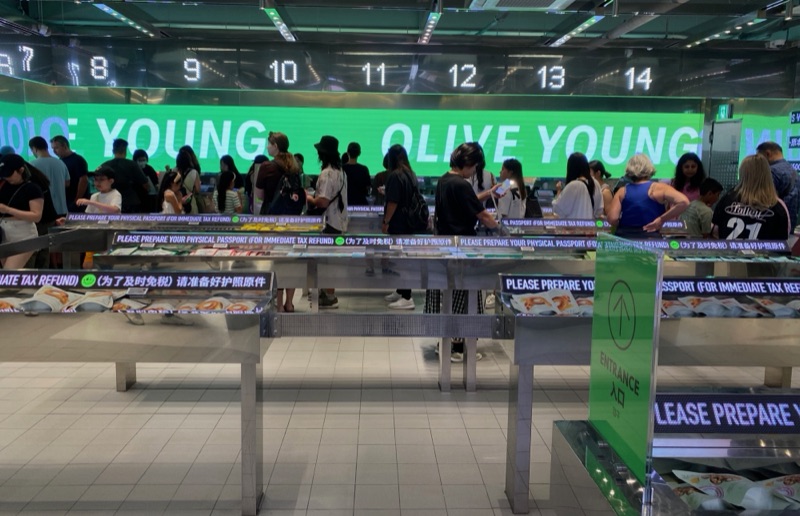
That is how many Koreans use it anyway. A result does not change who you are; it gives you words. It lets you explain to a friend why coral lipstick never quite worked, ask a shop assistant for help without testing twenty shades, and trim a long Olive Young run down to the colors that matter. Like MBTI letters, a season is less a diagnosis than a conversation starter, a few syllables that say something about how you see yourself. For visitors, it has become a new kind of Seoul souvenir: nothing to pack, just a handful of colors you start noticing everywhere once you know them, and a question you will keep hearing in Korean beauty talk. Warm, or cool?