It is a weeknight in late January in Hongdae, Seoul's student neighborhood, and the café at the top of a narrow staircase is full. Two friends in their twenties wait their turn, phones open to texts from home with the hour each of them was born. One wants to know whether this is the year to change jobs; the other came mostly for fun. What they are waiting for is a saju reading. 사주 (saju) is Korea's best-known form of fortune telling: it reads your life from four "pillars," the year, month, day and hour of your birth. Each pillar is written as two characters from an old East Asian calendar cycle, eight in all, so Koreans also call it 사주팔자 (saju palja, "four pillars, eight characters"). A reader turns your birth moment into those characters, weighs how their elements balance and clash, and talks you through your temperament, your timing and the year ahead.
Why would a generation raised on smartphones pay to hear a calendar read aloud? Mostly for reassurance, not faith. In a Gallup Korea survey of 1,507 adults taken in March 2026 and reported by Money Today, 40 percent said they believe in fortune telling and saju, and 40 percent said they had paid for a reading at least once. Among people in their twenties, only 27 percent said they believe. Yet young Koreans keep booking readings before exams, job changes, weddings and births, the way you might call a blunt, wise friend: to hear their situation put into words, and maybe to get a push.
Four pillars, eight characters: what saju really is
The Encyclopedia of Korean Culture explains the name with an image: a person is pictured as a house, and the year, month, day and hour of birth are its four pillars. Each pillar pairs one of ten "heavenly stems" with one of twelve "earthly branches," the same twelve that give Korea its zodiac animals, or 띠 (tti), and the pairs run in a cycle of sixty. The saju year does not turn on January 1 or on Lunar New Year but at 입춘 (Ipchun), the traditional start of spring in early February, so a late-January baby carries the previous year's pillar. The hour pillar works in twelve two-hour blocks, which is why your birth time matters. Readers once looked all this up in a 만세력 (manseryeok), a perpetual almanac; now an app does it in a second.
The system grew from the yin-yang and five-elements thinking Korea shares with China, where the same chart is called bazi, but the everyday slang is pure Korean. A friend with an enviably easy life is said to have a good palja (팔자가 좋다, palja-ga jota), and a weary 내 팔자야 (nae palja-ya, "that's my fate") greets everything from a broken umbrella to a third late night at the office.
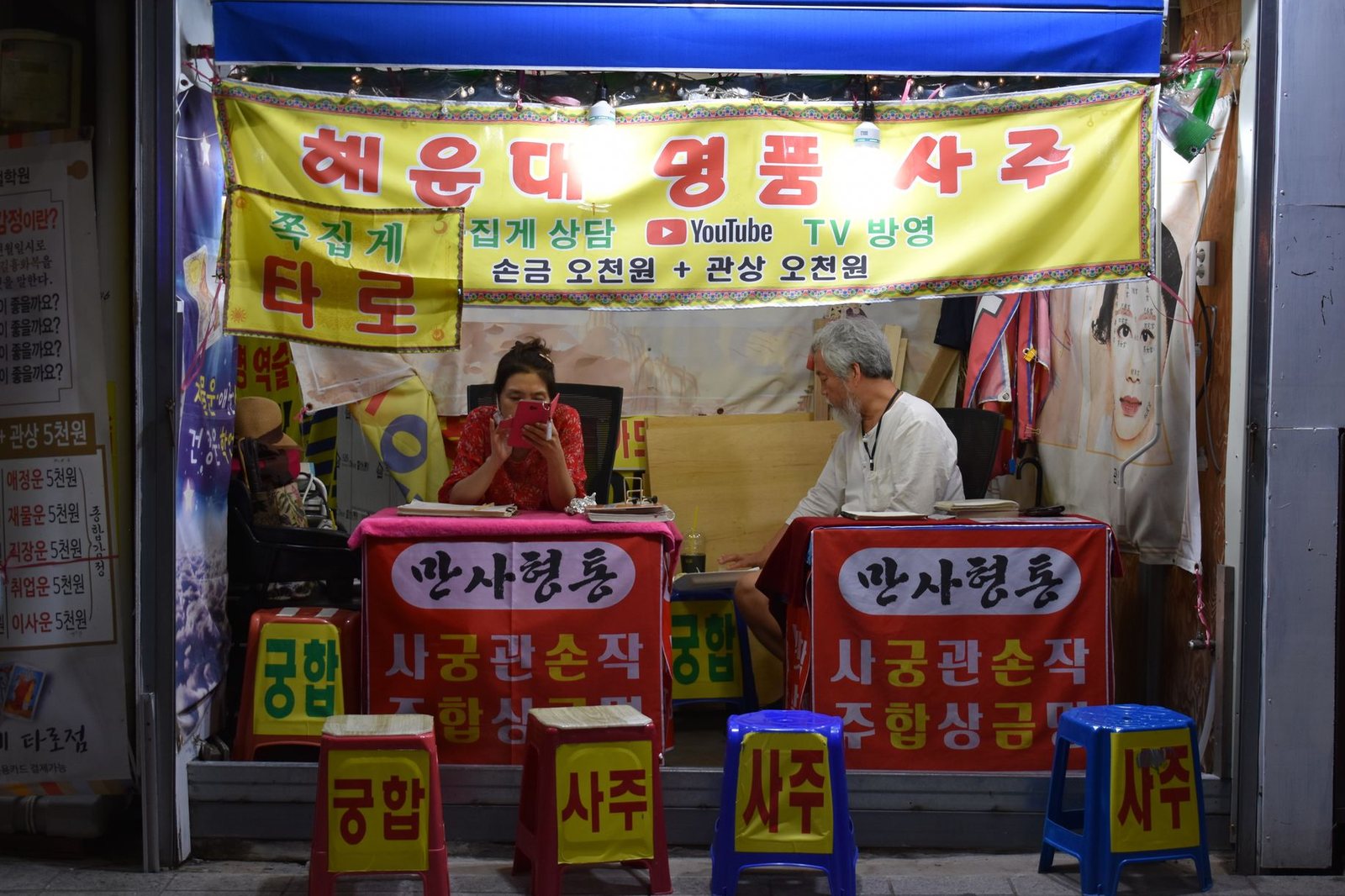
Saju's weightiest traditional job was matchmaking. A 궁합 (gunghap) reading compares two people's charts to judge whether they suit each other as spouses. In the old marriage process described by the Encyclopedia of Korean Culture, long before today's Korean weddings, the groom's family sent a 사주단자 (saju danja), a letter giving his birth date and hour. The bride's family had the match read and, if it looked good, sent back a chosen wedding date, which sealed the agreement. A bad reading could end a match, and the encyclopedia notes that gunghap also made a handy excuse to turn down a proposal. The habit has faded but not vanished: in the same Gallup survey, 39 percent said it is better not to marry someone with poor compatibility, while 59 percent said it does not matter.
A fortune for the whole year
If saju reads a whole life, the New Year fortune, 신년운세 (sinnyeon unse), is the annual check-up. Its classic form is 토정비결 (Tojeong bigyeol), a book of yearly fortunes credited to the 16th-century scholar Yi Ji-ham, whose pen name was Tojeong. The Encyclopedia of Korean Culture is frank that nobody is sure he wrote it, and that it only became a New Year custom after the reign of King Jeongjo, who died in 1800. You turn your age, birth month and birth day into three numbers (no birth hour needed), find your reading, and get a short verse for each of the twelve months. For generations, opening it at the start of the year was as seasonal as a bowl of rice-cake soup.
The habit never left; it moved. A fortune-teller with more than 20 years in the trade told the business daily Asiae in February 2024 that customers rise by about 30 percent at the start of the year, and that young clients ask about job prospects, career changes, love, and whether they could make it as influencers instead of taking a regular job. Then came the phones. Data firm IGAWorks counted 7,726,913 users in their teens to thirties on the six biggest fortune apps between March and August 2024, Asiae reported. Now chatbots have joined in: in Gallup Korea's 2026 survey, one in four adults said they had used AI services such as ChatGPT or Gemini for saju or fortune readings, around 40 percent among people in their twenties to forties.
The questions follow life's pressure points: an exam season like the suneung, a job offer, a wedding, a birth. The Korea Times reported in July 2026 that, as planned C-sections become more common, some expectant parents use "AI saju" to pick an auspicious delivery date and hour. Gallup's question on belief even grouped baby naming (작명, jakmyeong) with saju and face reading, since a Korean name can be chosen with a child's chart in mind.
Tea, tarot and a reading in English
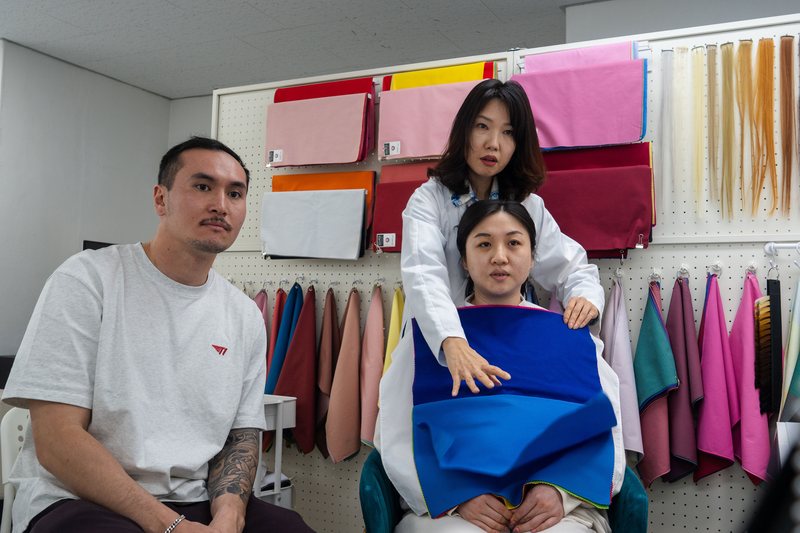
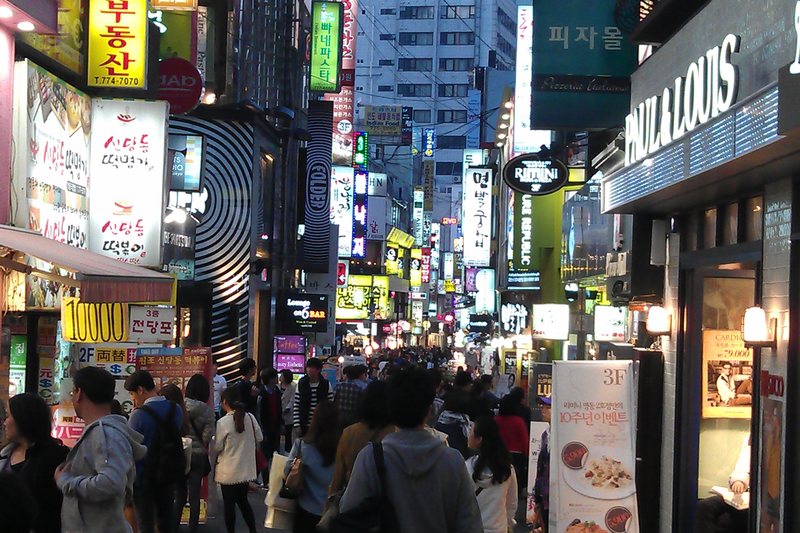
The saju café is the friendly front door to all this: a drink, a small table and a reader, often with a tarot deck beside the almanac. Cafés cluster where young people and visitors do, from Hongdae and Gangnam to tourist-heavy Myeong-dong. In 2024 the public Seoul Tourism Organization officially recognized saju cafés as a tourism product and began promoting them, The Korea Herald reported; many now post signs in English, Japanese and Chinese, and some employ readers who speak foreign languages or offer free interpretation, while smaller places rely on translation tools. The paper followed a Japanese visitor who paid 50,000 won for a half-hour session in Hongdae with an interpreter; prices vary from shop to shop, and palm reading can cost extra. One reader told the paper that foreign clients ask much the same things Koreans do: careers, romance, marriage and money.
Readers build every pillar from your birth details, so come prepared with three things: your date of birth, the calendar it is in, and the hour. For a gunghap reading you will need the same for your partner, a conversation worth having before you sit down.
Korean insider tip: Text your parents for your birth hour before you go, and know whether your birthday is solar or lunar: a reader's first question is often 양력이에요, 음력이에요? (yangnyeok-ieyo, eumnyeok-ieyo?, "Solar or lunar?"). If you were born abroad, the answer is almost certainly 양력, solar. If nobody knows the hour, say 시는 몰라요 (si-neun mollayo, "I don't know the hour"); readers can still work from the other three pillars, just in less detail.
Sessions are short (the Herald's examples ran 30 minutes), so bring the question that is actually on your mind. And know what you are booking. Saju is arithmetic on a calendar. The other world of Korean fortune telling is 신점 (sinjeom), readings by a 무당 (mudang), a shaman believed to receive messages from spirits, the same figure who performs the rituals called 굿 (gut). That is the world brought to the screen by the 2024 occult thriller Exhuma, a tale of two shamans, a feng shui expert and a mortician that passed 10 million admissions in 32 days. A café reading sits at the gentle, everyday end of that spectrum.
Believing a little, on purpose
Put the numbers side by side and they look like a contradiction. Only about a quarter of Koreans in their twenties say they believe, yet young people keep fortune apps busy and saju cafés full. There is no scientific evidence that a birth chart predicts anything, and most young Koreans would say so themselves. A professor quoted by Asiae in 2024 tied the boom to a generation that has repeatedly faced difficulties with jobs and marriage. When so much feels out of your hands, half an hour in which someone studies only you, and tells you when your good years begin, is a rare kind of comfort.
Saju also works as a language. The same friends who trade MBTI types over lunch will say 사주에 불이 많대 (saju-e buri mantae, "apparently my chart has a lot of fire") to explain a quick temper, the way "I'm an E" explains a love of parties. The reading becomes a story you can tell about yourself, and a story is easier to act on than a vague worry. Among Gallup's respondents who had paid for a reading, 71 percent said they had taken the reader's words into account when making a decision, which says less about prophecy than about how badly people want a second opinion.
That is what saju means in Korea today. Not a religion and rarely a rulebook, but a small ritual of permission: a way to say "this is the year I try" with a little cosmic backup. When the two friends in Hongdae walk back down the stairs, the stars will not have decided anything for them. Somebody simply listened closely for half an hour, and in a country that moves this fast, that alone can be worth the price of a cup of tea.