It is a Thursday in a Seoul office, a few minutes past six. Monitors are still glowing and nobody has moved, until the team leader stands up and says the two words every new hire learns fast: 오늘 회식 (oneul hoesik, “team dinner tonight”). Jackets come off chairs, someone calls the barbecue place down the block, and the whole team walks out together. For a foreigner, Korean hoesik etiquette comes down to a few quiet moves: go to the first round if you can, let the most senior person set the pace, drink only what you want, and when it is time to go home, say so out loud instead of disappearing.
The word itself is plain. 회식 (會食, hoesik) means “eating together”: the after-work meal a team shares, usually paid on the company card, the 법인카드 (beobin kadeu). But hoesik is only the loudest chapter in a day of unwritten office manners, and most of them grew from the same old sense that a team is something like a family, and families eat together. That idea is now being renegotiated, one lunch and one dinner at a time.
Noon sharp, and the names nobody says
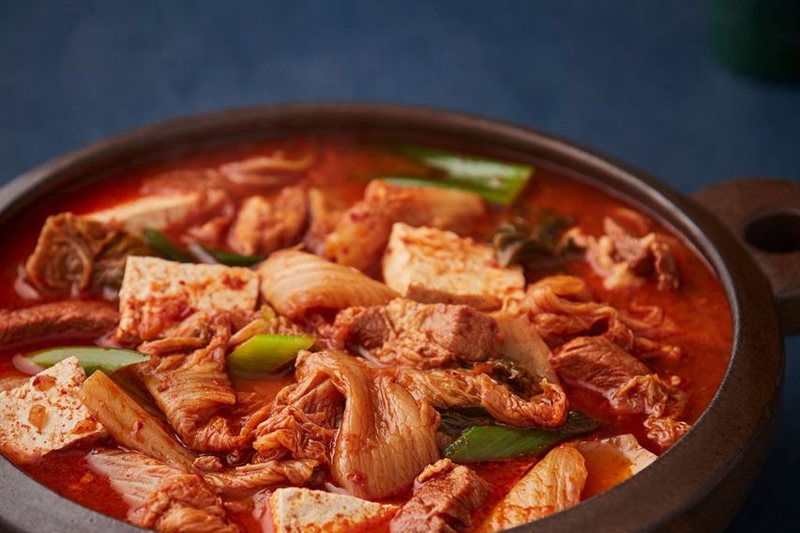
The first lesson usually comes before noon. In many Korean offices lunch is a fixed hour, very often twelve to one, and the team heads out together. Someone asks 점심 뭐 먹지? (jeomsim mwo meokji?, “what should we have for lunch?”), and the answer tends to be a stew, a noodle shop or a set meal that everyone can share a table over. For a long time, eating with your team was simply part of belonging, and slipping off alone every day could read as a quiet statement. That has softened, and 혼밥 (honbap, eating alone) no longer draws the looks it once did, but in your first weeks, saying yes to the group lunch is still the easiest way in.
Lunch has turned into a small economics lesson, too. A 김치찌개 백반 (kimchi-jjigae baekban, kimchi stew with rice and side dishes), the classic office lunch, averaged 9,043 won nationwide in August 2026, according to Korea Consumer Agency price data reported by Newsis. The same report found Korea's big caterers serving more meals in company cafeterias, the 구내식당 (gunae sikdang); one of them, Hyundai Green Food, counted 9.3 percent more meals at office sites in the first eight months of the year than a year earlier. Koreans have a borrowed word for the squeeze: 런치플레이션 (reonchipeulleisyeon, “lunchflation”).
Then there are the names, or rather the missing ones. In a traditional Korean office you almost never call a senior colleague by their given name. You use their job title with the honorific 님 (nim) attached: 부장님 (bujang-nim) for a department head, 과장님 (gwajang-nim) for a manager, 대리님 (daeri-nim) for an assistant manager, often with the surname in front, as in Kim Daeri-nim. Newcomers without a title get their full name plus 씨 (ssi). It is the same logic that runs through Korean honorific speech: the words you choose show where each person stands. Office K-dramas are full of it, and one hit series even wears it in its name: the Korean title of What's Wrong with Secretary Kim, 김비서가 왜 그럴까, names its heroine only by her surname and her job.
Many younger companies see that ladder as a brake. Startups and tech firms often drop titles altogether, using a first name plus nim or an English nickname, so that a new hire can challenge a senior's idea without first climbing over a rank. Even Samsung Electronics, the country's largest company, joined in. In 2016 it replaced rank titles among regular employees with a name plus nim, and in February 2023, KED Global reported, it banned staff from addressing senior managers by title as well, so that even presidents are now called by their first name plus nim, or by initials they choose themselves. The hierarchy has not vanished; in most offices it has simply grown quieter.
Reading the room at six o'clock
If lunch teaches you whom to sit with, the end of the day teaches 눈치 (nunchi), the Korean art of reading a room. For decades, the unwritten rule in many offices was that you did not leave before your boss. The workday might officially end at six, but juniors would keep an eye on the senior's desk, wait for the jacket to go on, and only then pack up. Leaving exactly on time even earned its own slang, 칼퇴 (kaltoe, short for kal-toegeun, “knife-sharp clocking out”), said half in envy and half as a dig. The polite exit line, still heard in offices across Korea, is 먼저 들어가 보겠습니다 (meonjeo deureoga bogetseumnida, “I'll head out first”), a sentence that apologizes for leaving without quite saying sorry.
Then the law changed the arithmetic. In February 2018 the National Assembly passed an amendment to the Labor Standards Act that cut the maximum workweek from 68 hours to 52: 40 regular hours plus no more than 12 of overtime, holiday work included. According to the government's policy briefing service, it took effect on July 1, 2018, at companies with 300 or more employees, reached those with 50 to 299 on January 1, 2020, and covered workplaces with five to 49 from July 1, 2021. Once every extra hour at the desk counts against a weekly cap, an evening spent waiting for the boss to leave stops looking like loyalty and starts looking like a compliance problem.
The night shift: hoesik etiquette for foreigners
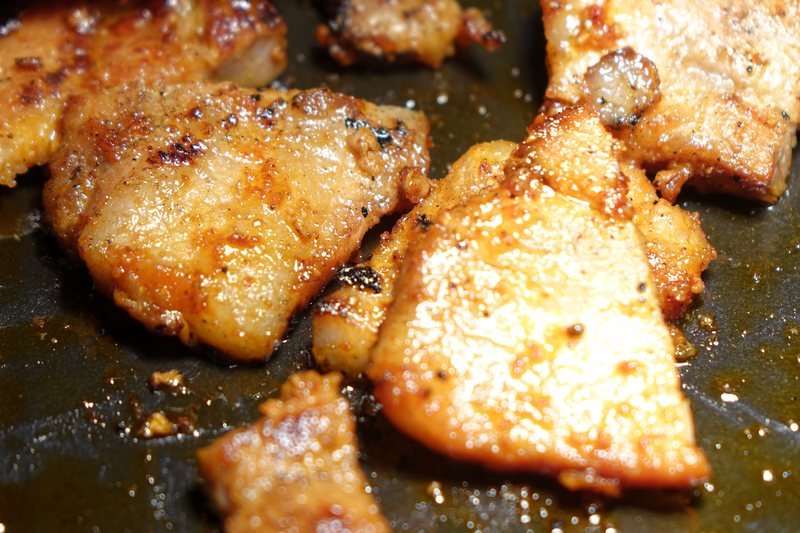
Which brings us back to Thursday night. Hoesik has long been explained as a bonding ritual, built on the belief that a team that eats and drinks together works better together. A professor interviewed by Korea JoongAng Daily traced its role as informal networking back to the 1960s, the start of Korea's industrial boom. In its classic form the night moves in rounds. The 1차 (il-cha, first round) is dinner, very often grilled pork belly, with the youngest people at the table traditionally minding the meat on the grill. The 2차 (i-cha, second round) moves on to a pub for beer, and a 3차 (sam-cha, third round) could end in a 노래방 (noraebang, karaoke room) well after the last subway had gone.
It is also, officially, not work. In guidance issued in June 2018, just before the 52-hour week began, the Ministry of Employment and Labor said a company dinner held to lift morale is not working time, and that a boss pressing people to attend does not, on its own, change that. It cuts both ways. Hoesik is not paid overtime, but on paper it is also a social event, and a social event can be declined. The legal side of turning down a drink, which changed in 2019, is told in our story on drinking with elders, along with the pouring rules.
And plenty of people would rather decline. In a 2023 survey of 1,000 people by the research firm Embrain, cited by the same paper, 53.2 percent called hoesik “bothersome” and only 24.7 percent “enjoyable.” Asked about the downsides, 61.6 percent pointed to the stress of sitting with people they found uncomfortable, and 49.4 percent disliked having to tend to their bosses' moods. The split runs along generations. In a 2022 Hankook Research poll from the same article, 63 percent of people over 60 said company dinners were necessary, against 40 percent of those aged 18 to 29. Companies have noticed: the report describes hoesik growing shorter and usually ending after the first round, with bowling, screen golf, escape rooms or an exhibition followed by lunch standing in for the long night of soju.
Korean insider tip: If you need to leave early, tell your team leader before the dinner starts, not halfway through it: 오늘은 1차만 하고 들어가 보겠습니다 (oneureun il-cha-man hago deureoga bogetseumnida, “Today I'll stay for the first round only, then head home”). Then go in the shuffle between rounds, while people are paying and finding their coats. Say goodbye to the most senior person first, with a small bow. Slipping out without a word is the exit people remember.
The reasons Koreans give for heading home are usually short, and nobody expects details: an early start, family waiting, a long ride home. Foreigners get a little slack, but the gesture matters. Raise your glass for the first toast, even if it holds soda, eat with the team, thank whoever paid with 잘 먹었습니다 (jal meogeotseumnida, “I ate well, thank you”), and you have done the part of hoesik that counts. Increasingly, staying for the noraebang is a choice rather than a duty.
A dinner that has to earn its seat
None of this means hoesik is disappearing. About a quarter of the people in that 2023 survey called it enjoyable, and in many teams a good dinner is still where a newcomer finally hears the stories nobody tells in meetings. What has changed is the direction of the obligation. A generation ago, the employee had to justify going home. Now the dinner increasingly has to justify itself, with a better restaurant, an earlier finish, a lunch instead of a late night, or an activity people actually picked.
That says something larger about Korea right now. The office was one of the places where an older idea of the group, in which you proved you belonged by showing up and staying late, held on the longest. It is giving way, slowly and unevenly, to one where belonging is a choice, and the team has to make it worth choosing. For a foreigner, the timing is lucky. You are arriving just as Korean workplaces learn to say what you may have wanted to say all along: come for the first round, and go home when you need to.