Who Can Sit in the Pink Seat? Seoul Subway Rules Nobody Tells Tourists
Two pink seats in every car, a corner kept for elders and a hush you can almost hear. Here are the rules of Seoul's subway that no sign spells out.
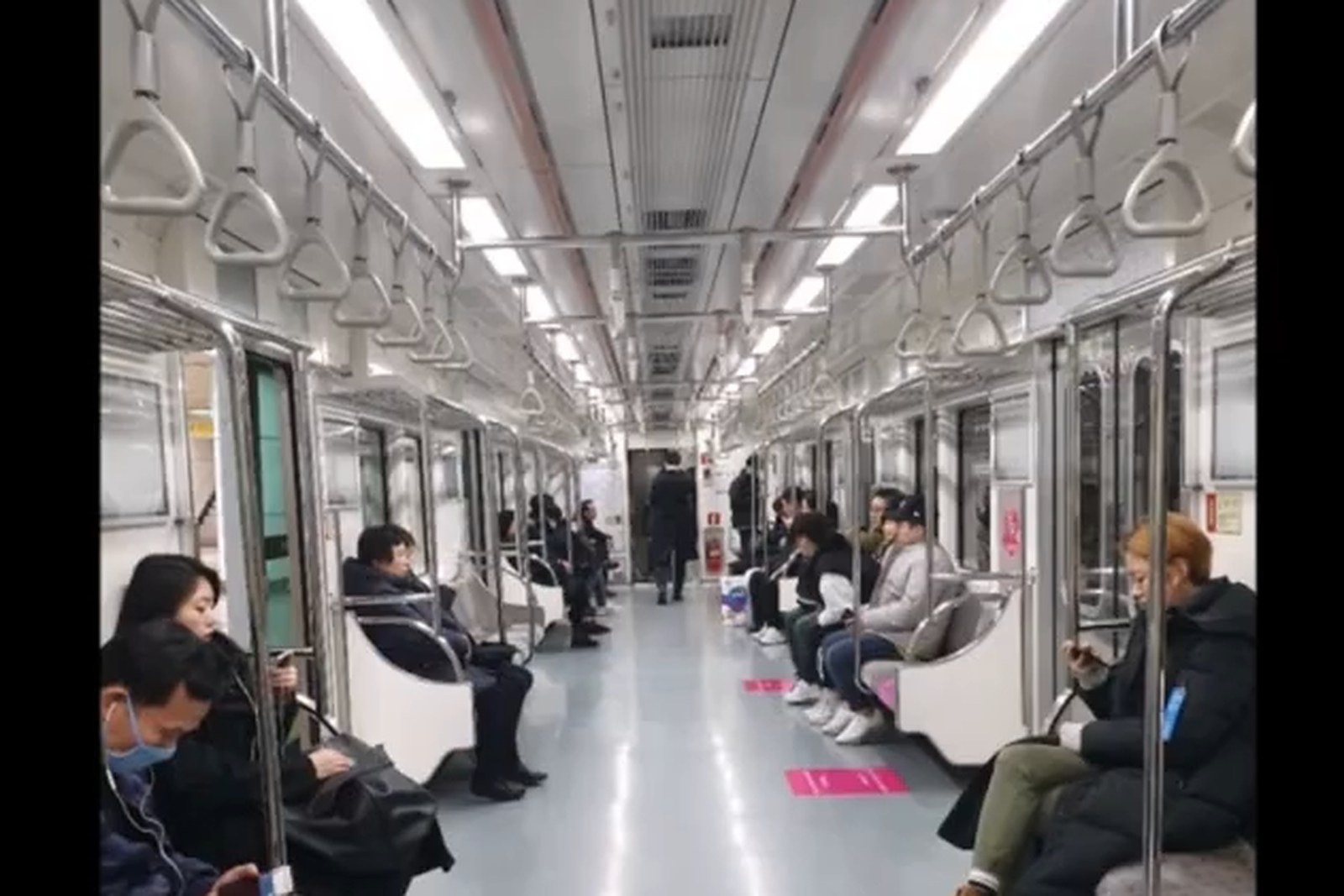
It is 8:30 on a weekday morning on Line 2, and the car is packed so tightly that strangers stand shoulder to shoulder. Then you notice it: one seat at the end of a long bench, still empty. The cushion is pink, the backrest is pink, and so is the patch of floor in front of it. Nobody takes it. If you are wondering about the Seoul subway pink seat rules, here is the short answer. This is the 임산부 배려석 (imsanbu baeryeoseok, “seat of consideration for pregnant women”), and no law stops anyone else from sitting there. Even so, many Koreans leave it empty, so that a pregnant woman never has to ask a stranger to get up.
The pink seat is only one line in an unwritten code. The short benches at each end of the car are the 노약자석 (noyakjaseok, seats for older and frail riders), now officially called seats for the transport-vulnerable, and many young, healthy Koreans will not sit there even in a crush. Add a hush that surprises many first-time visitors, backpacks swung around to the front and a transport card that must be tapped on the way out, and you have the real rulebook of the Seoul subway. Only one item on it can actually cost you money.
Two pink seats in every car
The pink seats are newer than many visitors assume. On December 2, 2013, Seoul began setting aside two seats in every car on subway Lines 1 to 8 for pregnant women, the Seoul Metropolitan Government announced. At first they were marked only by an emblem sticker, 30 centimeters square, fixed above the seat. The city's reasoning still holds: in the first months, when many women struggle with morning sickness, a pregnancy usually does not show, so the riders who most need a seat are often the ones nobody notices.
The sticker had an obvious flaw. Once someone sat down, their own body hid it. Riders complained, and in July 2015 Seoul announced a fix that nobody could miss: the seat, the backrest and the floor in front would all turn pink, forming what the city called a pregnancy “consideration zone.” A message on the floor read 내일의 주인공을 위한 자리입니다, “a seat for the main characters of tomorrow.” The new design was tried on 2,884 seats on Lines 2 and 5, and in January 2016 the city extended it to the rest of the 7,140 pregnancy seats on Lines 1 to 8, after 76 percent of respondents in an operator survey backed it.
Paint cannot tell who is pregnant, though. So Korea also gives out a small pink badge that reads 임산부 먼저 (imsanbu meonjeo, “pregnant women first”). The Korea Times reported in June 2026 that the badge program runs under the Ministry of Health and Welfare, with badges available at public health centers and at customer service centers in some subway stations. The same report found that some women hesitate to wear it, because it can feel like demanding a favor rather than quietly hoping for one. Busan has tried a more high-tech answer: a “pink light” in the car that switches on, with a spoken reminder, when a pregnant rider presses a small beacon she carries. Seoul has stuck with paint, badges and campaigns.
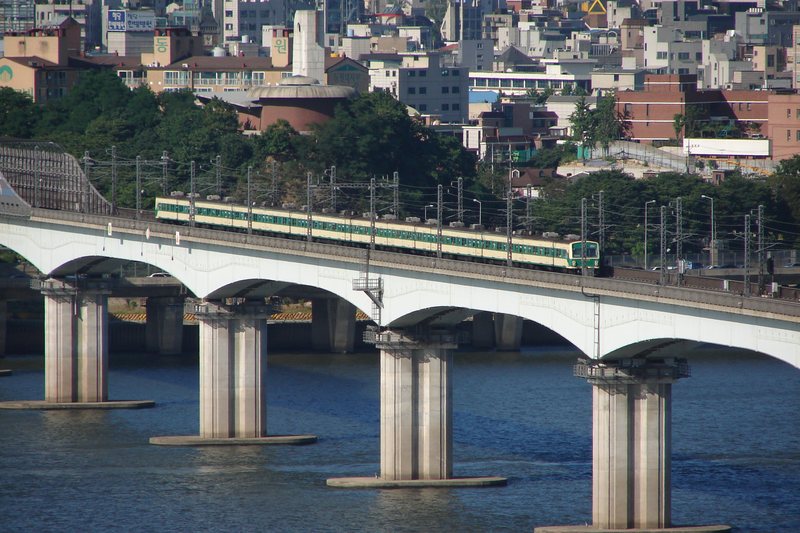
The pink seat rules, written and unwritten
So is there an actual rule? Legally, no. In 2024 a citizen proposed sensors that would beep and play a voice message whenever someone who was not pregnant sat in a pink seat. The city declined, saying there was no legal basis to enforce exclusive use and that repeated alarms could disturb other passengers, and Seoul Metro, which runs Lines 1 to 8, warned that the idea could stir up gender or generational conflict. The complaints keep coming anyway: according to city figures reported by the Korea Herald, riders filed 7,334 complaints about the pregnancy seats in 2022 and 7,086 in 2023.
What remains is etiquette, and Koreans honestly disagree about it. One camp says the seat should stay empty even in the worst rush hour, because a woman in her first months will rarely ask anyone to move. The other says an empty seat on a crushed train is a waste, and that sitting is fine as long as you get up the moment someone who needs it boards. The Korea Herald heard both from commuters, and so will you. What reliably sparks outrage online is someone staying seated while a pregnant woman stands right in front of them, a scene that has gone viral more than once.
The seats at the ends of the car are a different matter, and here the unwritten rule is firmer. Priority seating for elders grew out of the early 1980s, when Korea passed laws giving special treatment to citizens aged 65 and over, as the Korea JoongAng Daily has recounted; subways later turned seats for the elderly into seats for anyone who struggles to stand. Today Seoul Metro keeps 12 of these protected seats in each car (8 on newer trains), plus seven consideration seats (six on newer trains) that include the two pink ones, according to Newsis. Under Korean law, the transport-vulnerable, 교통약자 (gyotong yakja), include older people, people with disabilities, pregnant women, people traveling with small children, and children. On a real train, though, the end seats are understood to belong to grandmothers and grandfathers, and a healthy twenty-something sitting there can expect a few long looks. It is the same respect for age that shapes how Koreans speak to their elders.
Korean insider tip: Watch bags, not bellies. Early pregnancy rarely shows, so Koreans look for the small pink 임산부 먼저 badge that many pregnant women hang on a bag strap. If you take a pink seat on a crowded train, glance at the bags of people boarding at each stop, and if you spot one, simply stand up and step away. No speech needed; a quiet 여기 앉으세요 (yeogi anjeuseyo, “please sit here”) is plenty.
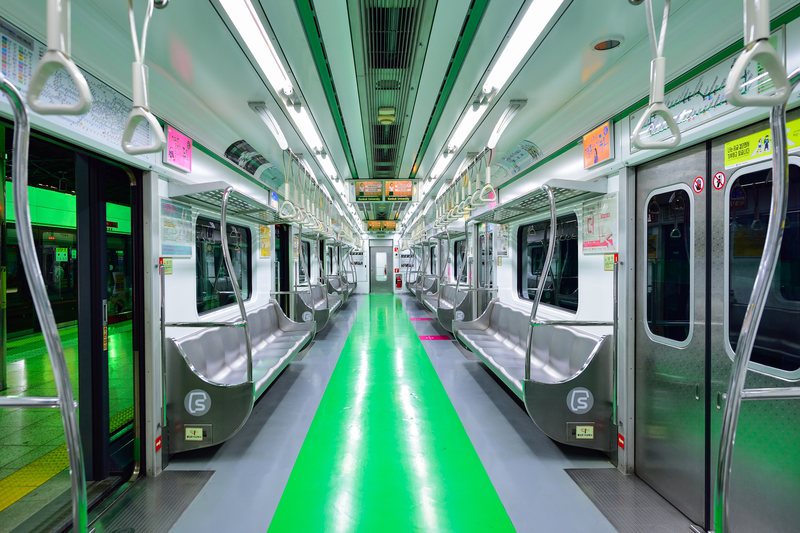
A hush, and a backpack turned around
The next thing visitors notice is the sound, or rather the lack of it. A full car on a weekday morning can be strikingly quiet: earbuds in, eyes on phones, conversation kept to a murmur. Phone calls happen, but they tend to be short and low, often with a hand cupped over the mouth, and many people simply text “I'm on the subway” and call back later. No rule bans talking. It is 눈치 (nunchi), the Korean habit of reading the room, applied to a carful of strangers at once.
Food follows the same logic. There is no specific law against eating on the subway, but Seoul Metro's passenger terms let staff restrict items that are unsanitary or give off strong smells, and operators recommend that riders not eat in the cars, Asia Business Daily reported in January 2026. Seoul Metro still receives several hundred to about a thousand complaints a year about people eating on board. Buses are stricter: since 2018, a Seoul ordinance has banned eating and drinking on the city's buses.
Then there is the backpack. On a crowded train, a bag on your back bumps whoever is behind you every time you turn. Koreans usually swing it around to the front, hold it low or set it on the overhead rack where the train has one. A 2017 column on the Seoul city government's MediaHub went further, with a seat-by-seat strategy: if you are wearing a backpack, stand in front of the fourth seat, the middle of the seven-seat bench, where you are out of the way of people squeezing toward the doors. Seated riders, meanwhile, keep their legs tucked in.
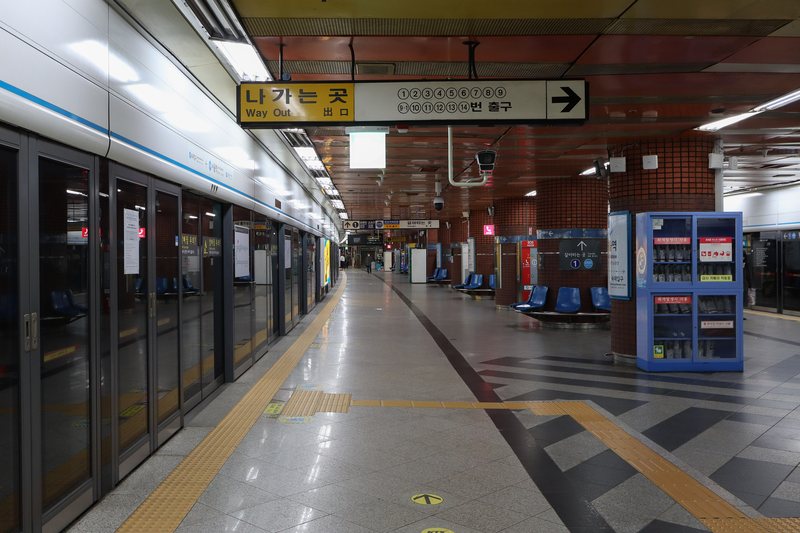
Glass walls and the final tap
Seoul's platforms are sealed off by glass screen doors, and they are newer than they look. The first went in at Sadang Station in October 2005, and according to the city, every subway station in Seoul had them by 2009. They keep people from falling onto the tracks and make the platform quieter, and they shape the boarding ritual too: riders wait in two lines on either side of each door, let everyone off, then step in. Pushing into the middle of the doorway earns frowns, though at rush hour, when ppalli-ppalli takes over, the neat lines can dissolve into a crowd.
The last rule is the only one with a price tag. Seoul fares depend on distance, so you tap your transport card, such as T-money, both on the way in and on the way out; you can buy one and top it up at a convenience store. Skipping the exit tap used to be a small trick for saving a few hundred won. Since March 7, 2026, it carries a penalty: if you leave without tapping out, the system adds the base fare to your next ride, which is 1,550 won for an adult, 900 won for a teenager and 550 won for a child, according to the Seoul Metropolitan Government. Single-journey tickets and commuter passes are exempt.
Put together, the Seoul subway runs on very few enforced rules and a great many shared ones. Apart from that final tap, almost nothing here is punished. What holds it together is a habit of noticing: the gray-haired rider by the door, the pink badge swinging from a tote bag, the stranger who needs you to shift your backpack a few inches. In a country that worries out loud about how few babies are being born, an empty pink seat in a packed rush-hour car is a small public statement about who Koreans want to make room for. Sitting in it is your call, and Koreans themselves are split. But both camps would agree on one thing: if you do sit, keep looking up.