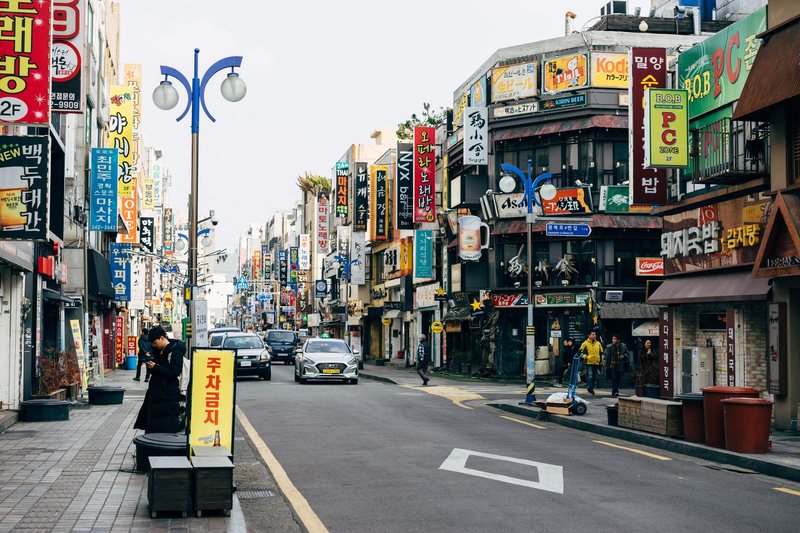
On a Saturday morning in late October, a Seoul subway car heading for the city's northern mountains can look like an outdoor fashion show: zip-up jackets in red, orange and electric blue, trekking poles strapped to backpacks. Most of them are going to see the leaves.
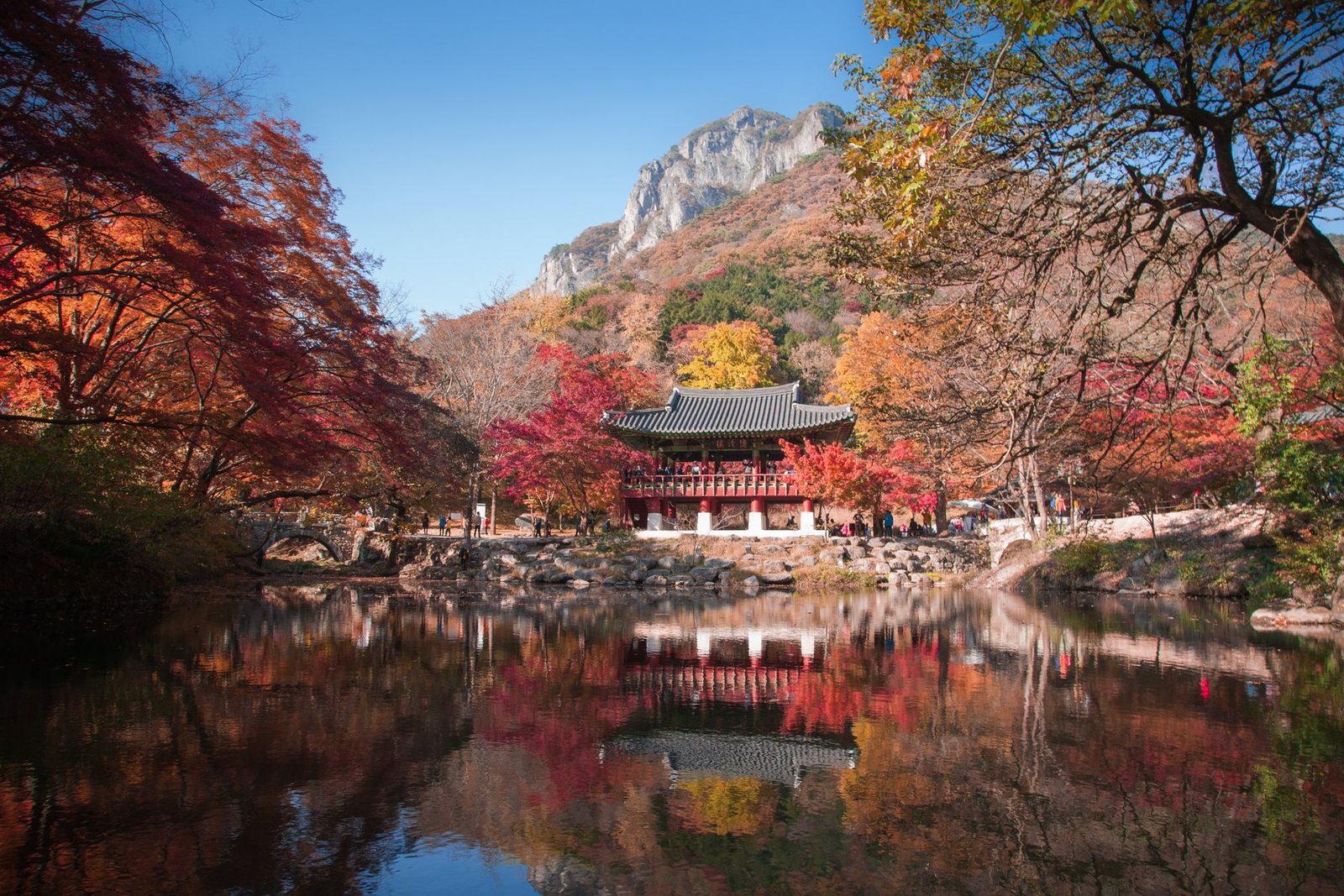
This is 단풍 (danpung) season, when Korea's mountains turn red, orange and gold. Why do so many Koreans head for the hills at once? Mountains are everywhere, so the best color is a bus ride away. Admiring autumn leaves is a centuries-old custom. And the color moves so fast, and is tracked so closely, that everyone chases the same few weekends.
A word for going out to look at leaves
Danpung (丹楓) is written with the characters for "red" and "maple," but the Standard Korean Language Dictionary defines it as leaves turning red or yellow, or the colored leaves themselves, so ginkgo gold counts as much as maple red. Add 놀이 (nori, outing or play) and you get 단풍놀이 (danpung-nori), an outing to enjoy mountains and valleys in autumn color. Most people simply say 단풍 구경 (danpung gugyeong, "leaf watching").
The habit is old. The Encyclopedia of Korean Culture describes 등고 (deunggo, "climbing high"), a custom of carrying food up a mountain on the ninth day of the ninth lunar month to enjoy the autumn colors. An 1849 record of seasonal customs, the Dongguk Sesigi, says people in Seoul climbed the mountains north and south of the city to eat and make merry, and it names favorite foliage spots, including Bukhansan, Dobongsan, Suraksan and Namhansan. All four are still a subway or bus ride from central Seoul, so an October hiker on Bukhansan is following a travel tip from 1849.
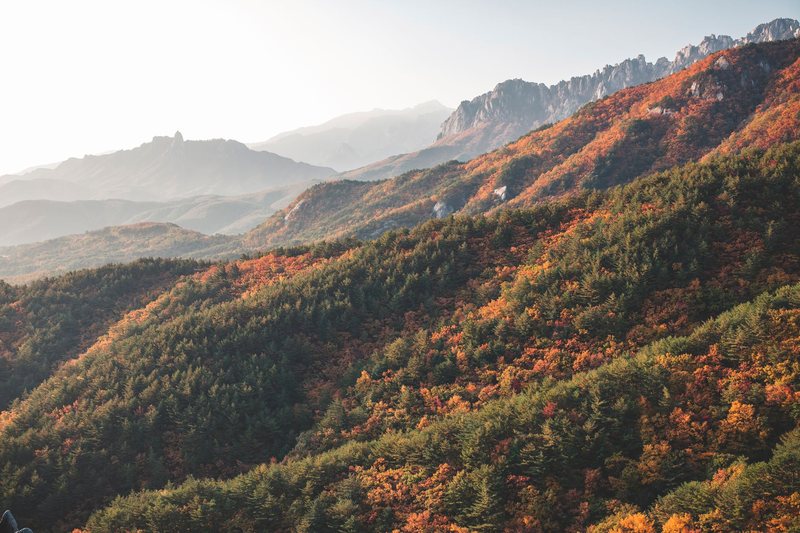
A country made of mountains
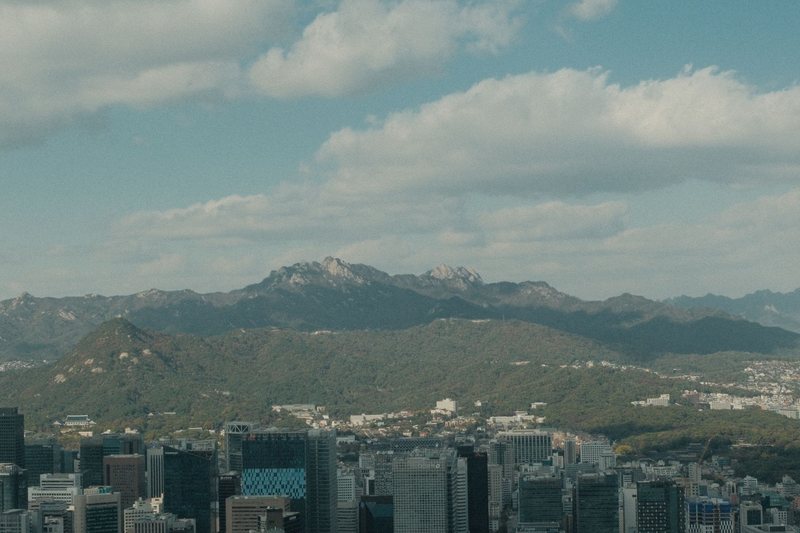
According to the Korea Forest Service, forests cover about 63% of South Korea, roughly twice the world average. In Seoul, rocky peaks rise just beyond the apartment blocks.
Hiking is also close to a national pastime. In a 2022 Korea Forest Service survey of 1,800 adults, 78% said they went hiking or walked forest trails at least once a month, rising to 91% among people in their 60s and older. Younger Koreans have joined in; beginners even have a joking nickname, 등린이 (deungrini), a blend of 등산 (deungsan, hiking) and 어린이 (eorini, child).
Autumn is the high point because the weather cooperates. Koreans describe the season with the idiom 천고마비 (cheongomabi), "the sky is high and the horses grow fat": clear, deep-blue skies and ripening grain. Sunny days followed by cold nights also tend to bring out the brightest reds.
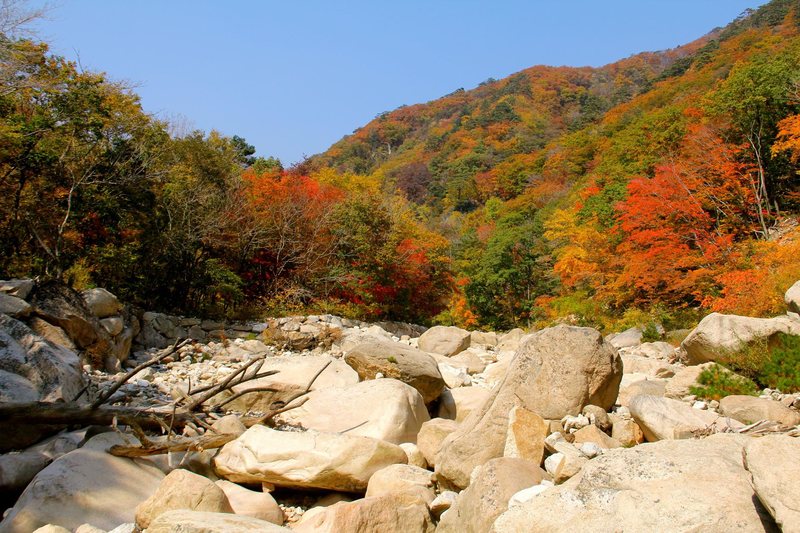
Forecasting leaves like the weather
Visitors are often surprised by how closely Korea tracks the color. The Korea Meteorological Administration (KMA) watches famous mountains for two milestones: first foliage (첫 단풍, cheot danpung), when about 20% of a mountain has turned from the summit down, and peak (단풍 절정, danpung jeoljeong), when about 80% has. This year, the KMA's Gangwon office recorded first foliage on Seoraksan (1,708 m) on September 28, right on the long-term average. In a typical year, the peak there follows about three weeks later.
The national forecast comes from the Korea Forest Service, which counts the peak as the point when at least half the leaves have turned. Its 2026 map, released on September 22, predicts peaks around October 20 at Seoraksan, October 28 at Songnisan, November 4 at Naejangsan and November 6 at Hallasan on Jeju Island, with most of the country at its best in late October. Ginkgo trees should peak around October 30, maples and oaks around October 31.
For a single spot, the Korea National Arboretum's online search, open since September 29, gives the expected peak for any address, based partly on records from 829 citizen scientists. The Korea Tourism Organization's 2026 foliage map on VisitKorea uses the same data and picks out 36 places.
Korean insider tip: Before heading to Seoraksan or another Gangwon park, check the KMA Gangwon office's foliage site. It streams live park cameras and posts dated trail photos from the valley to the summit. Read them as the color sliding downhill: in 2026, Daecheongbong at the top was marked "foliage over" by October 22, yet Sogongwon at the trailhead still had color on October 29. If the summit looks bare, stay on the low valley trails.
Forecasters often describe the color front sliding south at roughly 20 to 25 kilometers a day. With a short window and only so many weekends, much of the country aims for the same few days: ppalli-ppalli energy, applied to scenery.
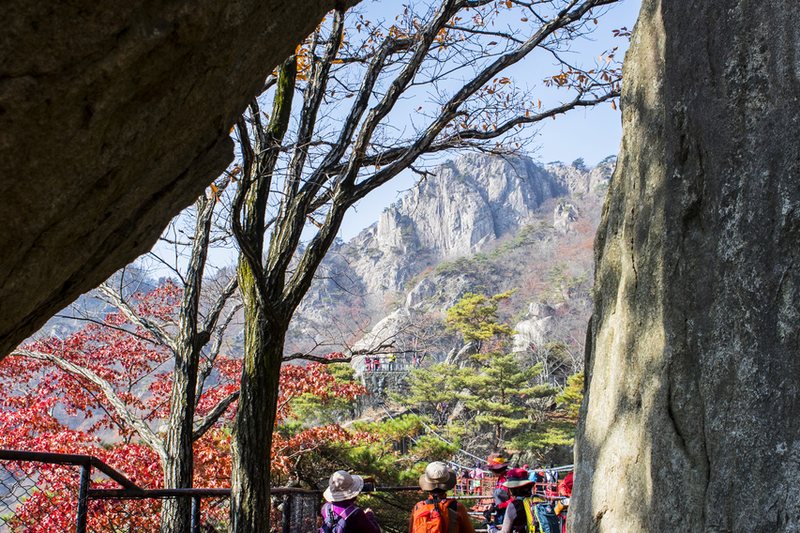
Dressed for the Himalayas, hiking a hill
Then there is the outfit: technical jacket, hiking trousers, boots, poles, hat and gloves, even for a gentle trail. The Korea JoongAng Daily has traced how hiking pants went from mostly black, navy and gray to bolder colors and slimmer cuts in the mid-2000s, as the five-day work week spread and more people hiked for their health. Ask hikers why they gear up, and the answers mix the practical and the social: weather on a rocky summit can turn quickly, and nobody wants to be the one person on the trail who looks out of place. Younger hikers have added their own spin, wearing outdoor pieces as streetwear and treating the summit photo as half the fun.
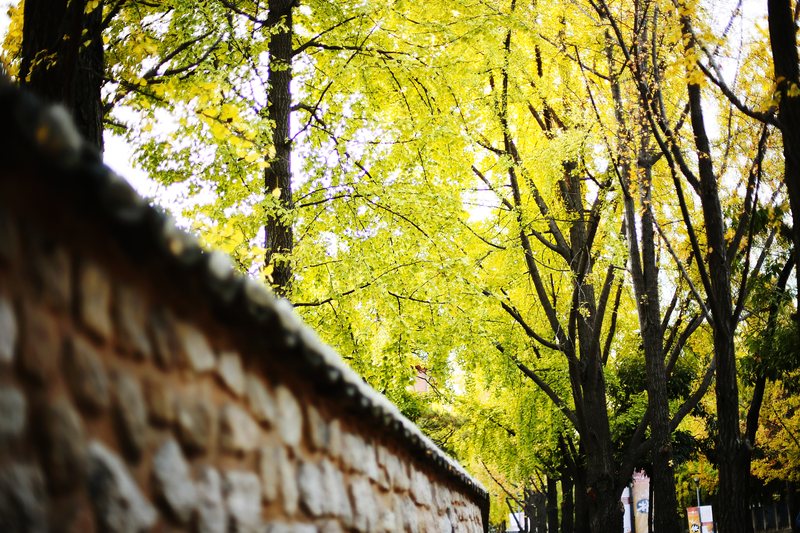
Not a mountain person? Follow the ginkgo
In the cities, autumn arrives in yellow. The ginkgo is Seoul's official tree and its most common street tree: according to the Kyunghyang Shinmun, the city had 102,794 ginkgo street trees in 2024, roughly a third of all the trees lining its roads. When they turn, whole avenues glow gold, and the city's royal palaces and parks fill with leaf watchers who never go near a summit.
There is one catch, and every Korean knows it. Female ginkgo trees drop seeds whose fleshy coat smells notoriously bad, mainly because of butyric acid, the compound behind the smell of rancid butter. The city sends crews with vibrating harvesters and nets to collect the seeds before they hit the pavement, and some districts are replacing female trees with male ones. In autumn, Koreans walk under ginkgo trees looking up at the color and down at their shoes.
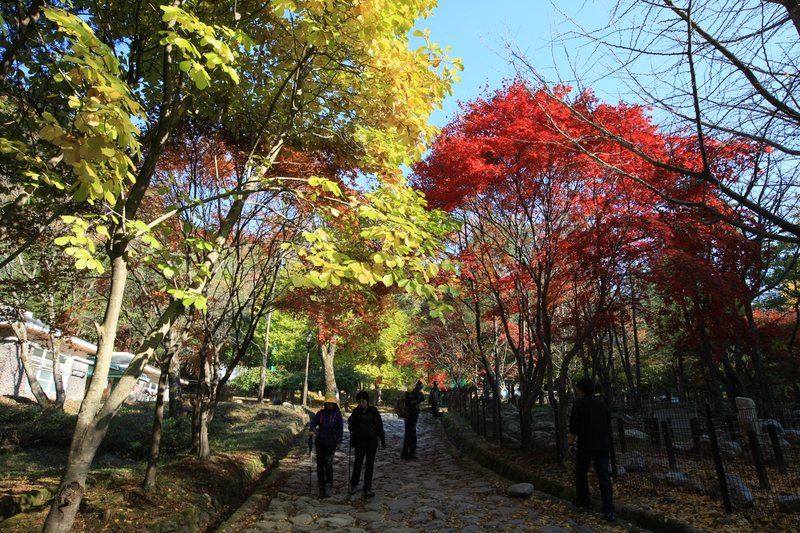
Before you join the crowds on the trail
- Check the forecast, not the calendar. The KMA and the Forest Service define "peak" differently, so their dates will not always match.
- Go early, or on a weekday. Famous parks get crowded on autumn weekends, and some popular trails need an advance reservation in foliage season; check the Korea National Park Service website.
- Stay on marked trails. Shortcuts and closed sections are off-limits, and wandering in can cost a fine of 200,000 won or more.
- No smoking, no cooking, no campfires. Cooking is allowed only in designated spots, smoking outside designated spots costs 600,000 won on a first offense, and autumn is wildfire season, when some trails close.
- Save the drinks for later. Alcohol is banned at designated summits, shelters and trail sections in national parks, with a fine of 100,000 won from the first offense.
- Take your trash home. National parks removed their trail trash cans so that hikers carry their rubbish out.
- Leave the acorns. Picking acorns, chestnuts, mushrooms or plants in national parks is illegal, and this year's autumn crackdown runs until November 30.
Bus routes, opening rules and a taxi card for three classic foliage parks are in the Getting there guide at the end. And once the last leaves fall, Korea moves on to its next seasonal ritual: winter street snacks.
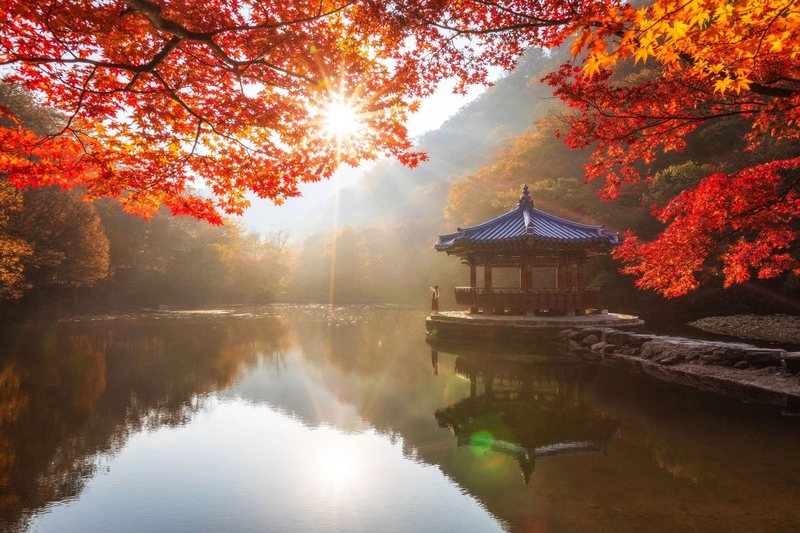
Quick answers
When is the best time to see fall foliage in Korea in 2026?
Late October around Seoul and in the northern mountains, early to mid-November in the south. The Korea Forest Service forecasts peaks around October 20 at Seoraksan, November 4 at Naejangsan and November 6 at Hallasan.
What does danpung mean in Korean?
단풍 (danpung) means autumn foliage, the leaves that turn red or yellow. Danpung-nori is an outing to enjoy them.
Why do Korean hikers wear so much gear?
Mountain weather changes fast, full outdoor wear became the norm as hiking boomed in the 2000s, and few people want to look out of place.
Getting there
Seoraksan National Park (Sogongwon entrance) 설악산 소공원
- Bus
- Intercity bus to Sokcho from Seoul Express Bus Terminal or Dong Seoul Terminal (Line 2, Gangbyeon Station); then city bus 7 or 7-1 from Sokcho Intercity Bus Terminal to Seoraksan Sogongwon
- Hours
- Ulsanbawi, Biseondae and Gwongeumseong trails: no entry from sunset until 2 hours before sunrise. Beyond Biseondae toward Yangpok: entry 3:00–14:00 in October, 4:00–12:00 in November
- Admission
- No park entrance fee; Sinheungsa Temple's heritage fee was dropped in 2023. Cable car extra
- Tip
- The cable car from Sogongwon goes up toward Gwongeumseong. In 2024 and 2025, high trails to Daecheongbong closed Nov 15–Dec 15 for wildfire season; check the park site for 2026
Naejangsan National Park (Visitor Information Center) 내장산국립공원 탐방안내소
- Bus
- KTX from Yongsan (about 1 h 40 min) or SRT from Suseo (about 1 h 30 min) to Jeongeup Station; then city bus 171 to Naejangsan (about 45 min, roughly every 30 min)
- Hours
- Trail entry 4:00–16:00 in October, 5:00–15:00 in November
- Admission
- Free (park and Naejangsa Temple)
- Tip
- From Oct 30 to Nov 15, 2026, private cars are barred from the park and a free circular bus runs from Naejangho parking lot to Wollyeonggyo Bridge. The biggest crowds are expected Oct 31–Nov 15
Bukhansan National Park (Bukhansanseong trailhead) 북한산성탐방지원센터
- Subway
- Line 3, Gupabal Station, Exit 1 or 2
- Bus
- 704 or Yangju 37 to Bukhansanseong Entrance (북한산성입구), then about 10 min on foot
- Hours
- Trail entry 4:00–17:00 (March–November)
- Admission
- Free
- Tip
- To Baegundae (836 m), Bukhansan's highest peak: 3.4 km via Daeseomun Gate, about 2 h 40 min one way
Checked on October 11, 2026; confirm on the official site before you go.